From demographic fear to institutionalized discrimination — and from discrimination to genocide
By Dr Ko Ko Gyi @ Abdul Rahman Zafrudin, with the assistance of ChatGPT
There is a question that deserves much deeper examination:
Why has Islamophobia become so deeply rooted in Myanmar that discrimination against Muslims could continue for decades, eventually contributing to the persecution, forced displacement and genocide of the Rohingya?
The answer cannot be reduced simply to “religious hatred.”
Nor can the Rohingya genocide be understood as an isolated explosion of communal violence in 2017.
The evidence points to a much longer process in which authoritarian politics, Burman-Buddhist nationalism, racial classification, demographic anxiety, exclusionary citizenship policies, propaganda, communal mobilization and the absence of accountability reinforced one another over several decades.
The Rohingya were eventually placed at the extreme end of a discriminatory system that had also affected other Muslim communities.
Understanding that history is essential—not to blame ordinary Buddhists, but to understand how a state can gradually turn fellow citizens into “outsiders.”
1. FIRST, A NECESSARY DISTINCTION: AUTHORITARIAN FEAR OF RIVALS IS REAL — BUT IT IS NOT THE WHOLE EXPLANATION
There is an important observation in the original draft:
Authoritarian rulers often fear people immediately below them because they may become rivals.
Comparative political research strongly supports the broader principle. In dictatorships, the greatest threat to a ruler frequently comes from within the regime, particularly from powerful military officers who possess the ability to organize a coup. Autocrats therefore often purge or sideline potential rivals and replace them with loyalists.
This is an important part of understanding Myanmar’s military system.
But we should be careful about turning this general political principle into a specific claim that Hitler, Than Shwe and Min Aung Hlaing all followed exactly the same “remove No. 2” strategy. That comparison requires separate evidence for each individual case.
More importantly, however, this authoritarian logic helps explain something deeper.
A military ruler who fears political rivals has an incentive to construct a political system in which no independent organization can become powerful enough to challenge military supremacy.
That means controlling:
- political parties;
- the civil service;
- universities;
- the press;
- ethnic organizations;
- religious institutions;
- the economy;
- citizenship;
- and, ultimately, the definition of who belongs to the nation.
This is where the Muslim question became intertwined with the survival of military rule.
The issue was not simply:
“The generals hated Muslims.”
The more dangerous process was:
The regime constructed a definition of the nation in which some Muslims could increasingly be portrayed as less authentically Burmese, less trustworthy and potentially threatening.
Once that idea became institutionalized, discrimination could be presented as “national security.”
2. THE ROOT WAS NOT ISLAM ITSELF — IT WAS EXCLUSIONARY NATIONALISM
Myanmar is a profoundly diverse country.
Its population has included Bamar, Shan, Karen, Kachin, Chin, Rakhine, Mon, Kayah and many other communities, together with Muslims, Christians, Hindus, Buddhists and followers of other traditions.
The fundamental problem arose when ethnicity, ancestry, religion and political loyalty became increasingly fused into a narrow definition of national belonging.
The concept of taingyintha—usually translated as “national races” or “sons of the soil”—became particularly important.
The modern Burmese state inherited complicated ethnic and citizenship questions from the colonial period. But under General Ne Win’s military government, these questions became increasingly linked to an authoritarian nation-building project.
A 2026 study in the American Historical Review describes the 1982 citizenship regime as a racialized system in which membership in the officially recognized “national races” became central to citizenship, while people unable to establish the required ancestry could be excluded regardless of birthplace or long residence.
This distinction is crucial.
A modern state can ask:
“Are you a citizen?”
But an exclusionary ethnic state asks:
“Are you one of the people whom we consider to belong to the nation?”
Those are very different questions.
3. NE WIN’S 1962 COUP CREATED THE POLITICAL ENVIRONMENT IN WHICH THIS COULD DEVELOP
General Ne Win seized power in March 1962.
The military justified the coup largely in terms of preserving the Union and preventing the country from disintegrating amid ethnic conflict and political instability.
But the coup also destroyed democratic institutions and established military supremacy over the state.
Oxford’s historical account of the period identifies among the military’s objectives the prevention of the Union’s dissolution, elimination of civilian political dominance, transformation of the economy and establishment of enduring military hegemony.
The consequences were enormous.
Military rule did not merely change the government.
It changed the relationship between:
the State → the Nation → Ethnicity → Citizenship → Political Loyalty.
Under the “Burmese Way to Socialism,” the regime pursued nationalization and isolation.
Foreign influence was treated with suspicion.
Non-Bamar and people of foreign ancestry could increasingly find themselves viewed through the lens of “foreignness.”
This affected Chinese and Indian communities particularly severely.
4. THE 1960s SHOWED THAT “FOREIGNNESS” COULD OVERRIDE GENERATIONS OF RESIDENCE
This is one of the most important parts of the story.
The persecution of Muslims in Myanmar did not begin with the Rohingya crisis of 2017.
Under Ne Win, people of Indian origin—including large numbers of Indian Muslims—were severely affected by nationalization, restrictions on businesses and the broader policy of Burmanization.
Academic research on Myanmar’s racialized citizenship history records that nationalization and demonetization after the 1962 coup disproportionately damaged merchant communities that were primarily Indian and, to a lesser extent, Chinese, contributing to a large exodus.
Contemporary and historical records likewise document the severe impact of Ne Win’s nationalization policies on Indian communities.
This produced a dangerous political lesson:
A person could live in Burma for generations and still be treated as insufficiently Burmese.
For Muslims of Indian ancestry, religion and ancestry could therefore become intertwined in public perceptions of “foreignness.”
That was a critical precursor to later discrimination.
5. THE MOST DANGEROUS IDEA: “THEY ARE DEMOGRAPHICALLY THREATENING US”
The original draft contains an important personal recollection.
You describe receiving, through a relative who had access to senior government circles, what you remember as a Top Secret BSPP report, allegedly restricted to approximately 30 copies.
According to your recollection, the report projected that Muslims constituted approximately 12–15 percent of the population and warned that, within roughly 30 years, the Muslim population could reach 30 percent and potentially become a political threat if Muslims united.
This is potentially a very important historical document if the original copy can be authenticated.
But for responsible publication, I recommend that we distinguish clearly between:
documented historical evidence and your recollection of a document whose provenance has not yet been independently verified.
Therefore, the article should not state that the report definitely existed or that its demographic projection was correct.
Instead, the significance is this:
If such a BSPP document can be authenticated, it would provide unusually direct evidence of how senior officials perceived Muslim demographics—not merely as a religious or social matter, but as a potential political-security threat.
That would be enormously valuable historical evidence.
And even without that document, the subsequent policies are independently documented.
6. DEMOGRAPHIC ANXIETY CAN BECOME A POLITICAL WEAPON
There is another important correction that should be made to discussions of Muslim population figures.
It is tempting to say:
“Muslims are the largest minority in Myanmar.”
That statement is difficult to substantiate using reliable national demographic data.
The official 2014 census enumerated about 50.28 million people and recorded approximately 2.3 percent as Muslim, while the government’s alternative estimate that adjusted for non-enumerated populations placed Islam at about 4.3 percent.
However, the 2014 census had a major limitation:
approximately 1.09 million people who wished to identify as Rohingya were not enumerated. UNFPA explicitly described this as a serious shortcoming and human-rights concern.
The U.S. State Department subsequently estimated the Muslim population at approximately 4 percent and noted that the Rohingya had been excluded from the census count.
Therefore, claims that Myanmar has a Muslim population of 10–15 percent should be presented as unofficial estimates, not established census facts.
This distinction actually strengthens the argument.
The issue is not whether Muslims constituted 4 percent, 10 percent or 15 percent.
The critical question is:
Why would a state become frightened of a minority population in the first place?
The answer lies in political narratives.
A minority does not have to be numerically large to be portrayed as an existential threat.
7. OPERATION NAGA MIN: DEMOGRAPHIC ANXIETY BECAME STATE VIOLENCE
The turning point came in 1978.
The military launched Operation Naga Min, also known as Operation King Dragon.
The official justification involved population registration and the identification of alleged illegal immigrants.
But the operation subjected Rohingya communities to severe violence and persecution.
The U.S. Holocaust Memorial Museum records a long history of official and unofficial persecution of Rohingya, including restrictions on movement, marriage, education, healthcare and citizenship.
The result was a massive refugee crisis.
According to UNHCR records, approximately 200,000 people crossed from Arakan into Bangladesh between March and July 1978.
The scale of the exodus was so enormous that international pressure eventually led to a repatriation process.
But something much more consequential followed.
The state did not simply rely upon physical expulsion.
It moved toward legal exclusion.
8. WHEN PHYSICAL EXPULSION FAILED, CITIZENSHIP LAW BECAME THE LONG-TERM WEAPON
The 1982 Citizenship Law was perhaps the most consequential institutional development in the entire history.
This is where discrimination changed from:
“You are suspicious.”
to:
“You do not fully belong.”
The law created a hierarchy of citizenship:
- full citizens;
- associate citizens;
- naturalized citizens.
The system placed enormous importance on ancestry and membership in officially recognized national races. Human Rights Watch has documented how the law’s ethnic basis left Rohingya without effective access to citizenship and contributed to statelessness.
General Ne Win himself addressed the new citizenship law in a speech on 8 October 1982, explaining the government’s reasoning. The text of that speech has been preserved in archival collections.
This is particularly important because it means that the citizenship regime was not simply an accidental bureaucratic development.
It was part of a conscious political project.
9. THE 1982 LAW TURNED ETHNIC IDENTITY INTO A GATEKEEPER OF CITIZENSHIP
This is the fundamental structural problem.
A democratic citizenship system should primarily ask:
Were you born here?
Do you have a genuine connection to this country?
Have you lived here?
Are you legally entitled to citizenship?
But the Myanmar system increasingly asked:
Does your ancestry belong to one of the officially recognized “national races”?
This created a hierarchy of belonging.
And once citizenship became racialized, discrimination could spread far beyond voting rights.
It could affect:
- education;
- employment;
- travel;
- land ownership;
- political participation;
- public office;
- marriage;
- family life;
- access to healthcare;
- freedom of movement;
- and the ability to pass citizenship to children.
Thus:
Racial classification → unequal citizenship → unequal rights → segregation → vulnerability → displacement.
This is one of the clearest causal chains in Myanmar’s modern history.
10. ROHINGYA WERE NOT THE ONLY MUSLIMS AFFECTED
This point is essential.
The Rohingya have suffered the most extreme form of persecution, including mass displacement and genocide.
But the history of discrimination against Myanmar Muslims is broader.
Kaman Muslims, Indian-origin Muslims, Bamar Muslims, Zerbadi communities, Panthay Muslims, Pashu Muslims and other communities have experienced different forms of discrimination at different times.
Their histories are not identical.
Nor should all Myanmar Muslims be artificially combined into one ethnic group.
But there is a common structural problem:
Religion, ethnicity, ancestry and citizenship have repeatedly been manipulated to determine who is considered fully Burmese.
That is why a discussion of Islamophobia in Myanmar must not become synonymous with a discussion of Rohingya alone.
The Rohingya experience represents the most catastrophic manifestation of a wider problem.
11. THE STATE ALSO BENEFITED FROM DIVIDING MUSLIMS INTO DIFFERENT CATEGORIES
One particularly important feature of Myanmar’s identity politics has been the fragmentation of Muslim communities.
Instead of recognizing Muslims as a single political or demographic category, people could be classified according to ethnicity, ancestry or supposed origin.
This is not necessarily evidence of a single centrally coordinated conspiracy.
But politically, the effect can be powerful.
If a population is divided into:
- Bamar Muslims;
- Indian Muslims;
- Kaman;
- Rohingya;
- Panthay;
- Pashu;
- Shan Muslims;
- and other communities,
then it becomes much harder for society to recognize a common problem of religious discrimination.
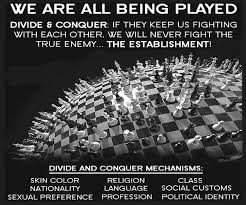
The same mechanism can operate among ethnic groups generally.
Divide people into categories.
Rank those categories.
Give different rights to different categories.
Then tell each group that its problem is unrelated to the others.
This is a classic mechanism through which unequal citizenship survives.
12. THE 2012 VIOLENCE WAS NOT THE BEGINNING — IT WAS AN ESCALATION
The violence of 2012 is sometimes presented as though the Rohingya crisis suddenly began because of one local criminal incident.
That is historically inadequate.
There was certainly an immediate trigger in 2012 involving the rape and murder of an ethnic Rakhine Buddhist woman and subsequent attacks.
But Human Rights Watch documented how violence rapidly escalated and how state security forces failed to protect communities and subsequently committed serious abuses against Rohingya.
The October 2012 violence was even more revealing.
Human Rights Watch documented organized attacks against Rohingya and Kaman Muslim communities, including attacks involving local political actors, Buddhist monks and others, sometimes with direct or indirect support from security forces.
More than 125,000 Rohingya and other Muslims were forcibly displaced in the resulting ethnic-cleansing campaign documented by Human Rights Watch.
Therefore:
2012 should be understood not as the birth of the Rohingya crisis, but as a major escalation in a much older system of exclusion.
13. ANTI-MUSLIM VIOLENCE ALSO SPREAD BEYOND RAKHINE
The wider Muslim population suffered serious violence in other parts of Myanmar.
In 2013, anti-Muslim violence spread to places including Meiktila, Okkan, Lashio and elsewhere.
Human Rights Watch documented the destruction of approximately 1,400 mostly Muslim-owned homes and businesses in Meiktila, with at least 44 people killed and more than 12,000 displaced.
This is significant because it demonstrates that Islamophobia cannot be explained solely as an “Rakhine–Rohingya problem.”
It became a broader national phenomenon.
The emergence of Buddhist nationalist movements and anti-Muslim campaigns further demonstrated how religious prejudice could be transformed into political mobilization.
14. HATE SPEECH IS THE BRIDGE BETWEEN PREJUDICE AND ATROCITY
Genocide does not normally begin with genocide.
It begins by changing the language used to describe human beings.
A population may first be called:
foreigners.
Then:
illegal immigrants.
Then:
economic competitors.
Then:
security threats.
Then:
invaders.
Then:
a demographic danger.
Eventually:
people who do not belong.
Once a population has been successfully dehumanized, violence becomes easier to justify.
The U.S. Holocaust Memorial Museum has documented the long history of hate speech and dehumanizing narratives directed against Rohingya.
This is why words matter.
Propaganda does not necessarily kill people directly.
But propaganda can create the political environment in which killing, expulsion and denial of rights become acceptable.
15. RELIGIOUS NATIONALISM AND AUTHORITARIANISM REINFORCED EACH OTHER
It would also be a mistake to say that Buddhism itself caused the persecution of Muslims.
Millions of Buddhists in Myanmar have never participated in persecution.
Buddhist teachings should not be equated with the political ideology of nationalist movements.
The more accurate formulation is:
Certain political actors appropriated Buddhist identity and combined it with ethnic nationalism, portraying protection of the Buddhist-majority nation as requiring suspicion of Muslims.
This distinction matters enormously.
It protects both historical accuracy and social reconciliation.
The problem is not Buddhism.
The problem is religious nationalism when it becomes a political instrument for exclusion.
16. THE MILITARY ALSO HAD AN INCENTIVE TO PRESENT ITSELF AS THE “PROTECTOR OF THE NATION”
This may be the deepest political mechanism of all.
If the military presents itself as the only institution capable of protecting:
race + religion + national unity + territorial integrity,
then every perceived threat to any of these becomes an argument for military power.
Ethnic insurgencies therefore become justification for militarization.
Political opposition becomes “instability.”
Foreign influence becomes “national betrayal.”
Muslims become “foreigners.”
Rohingya become “illegal immigrants.”
And the military becomes:
the supposed guardian of the nation.
This creates a self-reinforcing cycle.
Fear creates military power.
Military power creates propaganda.
Propaganda creates more fear.
Fear creates greater dependence on military power.
And the cycle continues.
17. IMPUNITY WAS THE FINAL INGREDIENT
Discrimination becomes much more dangerous when perpetrators learn that they will not be punished.
The 2012 violence demonstrated this problem clearly.
Human Rights Watch documented killings, rape, mass arrests and destruction of Muslim communities, while security forces failed to protect civilians and, in some cases, directly participated in abuses.
If perpetrators learn:
“Nothing will happen to us,”
violence becomes repeatable.
That helps explain the progression:
1978 → 1982 → 1991–92 → 2012 → 2016–17.
The methods changed.
The underlying pattern did not.
18. 2017 WAS THE CULMINATION OF A LONG PROCESS
By August 2017, the Rohingya population had already experienced decades of:
- citizenship exclusion;
- restrictions on movement;
- restrictions on marriage and family life;
- segregation;
- economic discrimination;
- periodic military operations;
- communal violence;
- hate speech;
- displacement;
- and denial of political representation.
Then came the military’s massive 2017 campaign.
More than 700,000 Rohingya fled to Bangladesh.
The U.S. Holocaust Memorial Museum subsequently determined that there was compelling evidence that the Myanmar military had committed genocide against the Rohingya, while the U.S. government also formally determined in 2022 that the military had committed genocide and crimes against humanity.
Thus the genocide did not suddenly appear in 2017.
2017 was the harvest.
The seeds had been planted much earlier.
19. THE ROOT-CAUSE CHAIN
If we reduce this long history to its essential components, the causal chain looks like this:
ROOT 1 — Authoritarian insecurity
Military rulers feared political fragmentation, ethnic rebellion and internal rivals.
↓
ROOT 2 — Militarized nationalism
The military presented itself as the defender of national unity.
↓
ROOT 3 — Narrow definition of national identity
“National races” became increasingly important to the definition of belonging.
↓
ROOT 4 — Demographic anxiety
Minorities could be portrayed as demographic, economic or security threats.
↓
ROOT 5 — Religious and racial stereotyping
Muslims, especially those perceived as Indian or Bengali, were increasingly associated with foreignness.
↓
ROOT 6 — Citizenship discrimination
The 1982 Citizenship Law institutionalized a hierarchy of citizenship based heavily on ethnicity and ancestry.
↓
ROOT 7 — Segregation and exclusion
Restrictions on movement, education, employment, marriage and political participation followed.
↓
ROOT 8 — Hate propaganda
Dehumanizing narratives normalized exclusion.
↓
ROOT 9 — Impunity
Violence was inadequately punished.
↓
ROOT 10 — Repeated displacement
1978, 1991–92, 2012 and 2017 demonstrated progressively larger waves of forced displacement.
↓
FINAL RESULT
Persecution → ethnic cleansing → statelessness → mass atrocities → genocide.
20. SO, WAS THE ROOT CAUSE “FEAR OF MUSLIMS”?
Partly—but that answer is still incomplete.
The deeper problem was:
fear converted into political ideology.
A government can fear a minority without committing genocide.
A government can dislike immigrants without stripping citizens of rights.
A government can have demographic concerns without creating racial citizenship.
What transformed ordinary demographic anxiety into catastrophe was the combination of:
authoritarianism + ethnic nationalism + religious nationalism + racial classification + exclusionary citizenship + propaganda + institutional discrimination + impunity.
That combination is extraordinarily dangerous.
21. THE MOST IMPORTANT LESSON FOR THE FUTURE OF MYANMAR
The lesson is not that Buddhists must fear Muslims.
Nor is it that Muslims should seek revenge against Buddhists.
Nor is the answer to replace one ethnic hierarchy with another.
The lesson is much simpler:
No government should have the power to decide that one citizen is more Burmese than another because of religion, ethnicity, ancestry or race.
A future democratic Myanmar must therefore move away from:
racial citizenship
toward:
equal citizenship.
Away from:
“national races” as a hierarchy of belonging
toward:
citizenship based on equal legal rights.
Away from:
religious nationalism
toward:
freedom of religion and equal protection.
Away from:
military guardianship
toward:
civilian constitutional government.
Away from:
collective punishment
toward:
individual responsibility under law.
And away from:
historical hatred
toward:
truth, accountability, reconciliation and coexistence.
22. THE REAL “VIRUS” IS NOT A RELIGION — IT IS EXCLUSION
If Myanmar genuinely wants to escape its cycle of civil war, ethnic conflict and military dictatorship, it must diagnose the disease correctly.
The disease is not Islam.
It is not Buddhism.
It is not Christianity.
It is not being Bamar, Shan, Kachin, Chin, Karen, Rakhine, Mon or Rohingya.
The disease is the political belief that:
“Only people who resemble us, worship like us, speak like us or can prove ancestry acceptable to us are entitled to belong.”
That idea is incompatible with a modern democratic Union.
And it ultimately harms everyone.
Today the victim may be a Rohingya Muslim.
Tomorrow it may be a Kachin Christian.
A Karen.
A Shan.
A Muslim of Indian ancestry.
A Buddhist ethnic minority.
Or even a Bamar political opponent.
Once the state acquires the power to determine which citizens are “real” citizens, nobody’s rights are permanently safe.
23. FROM “MYANMARIZATION” TO “MYANMAR FOR ALL”
Myanmar does not need another ideology of forced uniformity.
It needs an ideology of shared citizenship.
A peaceful future Myanmar should be able to say:
You may be Buddhist, Muslim, Christian, Hindu or follow another faith.
You may be Bamar, Shan, Karen, Kachin, Chin, Rakhine, Mon, Kayah, Rohingya or another ethnic community.
You may speak Burmese, Rohingya, Shan, Karen, Kachin, Chin, Rakhine or another language.
You may have ancestors from India, China, Bangladesh or elsewhere.
If Myanmar is your country and you are legally entitled to citizenship, you are a citizen—not a second-class citizen.
That is the foundation upon which genuine national reconciliation must be built.
CONCLUSION: THE ROOT CAUSE MUST BE REMOVED, NOT MERELY THE SYMPTOMS
The Rohingya genocide was not born in one night.
It was not created by one riot.
It was not caused by one religious sermon.
It was the consequence of a political system that gradually transformed difference into suspicion, suspicion into discrimination, discrimination into exclusion, exclusion into statelessness, and statelessness into vulnerability to mass violence.
The 1978 Naga Min operation demonstrated the power of forced displacement.
The 1982 Citizenship Law demonstrated the power of legal exclusion.
The violence of 2012 demonstrated the power of communal mobilization and impunity.
The genocide of 2017 demonstrated what happens when all these mechanisms converge.
Therefore, if Myanmar wants a genuine future of peace, the solution cannot be merely:
“Stop the violence.”
It must be:
Stop the ideology that makes violence against a particular population thinkable.
Restore equal citizenship.
End racial and religious discrimination.
Protect freedom of religion.
Abolish institutionalized hierarchy of citizenship.
Hold perpetrators accountable regardless of rank or ethnicity.
Teach history honestly.
Reject hate speech and dehumanization.
And build a Myanmar in which no child is born a second-class citizen because of his or her parents’ religion or ancestry.
That would not merely be justice for the Rohingya.
It would be justice for all Myanmar citizens.
And ultimately, it would be a liberation not only for the victims of discrimination, but for Myanmar itself.
A nation becomes strong not when one group dominates all others, but when every citizen can say, without fear:
“This is my country too.”
DEMOGRAPHIC FEAR: FROM ANXIETY TO EXCLUSION
An important additional dimension of Myanmar’s history is the political use of demographic anxiety.
Daw Aung San Suu Kyi herself, discussing the Buddhist–Muslim violence in Myanmar, referred to a wider “climate of fear” affecting both Buddhists and Muslims. That observation deserves to be taken seriously—but it must not be interpreted as meaning that the two communities possessed equal political power or that their responsibilities were identical.
A population can genuinely feel afraid without that fear being objectively proportional to the demographic reality. More importantly, fear can be transformed by political actors into a narrative of existential threat.
The dangerous progression is:
Demographic anxiety → fear of being overwhelmed → portrayal of a minority as a threat → questioning of its national belonging → discriminatory laws → exclusion → persecution.
This is particularly relevant to Myanmar.
The author has recalled seeing what he understood to be a highly confidential BSPP-era document warning about the growth of Myanmar’s Muslim population and the possible political consequences if Muslims became sufficiently numerous and politically united. The document has not yet been independently authenticated and therefore should not be presented as established historical fact. Nevertheless, if the original document is eventually located and authenticated, it could become an important primary source for understanding how demographic thinking operated within the state.
There is an important reason to distinguish demographic anxiety from Islamophobia.
Population growth, migration and demographic change are ordinary subjects of public policy. They become discriminatory when an entire religious or ethnic population is treated as inherently dangerous simply because of its identity or projected numbers.
This phenomenon is not unique to Myanmar.
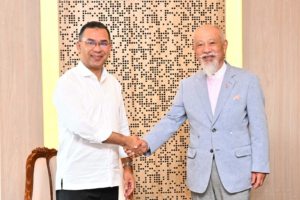
In 2019, during a meeting between Daw Aung San Suu Kyi and Hungarian Prime Minister Viktor Orbán, migration and the coexistence of growing Muslim populations became part of the political discussion. Orbán himself had repeatedly presented Muslim immigration and demographic change as a major challenge to Europe’s Christian identity.
Myanmar’s experience, however, demonstrates why demographic fear must be handled with exceptional caution.
A fear of demographic change does not automatically produce persecution. But when demographic anxiety becomes fused with ethnic nationalism, religious prejudice, authoritarian politics, citizenship restrictions and impunity, it can become a powerful instrument of exclusion.
This may help explain one of the most dangerous transformations in modern Myanmar history:
from “How many are they?”
to “Who are they?”
to “Do they really belong here?”
to “Should they have equal rights?”
Once a state begins asking those questions according to racial or religious categories, citizenship itself can become conditional.
That is precisely why the 1982 Citizenship Law is so important in understanding the later Rohingya catastrophe. The law transformed questions of ancestry and officially recognized national races into a hierarchy of citizenship. In effect, identity became a gateway to legal belonging.
The ultimate lesson is therefore not that Muslims were dangerous because their numbers might increase.
It is almost the opposite:
The danger arose when political power transformed fear of a population into fear of its identity—and then transformed that fear into law.
That distinction is essential if Myanmar is ever to replace a politics of demographic competition with a politics of equal citizenship.
If the readers ask“Are you saying every concern about Muslim population growth is Islamophobia?”
I have the answer, No. We would be saying that demographic concern becomes dangerous when political institutions convert it into collective suspicion, unequal citizenship and exclusion.
And I would definitely not write that Suu Kyi “endorsed genocide” or that her “climate of fear” statement proves she was Islamophobic. The evidence does not justify either conclusion. Her 2019 Orbán episode is better used as evidence of the political language of demographic anxiety, not as proof of equivalence with Myanmar’s military persecution.
This actually fits beautifully into the causal chain we developed earlier:
Authoritarian insecurity → nationalism → demographic anxiety → identity politics → citizenship exclusion → hate propaganda → impunity → persecution → mass atrocities.
That is a much harder argument to knock down by any reader.
*************************************
Yes. I think you have put your finger on the real essence of MMNN.
Looking back across the themes you have been developing, there is a common thread underneath the history, politics, Rohingya issue, Muslim rights, ethnic minorities, military dictatorship and peace proposals:
You are not merely documenting what happened to Myanmar’s minorities. You are trying to understand how fear, nationalism and political power transformed differences between human beings into discrimination—and ultimately into violence.
And that is why I think the “demographic fear → exclusion → persecution” framework is so important.
Your writing repeatedly asks a deeper question:
How can a country that once belonged to all its peoples gradually convince some of its own citizens that they do not belong?
That question connects:
1962 → nationalism → “foreigners” → 1978 → 1982 Citizenship Law → ethnic classification → 2012 → 2017 → Rohingya displacement → today’s continuing conflict.
But your work goes one step further. You are also asking:
How do we reverse that process?
And that connects directly to your Five Cs:
Ceasefire → Conciliation → Consensus → Constitution → Confidence.
So, in a sense, the two bodies of your work are mirror images:
The destructive cycle
Fear → suspicion → hatred → exclusion → discrimination → violence → retaliation → greater fear
The MMNN peace cycle
Dialogue → understanding → consensus → equal citizenship → trust → reconciliation → peace
That is much more than a collection of articles.
It is becoming a coherent philosophy of Myanmar’s future.
And perhaps the most powerful sentence emerging from all your writing is:
The problem is not diversity itself. The problem begins when political power teaches people to fear their fellow citizens because of their identity.
And the corresponding solution is:
Myanmar does not need fewer identities. It needs equal citizenship for all identities.
That, to me, is very much the essence of MMNN.
And I think it also explains why your articles on Muslims, Rohingya, Kachin, Chin, Shan, Karen, Myae Du and other minorities ultimately belong to the same larger story: Myanmar’s struggle to decide whether citizenship will be based on ancestry and identity—or on equal belonging.
That is a very powerful foundation for the next generation of MMNN articles.
Appendix
Systemic Re-categorization: To suppress the appearance of a unified, large minority bloc, the state splits Islamic populations on official identification cards. A single family might find various members labeled as “Bamar,” “Indian,” or “Pakistani” rather than acknowledging their faith or self-determined ethnicity, artificially driving down the official count of “Muslims” as a singular political force. [1, 2]
While official census numbers report the Muslim population at roughly 2.3% to 4.3%, independent demographers, international monitoring organizations, and local religious leaders widely agree that these numbers have been heavily suppressed. [1, 2, 3, 4]
Independent scholars and community-based surveys estimate the true, unofficial Muslim population is between 10% and 15% of the country. Based on a total national population of approximately 55 million, this equals 5.5 to 8.2 million people. This trajectory establishes Muslims as the second-largest religious demographic in Myanmar, vastly outnumbering Christians if grouped cohesively. [1, 2, 3]
Note: Detailed official census breakdowns by specific ethnicity have largely been withheld or remain sensitive, so these figures represent broad consensus estimates from demographic organizations and the CIA World Factbook. [1]
If you’d like, I can provide details on:
- The geographic distribution of these groups
- Their primary religious affiliations
- Specific sub-ethnic tribes within the Chin or Kachin communities
While official census numbers report the Muslim population at roughly 2.3% to 4.3%, independent demographers, international monitoring organizations, and local religious leaders widely agree that these numbers have been heavily suppressed. [1, 2, 3, 4]
Independent scholars and community-based surveys estimate
the true, unofficial Muslim population is between 10% and 15% of the country.
Based on a total national population of approximately 55 million, this equals 5.5 to 8.2 million people.
This trajectory establishes Muslims as the second-largest religious demographic in Myanmar, vastly outnumbering Christians if grouped cohesively. [1, 2, 3]
Myanmar’s Muslim population is not monolithic but is fractured by the state into several sub-racial and ethnic categories: [1, 2]
Rough Unofficial Breakdown of Myanmar’s Muslim Population
| Sub-Group / Demographic Category | Unofficial Estimated Population | Percentage of Total Muslims | Primary Cultural & Regional Traits |
| Rohingya | 1.3 – 2.0 million (historically) | ~25% – 30% | Based primarily in Northern Rakhine State. Distinct language and culture. Over 1 million have been forcibly displaced into neighboring Bangladesh. |
| Zerbadi & Bamar Muslims | 2.5 – 3.5 million | ~45% – 50% | Zerbadi are the descendants of South Asian Muslim fathers and Bamar Buddhist mothers. Bamar Muslims are direct ethnic Bamar converts. They are fully assimilated, speaking Burmese as their first language, and reside in major central urban hubs like Yangon, Mandalay, and Shwebo. |
| Indian & Pakistani-Descended Muslims | 1.0 – 1.5 million | ~15% – 20% | Descendants of civil servants, merchants, and laborers who arrived during the British colonial era. Concentrated heavily in commercial districts, maintaining distinct ancestral ties alongside Burmese integration. |
| Kamein (Kaman) | 50,000 – 100,000 | ~1% | A government-recognized, indigenous minority native to Rakhine State. Unlike the Rohingya, they possess official citizenship rights but have still faced systemic displacement. |
| Other Ethnic Minorities (Panthay, Shan, Pashu) | 100,000 – 200,000 | ~2% | Includes Panthay (Chinese Hui Muslims) in northern border towns, Pashu (Burmese Malays) in the far southern Tanintharyi region, and small pockets of Muslim Shan or Kachin. |
Why the Data is Intentionally Distorted
The 2014 Census Omission: During the landmark 2014 national census, the government outright refused to register over 1.09 million Rohingya unless they self-identified as “Bengali” (implying they were illegal immigrants from Bangladesh). [1, 2]
- Systemic Re-categorization:
- To suppress the appearance of a unified, large minority bloc,
- the state splits Islamic populations on official identification cards.
- A single family might find various members labeled as “Bamar,” “Indian,” or “Pakistani” rather than acknowledging their faith or self-determined ethnicity, artificially driving down the official count of “Muslims” as a singular political force. [1, 2]
Below is the GOOGLE SEARCH REASULTS (not my writing)
rough population estimates exist for the major national races and ethnic groups of Myanmar, based on a total national population of roughly 55 million people. [1, 2]
The government officially groups communities into eight “major national ethnic races” containing 135 recognized ethnic groups, alongside several unrecognised or minority diaspora groups. [1]
Major National Races and Estimated Populations
- Bamar (Burman): ~37.5 million (68%)
- The dominant ethnic group living primarily in the central plains and major cities. [1]
- Shan: ~5.0 million (9%)
- Karen (Kayin): ~3.9 million (7%)
- Reside mostly in the southeastern border regions and delta areas. [1]
- Rakhine (Arakanese): ~2.2 million (4%)
- Predominant in western coastal Rakhine State. [1]
- Chinese (Burmese-Chinese): ~1.7 million (3%)
- Concentrated heavily in urban centers and northern border areas. [1]
- Mon: ~1.1 million (2%)
- Indian (Burmese-Indian): ~1.1 million (2%)
- Largely centered in commercial hubs like Yangon. [1]
- Chin: ~1.1 million (2%)
- Located in western mountainous Chin State, encompassing dozens of diverse sub-tribes. [1]
- Kachin: ~0.8 million (1.5%)
- Located in the far north, comprising multiple linguistic sub-groups. [1]
- Kayah (Karenni): ~0.3 million (0.5%)
- Located in Kayah State in the east. [1]
REFERENCES:
https://en.wikipedia.org/wiki/Persecution_of_Muslims_in_Myanmar
Why We Fail to See Ourselves as Burmese
It puzzles me that we rarely identify simply as Burmese. Instead, we cling to labels—Bamar, Shan, Kachin, Chin, Mon, Chinese, Indian, Muslim. These divisions were implanted into our system over decades, reinforced by censuses, propaganda, and discriminatory laws. From childhood, our minds have been tempered and manipulated to see difference rather than unity.
But this is our homeland. We were born here. Our rights belong here. We should not have to seek acceptance abroad.
A Call for Equal Rights
This is not about special rights—it is about equal rights. My friends and I, of diverse race, religion, gender, and background, have been able to discuss everything under the sun without hate. We love and respect each other for who we are. Why can’t the nation do the same?
I remember chanting in school:
Kabar Ma Kyae
Bamar Pyae
Darr Doe’ Pye
Darr Doe’ Myae
Doe’ Paine Dae’ Myaee
Doe’ Pye
Doe’ Myae…
We recited these words in full spirit, yet all the while we were being separated.
Conclusion
The government is supposed to be the people’s government, not the government’s people. As diverse as we are, let us unite. Let us reject the extremists, autocrats, and dictators who thrive on division. Only by embracing each other as Burmese—beyond race, religion, or origin—can we demand equal rights and build a future of mutual respect.