Translated By Dr Ko Ko Gyi, the post of Kyaw Zeyar Win, with the help of Gemini AI
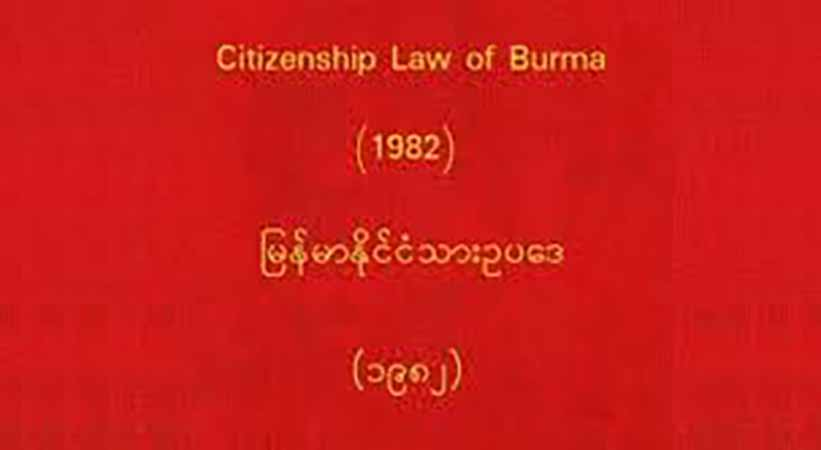
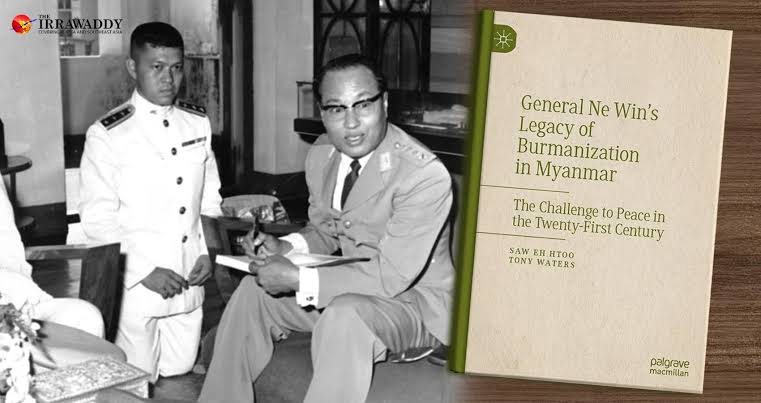
On October 8, 1982, during the 7th Central Committee Meeting of the Burma Socialist Programme Party (BSPP) held at the Presidential Palace in Ahlone Township, Chairman U Ne Win delivered a definitive speech regarding the newly drafted 1982 Citizenship Law. In his address, Ne Win explicitly declared that people of mixed heritage—specifically targeting those of Indian (“Kalar”) and Chinese lineage—could never be fully trusted. He argued that granting them equal citizenship rights posed a direct threat to “national security” and insisted they must be excluded from shaping the country’s destiny. However, acknowledging that Burma was their final resting place, he conceded that they should be granted a basic right to earn a lawful living out of mere leniency.
This speech marked a dark milestone in modern Burmese history. It was the first time a head of state and state-run media officially weaponized the term “Thway-hnaw” (mixed-blood) to institutionalize discrimination. This discourse laid the philosophical and structural foundation for the 1982 Citizenship Law, formalizing a state-sponsored policy of exclusion based on race and religion that remains deeply rooted in Myanmar’s society today.
The Colonial Pretext and Selective Assimilation
To justify downgrading people of Indian and Chinese descent to second-class citizens, U Ne Win utilized a historical narrative dating back 159 years to the beginning of British colonial rule. He claimed that these mixed-heritage populations were the descendants of opportunists who entered the country unchecked while Burma was under colonial subjugation. This historical framing continues to dictate state policy today; whenever current military and government officials interface with international diplomats, they echo Ne Win’s narrative, dismissing populations like the Rohingya as mere “irregular migrations” from the colonial era.
However, a critical look at Burma’s history reveals the hypocrisy of this rigid focus on “blood purity.” Ne Win himself was of Chinese descent, yet the public rarely questioned why the destiny of the nation was placed into the hands of a leader who did not meet his own standard of an indigenous “national race.”
Furthermore, while the state enacted a blanket policy of xenophobia against all mixed-heritage groups, the lived reality of discrimination diverged significantly along religious lines:
- Sino-Burmese and Hindu-Burmese Assimilation: Individuals of Chinese heritage were often able to bypass the harshest social exclusions. By adopting Burmese names, speaking the language fluently, practicing Buddhism, and intermarrying with the majority Bamar population, they successfully integrated. Similarly, many Hindu Indians assimilated into the cultural fabric by adopting Burmese social norms, as their religious traditions shared deep historical and cultural affinities with Burmese Buddhism.
- The Disproportionate Targeting of Muslims: Unlike their Chinese or Hindu counterparts, Burmese Muslims faced—and continue to face—the brunt of institutionalized and social xenophobia. Because Islam dictates distinct religious practices, dietary laws (Halal), and strict boundaries regarding intermarriage, Muslims could not easily “blend in” or pretend to assimilate without compromising their faith. Consequently, they became the ultimate target of Ne Win’s exclusionary philosophy, viewed as perpetually “un-assimilable” and fundamentally alien to the Burmese national identity.
Dismantling the Myth of Historical Continuity
Defenders of the 1982 Citizenship Law often rely on a false sense of historical continuity, romanticizing a “pure” Burmese state that supposedly existed uninterrupted for a thousand years since the Pagan Dynasty. Under this logic, critics argue that groups like the Rohingya or other Muslim minorities have no place in Myanmar because they were not present in the ancient past.
In reality, the modern state of Myanmar did not exist prior to January 4, 1948. Before British colonizers unified the territory into a single province under British India, the region consisted of fragmented feudal city-states and ethnic principalities defined by shifting allegiances, warfare, and heavy exploitation of the peasantry. The concepts of modern “statehood” and “citizenship” were entirely undefined. During the colonial era, traveling from Calcutta to Yangon was legally no different than traveling from Mawlamyine to Mandalay today—it was an internal journey within a single empire.
When independence was finally achieved, the newly formed state established the 1948 Union Citizenship Act and the 1951 Residents of Burma Registration Rules. If these minority groups were truly foreign intruders, they would have been issued Foreign Registration Certificates (FRC) from the outset. Instead, they held legal documentation recognizing their residence and belonging within the newly defined union.
An Unjust, Retrospective Law
From the perspective of legal philosophy, the 1982 Citizenship Law is fundamentally flawed. It acts as a retroactive piece of legislation, attempting to penalize and reclassify generations of people based on migration patterns that occurred over a century prior under a completely different political administration. Punishing modern citizens for historical colonial migrations is as legally absurd as the United States passing a law to strip white Americans of citizenship due to the historical trans-Atlantic slave trade.
While apologists claim the 1982 law was passed democratically by the parliament (Hluttaw) with the backing of the public, anyone who lived through the BSPP era knows that “public support” and “parliamentary consensus” under Ne Win’s military dictatorship were a complete farce. Rather than a fortress protecting national sovereignty, the 1982 Citizenship Law was an authoritarian weapon engineered to divide the population, institutionalize xenophobia, and construct a hierarchy of human rights that left religious minorities permanently vulnerable.