By Dr Ko Ko Gyi.
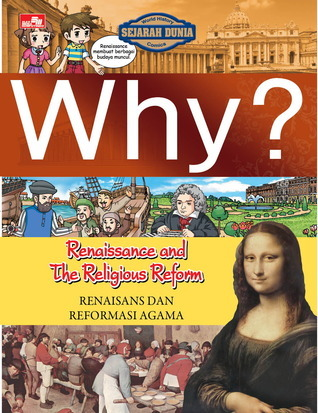
Just used the pic but I even never read that book.
Every society experiences moments when its people aspire to renewal. Throughout history, terms such as “Renaissance,” “Enlightenment,” and “Reformation” have come to symbolize periods of profound transformation. In contemporary Malaysia, the term “Reformasi” carries similar aspirations. Yet an important question remains: do movements that bear the language of reform necessarily produce the same outcomes?
The European Experience
The European Renaissance, beginning in the 14th century, marked a revival of learning, arts, science and human inquiry. It encouraged independent thinking and helped move Europe beyond many limitations of the medieval period.
The Reformation of the 16th century challenged established religious authority and encouraged greater accountability, literacy and public engagement with ideas. Although it led to conflicts and divisions, it also contributed to institutional evolution across Europe.
The Enlightenment of the 17th and 18th centuries further emphasized reason, scientific inquiry, individual rights and constitutional governance. The cumulative effect of these developments created foundations for modern democratic institutions, industrial advancement and economic growth.
These transformations did not occur overnight. They unfolded across centuries. However, what historians often observe is that the long-term trajectory was accompanied by visible progress in education, governance, scientific achievement and economic development.
Malaysia’s Reformasi: A Different Journey
Malaysia’s Reformasi movement emerged under very different circumstances. It was not born from debates over religion or philosophy, but largely from political events and demands for justice, accountability and good governance.
For many Malaysians, Reformasi represented hopes for cleaner institutions, a more inclusive national identity, stronger democratic practices and reduced corruption. It inspired a generation of activists, politicians and ordinary citizens who believed meaningful change was possible.
After decades of political struggle, the movement eventually achieved what many once thought impossible: the transfer of power from long-entrenched political structures and the emergence of leaders associated with Reformasi ideals.
Yet the transition from opposition movements to governing a nation is never straightforward. Governing requires balancing economic realities, ethnic sensitivities, religious concerns and coalition politics. Aspirations that appear clear during years of opposition often become far more complicated when translated into actual policy.
The Question Many Malaysians Ask
Among some segments of society, there is a perception that the original ideals of Reformasi have become less visible than they once were.
Some citizens had expected more dramatic institutional reforms. Others hoped for a stronger emphasis on meritocracy, national unity and economic competitiveness. Instead, many observe that political compromises have become an unavoidable feature of coalition governance.
There are also concerns expressed by some observers about increasing identity politics. Malaysia’s political landscape continues to be shaped by complex interactions between ethnic, religious and regional interests. The rise of Islamist political forces, concerns over communal polarization and debates about national identity remain significant factors in public discourse.
At the same time, supporters of the current government argue that moderation and stability are essential. They note that governing a diverse country requires careful consensus-building rather than rapid or disruptive transformation.
A Region Facing New Challenges
Since the political turbulence following the collapse of earlier administrations and the years surrounding the Covid-19 pandemic, Malaysia has experienced multiple changes in national leadership within a relatively short period.
This period highlighted both the resilience and fragility of Malaysian politics. Frequent changes in government created uncertainty while also demonstrating that democratic competition remains active.
Some commentators argue that public policy has increasingly reflected concerns about identity, demographics and social cohesion. Others view such developments as responses to genuine societal anxieties. Regardless of perspective, it is clear that these debates have become a defining feature of contemporary Malaysian politics.
Looking Ahead
Malaysia today faces a complex political environment. On one side are those who favour a more multicultural and reform-oriented vision. On the other are those who advocate stronger emphasis on Malay-Muslim political leadership and traditional social structures.
The future may also witness the emergence of a new generation of leaders. Technocratic administrators, state-level politicians and younger political figures are increasingly being discussed as possible contributors to the country’s next chapter. Whether such figures possess sufficient experience at the federal level remains a topic for debate, but their rise reflects the public’s desire for fresh ideas and renewed governance.
Conclusion
Europe’s Renaissance, Reformation and Enlightenment are remembered not merely because they promised change, but because many historians believe they produced long-term transformations that altered the trajectory of entire societies.
Malaysia’s Reformasi remains a work in progress. Its ultimate historical significance may not be determined by political slogans or electoral victories alone, but by whether future generations perceive a lasting improvement in governance, national unity, institutional integrity and social opportunity.
Perhaps the most realistic conclusion is that reform is not an event but a process. The aspirations that inspired Reformasi continue to exist within Malaysian society. The challenge is ensuring that those aspirations evolve from political rhetoric into enduring national achievements.
As history suggests, the success of any reform movement is measured not by how power is obtained, but by what is accomplished after power is attained.