Dr Ko Ko Gyi translated and commented the Myanmar Historic Archive‘s post.
“The Historic Day (1961) When Newspapers Reported Buddhism Being Declared as the State Religion”
In Myanmar’s history, one of the most significant events concerning the intersection of religion and politics was the official declaration of Buddhism as the state religion in 1961.
Following independence, the 1947 Constitution of the Union of Burma acknowledged that Buddhism held a special position because it was practiced by the majority of the union’s citizens; however, it was not yet officially designated as the state religion. At that time, Prime Minister U Nu wished to establish Buddhism as the state religion. During the 1960 general election, he promised that if his party won, he would legislate Buddhism as the state religion. After U Nu’s Union Party won the election, a commission was formed to study and implement this establishment.
However, this proposal faced objections from minority religious groups, including Christians and Muslims. Religious anxieties arose particularly in the Kachin and Chin regions.
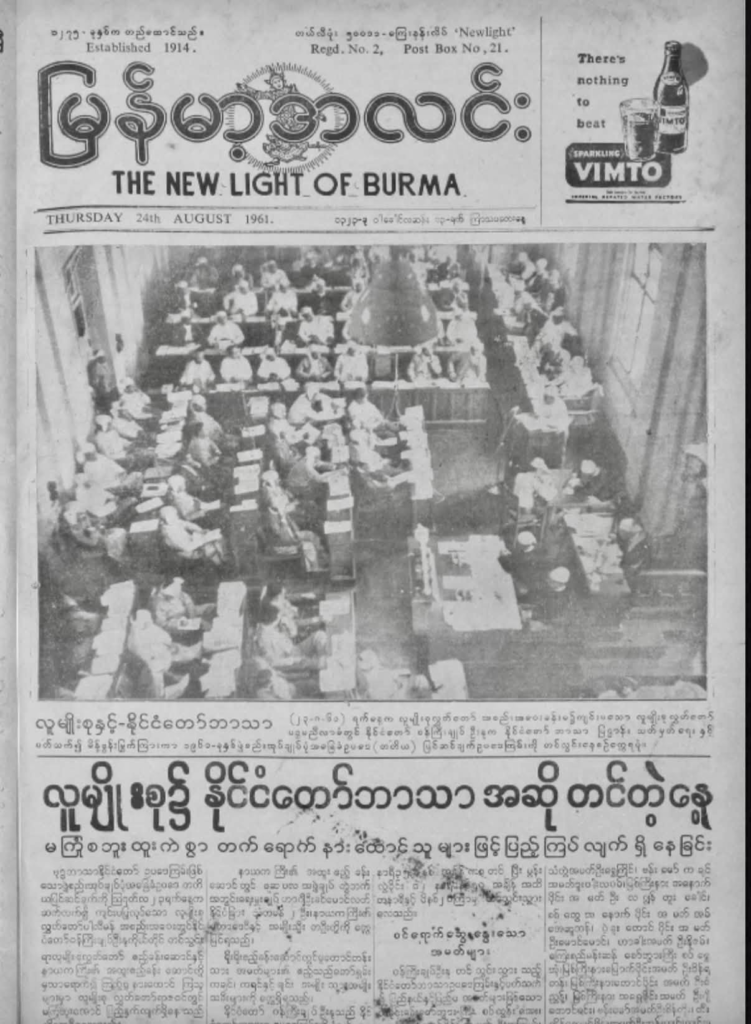
Ultimately, on August 26, 1961, during a parliamentary session, the third amendment to the Constitution was approved, officially declaring Buddhism as the state religion of Myanmar. Contemporary news records indicate that the vote passed with 324 votes in favor and 28 votes against. Subsequently, on September 28, 1961, a fourth constitutional amendment regarding the rights of religious minorities was also enacted.
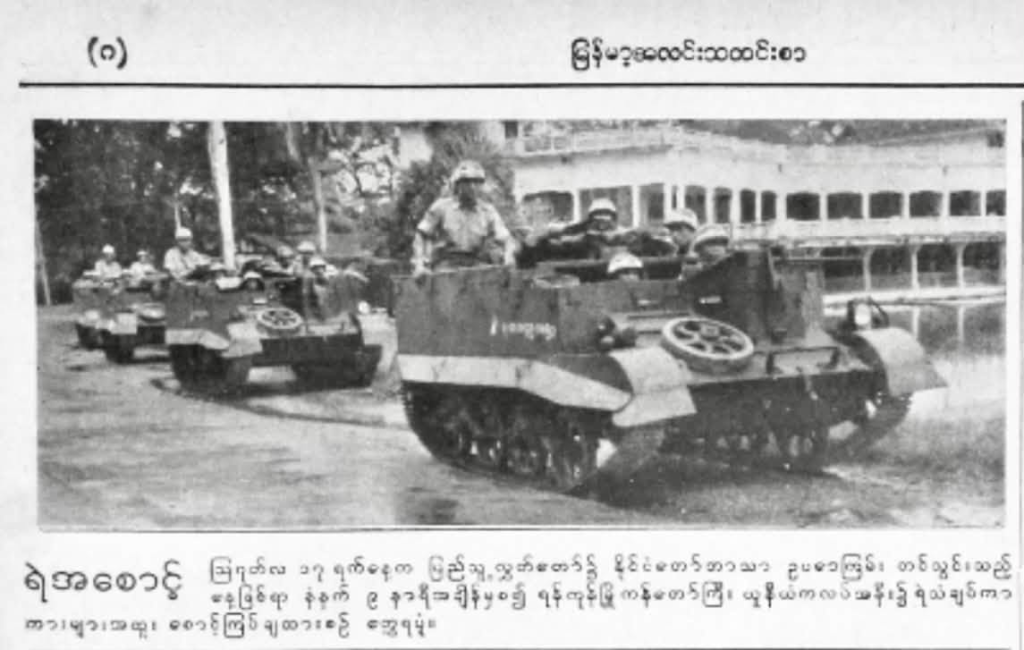
However, this state religion provision did not last long. On March 2, 1962, the military led by General Ne Win staged a coup and suspended the 1947 Constitution, rendering the provision declaring Buddhism as the state religion null and void. Therefore, Buddhism was constitutionally recognized as the state religion of Myanmar for only a brief period from 1961 to 1962.
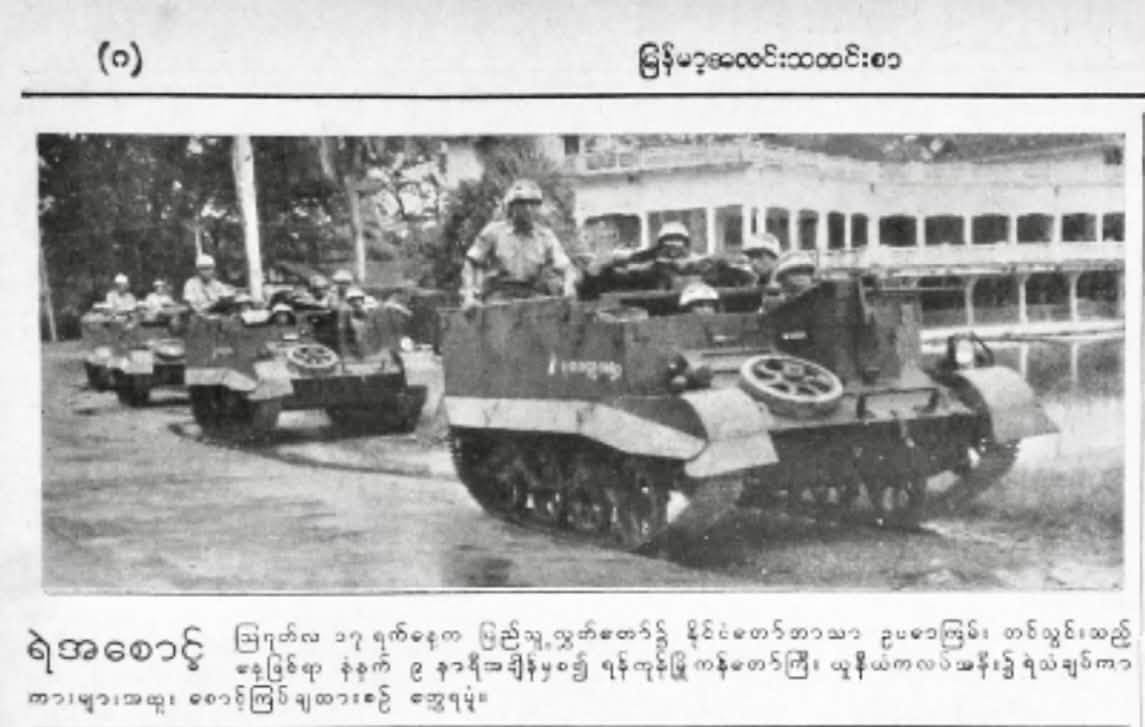
This newspaper clipping stands as a historical record of 1961 when Myanmar’s religious, political, and constitutional histories converged.
The Political Promise: Prime Minister U Nu did indeed make the designation of Buddhism as the state religion a central platform of his Clean AFPFL (Union Party) campaign in 1960, largely to secure support from traditional Buddhist clergy (Sangha) and the rural majority.
- The Vote (August 26, 1961): The third constitutional amendment passed overwhelmingly in the Chamber of Deputies, with 324 votes for and 28 against, as noted in historical records.
- The Minority Protections: To mitigate pushback from non-Buddhist ethnic minorities (such as the predominantly Christian Chin and Kachin populations), the Union Parliament also passed the State Religion Promotion Act and subsequent amendments to protect minority faiths, though deep political unease remained.
- The 1962 Coup: General Ne Win’s military takeover on March 2, 1962, completely dissolved the parliament, overthrew U Nu’s civilian government, and swept away the 1947 Constitution—effectively ending the state-religion status after less than a year.
Consequences of This Action
- Heightened Ethnic and Religious Tensions: The declaration alarmed non-Buddhist ethnic minority groups, particularly in the frontier areas (like Kachin and Chin states), who feared state-sanctioned religious marginalization. This exacerbated existing insurgencies and fed into separatist grievances.
- Political Instability: The intense debate and polarization surrounding the state religion bill weakened the democratic fabric of the civilian government and caused fractures within the ruling party itself.
- Justification for the Military Coup: General Ne Win and the military cited national disintegration, disunity among ethnic groups, and political instability—intensified heavily by the religious polarization of the era—as key justifications for overthrowing the democratic government in March 1962.
- Secular Reset: When the military took power, they immediately discarded the state religion policy, steering the country back toward a strictly secular (and later socialist) constitutional framework in subsequent decades.
Myanmar Historic Archive
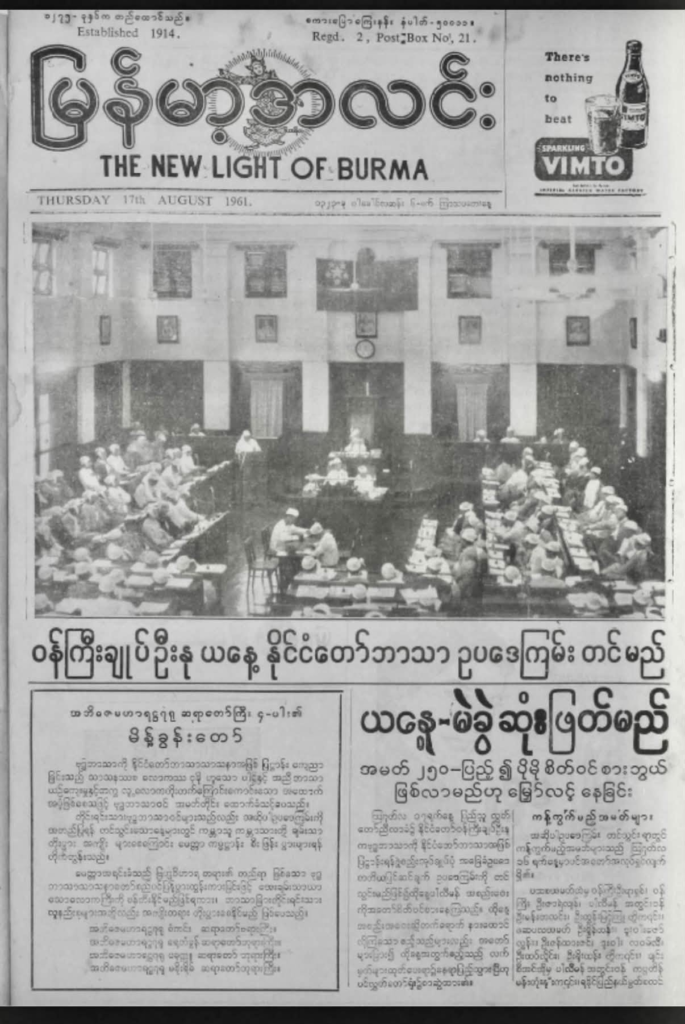
သတင်းစာများကဖော်ပြခဲ့သော ဗုဒ္ဓဘာသာကို နိုင်ငံတော်ဘာသာအဖြစ် ပြဋ္ဌာန်းခဲ့သည့် သမိုင်းဝင်နေ့ (၁၉၆၁)
မြန်မာနိုင်ငံ၏ သမိုင်းတွင် ဘာသာရေးနှင့် နိုင်ငံရေးဆက်နွှယ်မှုအရ အရေးပါသော ဖြစ်ရပ်တစ်ခုမှာ ၁၉၆၁ ခုနှစ်တွင် ဗုဒ္ဓဘာသာကို နိုင်ငံတော်ဘာသာအဖြစ် တရားဝင်ပြဋ္ဌာန်းခဲ့ခြင်းပင် ဖြစ်သည်။
လွတ်လပ်ရေးရပြီးနောက် မြန်မာနိုင်ငံ၏ ၁၉၄၇ ဖွဲ့စည်းပုံအခြေခံဥပဒေတွင် ဗုဒ္ဓဘာသာသည် ပြည်ထောင်စုနိုင်ငံသားအများစု ကိုးကွယ်သည့်ဘာသာဖြစ်သောကြောင့် အထူးအနေအထားရှိကြောင်း အသိအမှတ်ပြုထားခဲ့သော်လည်း နိုင်ငံတော်ဘာသာအဖြစ် တရားဝင်သတ်မှတ်ထားခြင်း မရှိသေးပေ။
ထိုအချိန်တွင် ဝန်ကြီးချုပ်အဖြစ် တာဝန်ယူနေသော ဦးနုသည် ဗုဒ္ဓဘာသာကို နိုင်ငံတော်ဘာသာအဖြစ် သတ်မှတ်ရန် ဆန္ဒရှိခဲ့သူဖြစ်သည်။ ၁၉၆၀ ခုနှစ် ရွေးကောက်ပွဲကာလတွင်လည်း ရွေးကောက်ပွဲအနိုင်ရပါက ဗုဒ္ဓဘာသာကို နိုင်ငံတော်ဘာသာအဖြစ် ပြဋ္ဌာန်းပေးမည်ဟု ကတိပြုခဲ့သည်။
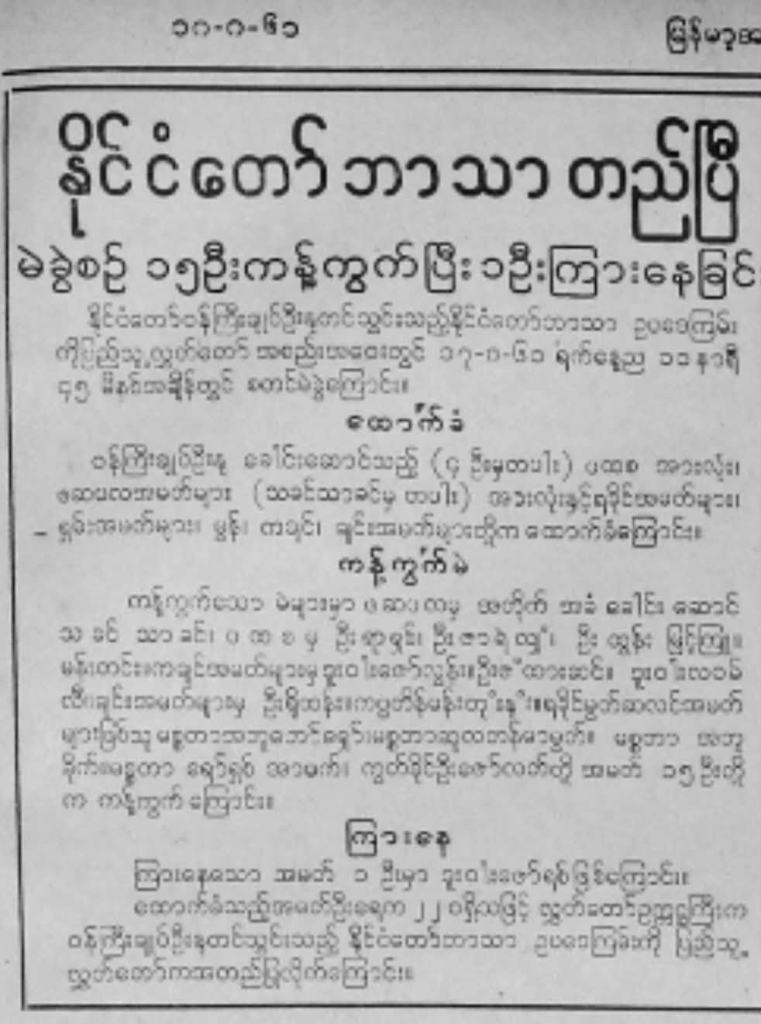
ရွေးကောက်ပွဲတွင် ဦးနု၏ ပြည်ထောင်စုပါတီ အနိုင်ရရှိခဲ့ပြီးနောက် နိုင်ငံတော်ဘာသာအဖြစ် သတ်မှတ်ရေးဆိုင်ရာ ကော်မရှင်ကို ဖွဲ့စည်းကာ လေ့လာဆောင်ရွက်ခဲ့သည်။
သို့သော် ဤအဆိုပြုချက်အပေါ် ခရစ်ယာန်၊ အစ္စလာမ်နှင့် အခြားဘာသာဝင် လူနည်းစုအဖွဲ့အစည်းများက ကန့်ကွက်မှုများ ရှိခဲ့သည်။ အထူးသဖြင့် ကချင်နှင့် ချင်းဒေသများတွင် ဘာသာရေးဆိုင်ရာ စိုးရိမ်ပူပန်မှုများ ပေါ်ပေါက်လာခဲ့သည်။
နောက်ဆုံးတွင် ၁၉၆၁ ခုနှစ် ဩဂုတ်လ ၂၆ ရက်နေ့၌ ပါလီမန်အစည်းအဝေးတွင် ဖွဲ့စည်းပုံအခြေခံဥပဒေ တတိယအကြိမ်ပြင်ဆင်ချက်ကို အတည်ပြုခဲ့ပြီး ဗုဒ္ဓဘာသာကို မြန်မာနိုင်ငံ၏ နိုင်ငံတော်ဘာသာအဖြစ် တရားဝင်ပြဋ္ဌာန်းနိုင်ခဲ့သည်။
ထိုမဲခွဲဆုံးဖြတ်မှုတွင် ထောက်ခံမဲ ၃၂၄ မဲ၊ ကန့်ကွက်မဲ ၂၈ မဲဖြင့် အတည်ပြုခဲ့ကြောင်း ခေတ်ပြိုင်သတင်းမှတ်တမ်းများတွင် ဖော်ပြထားသည်။
ထို့နောက် ၁၉၆၁ ခုနှစ် စက်တင်ဘာလ ၂၈ ရက်နေ့တွင် ဘာသာရေးလူနည်းစုများ၏ အခွင့်အရေးနှင့်ပတ်သက်သော စတုတ္ထအကြိမ် ဖွဲ့စည်းပုံပြင်ဆင်ချက်ကိုလည်း ထပ်မံပြုလုပ်ခဲ့သည်။
သို့သော် ဤနိုင်ငံတော်ဘာသာဆိုင်ရာ ပြဋ္ဌာန်းချက်သည် ကြာရှည်မခံခဲ့ပေ။
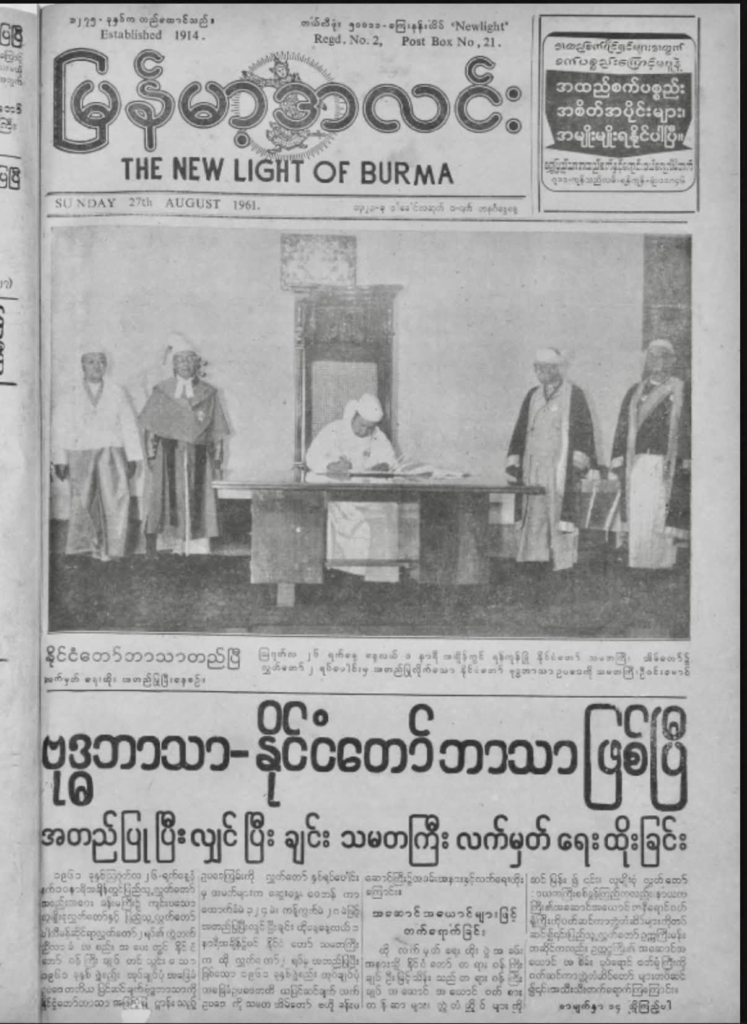
၁၉၆၂ ခုနှစ် မတ်လ ၂ ရက်နေ့တွင် ဗိုလ်ချုပ်နေဝင်း ဦးဆောင်သော စစ်တပ်က အာဏာသိမ်းယူခဲ့ပြီး ၁၉၄၇ ဖွဲ့စည်းပုံအခြေခံဥပဒေကို ရပ်ဆိုင်းလိုက်သည့်နောက် ဗုဒ္ဓဘာသာကို နိုင်ငံတော်ဘာသာအဖြစ် သတ်မှတ်ထားသည့် ပြဋ္ဌာန်းချက်လည်း ပျက်ပြယ်သွားခဲ့သည်။
ထို့ကြောင့် ၁၉၆၁ ခုနှစ်မှ ၁၉၆၂ ခုနှစ်အထိသာ ဗုဒ္ဓဘာသာသည် မြန်မာနိုင်ငံ၏ နိုင်ငံတော်ဘာသာအဖြစ် ဖွဲ့စည်းပုံအခြေခံဥပဒေအရ တရားဝင်သတ်မှတ်ခံခဲ့ရခြင်း ဖြစ်သည်။
သတင်းစာဖြတ်ပိုင်းသည် မြန်မာနိုင်ငံ၏ ဘာသာရေး၊ နိုင်ငံရေးနှင့် ဖွဲ့စည်းပုံအခြေခံဥပဒေသမိုင်းတို့ ဆုံစည်းခဲ့သည့် ၁၉၆၁ ခုနှစ်၏ သမိုင်းဝင်မှတ်တမ်းတစ်ခုလည်း ဖြစ်ပါသည်။