History is rarely the story of one race, one religion, or one people. It is the story of many human beings who met, traded, argued, married, learned from one another, and together built a civilisation.
Editorial Note: In this series, the name “Burma” is used when referring to the country in its historical context, reflecting the terminology used in the majority of English-language historical sources cited. “Myanmar” is used when referring to the present-day nation.
Using the historical names helps transport the reader into the period being discussed.
For example:
- Ancient Burma
- British Burma
- The Burma Research Society
- History of Burma
- The Muslims of Burma
These are all authentic titles of books, journals, or historical contexts.
Many historians do something similar.
For example:
- They write Constantinople when discussing the Byzantine period, even though today it is Istanbul.
- They write Ceylon when discussing colonial history, but Sri Lanka when discussing the modern republic.
- They write Persia in certain historical contexts and Iran in modern ones.
- They write Siam for historical Thailand.
Readers understand that the choice reflects historical context, not necessarily a political statement.
The Making of Early Burma
Pyu, Mon and Rakhine: Civilisations Before Bagan
“No civilisation appears overnight. Every nation stands upon foundations laid by earlier generations.”
By Dr. Ko Ko Gyi Abdul Rahman Zafrudin
When most people think about the history of Burma, the magnificent temples of Bagan immediately come to mind. King Anawrahta is rightly celebrated for unifying much of the country and establishing Theravāda Buddhism as the dominant faith.
Yet Bagan did not emerge from an empty land.
Long before Anawrahta was born, flourishing civilisations had already appeared across the plains of Upper Burma, the coastal regions of Lower Burma, and the ancient kingdom of Arakan. These societies developed agriculture, trade, writing, religion, law and urban life. They also became important meeting places where ideas from India blended with indigenous traditions.
To understand Burma, we must first understand the peoples who came before Bagan.
The Pyu: Builders of Burma’s First Cities
Among the earliest known urban civilisations of Myanmar were the Pyu.
Archaeological discoveries at Hanlin, Beikthano and Sri Ksetra reveal sophisticated cities surrounded by walls, moats and carefully planned streets. These cities flourished many centuries before Bagan became the political centre of Burma.
Chinese envoys who visited the Pyu kingdoms described an organised and peaceful society with impressive cities, monasteries and Buddhist traditions. Their records remain one of our most valuable historical sources.
Professor Than Tun also regarded the Pyu as one of the principal ancestors of later Burma civilisation. According to his writings, the Pyu population developed through interactions among indigenous communities, migrants from the Indian subcontinent, and Tibeto-Burman peoples moving southward over many centuries.
History rarely follows a simple, single line.
Civilisations are usually born where different peoples meet.
Stones That Still Speak
The Pyu left more than ruined cities.
They left inscriptions.
Many were written in the Pyu language using scripts derived from the Gupta script of India. This does not mean that the Pyu were Indians. Rather, it demonstrates how one civilisation borrowed a writing system from another—just as many nations later adopted the Roman alphabet while remaining culturally distinct.
The inscriptions also preserve royal names ending in Vishnu and Varman, titles familiar in ancient India and found elsewhere across Southeast Asia.
Such evidence reminds us that ideas travelled more easily than armies.
Merchants, monks and scholars often changed history more profoundly than conquerors.
The Mon: Guardians of Learning
While the Pyu flourished in Upper Burma, the Mon peoples established prosperous kingdoms in Lower Burma.
Ports such as Thaton and later Bago became centres of maritime commerce linking the Bay of Bengal with the Gulf of Thailand.
Through these trade routes came Buddhist scriptures, Sanskrit and Pali learning, artistic traditions and new ideas of kingship.
Many historians believe that the Mon played a vital role in preserving and transmitting Theravāda Buddhist learning in mainland Southeast Asia.
When King Anawrahta conquered Thaton in the eleventh century, tradition records that he brought back monks, craftsmen, manuscripts and scholars to Bagan.
Whether every detail of this tradition is historically exact remains debated, but there is broad agreement that Mon culture made a profound contribution to the flowering of Pagan civilisation.
Arakan: The Western Gateway
Across the Arakan Yoma lay another remarkable civilisation.
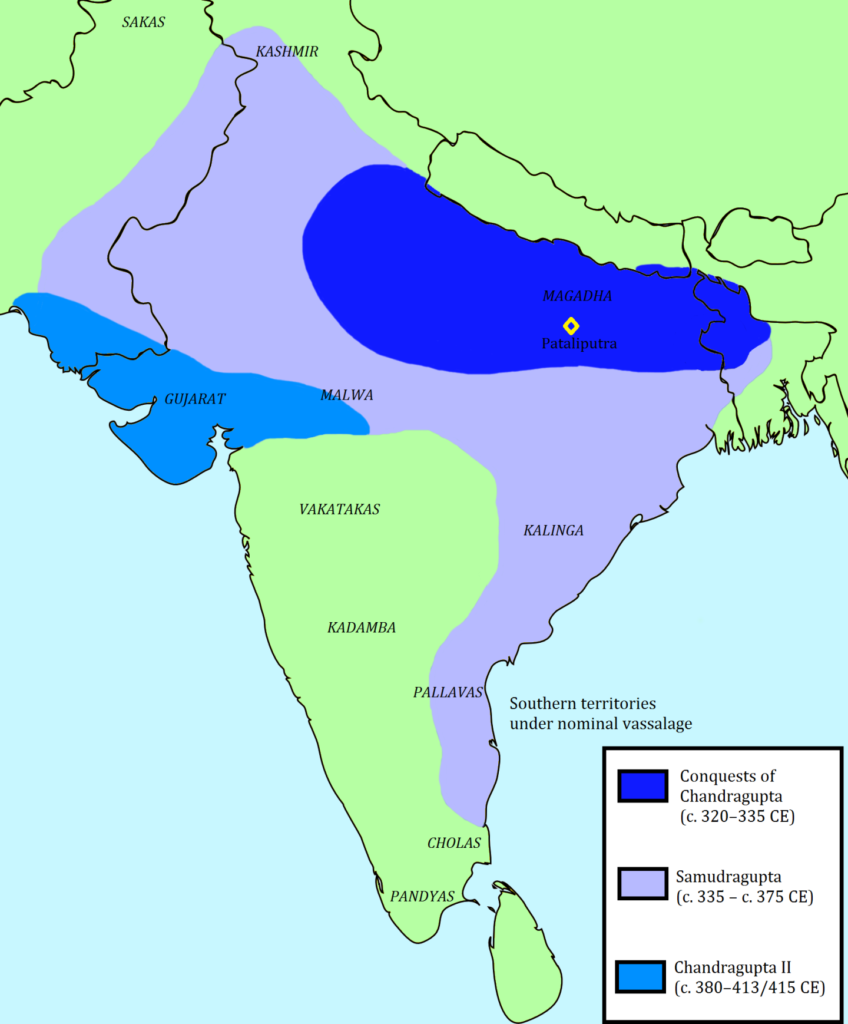
Because Arakan faced the Bay of Bengal rather than the Irrawaddy valley, its contacts with eastern India were especially strong.
The ancient city of Vaisali (Wesali) preserves archaeological evidence of Hindu and Buddhist influences existing side by side.
Maurice Collis observed that the Chandra rulers maintained close cultural and commercial relations with Bengal, while D. G. E. Hall likewise noted that early Arakan’s dynasties bore unmistakable Indian characteristics before later Burmese settlement became prominent.
Yet Arakan was never merely an extension of Bengal.
Like the Pyu and Mon, its rulers adopted foreign ideas while creating a distinctive civilisation of their own.
Its history reminds us that cultural influence is not the same as political domination.
The Language of Kings
One fascinating feature shared by many early Southeast Asian kingdoms was their adoption of Sanskrit royal titles.
Words such as Maharaja, Varman and Sri appear not only in India but also in Cambodia, Thailand, Java, Champa and parts of early Myanmar.
This shared vocabulary reflected prestige rather than ethnicity.
Just as modern governments around the world use words derived from Latin without becoming Roman, ancient Southeast Asian rulers adopted Sanskrit political language while remaining fully rooted in their own societies.
Ideas travel.
Identity remains.
Law, Religion and Civilisation
Indian influence reached far beyond language.
Concepts of kingship, law and religious scholarship also crossed the Bay of Bengal.
Later, under King Wareru, these traditions contributed to the compilation of the famous Wareru Dhammathat, one of the earliest surviving Burmese law codes.
Although inspired by Indian Dharmaśāstra traditions, it evolved within Theravāda Buddhist society and became uniquely Burma in character.
This is perhaps the best example of how Burmese civilisation grew—not by copying others, but by transforming borrowed ideas into something entirely its own.
The Lesson of Archaeology
The ruined cities of Hanlin, Beikthano, Sri Ksetra, Thaton and Vaisali tell a consistent story.
Long before modern concepts of nationality existed, peoples around the Bay of Bengal exchanged goods, beliefs, technologies and knowledge.
Those exchanges enriched everyone.
The greatness of early Burma lay not in isolation but in openness.
Its people learned from neighbours while preserving their own traditions.
That is how enduring civilisations are built.
To Be Continued…
In Part Three, we shall follow these historical connections into the age of Bagan, the compilation of the Dhammathats, the maritime influence of the Chola Empire, Burma’s administration under British India, and the contributions made by generations of Indian migrants to the building of modern Myanmar.
Selected References
- Than Tun. The Story of Myanmar Told in Pictures.
- Than Tun. Bagan Culture.
- D. G. E. Hall. Burma.
- D. G. E. Hall. A History of South-East Asia.
- George Coedès. The Indianized States of Southeast Asia.
- Maurice Collis. Arakan’s Place in the Civilization of the Bay.
- Moshe Yegar. The Muslims of Burma.
- Chinese dynastic chronicles concerning the Pyu kingdoms.