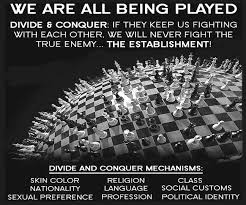
We are familiar with the term divide and conquer, a tactic perfected by both the Roman Empire and the British Empire. To maintain power and control, rulers turned communities against one another, exploiting differences in religion, language, or caste. They understood that a united people could resist oppression; division was their most effective weapon.
This strategy, though subtle, is devastating. It creeps into society so quietly that we often fail to recognize it until it has already taken root. The mechanics are predictable:
- Creating divisions among subjects to prevent alliances.
- Promoting collaborators willing to serve the sovereign.
- Fostering distrust between local rulers.
- Encouraging wasteful expenditures to weaken political and military strength.
Colonial Examples
- In Sri Lanka, the British required race to be indicated on official documents, institutionalizing identity politics. Favoring Tamils in education and administration sowed resentment among Sinhalese, laying the groundwork for later ethnic conflict.
- In India, the British introduced separate electorates in 1909, embedding religion into politics. The partition of Bengal (1905) and later the partition of India (1947) were direct consequences of divide-and-rule policies.
- In Myanmar, the British censuses documented languages, not races. The 1911 census listed 65 languages, and the 1931 census listed 135 languages. These linguistic surveys were later distorted into “ethnic lists” by military regimes.
Post-Colonial Manipulation in Myanmar
After independence, successive governments manipulated identity for political ends:
- 1972 – 144 Ethnic Groups: The Ministry of Home and Religious Affairs issued a list that included Muslim groups such as Pathi, Rohingya, Myedu, Pashu (Malay), and Panthay (Chinese Muslims).
- 1983 Martial Law: Ne Win’s regime removed many Muslim groups from recognition.
- 1989 – 135 Ethnic Groups: Vice-Senior General Saw Maung announced the infamous “135 races” list. This was not based on anthropology but numerology (1+3+5=9, a number favored by military astrologers).
- Later “101 Ethnic Groups”: Officials like U Khin Yi and U Tin Aye cited “101” without explanation, further erasing communities.
New Divisions Since Ne Win
The manipulation did not stop at numbers. Under Ne Win and later regimes, citizens were categorized into degrading labels:
- Host citizens – recognized “national races.”
- Visitor citizens – migrants tolerated but not fully accepted.
- Mixed blooded – those of intermarriage, often stigmatized.
- Kalars – a derogatory term for Muslims and South Asians.
- Kalar Dains – mixed Muslim descendants.
- Bin Gali – a term popularized by President Thein Sein to refer to Rohingyas, echoing colonial “Bengali” labeling.
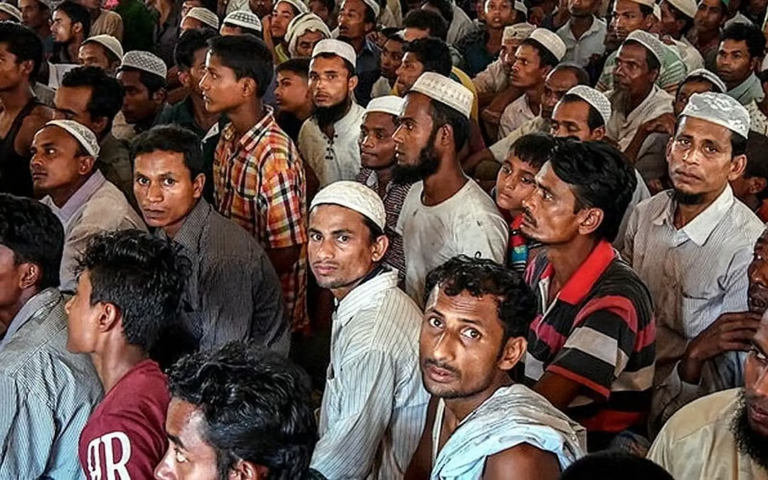
Muslims were forced to register in national IDs as Indian, Bangladeshi, Pakistani, etc., denying them recognition as Burmese. This is a continuation of divide-and-rule logic: stripping identity to weaken unity.
Why We Fail to See Ourselves as Burmese
It puzzles me that we rarely identify simply as Burmese. Instead, we cling to labels—Bamar, Shan, Kachin, Chin, Mon, Chinese, Indian, Muslim. These divisions were implanted into our system over decades, reinforced by censuses, propaganda, and discriminatory laws. From childhood, our minds have been tempered and manipulated to see difference rather than unity.
But this is our homeland. We were born here. Our rights belong here. We should not have to seek acceptance abroad.
A Call for Equal Rights
This is not about special rights—it is about equal rights. My friends and I, of diverse race, religion, gender, and background, have been able to discuss everything under the sun without hate. We love and respect each other for who we are. Why can’t the nation do the same?
I remember chanting in school:
Kabar Ma Kyae
Bamar Pyae
Darr Doe’ Pye
Darr Doe’ Myae
Doe’ Paine Dae’ Myaee
Doe’ Pye
Doe’ Myae…
We recited these words in full spirit, yet all the while we were being separated.
Conclusion
The government is supposed to be the people’s government, not the government’s people. As diverse as we are, let us unite. Let us reject the extremists, autocrats, and dictators who thrive on division. Only by embracing each other as Burmese—beyond race, religion, or origin—can we demand equal rights and build a future of mutual respect.