Halin – The Ancient City That Awakened from the Earth
“Long before Bagan’s pagodas reached toward the sky, another city quietly slept beneath the earth for more than a thousand years.”
For centuries, farmers in the plains of Upper Myanmar cultivated their fields without realizing that an ancient city lay beneath their feet.
The bricks scattered across the fields were often regarded as nothing more than remnants of old ruins. Earthen mounds blended naturally into the landscape. Time had hidden the city’s true story.
Only in the twentieth century did archaeologists begin to reveal that this forgotten place was Halin, one of the earliest and most remarkable cities of the Pyu civilization.
Like a carefully folded manuscript waiting to be opened, Halin gradually revealed its secrets.
A City Planned with Purpose
Unlike villages that grow gradually over generations, Halin appears to have been carefully planned.
Its walls enclosed a large urban area.
Moats surrounded sections of the city, providing both protection and water management.
Roads connected different quarters.
Outside the walls lay fertile farmland that supplied food for its inhabitants.
The city demonstrates that the Pyu were not simply farmers who happened to build walls. They understood urban planning, engineering, and administration.
Halin was a functioning city—one of the earliest known in mainland Southeast Asia.
Water: The Source of Life
Every great civilization depended upon water.
Egypt had the Nile.
Mesopotamia had the Tigris and Euphrates.
China had the Yellow River.
The Pyu developed their civilization along the Ayeyarwady basin and its tributaries.
At Halin, archaeologists discovered evidence of wells, reservoirs, canals, and sophisticated water-management systems.
Water was not merely for drinking.
It sustained agriculture.
It supported daily life.
It helped protect the city.
It made urban civilization possible.
The people who designed these systems understood something timeless:
A civilization flourishes only when it learns to live in harmony with its environment.
What the Earth Revealed
Archaeological excavations uncovered far more than ancient bricks.
Researchers found:
- city walls and gateways;
- residential areas;
- pottery and ceramics;
- iron tools and ornaments;
- beads made from semi-precious stones;
- burial sites;
- inscriptions written in the Pyu script.
Each discovery added another page to a history that had long been forgotten.
These objects tell us that Halin was connected to regional trade networks and possessed skilled craftsmen who produced goods both for local use and for exchange.
Voices Without Sound
Unlike modern cities filled with traffic and conversation, Halin is silent.
Yet archaeology allows the city to speak.
Every brick tells us that someone shaped it by hand.
Every bead reminds us of an artisan’s patience.
Every inscription preserves the thoughts of people who lived more than a thousand years ago.
History is not only written in books.
Sometimes it is written in clay, stone, and earth.
A World Heritage Treasure
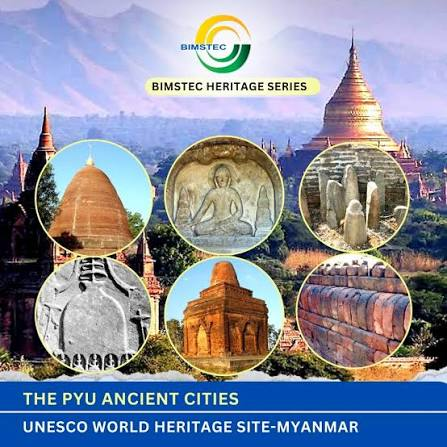
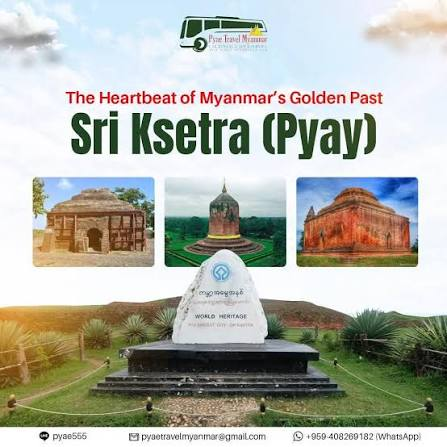
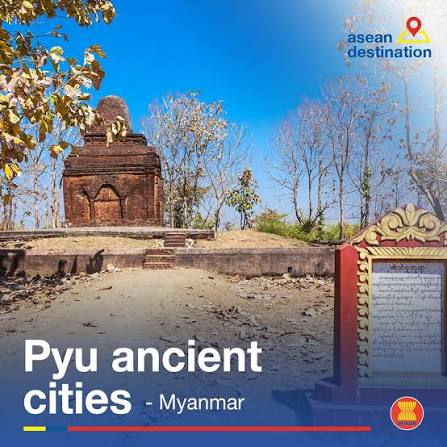
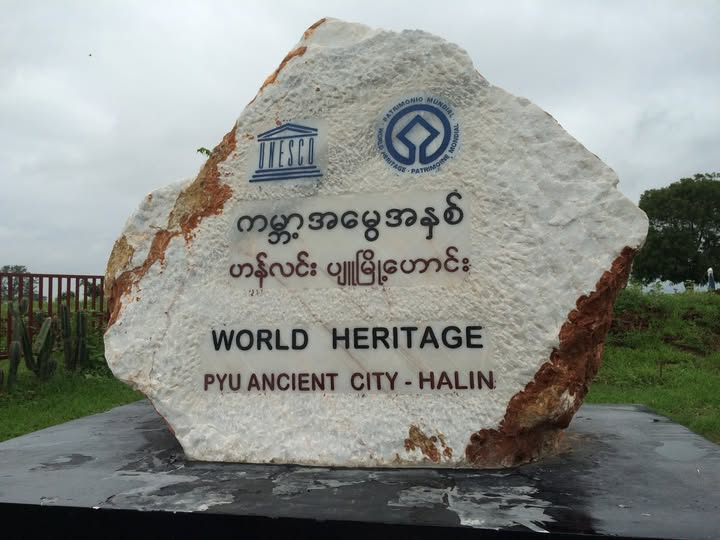
Today, Halin, together with Beikthano and Sri Ksetra, forms the group of Pyu Ancient Cities recognised by UNESCO as a World Heritage Site.
This recognition is not merely an honour for Myanmar.
It is recognition that the Pyu civilization forms part of the shared heritage of humanity.
Their achievements belong not only to one people or one nation, but to the story of human civilization itself.
Why Halin Still Matters
The ruins of Halin remind us that civilizations are not measured only by military victories or powerful kings.
They are measured by the cities they build.
The knowledge they preserve.
The communities they create.
The values they pass to future generations.
Empires may disappear.
Walls may crumble.
But human curiosity continues to uncover the past, allowing forgotten civilizations to speak once more.
And so, after sleeping beneath the earth for over a millennium, Halin has awakened—not as a living city, but as a teacher of history.
Coming in Part 4
The Pyu and the Silk Roads of Asia
Were the Pyu isolated?
Or were they active participants in the great exchange of goods, religions, ideas, music, and technology that linked India, China, and Southeast Asia?
The answer reveals that ancient Myanmar stood at one of Asia’s most important crossroads.