The First Cities Along the Great River
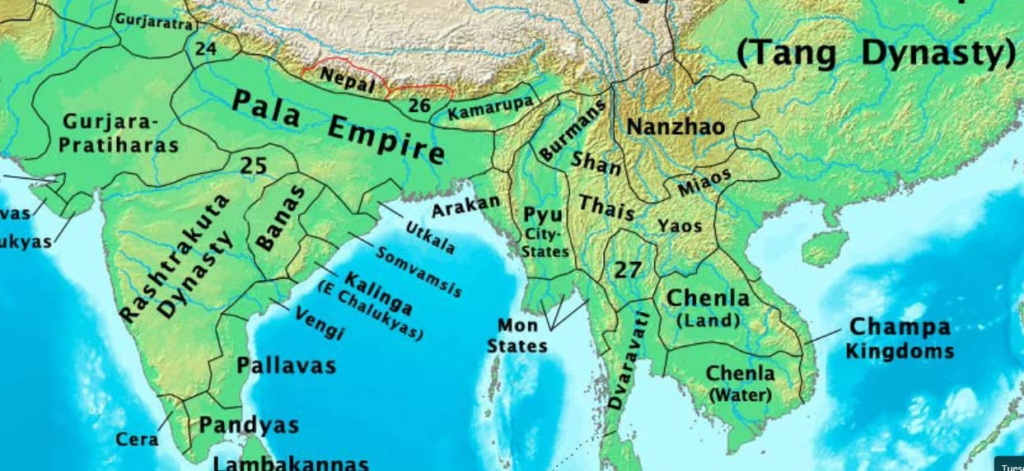
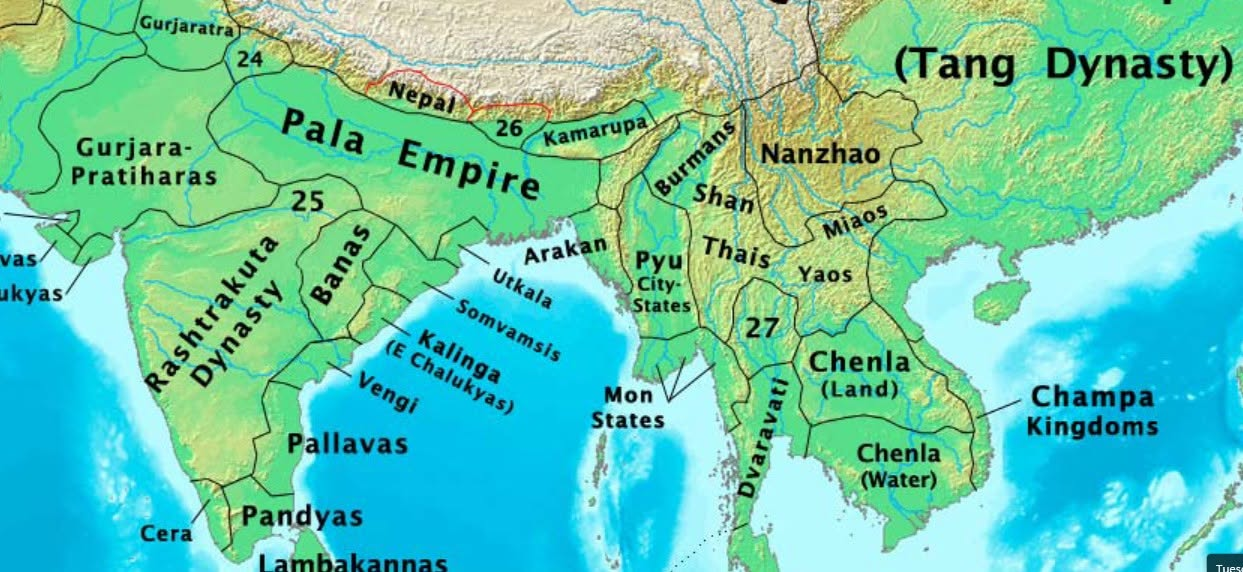
Credit: Wikipedia:https://upload.wikimedia.org/wikipedia/commons/0/0c/East-Hem_800ad.jpg?utm_source=en.wikipedia.org&utm_campaign=imageinfo&utm_content=original
The Pyu City-States did not exist in isolation. They flourished as part of a vibrant network of Asian civilizations during the first millennium CE, connected by trade, diplomacy, religion, and cultural exchange. (Map adapted from Wikipedia.)
This map also supports one of the main themes I hope runs throughout our series:
Civilizations grow through connections.
Not through isolation.
The Pyu exchanged goods with India.
They communicated with China.
They influenced neighbouring peoples.
They received ideas from abroad.
Yet they remained distinctly Pyu.
That is one reason historians find them so fascinating.
I think our Pyu series is gradually becoming more than a history of one ancient people.
It is becoming a story of Myanmar’s place in the wider civilization of Asia.
That perspective is much richer than treating ancient Myanmar as an isolated land.
I believe readers—especially younger members of the Myanmar diaspora who may know little about this period—will appreciate seeing their country’s earliest urban civilization placed within the broader tapestry of Asian history.
“Long before the temples of Bagan…”
When people think of Myanmar’s ancient past, the magnificent temples of Bagan usually come first to mind. Their golden spires still rise proudly above the plains, attracting visitors from around the world.
But the story of Myanmar began much earlier.
Long before King Anawrahta united Upper Myanmar…
Long before the Bagan Kingdom flourished…
Long before Mandalay, Ava, or even Pagan existed…
another civilization had already transformed the fertile valleys of the Ayeyarwady into centres of learning, trade, and urban life.
That civilization was the Pyu.
A River That Gave Birth to Cities
The Ayeyarwady River has always been Myanmar’s lifeline.
Flowing from the northern mountains to the Andaman Sea, it carried water, fertile soil, travellers, merchants, monks, and ideas.
Along its banks, the Pyu people established some of Southeast Asia’s earliest urban settlements.
These were not isolated villages.
They were carefully planned cities protected by walls and moats.
The best known among them were:
- Halin, in the north;
- Beikthano, in the central dry zone;
- Sri Ksetra, farther south near present-day Pyay.
Each occupied a strategic position along the great river corridor, connected by trade and communication.
Together they formed a remarkable network of cities that prospered for many centuries.
Why Here?
The Pyu did not choose these places by accident.
The river supplied fresh water.
Annual floods enriched the surrounding fields.
Farmers could produce rice and other crops in abundance.
Surplus food supported craftsmen, merchants, monks, and administrators.
Where food was plentiful, towns grew.
Where towns grew, ideas flourished.
This pattern can be seen in many of the world’s great civilizations, from the Nile in Egypt to the Tigris and Euphrates in Mesopotamia, the Indus in South Asia, and the Yellow River in China.
Myanmar’s earliest cities followed the same timeless relationship between geography and civilization.
More Than Fortresses
The walls surrounding Pyu cities were not built only for defence.
Within them lived thousands of people.
Archaeologists have uncovered evidence of:
- homes,
- roads,
- wells,
- monasteries,
- workshops,
- cemeteries,
- and sophisticated water-management systems.
These discoveries tell us that the Pyu were highly organised.
Their cities were places where people lived, worked, worshipped, traded, and learned.
A Peaceful Reputation
One remarkable feature of the Pyu comes not from archaeology but from Chinese historical records.
Chinese envoys described the Pyu as a people who valued order, culture, and learning.
Their accounts portray a society where Buddhism flourished and where music and ceremony played important roles in daily life.
Although historians recognise that ancient travel accounts sometimes contain exaggerations, they remain valuable windows into how the Pyu were perceived by their contemporaries.
The River Still Flows
The ancient walls have weathered.
Many buildings have disappeared beneath the soil.
Kings have come and gone.
Empires have risen and fallen.
Yet the Ayeyarwady River continues its timeless journey from the northern mountains to the sea.
It watched the rise of the Pyu.
It later witnessed the splendour of Bagan.
It saw the kingdoms of Ava and Mandalay.
It carried British steamships and now modern vessels.
The river remembers every chapter of Myanmar’s long history.
And among its earliest memories are the remarkable cities of the Pyu.
Coming in Part 3
“Halin: The City That Awakened from the Earth”
How archaeologists uncovered one of Myanmar’s oldest cities, and what its ancient bricks, walls, and burial sites reveal about the beginnings of urban civilization in the Ayeyarwady Valley.