“Regarding the issue of influencers taking photos of Rohingya praying at a surau that is allegedly not under the Islamic Religious Department, my friend Tamim Dahri called for the same scrutiny on places of worship built by other Myanmar refugees, including churches.
Many were surprised to see so many churches built by refugees from Myanmar. Some immediately claimed this is proof that the Rohingya are kafir (disbelievers) and non-Muslim. Others suggested they might belong to an elite caste because their skin is light, not brown or dark like the Rohingya, and thus belong to Christianity. No, brothers… No.
Refugees in Malaysia from Myanmar are not just Rohingya. There are other ethnic groups who also faced genocide there and fled here—such as the Chin, Karen, and many others. The issue is that these ethnic groups have physical features similar to local Chinese people, so people might assume they are local Chinese citizens. And they commit no less crime. In fact, some are worse than the Rohingya and pose a greater danger to the country.
Secret societies, drunk fighting, domestic violence, murder, etc. These are crimes that have the potential to ‘colonize the nation,’ compared to the untidiness or begging of Rohingya children.
But why is the hate propaganda targeted at only one refugee group from Myanmar? Have you been played by bots from the [Myanmar military] Junta—who are currently on trial at the international court—which was then echoed by populist influencers?
Without denying the need for action against refugees, I also call for equal enforcement against these other ethnic groups. If a single Rohingya surau makes us boil over, why do we turn a blind eye to over 50 illegal Chin and Karen ethnic churches in our country? Why hasn’t anyone made their crimes and actions viral in Malaysia?
Or are you afraid because they have secret societies backing them? Or are you only angry at our fellow brothers in faith? If so, how are we any different from enforcers who only take action against Malay Muslims? Or are we only brave against weak refugees while backing down from stronger ethnic groups?
Remember, my friends and I have spoken about other Myanmar ethnic refugees until we are blue in the face, but no one listens. No influencers want to make videos hunting them down, no media wants to report on their crimes—nothing. Nehe [No].
Think about it.
P.S. The pronunciation is the CHIN ethnic group, not CHINA.”
Editorial & Stylistic Review
- Tone & Register: The original post uses informal Malay (bahasa pasar) combined with local slang (depa, tutup mata, muka depa macam orang Cina, berbuih mulut). The translation captures the persuasive, provocative, and conversational tone while remaining grammatically clear in English.
- Terminology Clarification:
- Surau: An informal Islamic prayer house/hall, distinct from an official state-managed mosque (masjid).
- Chin Ethnic Group: A distinct, predominantly Christian ethnic group from western Myanmar (Chin State). The author rightly clarifies that “Chin” has no connection to “China.”
- Karen Ethnic Group: An ethnic minority group primarily from eastern Myanmar (Kayin State), with significant Christian and Buddhist populations.
Fact Check & Context
- 1. Myanmar Ethnic Demographics in Malaysia
- Fact: According to UNHCR Malaysia statistics, Malaysia hosts roughly 180,000 to 190,000 registered refugees and asylum seekers from Myanmar.
- While the Rohingya form the largest single block (over 100,000), tens of thousands belong to non-Rohingya ethnic minorities from Myanmar, including the Chin, Karen, Mon, Kachin, and Arakanese.
- 2. Religious Background of Non-Rohingya Refugees
- Fact: The Chin community is estimated to be ~90% Christian due to 19th-century missionary activities in Chin State. A substantial portion of the Karen community in the diaspora is also Christian.
- The existence of unregistered or community-run Christian fellowship places/churches operated by refugee groups in urban areas (such as the Klang Valley) is well-documented. These function similarly to community-run suraus or prayer halls built by refugee groups without formal government registration.
- 3. Crime Rates & “Secret Societies”
- Context: Crime occurs within various refugee communities, including gang activity, turf disputes, alcohol-fueled fights, and domestic issues. However, attributing systemic “nation-colonizing” threats or elevated gang criminality exclusively to non-Rohingya refugees oversimplifies complex socio-economic conditions. Law enforcement authorities in Malaysia periodically arrest offenders across all foreign national groups, regardless of ethnicity.
Critical Analysis & Commentary
- Double Standards in Social Media Outrage: The author raises a valid observation regarding selective public anger on Malaysian social media. Public hostility often fixates heavily on Rohingya refugees (due to xenophobia, visible poverty, and viral social media campaigns), while ignoring similar socio-legal challenges (such as unapproved structures or crimes) involving other ethnic groups.
- Anti-Refugee Sentiment vs. Equal Enforcement: While advocating for fair treatment across all demographics, the post relies on stereotyping other ethnic minority groups (e.g., alleging that Chin/Karen refugees are heavily involved in gangs, violent crime, or pose a greater security threat). Framing one refugee group as “worse” to deflect heat from another run the risk of stoking general anti-immigrant sentiment against all minority groups.
- Socio-Legal Reality in Malaysia: Malaysia is not a signatory to the 1951 Refugee Convention. Consequently, refugees—regardless of whether they are Rohingya, Chin, or Karen—lack formal legal status to work, buy property, or build permanent religious structures. This legal framework forces many refugee communities to set up makeshift or informal places of worship and community centres.
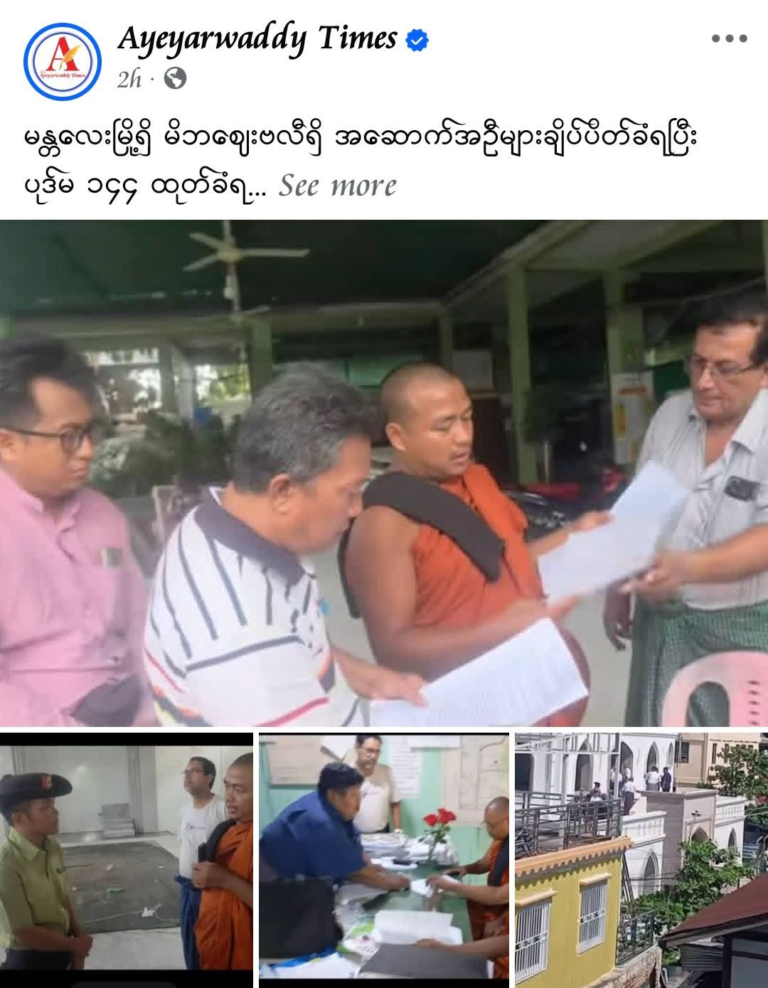
There are few hundred Myanmar Buddhist Monastries built by Myanmar refugees and Rakhine Refugees.
Many monks are just registered as cleaners, workers, illegal migrants and few only got UNHCR Cards.
There is a large Ethnic Mon Pagoda built few years ago in Semenyih, Selangor near Bangi. And another biggest Burmese pagoda and monastry in Penang.
As they are sponsered by local Buddhist Malay Chinese, Malaysian never noticed, and especially as
Buddhist Bamas and numerous Rakhines looks like Malays, not like Rohingyas and Myanmar Muslims who are darker, pointed nose and features look like Northern Indian or Bangladeshis.
Helmi Effendy II
Kan isu ada pempengaruh tangkap gambar Rohingya solat kat Surau yang katanya bukan under jabatan agama Islam dan sebagainya, sahabat aku Tamim Dahri kat thread seru semangat sama pada rumah ibadah yang didirikan oleh pelarian Myammar lain dan salah satunya gereja.
Ramai pulak terkejut tengok banyak gereja yang dibuat oleh pelarian dari Myammar. Ada yang terus kata inilah bukti bahawa Rohingya tu kafirrrr, tak Islam. Ada kata ni maybe kasta elit, sebab muka depa putih, tak coklat dan gelap macam Rohingya, dan sebab kasta elit, depa ni agama Kristian. Tak bang… Tak.
Pelarian dalam Malaysia dari Myammar bukannya Rohinhya jer bang. Ada etnik lain yang turut sama kena genocide dekat sana dan lari ke sini. Etnik Chin, Karen, dan banyak lagi. Masalahnya etnik ni muka depa macam orang Cina, orang mungkin ingat depa orang Cina tempatan. Dan mereka tak kurang jenayah depa. Malah ada lagi teruk dari Rohinghya dan lebih berbahaya pada negara.
Kongsi gelap, mabuk sampai bergaduh, pukul bini, bunuh etc. Ini jenayah yang berpotensi “jajah negara” tau banding pengotornya atau mintak sedekah anak-anak Rohingya ni.
Tapi masalahnya kenapa propaganda kebencian dihalakan pada satu kaum pelarian dari Myammar jer? Ke korang dah kena main dengan bot-bot dari Junta sebab depa tengah diadili kat mahkamah antarbangsa yang kemudian disambut oleh pempengaruh lain demi semangat populis?
Tanpa menafikan perlunya tindakan ke atas pelarian, aku jugak menyeru semangat yang sama ke atas etnik-etnik lain ni. Kalau 1 surau Rohingya dah buat kita menggelegak, kenapa lebih 50 gereja etnik Chin dan Karen kat negara kita, yang dibina secara haram kita tutup mata? Kenapa segala jenayah dan perbuatan mereka di Malaysia takde sape viralkan?
Atau takut sebab depa ni ada kongsi gelap dibelakang mereka? Atau hanya marah pada saudara seakidah dengan kita? Kalau macam tu apa beza kita dengan penguatkuasa yang hanya ambil tindakan ke atas orang Melayu Islam jer? Atau kita hanya berani pada pelarian yang lemah, berbanding yang kuat macam etnik-etnik lain ni?
Ingat, aku dengan sahabat-sahabat aku dah berbuih mulut sebut pasal etnik pelarian Myammar lain di Malaysia tau, tapi tak bersambut pun. Takde influencers nak buat video buru depa, takde media nak laporkan pasal jenayah depa, takdakkkk. Nehe.
Fikir-fikirkan.
P.S: Sebutan dia etnik CHIN tau, bukan CHINA.

Cheras Ria – My Story
I’ve lived around Bukit Ketumbar near Cheras Ria since the year 2000. At first, I stayed in my late father’s house, which was once broken into by Indonesian workers living in nearby shared quarters — back then, one block had fewer than 10 occupied units.
Later, I bought my own unit there before getting married. I only moved out during the COVID-19 pandemic in 2020 because it was difficult to manage my special-needs child in an upper-floor flat. The toilet was too small, and even basic care became a struggle.
My connection with Cheras Ria runs deep. Many of my childhood friends were from there — I’d often “kidnap” them to swim at my place. It was also where I caught the bus or van every morning, and where my siblings were sent to the babysitter. Even today, we still keep in touch. Sometimes, when I need a cleaner, I’ll ask my old contacts from Cheras Ria.
The Flats and Their Problems
If you ask me, the cleanliness and utility issues at Cheras Ria flats since the 2000s weren’t simply because residents were “dirty.” The real problem was the Joint Management Body (JMB).
All the flats and condos here were built by a developer called Mahajaya. But Mahajaya went bankrupt, so there was never a proper handover to owners. Even up to 2020, when I moved out, the strata title hadn’t been resolved. Imagine living in a flat without strata, with a JMB left adrift — that’s the reality.
The Rohingya and Other Communities
As for the Rohingya presence in Cheras Ria — they only started appearing around 2017. Much of their settlement was facilitated by Ali Regan, who helped them with local arrangements. Anyone living nearby would know who Ali Regan is.
Other Myanmar nationals had already been around earlier, especially along Jalan Kuari, just downhill from Cheras Ria. That area has many factories and hardware shops, so many Myanmar workers were employed there. So, not everyone you see chewing betel nut or playing takraw downstairs is a refugee — some are legitimate workers from Myanmar.
The Surau
Now, about the surau. I can assure you it’s not an illegal surau. It’s a community surau built on land gazetted for Cheras Ria and the surrounding condos.
It’s officially registered under JAWI as Madrasah As-Sobirin, located at Unit B-0-8, Flat Cheras Ria, Taman Cheras Utama, 56100 Kuala Lumpur, Zone 3. It’s also listed under DBKL’s community unit activities.
The surau opened around 2005–2006. The first chairman I remember was Hj Ahmad Mashod. I prayed there, even celebrated Eid there while my father was still living in Cheras Ria. Back then, the surau was lively — taraweeh prayers, Eid feasts, qurban activities, even wedding receptions because the space was large.
But in recent years, before I moved, fewer locals came. Many had relocated since Cheras Ria flats are only 600 sq ft with two bedrooms. Married friends moved out, leaving only their parents behind. Some retirees returned to their hometowns. Meanwhile, the new residents lived in tighter conditions, so naturally, their numbers grew.
That’s the reality.
Reflections
So yes, when I see posts questioning the surau at Cheras Ria, I feel sad. This place holds memories — not just where we lived, but where we built bonds as Muslims.
As the saying goes: “The place where you fall is remembered; how much more the place where you grew up and shared ties of brotherhood.”
P/S: About the Video
I’ve watched the video being circulated. It’s only three seconds long, and all I heard was “solat jemaah.” I replayed it many times, but there was no sermon. I think what the poster meant was the group of men sitting in front of the congregation — that was actually ta‘lim.
Ta‘lim sessions are usually conducted in the mother tongue of the karkun (preacher). If he’s Bangladeshi, it’s in Bangla; if Pakistani, in Urdu. If you want it in Malay, it’s simple — just sit beside them and request it. InshaAllah, they’ll accommodate.
The text usually read after Asar is from Fadha’il A‘mal by Maulana Muhammad Zakariyya al-Kandhlawi. Common chapters include:
- Fadha’il of Prayer
- Fadha’il of Dhikr
- Fadha’il of Quran
- Fadha’il of Tabligh
- Stories of the Companions
Sometimes they alternate with Muntakhab Ahadith, but daily ta‘lim is most associated with Fadha’il A‘mal.
And no — politics is never part of ta‘lim. InshaAllah.
Khairul Azri
CHERAS RIA- Aku duduk area bukit ketumbar berdekatan Cheras Ria ni sejak tahun 2000. Dari duduk rumah arwah bapak aku yang kena pecah masuk dengan Indo rumah kongsi sebab masa tu satu blok tak sampai 10 unit duduk.
Sampailah aku beli sendiri satu unit dekat situ sebelum kahwin dan pindah masa covid 2020 sebab susah nak handle anak OKU rumah atas ni. Toilet kecil tak muat katil mandi kakak.
Nak cerita touch point aku dengan Cheras Ria ni banyak, malah kawan kawan masa kecik aku pun ramai dari sini aku culik ajak mandi swimming di rumah aku.
Di sinilah juga aku naik bas/van tiap tiap pagi, di sini lah adik beradik aku dihantar ke rumah pengasuh. Sampai hari ini kami masih berhubung. Kadang kadang nak cari tukang cuci aku mintak tolong dari kenalan aku di Cheras Ria lah.
Berbalik kepada Cheras Ria..
Kalau kau tanya aku dari tahu 2000an Flat Cheras Ria ni kotor dan banyak masalah utiliti bukanlah sebab penduduknya pengotor semata mata, tapi sebab Flat ni ada masalah dengan JMB. Siapa yang duduk sini akan tahu bahawa kesemua flat dan kondo sini dibangunkan oleh pemaju nama Mahajaya.
Mahajaya ni pemaju bankrup, jadi tak ada proper handover kepada pemilik. Terakhir sebelum aku pindah 2020, rasanya masih belum selesai, strata title pun tak ada kalau tak salah.
Maka kau boleh bayangkanlah macamana keadaan flat yang tak ada strata, JMB yang terumbang ambing.
Dan kalau tanya aku Rohingya di Cheras Ria ni bila? Depa muncul tak lama pun, 2017 baru muncul. Sebab Ali Regan yang banyak bantu permudahcara urusan depa di kawasan sekitar sini. Siapa duduk sekitar sini tahu siapa lah Ali Regan.
Myanmar lain tu pula dah memang ada sebelum tu lagi sebab turun sikit dari Cheras Ria ni adalah jalan Kuari. Jalan Kuari ni banyak kilang dan hardware. Maka banyaklah Myanmar ni kerja dikilang dan kedai hardware tu semua. Jadi bukan semua gigit paan dan main takraw di bawah itu pelarian, ada bercampur juga dengan pekerja sah dari Myanmar.
Now cerita Surau.
Surau tu aku pasti dan jamin bukan surau haram. Tapi surau komuniti yang dibangunkan atas tanah yang digazetkan untuk Cheras Ria dan Kondo sekitar situ.
Dan surau ini adalah surau berdaftar bawah JAWI dengan nama Madrasah AsSobirin, alamat Unit B-0-8, Flat Cheras Ria, Taman Cheras Utama, 56100 Kuala Lumpur, bawah Zon 3. Juga didaftarkan di bawah aktiviti unit komuniti DBKL.
Surau ni dibuka ingat ingat aku 2005-2006, Awal awal surau ni dibuka yang aku ingat jadi pengerusi adalah Hj Ahmad Mashod. Aku solat disini, solat hari raya disini masa ayah aku masih duduk di sini.
Zaman tu kira aktiflah surau ni, dapatlah joinlah taraweh di sini, jamuan raya, aktiviti korban. Majlis kenduri pun orang buat dekat sini sebab tempat dia luas.
Cuma tak dinafikan tahun tahun terakhir sebelum aku pindah memang ketara kurang orang tempatan turun sebab ramai dah berpindah sebab cheras ria ni flat 600sqf dua bilik.
Kawan kawan aku yang dah kahwin pun ramai dah tak duduk di sini. Yang tinggal mak ayah depa. Ada juga yang pencen dah dah pulang ke kampong. Berbeza dengan depa yang duduk bersempit.
Maka ya realitinya nampaklah depa ni makin ramai.
Cuma bila aku tengok posting ni dan komen komen ada yang persoalkan surau cheras ria ni aku sedih lah jugak.
Tempat jatuh lagi dikenang, inikan pula tempat kita bermain..or i would say bersilaturrahim sesama Muslim..
.
.
P/s:
Oh btw aku dah tengok video ni..dia kata ceramah tu dia merujuk kepada apa sebenarnya? Sebab video 3 saat ni dia cuma sebut solat jemaah.
Banyak kali aku ulang kot ada suara orang ceramah, aku rasa dia maksudkan sekumpulan lelaki duduk depan geng solat tu lah sebagai ‘ceramah’.
Kalau itulah yang dia maksudkan dan waktu Asar itu depa tengah ‘taalim’ bang. Taalim ni memang buat dalam bahasa ibunda ikut karkun mana. Kalau kau karkun bangla, bahasa bangla, kau karkun pakistan bahasa pakistan.
Nasihat aku kalau nak bahasa kita, mudah je..lain kali dia mula taalim, duduk sebelah dia, cakap nak bahasa Melayu. InshaAllah pandailah dia khidmat kan untuk kau.
‘Teks ceramah’ lepas Asar biasanya baca Kitab Fadha’il A‘mal karya Maulana Muhammad Zakariyya al-Kandhlawi.
Antara bab yang selalu dibaca: Fadha’il Solat, Fadha’il Zikir, Fadha’il Quran, Fadha’il Tabligh dan kisah para sahabat. Ada tempat yang selang-seli dengan Muntakhab Ahadith, tapi yang paling sinonim dengan taalim harian ialah Fadha’il A‘mal.
Politik² ni tak ada dalam agenda taalim. InshaAllah.