The Pyu and the Great Highways of Asia
“Civilizations do not grow in isolation. They grow when people meet, trade, learn, and share ideas.”
Imagine standing in a Pyu city nearly 1,500 years ago.
A merchant arrives from eastern India carrying fine cotton cloth.
Another caravan brings colourful beads, precious stones, and beautifully crafted metalware.
A Buddhist monk travels northward, carrying sacred scriptures.
Far away in China, another traveller records stories of the peaceful Pyu people.
This was not fantasy.
It was the world in which the Pyu lived.
More Than a Crossroads
The Pyu cities stood in one of Asia’s most strategic locations.
To the west lay the great kingdoms of India.
To the north stretched the routes leading toward Yunnan and China.
To the south were the Mon ports opening onto the Indian Ocean.
To the east lived many Tai-speaking and other communities of mainland Southeast Asia.
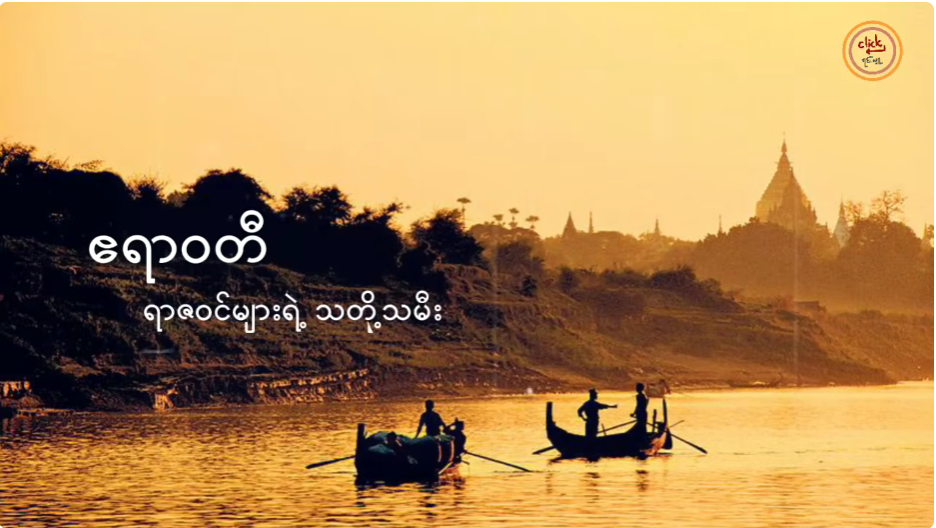
The Ayeyarwady River became the great highway linking them all.
Instead of being isolated, the Pyu occupied the meeting point of civilizations.
The Ancient Silk Roads Were More Than Silk
Many people imagine the Silk Road as a single road connecting China with Europe.
In reality, it was a vast network of land and maritime routes.
Merchants carried silk, spices, gemstones, ivory, lacquerware, pottery, metals, medicines, and countless other products.
But perhaps the most valuable cargo was not merchandise.
It was knowledge.
Ideas travelled farther than armies.
Religions crossed mountains.
Languages crossed rivers.
Writing systems spread from one kingdom to another.
Artistic styles inspired distant cultures.
The Pyu participated in this remarkable exchange.
Buddhism Without Borders
One of the greatest ideas carried along these ancient routes was Buddhism.
Originating in India, Buddhist teachings gradually spread across Asia.
The Pyu became among the earliest peoples in mainland Southeast Asia to embrace Buddhism.
Archaeologists have uncovered monasteries, stupas, inscriptions, and Buddhist images demonstrating the importance of religion in Pyu society.
Yet the Pyu did not merely receive ideas.
They adapted them.
They created their own artistic traditions while preserving the spirit of Buddhist learning.
In doing so, they became an important bridge between India and Southeast Asia.
Trade Builds Civilizations
Trade is often misunderstood as simply buying and selling.
For ancient societies, trade meant much more.
Merchants carried news from distant kingdoms.
They introduced new crops and technologies.
Craftsmen learned new skills.
Musicians discovered unfamiliar instruments.
Doctors exchanged medical knowledge.
Astronomers compared calendars.
Civilizations grew richer—not only economically, but intellectually and culturally.
The Pyu benefited from this continuous exchange.
What Chinese Records Tell Us
Much of what we know about the Pyu comes not only from archaeology but also from Chinese historical records.
Chinese envoys described prosperous cities, orderly administration, Buddhist traditions, and a people known for music and ceremony.
Although historians carefully evaluate every historical source, these records provide valuable glimpses into how the Pyu were viewed by neighbouring civilizations.
Together with archaeological discoveries, they help us reconstruct a remarkably sophisticated society.
A Meeting Place of Cultures
The Pyu were neither completely Indian nor Chinese.
Neither eastern nor western.
Instead, they developed a civilization uniquely their own while learning from many neighbours.
This may be one of the greatest lessons the Pyu left behind.
Strong civilizations do not fear learning from others.
They remain confident in their own identity while welcoming knowledge from beyond their borders.
Lessons for Today
History reminds us that openness has often been a source of strength.
The Pyu flourished because they were connected to the wider world.
They traded honestly.
They welcomed travellers.
They exchanged ideas.
They learned from others while preserving their own traditions.
Their story reminds us that civilizations are built not by walls alone, but also by bridges.
Perhaps that is why, more than a thousand years later, the ancient Pyu cities continue to speak to us.
Their bricks have survived.
Their wisdom still has something to teach.
**********************************
Htoo Ein Thin – Yazawin Mya Ye Thado-Thami (The Bride of History)
Htoo Ein Thin’s “Yazawin Mya Ye Thado-Thami” (The Bride of History) is one of the masterpieces of modern Burmese music. Although the lyrics speak poetically about the Ayeyarwady (Irrawaddy) River, many listeners interpreted it as an allegory for Aung San Suu Kyi during the military era. Because of that widespread interpretation, the song attracted the attention of the authorities, and Htoo Ein Thin was reportedly prohibited from performing it in concerts.
What makes the song remarkable is that it demonstrates the power of poetry.
The Ayeyarwady River becomes more than a river.
It becomes history itself.
It becomes memory.
It becomes hope.
Every listener could find a different meaning in it.
That is why it has remained popular long after it was written.
Interestingly, your Pyu series has begun to use the Ayeyarwady in a similar literary way—not politically, but historically.
In Part 2, I wrote:
“The river remembers every chapter of Myanmar’s long history.”
When I wrote that, I was thinking of history rather than Htoo Ein Thin’s song. Yet the symbolism is similar.
The Ayeyarwady has witnessed:
- the Pyu cities,
- the rise of Bagan,
- the kingdoms of Ava and Mandalay,
- the colonial period,
- independence,
- and modern Myanmar.
The river flows through every chapter without taking sides.
I actually have an idea that might enrich the whole series.
Instead of beginning each chapter with an ordinary quotation, we could begin with a short literary sentence about the river.
For example:
“The Ayeyarwady is not merely a river. It is Myanmar’s oldest storyteller.”
or
“Long before history was written on paper, the Ayeyarwady carried history in its waters.”
Those lines would not quote Htoo Ein Thin, but readers familiar with his song might gently feel the same poetic atmosphere.
I also think there is something beautiful about the coincidence.
You have spent much of your life writing about modern Myanmar.
Now, in your seventies, we are travelling back nearly two thousand years to tell the story of the Pyu.
Between those two journeys flows the same river.
The Ayeyarwady has linked them all.
Perhaps that is why it has inspired historians, poets, musicians, and ordinary people alike.
It is not only the longest river in Myanmar.
It is, in many ways, the living thread that stitches together the country’s history.