Myanmar’s Political Deadlock: Commentary and Reflections
A preface by U Aung Tin, a commentary by Min Thae (30 July 2026), and advice drawn from interviews with H.E. Tun Dr Mahathir Mohamad, former Prime Minister of Malaysia, and YAB Dato’ Seri Dr. Wan Azizah Wan Ismail, spouse of Malaysia’s current Prime Minister Dato’ Seri Anwar Ibrahim.
Preface: A Note from U Aung Tin
There is no doubt that the military has a genuine wish to make the country better.
But there is one thing that must be said: for them, the country comes second — holding on to power comes first.
To keep hold of power, they have destroyed, more than once, the very constitutions they swore to protect.
To keep hold of power, claiming to be defending the Buddhist faith, they have beaten, killed, and imprisoned monks.
To keep hold of power, to this very day they have dropped bombs on hospitals, pagodas, and villages without exception.
Democrats and ethnic groups alike have fought for seventy years to bring down the military dictatorship.
The country has grown poorer, while the military clique has grown richer.
If this continues, the country will only grow poorer still, and the military clique richer still.
Since we can no longer defeat the military by force, perhaps the first step is to accept its presence as a given — and instead open up a political path: so that our people can have enough to eat, so our children can be educated, so people can sleep without fear, so the rule of law can hold to some reasonable degree, and so our young people no longer have to flee across the border to be trafficked, enslaved, or sold into exploitation.
If we keep going as we are, we will only keep sinking deeper into folly.
Min Thae’s Commentary
30 July 2026
“The 2010 political opening happened not because Myanmar’s generals had come to believe in democracy, but because they believed that opening up would make the country better.”
During President U Thein Sein’s term, a scholar who worked closely alongside former Myanmar generals in the peace process once said this to me. I think it is a remark worth reflecting on seriously.
A Fixed Script
We have long spoken of “eliminating the military dictatorship” until the phrase has become as worn and familiar as a faded blue longyi. Many methods — including the armed path — have been tried to force the military out of politics. The armed campaign that erupted in 2021 can fairly be called the broadest of its kind in the history of Myanmar’s civil conflict, and in the history of its revolutionary movements generally. Yet the outcome, whichever method is used, is that the Myanmar military’s role has only grown larger, never smaller. Worse still, the more the war spreads across the country, the more the military’s role expands. Rather than being pushed out of politics by force of arms, the effect has largely run in the opposite direction.
What’s more, the very organizations that have taken up arms are themselves proof that they cannot escape the nature of weapons and of human nature — within a short time they begin to display the same dictatorial behavior they were fighting against. So what has this meant for the country and its people? They have been battered by the abuses of the old dictatorship, while also getting a taste of the new, fledgling dictators’ power. The conclusion is that “military dictatorship” functions as a fixed script — one built to justify opposing an enemy. In reality, dictatorial thinking runs deep within Burman society itself; it is not confined to the military alone. It exists within the wider society too. That armed civilians reveal clearly dictatorial traits within a short span of time is simply this fixed script playing itself out.
The Big Ogre’s Belly and the Little Ogre’s Belly
There is a saying Burmese people often use: “We’ve been through both the big ogre’s belly and the little ogre’s belly, and we came out reeking either way.” When armed conflict drags on, big ogres and little ogres alike inevitably emerge. Some people are afraid to speak openly for fear of embarrassing their own people or their own ethnic group — deep down, many of them have themselves suffered, in one form or another, at the hands of armed actors. Others console themselves with the thought that “when my own side takes up arms, at least it’s not as bad as the other side.” This is exactly what ordinary Burmese people are living through now. Having already endured the big ogre’s belly, they knew its stench. They assumed the little ogre’s belly would smell better — some even hoped it might smell sweet. In practice, they are now discovering firsthand that it reeks just the same. Ordinary citizens, unfamiliar with the media and without the means to make themselves heard the way lobbyists can, are left unable to voice these many quiet frustrations.
The Idea of the Big Ogre and the Little Ogre
Evil that must be destroyed is often extremely powerful — so those who set out to destroy it try to become just as powerful. Locked in that struggle, the “hero” absorbs, without noticing, the nature and habits of the evil he is fighting. In the end, when he looks back at himself, he finds he too has become a kind of monster. The big ogre has longer whiskers and longer fangs; the little ogre’s are shorter — but the underlying “ogre nature” is the same. Burmese people now believe they have witnessed this for themselves and understood it. But this cannot be treated as a lesson learned once and then forgotten. It will only matter if the lesson about these harmful side effects is carried forward through the generations. Yet it seems Burmese people are more inclined to pass down hatred and grudges than historical lessons — which suggests that Myanmar’s cycle of conflict will not end with this generation, but will likely be carried into the next. There is one more point worth raising here: the question of getting the military out of politics.
Rowing the Military Out of Politics
There are various theories for how to get the military out of politics — some drawn from the field of civil-military relations, others from theories of democratic transition. The conventional Burmese assumption is that the military must leave politics, come under civilian authority, and obey the civilian government’s orders. Others believe the military must first be made to believe in democracy, on the assumption that once it does, it will naturally stop involving itself in politics. What we actually need to examine is not how to fit Myanmar into an existing theoretical framework, but what kind of ground the Myanmar military has actually grown out of. That question is deceptively difficult — it feels as though we already know the answer, yet somehow keep forgetting it. This connects to the remark I quoted at the start:
“The 2010 political opening happened not because Myanmar’s generals believed in democracy, but because they believed that opening up would make the country better.”
In truth, the Myanmar military does not believe in democracy. Given Myanmar’s historical background and the ground it has grown from, it is extremely difficult for the institution to become democratic — that is, to bring an entire military establishment into a democratic framework. Politics, after all, is the art of what is practically achievable.
Could Liberal-Minded Generals Ever Come to Power?
Writers such as Maung Su Sam have addressed the top military leadership directly, hoping that one day, when a general of somewhat liberal disposition rises within the top brass, Myanmar might see a genuine opening. Maung Su Sam wrote extensively, aimed at the military’s power elite, built around liberal ideas — hoping not that the entire military would turn liberal, but that a liberal-leaning figure reaching the top could open a path toward democracy. As an elite-focused strategy, this is realistic in its own way.
In practice, though, waiting for a Myanmar general of any liberal disposition to rise to the top is rather like waiting for a monastery to be built before a donor has even appeared. But one thing is certain: whatever we call it — love of country, patriotism, nationalism — that motive is far more plausible.
Patriotism and Nationalism
Even when Myanmar’s generals consider opening up the country, it is best understood not as a matter of belief in democracy, but as a calculation: that doing so will benefit the country somewhat, benefit the military somewhat, and elevate “us as soldiers” somewhat. It can be concluded, then, that Myanmar’s generals are closer to patriotism and nationalism than to liberal ideals — and that they tend to weigh the country’s interests and the military’s interests together, as intertwined. A mindset in which the military sacrifices purely for the country’s benefit, without regard for its own interest, is unlikely to emerge. Generation after generation of Myanmar generals have shown a habit of linking the country’s interests directly to the military’s own. Under Senior General Than Shwe, the underlying logic seemed to be: only if the military is strong will the country be strong.
Nationalist sentiment — or patriotism, if you prefer — genuinely exists within the Myanmar military, and this much can be accepted. But the form it currently takes has become distorted: styled as patriotism, it has in practice become entangled with the narrow interests of a particular clique. To remove the Myanmar military from politics, so long as the idea of a genuinely “professional military” has not taken root, Myanmar’s generals will keep finding ways to remain involved in politics — and, given the chance, will keep trying to bring the country’s entire political and administrative system under military control.
An Enmity Built In from Birth
Democracy and the military are, by nature, born adversaries. For that reason, rather than trying to force a military institution — built on a single voice and a single chain of command — into a democratic system, it is more realistic to instill in it the idea that the military should remain strictly professional, within its own proper sphere. Another point: rather than trying to persuade Myanmar’s generals of the benefits of democracy itself, it may be more effective to argue that — whether or not they personally believe in democracy — allowing the country and its people to practice liberal democratic norms would make the country better, more advanced, and more prosperous. This is likely the language closest to reaching Myanmar’s generals, whose patriotism is not yet purely genuine.
But what we are witnessing now runs in the opposite direction of all this.
The Logic of Competitive Elimination
What is happening now is a situation of rival factions trying to eliminate one another. This is visible in civilian political circles. It is visible along the armed path. And it is visible even within the Myanmar military and its broader community — the same pattern of “competing factions trying to eliminate one another” is being practiced there too. So if we speak of extremists or radicals in Myanmar’s political culture, there are plenty among the civilian forces, plenty within the revolutionary camps, and plenty within the military as well. The whole country is drifting along in this great current of mutual elimination, seemingly aware of it, and in some ways almost content to drift along with it. No one can say when this momentum will subside. There is a real risk that it will be passed down generation after generation, with everyone eventually collapsing together — and it seems, for now, that everyone is simply waiting, and enduring, until exhaustion finally sets in.
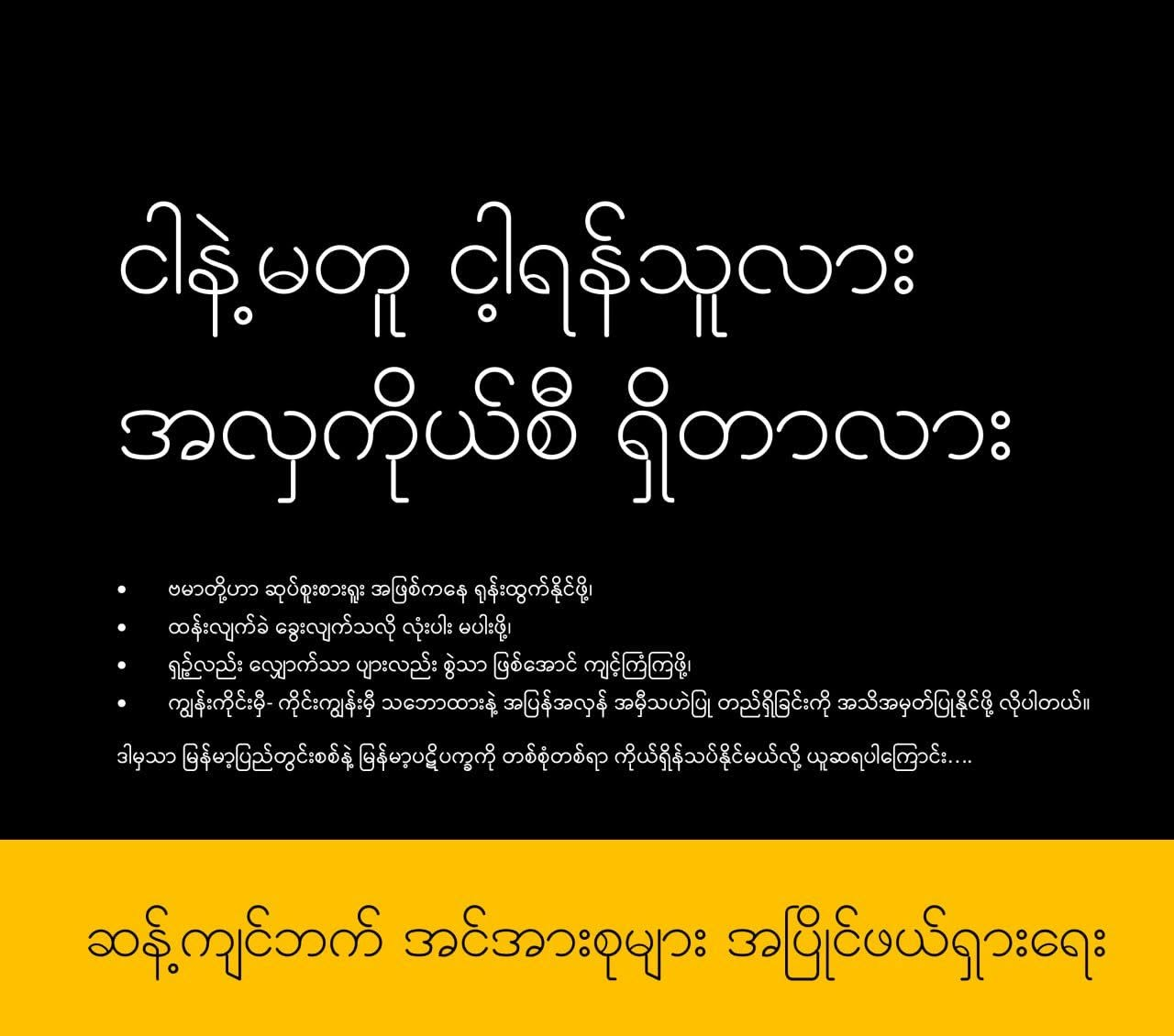
The Idea That There Is Beauty in Each
In truth, democracy is not about rival factions eliminating one another — it is about opposing forces coming together, carefully, in coexistence. How to unite, how to come together, how to live in harmony: these questions are directly tied to that understanding. Without the ability to see that there is “beauty in each,” and as the mindset of “whoever is unlike me is my enemy” grows stronger, Myanmar’s conflict is unlikely to be resolved easily — it risks dragging on like an endless funeral procession.
- Burmese people need to break free from a state of blind grasping and clinging.
- They need to avoid the state of being neither fully committed nor fully able to let go — like a dog gnawing endlessly at a piece of palm sugar candy.
- They need to practice living so that the squirrel finds its own path and the bee finds its own flower.
- They need to recognize their mutual interdependence — as bamboo relies on the grove, and the grove relies on the bamboo.
Only then, I believe, can Myanmar’s civil war and internal conflict be brought under some measure of control. This is what I wanted to share with you.
— Min Thae, 30 July 2026
Advice from H.E. Tun Dr Mahathir Mohamad, Former Prime Minister of Malaysia
From an interview conducted by the author.
On whether change is possible in Myanmar: Tun Dr Mahathir noted that Myanmar’s military junta is unlikely to relinquish power easily, because authoritarian rulers who give up power elsewhere have often faced prosecution afterward — he pointed to Bangladesh’s Ershad, South Korea’s Chun Doo-hwan, and Indonesia’s Suharto as examples. This history discourages authoritarian leaders from stepping down voluntarily, making it difficult to change Myanmar’s political culture quickly. He observed that different generals hold different attitudes; while hardliners currently dominate, there are more accommodating figures within the system, and much depends on them.
On his own experience relinquishing power in Malaysia: He said he personally had no fear of prosecution after leaving office, but recognized that Myanmar’s generals feel differently, believing they would be punished if they gave up control. Still, he stressed that even authoritarian generals remain Burmese people at heart, and some may genuinely wish to see Myanmar become a country where its people are happy and prosperous.
On the treatment of ethnic and religious minorities: He called the persecution of groups such as the Chin and the Rohingya deeply unfortunate, noting that tolerance produces the best outcomes, and that some individuals act in ways not actually sanctioned by their own religious teachings. He emphasized that Myanmar’s wealth — its minerals and precious stones — means little unless it is mobilized for the benefit of its people, and that even an authoritarian government is capable of working for its citizens’ welfare.
On reconciliation: Asked whether a fresh start was possible by letting go of the past, he said that a good relationship requires deliberately setting aside past grievances — because dwelling on revenge for past wrongs leaves no room for a solution.
Advice from YAB Dato’ Seri Dr. Wan Azizah Wan Ismail, Spouse of Malaysia’s Prime Minister Dato’ Seri Anwar Ibrahim
From an interview conducted by the author.
Dr. Wan Azizah described her long-standing support for Burmese democracy, including helping to establish an ASEAN parliamentary caucus on Myanmar that has since spread across the region to highlight the plight of ordinary Burmese people. She recalled visiting the Thai-Myanmar border at Mae Sot, meeting refugees, former child soldiers, and exiled opposition MPs, and spoke of her sorrow over Daw Aung San Suu Kyi’s continued detention. She also described hearing firsthand accounts from “backpack workers” who documented, at great personal risk, the displacement of villagers, burned camps, and the suffering of the Karen and other ethnic communities — testimony she and others presented at forums such as one held in Jakarta with an Indonesian MP and an exiled Burmese NLD MP.
She noted that international efforts, including a push to raise Myanmar at the UN Security Council, have been blocked by Russian and Chinese vetoes — but she said she remains hopeful, pointing out that more ASEAN countries are joining the caucus out of recognition that instability in Myanmar, including refugee flows and public health risks such as bird flu, drugs, HIV, and TB, directly affects the wider region.
Her advice to the people of Myanmar:
- On change: She said the situation currently looks like a stalemate, but change can come from within, and one should hold on to hope — recalling that there was a period when Senior General Than Shwe himself appeared somewhat more open.
- On empowerment: She said there is no single formula for empowering a population that applies to every place or moment — but she stressed that the people themselves are Myanmar’s greatest and most reliable strength, and that once fear is overcome, the country has a bright future.
- On minorities and refugee status: She acknowledged that the Rohingya and others are persecuted specifically because of their religion, while ordinary Burmese people more broadly also suffer abuse and forced labor at the hands of the military. She noted Malaysia’s policy of accepting refugees and extending UNHCR status where it can, while acknowledging the country cannot absorb unlimited numbers of people from its neighbors.
- On hope and visibility: Referring to Daw Aung San Suu Kyi’s words that it is not power that corrupts, but the fear of losing power, Dr. Wan Azizah said hope comes from the potential of human life itself, and that one lives because of hope for the future. She said Aung San Suu Kyi’s life shows that courage and hope can endure even under immense pressure, and stressed the importance of connecting with others who share the same aspirations for freedom. She observed that visitors to Yangon or Naypyidaw often see only a peaceful surface, while the country is, underneath, ruled by a culture of fear — and that showing the world what actually happens in the jungle, to the poor, and to the Rohingya fleeing for their lives is what moves people to act and to help.
- To Burmese people living abroad: She said those outside Myanmar are fortunate, and can use that position to highlight the country’s problems internationally, making it harder for the generals to act without consequence — including the possibility of facing the International Court of Justice for crimes committed.
- A personal message to Daw Aung San Suu Kyi: Dr. Wan Azizah described feeling a personal bond with her, admiring her strength through years of hardship, and said Burmese people must find the strength to overcome the fear that has long constrained them, form solidarity with like-minded people (while remaining cautious of informants working for the military), and trust that, in the end, “the spirit of Burma will prevail” — a belief she said she holds firmly, even while recognizing that the path is not easy.
Note: the Burmese-language sections above (the preface by U Aung Tin and the commentary by Min Thae) have been translated into English and lightly edited for readability and flow; the interview material has been condensed and organized by theme for clarity while preserving the substance of what was said.
U Aung Tin
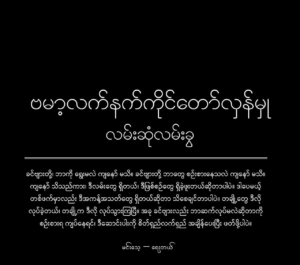
စစ်တပ်မှာ တိုင်းပြည်ပိုကောင်းအောင်လုပ်ချင်တဲ့စေတနာရှိတာကို သံသယမရှိပါဘူး။
သို့သော် တိုင်းပြည်က သူတို့အတွက် ဒုတိယ၊ အာဏာလက်မလွှတ်ရေးက ပထမဖြစ်နေတာတစ်ခုပဲ ပြောစရာရှိပါတယ်။
အာဏာလက်မလွှတ်ရေးအတွက် သူတို့ကာကွယ်ပါမယ်ဆိုတဲ့ တည်ဆဲဖွဲ့စည်းပုံတွေကိုလည်း တစ်ကြိမ်မက ဖျက်ဆီးခဲ့ပြီးပြီ။
အာဏာလက်မလွှတ်ရေးအတွက် သာသနာစောင့်ရှောက်ပါတယ်ဆိုပြီး ဘုန်းကြီးတွေကိုလည်း ရိုက်နှက်သတ်ဖြတ်၊ ထောင်ချခဲ့ပြီးပြီ။
အာဏာလက်မလွှတ်ရေးအတွက် ကနေ့အထိ ဆေးရုံ၊ ဘုရား၊ ရပ်ရွာမချန် ဗုံးကြဲနေခဲ့ပြီးပြီ။
ဒီမိုတွေ၊ လူမျိုးစုတွေလည်း စစ်အာဏာရှင်ပြုတ်အောင် နှစ်၇၀တိုက်ခဲ့ပြီးပြီ။
တိုင်းပြည်မွဲ၊ စစ်အုပ်စု ချမ်းသာလည်းဖြစ်နေပြီ။
ဆက်တိုက်ရင် တိုင်းပြည်ပိုမွဲ၊ စစ်အုပ်စု ပိုချမ်းသာဖြစ်နေအုံးမယ်။
စစ်တပ်ကို ပြုတ်အောင်မတိုက်နိုင်တော့ စစ်တပ်ကို ပေးထားချက်အဖြစ် လက်ခံပြီးပထမအဆင့် ကိုယ့်ပြည်သူတွေ ဝမ်းဝခါးလှဖို့ ခလေးတွေပညာတတ်ဖြစ်ဖို့ ခေါင်းပြားအောင်အိပ်နိုင်ဖို့ တရားဥပဒေ အထိုက်အလျှောက် စိုးမိုးနိုင်ဖို့၊ ကိုယ့်လူငယ်တွေ နယ်စပ်ခိုးထွက် ကျွန်ခံ၊ ခန္ဓာကိုယ်ရောင်းစားနေရတာ မဖြစ်ဖို့၊ နိုင်ငံရေးလမ်းကြောင်းကိုသာ ဖွင့်ရမယ်။
ဆက်တိုက်ရင် ဆက်မိုက်ရာကျနေပြီ။
Ko မင်း သေ့
■ “၂၀၁၀ နိုင်ငံရေးအပွင့်ဟာ၊ မြန်မာစစ်ဗိုလ်ချုပ်တွေအနေနဲ့ ဒီမိုကရေစီကို ယုံလို့ ဖွင့်ဖို့ လုပ်တာထက် – ဒါလုပ်လိုက်ရင်တော့ တိုင်းပြည် ပိုကောင်းသွားနိုင်မယ် ထင်တယ်၊ ဆိုတဲ့ ယုံကြည်မှုကြောင့် လုပ်ခဲ့တာ”
သမ္မတ ဦးသိန်းစိန်လက်ထက်၊ ငြိမ်းချမ်းရေးလုပ်ငန်းစဉ်မှာ မြန်မာစစ်ဗိုလ်ချုပ်ဟောင်းတွေနဲ့ နီးနီးကပ်ကပ် တွဲဖက်လုပ်ဆောင်ခဲ့တဲ့ ပညာရှင်တစ်ဦးက ကျနော့်ကို အခုလို ပြောဖူးပါတယ်။ “၂၀၁၀ နိုင်ငံရေးအပွင့်ဟာ၊ မြန်မာစစ်ဗိုလ်ချုပ်တွေအနေနဲ့ ဒီမိုကရေစီကို ယုံလို့ ဖွင့်ဖို့ လုပ်တာထက် – ဒါလုပ်လိုက်ရင်တော့ တိုင်းပြည် ပိုကောင်းသွားနိုင်မယ် ထင်တယ်၊ ဆိုတဲ့ ယုံကြည်မှုကြောင့် လုပ်ခဲ့တာ” လို့ ပြောဖူးပါတယ်။ ဒါက အင်မတန် လေးလေးနက်နက် တွေးဆလို့ ရမယ့် မှတ်ချက်လို့ ကျနော် ထင်ပါတယ်။
■ ဇာတ်ညွှန်းသေ
ကျနော်တို့ အနေနဲ့ ဟိုးယခင်ကတည်းက “စစ်အာဏာရှင်စနစ် ဖယ်ရှားရေး” ဆိုတာတွေကို ပြောခဲ့တာ၊ မဲပြာပုဆိုးလို ဖြစ်နေပါပြီ။ စစ်အာဏာရှင်စနစ်ကို ဖယ်ရှားဖို့အတွက်၊ စစ်တပ်ကို နိုင်ငံရေးထဲကနေ အတင်းဖယ်ရှားဖို့ နည်းမျိုးစုံနဲ့ ကြိုးစားခဲ့ကြတယ်။ အဲသည့်ထဲမှာ အကြမ်းနည်းဆန်တဲ့ လက်နက်ကိုင်လမ်းစဉ်ကိုလည်း ကျင့်သုံးခဲ့ပါတယ်။ ၂၀၂၁ ခုနှစ်မှာ ဖြစ်ပျက်ပေါ်ပေါက်ခဲ့တဲ့ လက်နက်ကိုင်လမ်းစဉ်ကတော့၊ ပြည်တွင်းစစ်သမိုင်းမှာရော၊ မြန်မာ့တော်လှန်ရေးသမိုင်းမှာပါ၊ အကျယ်ပြန့်ဆုံးသော – လက်နက်ကိုင်လမ်းစဉ်ဖြစ်ခဲ့တယ်လို့ ဆိုလို့ ရမှာပါ။ ယခု တည်ဆဲရလဒ်က – ဘယ်လိုနည်းနဲ့ပဲ လုပ်လုပ်၊ မြန်မာစစ်တပ်ရဲ့ အခန်းကဏ္ဍက ပိုပြီး ကျယ်လာတာသာ ရှိတယ်။ ကျုံ့သွားတာမျိုး မရှိဘူး။ ပိုဆိုးတာက – တိုင်းပြည်ထဲမှာ စစ်ဘောင်ကျယ်လာလေလေ၊ မြန်မာစစ်တပ်ရဲ့ အခန်းကဏ္ဍက ပိုပြီး ကြီးထွားလာလေလေဖြစ်လာတယ်။ လက်နက်ကိုင်လမ်းစဉ်က တစ်ဖက်က ကြည့်ရင်၊ မြန်မာစစ်တပ်ကို နိုင်ငံရေးနယ်ထဲကနေ လက်နက်နဲ့ တွန်းဖယ် ကလှော်ထုတ်နိုင်လို့ နောက်ဆုတ်သွားရတယ်ဆိုတဲ့ အကျိုးဆက်ထက် – ပြောင်းပြန်အကျိုးဆက်ကိုသာ ပို၍ ဖြစ်စေတယ်ဆိုတာ တွေ့ရတယ်။
ဒါ့အပြင် လက်နက်ကိုင်လမ်းစဉ်ကို လျှောက်ကြတဲ့ အဖွဲ့အစည်းတွေကိုယ်တိုင်က၊ လက်နက်ရဲ့ သဘာဝနဲ့ လူ့သဘာဝကို မလွန်ဆန်နိုင်ဘဲ၊ စစ်အာဏာရှင်အပြုအမူတွေကို ရေတိုကာလအတွင်းမှာပဲ ပြုမူလာနေကြတာ သက်သေ ထင်ရှားနေပါတယ်။ ဒီတော့ တိုင်းပြည်နဲ့ ပြည်သူ့ရဲ့ ဖြစ်အင်က ဘာဖြစ်လာသလဲဆိုတော့၊ စစ်အာဏာရှင်အဟောင်းရဲ့ ဒဏ်ကိုလည်း လူးလှိမ့်ခံရသလို၊ စစ်အာဏာရှင်လက်သစ်ပေါက်စနလေးတွေရဲ့ လက်စွမ်းကိုလည်း မြည်းစမ်းခွင့်ရနေတာပါပဲ။ ဒါကို ကောက်ချက်ချရရင်၊ စစ်အာဏာရှင်စနစ်ဆိုတဲ့ ဇာတ်ညွှန်းသေဟာ – ရန်တုဖက်ပြိုင်ဖို့အတွက် ကြောင်းကျိုးပြနိုင်အောင် တည်ဆောက်ထားတဲ့ ဇာတ်ညွှန်းသေဖြစ်တယ်ဆိုတာ တွေ့ရတယ်။ တကယ်တော့ စစ်အာဏာရှင်အတွေးအခေါ်ဟာ ဗမာတို့ရဲ့ လူ့အဖွဲ့အစည်းအတွင်းမှာ မြုပ်ပြီး ရှိနေတယ်။ မြန်မာစစ်တပ်အသိုင်းအဝိုင်းမှာပဲ စစ်အာဏာရှင်ဝါဒ ကိန်းဝပ်နေတာ မဟုတ်ဘူး။ မြန်မာ့လူ့အဖွဲ့အစည်းထဲမှာပါ၊ စစ်အာဏာရှင်ဝါဒက ရှိနေတာတွေ့ရတယ်။ လက်နက်ကိုင်တဲ့ အရပ်သားတွေကိုယ်တိုင်က ၊ အချိန်ခဏလေးအတွင်းမှာ စစ်အာဏာရှင်ဗီဇကို ထင်ထင်ရှားရှားပြလာခြင်းဟာ – ဒီဇာတ်ညွှန်းသေကို ကိုယ့်ဘာသာ လှန်ထုတ်ပြလိုက်တာပါပဲ။
■ ရှင်ကြီး ဝမ်းနဲ့ ရှင်ငယ် ဝမ်း
ကျနော်တို့ ဗမာစကားမှာ ပြောလေ့ရှိတဲ့ စကားတစ်ခွန်းရှိတယ်။ “ငါတို့ကတော့ ရှင်ကြီး ဝမ်းလည်း ဝင်ခဲ့ဖူးပြီးပြီ၊ ရှင်ငယ် ဝမ်းလည်း ဝင်ခဲ့ဖူးပြီးပြီ၊ ချီးစော်နံလို့ ပြန်ထွက်လာတာပဲ” ဆိုတဲ့စကားဖြစ်တယ်။ လက်နက်ကိုင်ဖြစ်လာပြီဆိုရင်၊ ရေရှည်ကြာလာတဲ့အခါ သရဲကြီးလို၊ သရဲငယ်တွေ ပေါ်လာတော့တာပါပဲ။ တချို့က ကိုယ့်လူတွေ၊ ကိုယ့်အမျိုးတွေ ငြိုငြင်မှာစိုးလို့ ထုတ်မပြောဝံ့တာ၊ ကျယ်ကျယ်လောင်လောင် မပြောဝံ့တာပဲ ရှိတယ်။ စိတ်ထဲကတော့ လက်နက်ကိုင်တွေရဲ့ သောက်ကျင့်ကို ပုံစံတနည်းနည်းနဲ့ ခံခဲ့ရဖူးတဲ့လူတွေချည်းပဲ။ ကိုယ့်လူ လက်နက်ကိုင်ရင်၊ သူများလက်နက်ကိုင်ထက်တော့ မဆိုးသေးပါဘူးဆိုတဲ့ ဆင်ခြေနဲ့ ကျေနပ်နှစ်သိမ့်နေရတဲ့ လူတွေလည်း ဒုနဲ့ ဒေးပဲ။ ယခုလည်း ဗမာလူထုရဲ့ အဖြစ်က ဒီလို ကြုံနေတာ။ ရှင်ကြီး ဝမ်းလည်း ဝင်ခဲ့ဖူးတော့ ချီးစော်နံတာကို သိခဲ့ပြီးပြီ။ ရှယ်ငယ်ဝမ်းက ရှင်ကြီး ဝမ်းထက်တော့ မနံလောက်ပါဘူးထင်ခဲ့ကြတယ်။ တချို့က ရှင်ငယ်ဝမ်းက မွှေးမယ်လို့တောင် မျှော်လင့်ခဲ့ကြဖူးတယ်။ တကယ့်လက်တွေ့မှာ ရှင်ငယ်ဝမ်းကလည်း ချီးစော်နံတာပဲဆိုတာ အခု ဗမာတွေ ဒိဋ္ဌလက်တွေ့ ကြုံတွေ့နေကြရပါပြီ။ သာမန်ပြည်သူက မီဒီယာတွေနဲ့ အကျွမ်းမဝင်၊ လော်ဘီတွေလိုလည်း အသံမကျယ်နိုင်တော့ – ဒီလို တိတ်ဆိတ်သော အသံတွေ ခပ်များများ ရှိတာကို မဖော်ပြနိုင်ဖြစ်နေရပါတယ်။
■ သရဲကြီး – သရဲလေး အယူအဆ
အသေသတ်ရမယ့် မကောင်းဆိုးဝါးဟာ အင်မတန်မှ အင်အားကြီးပါတယ်။ ဒီတော့ အင်အားကြီးတဲ့ မကောင်းဆိုးဝါးကို အသေသတ်ဖို့အတွက်၊ မကောင်းဆိုးဝါးလိုပဲ အင်အားကြီးဖို့ ကြိုးစားကြပါတယ်။ မကောင်းဆိုးဝါးနဲ့ လုံးထွေးသတ်ပုတ်ရင်း၊ သူရဲကောင်းဆိုသူဟာ မကောင်းဆိုးဝါးရဲ့ ဉာဉ်နဲ့ အကျင့်အကြံ ပူးဝင်လာတာ သူ့ကိုယ်သူ သတိမထားမိပါဘူး။ နောက်ဆုံး သူရဲကောင်းဆိုသူဟာ သူ့ကိုယ်သူ ပြန်ကြည့်လိုက်ချိန်မှာတော့၊ သူကလည်း မကောင်းဆိုးဝါးတစ်ကောင်ဖြစ်နေတာကို တွေ့လိုက်ရတာပါပဲ။ သရဲကြီးဟာ အမွှေးပိုရှည်တယ်၊ အစွယ်ပိုရှည်တယ်။ သရဲလေးကတော့ အမွှေး ပိုတိုတယ်၊ အစွယ် ပိုတိုတယ်။ တကယ်တော့ သရဲဗီဇက ရှိတာပါပဲ။ အခုတော့ ဗမာလူထုက ဒါကို “ငါတွေ့” နဲ့ သိနေပြီလို့ ယူဆပါတယ်။ ဒါပေမယ့် ဒါက “ငပျင်း လုံ့လ တစ်ခဏ” လို၊ ဖြစ်လို့တော့ မရဘူး။ မျိုးဆက်အလိုက် ဒီရဲ့ ဘေးထွက်ဆိုးကျိုးကို လက်ဆင့်ကမ်းနိုင်မှ ဖြစ်မယ်။ အဲသည့်အတွက်၊ ဗမာတွေဟာ သမိုင်းသင်ခန်းစာထက် အမုန်းနဲ့ အငြိုးကိုပဲ ပိုမိုလက်ဆင့်ကမ်းဖို့ လုံလထုတ်မယ့် ဟန်ရှိတယ်။ ဒီတော့ ဗမာတို့ရဲ့ ပဋိပက္ခသံသရာဟာ ဒီမျိုးဆက်နဲ့ မပြီးဘဲ၊ နောက်မျိုးဆက်ထိ လက်ဆင့်ကမ်း ဆက်နွှယ်ဖို့ ရှိနေမယ် ထင်ပါတယ်။ ဒီမှာ တစ်ခု ပြောချင်တာ ရှိပါတယ်။ အဲဒါကတော့ – စစ်တပ်ဟာ နိုင်ငံရေးထဲက ထွက်ရေးဆိုတဲ့ကိစ္စပါ။
■ နိုင်ငံရေးက ထွက်အောင် ကလှော်ထုတ်ခြင်း
စစ်တပ်ကို နိုင်ငံရေးက ထွက်နိုင်ဖို့အတွက်၊ နည်းမျိုးစုံနဲ့ ချည်းကပ်ကြတဲ့ သီအိုရီတွေရှိပါတယ်။ အဲသည့်ထဲမှာ အရပ်ဘက် – စစ်ဘက် ဆက်ဆံရေး ဘာသာရပ်က ချည်းကပ်တဲ့ သဘောတရားတွေလည်း ရှိတယ်။ ဒီမိုကရေစီအသွင်ကူးပြောင်းရေး [ဒီမိုကရက်တိုက်ဇေးရှင်း] သီအိုရီတွေကနေလည်း ချည်းကပ်ကြတာမျိုး တွေ့ရဖူးတယ်။ ဗမာအရပ်သားတွေ သမားရိုးကျ စဉ်းစားလေ့ရှိတဲ့ ပုံစံက – စစ်တပ်ဟာ နိုင်ငံရေးက ထွက်ရမယ်၊ ထို့နောက် အရပ်သား အုပ်ချုပ်ရေးအောက်မှာ ဝင်ရမယ်။ အရပ်သားအစိုးရရဲ့ အမိန့်ကို နာခံရမယ် ဆိုတာမျိုး စဉ်းစားတယ်။ တချို့ကလည်း အဲသည့်အတွက် – စစ်တပ်ကို ဒီမိုကရေစီ ယုံကြည်လာအောင် လုပ်ရမယ်ဆိုတာမျိုး စဉ်းစားတယ်။ စစ်တပ်ဟာ ဒီမိုကရေစီကို ယုံလာရင်၊ စစ်တပ်ဟာ ဒီမိုကရေစီကို ကျင့်သုံးလာတယ်ဆိုရင် – စစ်တပ်ဟာ နိုင်ငံရေးထဲ ဝင်မပါတော့ဘူးဆိုတဲ့ ချည်းကပ်မှုမျိုး စဉ်းစားကြတယ်။ ကျနော်တို့ စဉ်းစားဖို့ လိုတာက – သီအိုရီအထိုင်တွေနဲ့ ဘယ်လို ဘောင်ခတ်ပုံသွင်းမလဲဆိုတဲ့ စဉ်းစားချက်ထက် – မြန်မာစစ်တပ်ဟာ ဘယ်လို ရေခံမြေခံမျိုးရှိသလဲဆိုတာကို အရင်ဆုံး လေ့လာဖို့ လိုမယ် ထင်ပါတယ်။ အဲဒါက လွယ်သလိုလိုနဲ့ ခက်နေပါတယ်။ သိသလိုလိုနဲ့ မေ့နေသလို ဖြစ်နေပါတယ်။ အဲဒါက ကျနော် နိဒါန်းမှာ ပြောခဲ့တဲ့ မှတ်ချက်နဲ့ သက်ဆိုင်နေပါတယ်။
• “၂၀၁၀ နိုင်ငံရေးအပွင့်ဟာ၊ မြန်မာစစ်ဗိုလ်ချုပ်တွေအနေနဲ့ ဒီမိုကရေစီကို ယုံလို့ ဖွင့်ဖို့ လုပ်တာထက် – ဒါလုပ်လိုက်ရင်တော့ တိုင်းပြည် ပိုကောင်းသွားနိုင်မယ် ထင်တယ်၊ ဆိုတဲ့ ယုံကြည်မှုကြောင့် လုပ်ခဲ့တာ” ဆိုတဲ့ မှတ်ချက်ပါ။
တကယ်တော့ မြန်မာစစ်တပ်ဟာ ဒီမိုကရေစီကိုလည်း မယုံပါဘူး။ မြန်မာပြည်လို သမိုင်းနောက်ခံမျိုး၊ မြန်မာပြည်လို ရေခံမြေခံမျိုးက ဆင်းသက်လာတဲ့ မြန်မာစစ်တပ်အဖို့ ဒီမိုကရေစီဖြစ်လာဖို့ ဆိုတာလည်း အင်မတန်မှ ခက်ပါတယ်။ ဆိုလိုချင်တာက – တပ်အင်စတီကျူးရှင်းတစ်ခုလုံးကို ဒီမိုကရေစီဘောင်ထဲ သွတ်သွင်းဖို့ ဆိုတာ အင်မတန်မှ ခက်ပါတယ်။ နိုင်ငံရေးဆိုတာဟာ လက်တွေ့ဖြစ်နိုင်ချေရှိတာကို လုပ်တာ ဖြစ်ပါတယ်။
■ လစ်ဘရယ်စစ်ဗိုလ်ချုပ်များ အာဏာရနိုင်မလား
ဆရာ မောင်စူးစမ်းတို့လို လူမျိုးဟာ – တပ်ထိပ်ပိုင်းခေါင်းဆောင်ပိုင်းကို ပစ်မှတ်ထားပြီး စာတွေ ရေးခဲ့ဖူးပါတယ်။ တပ်ထိပ်ပိုင်းခေါင်းဆောင်ထဲမှာ လစ်ဘရယ်စိတ်အခံ နည်းနည်းပါးပါးရှိတဲ့ စစ်ဗိုလ်ချုပ်မျိုးက တိုင်းပြည်ကို ဦးဆောင်ခွင့်ရပြီဆိုတဲ့တစ်နေ့၊ မြန်မာပြည် အပွင့်ကို ခံစားရမယ်ဆိုတဲ့ မျှော်လင့်ချက်။ ဆရာ မောင်စူးစမ်းက စစ်ဘက် ပါဝါ အီလစ်အလွှာကို တည်,ပြီး ပစ်ခဲ့တဲ့ လစ်ဘရယ်အိုင်ဒီယာ စာတွေ ခပ်များများရှိပါတယ်။ တပ်တစ်ခုလုံးကို လစ်ဘရယ်ဖြစ်လာဖို့ မမျှော်လင့်ဘဲ၊ တပ်ထိပ်ပိုင်းခေါင်းဆောင်ထဲက လစ်ဘရယ်အိုင်ဒီယာအခံ ရှိတဲ့သူ ခေါင်းဆောင်ခွင့်ရလာရင် မြန်မာပြည်ရဲ့ ဒီမိုကရေစီလမ်းစကို ဖော်ဆောင်နိုင်မယ်လို့ ယူဆပြီး ချည်းကပ်ခဲ့တာပါ။ ဒါကလည်း အီလစ်ချည်းကပ်မှုပုံစံအရ လက်တွေ့ကျတယ်လို့ ဆိုလို့ ရပါတယ်။
တကယ့်လက်တွေ့မှာတော့ – မြန်မာစစ်တပ်ခေါင်းဆောင်တွေထဲမှာ လစ်ဘရယ် စိတ်အခံ တစ်စုံတစ်ရာ ရှိတဲ့ စစ်ဗိုလ်ချုပ် ရှိလာဖို့ ဆိုတာဟာ – ဆောက်ဖြစ်မှ ကျောင်းဒကာ လိုဖြစ်နေပါတယ်။ ဒါပေမယ့် အဲသည့်မှာ သေချာ တစ်ခုကတော့ – တိုင်းချစ်ပြည်ချစ်စိတ်လို့ပဲ ပြောပြော၊ မျိုးချစ်စိတ်လို့ပဲပြောပြော၊ အမျိုးသားရေးစိတ်လို့ပဲ ပြောပြော၊ ဒါကတော့ ပိုဖြစ်နိုင်ပါတယ်။
■ မျိုးချစ်စိတ်နဲ့ အမျိုးသားရေးဝါဒ
မြန်မာစစ်ဗိုလ်ချုပ်တွေဟာ တိုင်းပြည်အပွင့်ကို စဉ်းစားမယ်ဆိုရင်တောင် ဒါဟာ ဒီမိုကရေစီကို ယုံလို့ ဆိုတာထက် – ဒီလို ဖွင့်လိုက်ရင်၊ တိုင်းပြည်လည်း တစ်စုံတစ်ရာကောင်းသွားမယ်၊ တပ်မတော်လည်း တစ်စုံတစ်ရာ တက်သွားမယ်၊ ငါတို့ စစ်သားတွေလည်း တစ်စုံတစ်ရာ မြင့်သွားမယ်လို့ ယူဆပြီး၊ တိုင်းပြည်ကို ဖွင့်ဖို့ စဉ်းစားခဲ့တာပဲလို့ နားလည်နိုင်ပါတယ်။ ဒီတော့ – မြန်မာစစ်ဗိုလ်ချုပ်တွေဟာ လစ်ဘရယ်အိုင်ဒီယာတွေနဲ့ နီးကပ်တယ်ဆိုတာထက် – မျိုးချစ်စိတ်၊ အမျိုးသားရေးစိတ်နဲ့ ပိုနီးကပ်တယ်လို့ ကောက်ချက်ချနိုင်တယ်။ အလားတူပဲ၊ တိုင်းပြည်အကျိုးစီးပွားနဲ့ တပ်မတော်အကျိုးစီးပွားကို ပူးတွဲစဉ်းစားပြီး စဉ်းစားလေ့ရှိတယ်ဆိုတာကို နားလည်လို့ ရတယ်။ တပ်အကျိုးစီးပွားမပါဘဲနဲ့ တိုင်းပြည်အကျိုးစီးပွားသက်သက်နဲ့ တပ်မတော်က အနစ်နာခံမယ်ဆိုတဲ့ စိတ်ဓာတ်မျိုးက ဖြစ်လာမှာတော့ မဟုတ်ဘူးလို့ ယူဆရပါတယ်။ မြန်မာစစ်ဗိုလ်ချုပ်အဆက်ဆက်ဟာ တိုင်းပြည်အကျိုးစီးပွားကို တပ်မတော်အကျိုးစီးပွားနဲ့ တိုက်ရိုက်ချိတ်ဆက်ပြီး စဉ်းစားလေ့ရှိတဲ့ အလေ့အထမျိုးတွေ့ရတယ်။ ဗိုလ်ချုပ်မှူးကြီးသန်းရွှေ လက်ထက်မှာ – တပ်မတော်အင်အားရှိမှ တိုင်းပြည်အင်အားရှိမည် ဆိုတဲ့ စဉ်းစားချက်အထိုင်လို့ နားလည်ရပါတယ်။
မြန်မာစစ်တပ်မှာ – အမျိုးသားရေးစိတ်၊ တနည်း၊ မျိုးချစ်စိတ်၊ အမျိုးသားရေးဝါဒ ရှိတာကတော့ နီးနီးကပ်ကပ် လက်ခံလို့ ရပါတယ်။ သို့သော်လည်း တည်ဆဲ အခြေအနေက ပုံပျက်နေတဲ့ အမျိုးသားရေးဝါဒဖြစ်နေတယ်။ မျိုးချစ်စိတ်လို့ ပုံစံတပ်ပေမယ့် အုပ်စုအကျိုးစီးပွားနဲ့ ယှဉ်တဲ့ မျိုးချစ်စိတ်ဖြစ်နေတယ်။ မြန်မာ့တပ်မတော်ကို နိုင်ငံရေးထဲကနေ ဖယ်ဖို့ဆိုရင် – မြန်မာစစ်တပ်ဟာ ပရော်ဖက်ရှင်နယ်တပ်မတော် ဆိုတဲ့ အယူအဆအထိုင်ပေါ်မှာ အနည်မထိုင်သရွေ့၊ နိုင်ငံရေးထဲမှာ မြန်မာစစ်ဗိုလ်ချုပ်တွေဟာ တနည်းမဟုတ် တနည်း ပါဝင်ပတ်သက်ဖို့ ကြိုးစားနေမှာဖြစ်သလို၊ အခြေအနေပေးရင် မြန်မာ့နိုင်ငံရေးနဲ့ မြန်မာ့အုပ်ချုပ်ရေးစနစ်တစ်ခုလုံးကို စစ်ဘောင်နဲ့ အုပ်မိုးသွတ်သွင်းဖို့ ကြိုးစားနေကြအုံးမှာပါပဲ။
■ မွေးရာပါ ရန်ငြိုးရန်စ
ဒီမိုကရေစီနဲ့ စစ်ဟာ မွေးရာပါ ရန်ငြိုးရန်စ ရှိပါတယ်။ ဒါ့ကြောင့် တစ်သွေးတစ်သံ တစ်မိန့်နဲ့ ဖွဲ့စည်းထားတဲ့ တပ်အင်စတီကျူးရှင်းကို – ဒီမိုကရေစီစနစ်ထဲ သွတ်သွင်းတာထက် – တပ်ဟာ တပ်နေရာမှာပဲ ပရော်ဖက်ရှင်နယ်ပီပီသသ ရှိရမယ်ဆိုတဲ့ အယူအဆကို တင်သွင်းရင် ပိုပြီး နီးစပ်တယ်၊ ပိုပြီး လက်တွေ့ကျတယ်လို့ ယူဆပါတယ်။ နောက်တစ်ခုက မြန်မာစစ်ဗိုလ်ချုပ်တွေကို ဒီမိုကရေစီရဲ့ ကောင်းကျိုးနဲ့ မဲဆွယ်စည်းရုံးသိမ်းသွင်းတဲ့ ချည်းကပ်ပုံထက် -၊ တပ်ခေါင်းဆောင်တွေဟာ ဒီမိုကရေစီကို ယုံတာ / မယုံတာ အပထား၊ တိုင်းပြည်နဲ့ လူထုကို လစ်ဘရယ်ဓလေ့ ဒီမိုကရေစီကျင့်ထုံးနဲ့ အပ်အပ်စပ်စပ်ဖြစ်အောင် လုပ်တယ်ဆိုရင်၊ တိုင်းပြည်က ပိုကောင်းလာမယ်၊ ပိုတက်လာမယ်၊ ပိုကျယ်ပြန့်လာမယ်ဆိုတာကို ဆွယ်ဖို့ ဖြစ်တယ်။ ဒါဟာ မျိုးချစ်စိတ်ဓာတ်ခံ သန့်သန့်စင်စင် မကိန်းအောင်းနေသေးတဲ့ မြန်မာစစ်ဗိုလ်ချုပ်တွေနဲ့ အနီးကပ်ဆုံး ဘာသာစကားဖြစ်မယ် ထင်ပါတယ်။
ဒါပေမယ့် အခု ကျနော်တို့ ကြုံတွေ့နေတဲ့ ဖြစ်စဉ်ဖြစ်ရပ်တွေကတော့ – ဒါတွေအားလုံးနဲ့ ပြောင်းပြန်သဘောတွေ သက်ရောက်ကုန်တဲ့ အခြေအနေရှိပါတယ်။
■ အပြိုင်ဖယ်ရှားရေး အယူအဆ
အခု ဖြစ်နေတဲ့ အခြေအနေဟာ “ဆန့်ကျင်ဘက် အင်အားစုတွေ အပြိုင်ဖယ်ရှားရေး” ဖြစ်ပါတယ်။ အရပ်သားနိုင်ငံရေးနယ်ပယ်မှာလည်း ဒါမျိုးက ဖြစ်ထွန်းနေတာတွေ့ရတယ်။ လက်နက်ကိုင်လမ်းစဉ်မှာလည်း “ဆန့်ကျင်ဘက် အင်အားစုတွေ အပြိုင် ဖယ်ရှားရေး” ပဲ ဖြစ်နေပါတယ်။ မြန်မာ့တပ်မတော်နဲ့ မြန်မာစစ်တပ်အသိုင်းအဝိုင်း ကိုယ်၌သည်ပင်လျှင် “ဆန့်ကျင်ဘက်က အင်အားစုတွေ အပြိုင် ဖယ်ရှားရေး” ကို ကျင့်သုံးလုပ်ဆောင်နေတာတွေ့ရပါတယ်။ ဒီတော့ – မြန်မာ့လူမှုနိုင်ငံရေးဓလေ့မှာ အစွန်းရောက်တွေ၊ ရယ်ဒီကယ်တွေလို့ ပြောရင် အရပ်ဘက် အင်အားစုမှာလည်း အစွန်းရောက်တွေ အမြောက်အမြားပဲ၊ တော်လှန်ရေးနယ်မှာလည်း အစွန်းရောက်တွေ အမြောက်အမြားပဲ၊ မြန်မာစစ်တပ်ထဲမှာလည်း အစွန်းရောက်တွေ အမြောက်အမြားပဲ။ ဒီတော့ “ဆန့်ကျင်ဘက်အင်အားစုတွေ အပြိုင် ဖယ်ရှားရေး” ရေစီးကြောင်းကြီးထဲမှာ တစ်တိုင်းပြည်လုံးက သိလျက်နဲ့ မျောနေသလို၊ ပျော်ပျော်ပါးပါး မျောနေတာဖြစ်ပါတယ်။ ဒီအရှိန်ဟာ ဘယ်တော့ သေမလဲ မပြောတတ်ပါ။ မျိုးဆက်အလိုက် လက်ဆင့်ကမ်းရင်း၊ တစ်ပြုံလုံး ပြိုကြ ပျက်ကြမယ့် အခြေအနေလည်းရှိနေပါတယ်။ အားလုံးရဲ့ အမောဖောက်ချိန်ကို စောင့်ပြီး၊ အောင့်အီး ကြရမယ့် အခြေအနေကိုလည်း တွေ့နေရပါတယ်။
■ အလှကိုယ်စီ အယူအဆ
တကယ်တော့ ဒီမိုကရေစီဆိုတာ – “ ဆန့်ကျင်ဘက် အင်အားစုတွေ အပြိုင်ဖယ်ရှားရေး” မဟုတ်ပါဘူး။ ဆန့်ကျင်ဘက် အင်အားစုတွေဟာ သိမ်မွေ့စွာ အတူတူ ပေါင်းစည်းရေးဖြစ်ပါတယ်။ ဘယ်လို ပေါင်းစည်းမလဲ၊ ဘယ်လို ပေါင်းဖက်မလဲဆိုတာ ဘယ်လို သဟဇာတဖြစ်အောင် နေထိုင်ကျင့်ကြံကြမလဲဆိုတဲ့ ကိစ္စနဲ့ တိုက်ရိုက်သက်ဆိုင်ပါတယ်။ ကျနော်တို့ဟာ “အလှကိုယ်စီ” ရှိတယ်ဆိုတာကို မမြင်နိုင်ဘဲ၊ “ငါနဲ့မတူ ငါ့ရန်သူ” အယူအဆ ကြီးထွားလေလေ၊ မြန်မာ့ပဋိပက္ခဟာ တော်ရုံနဲ့ ငြိမ်းနိုင်မှာ မဟုတ်ဘဲ၊ အိပဲ့အိပဲ့နဲ့ စခန်းသွားရင်း ဇာတ်မျောကြီးဖြစ်နေမယ်လို့ ယူဆရပါတယ်။
• ဗမာတို့ဟာ ဆုပ်စူးစားရူး အဖြစ်ကနေ ရုန်းထွက်နိုင်ဖို့၊
• ထန်းလျက်ခဲ ခွေးလျက်သလို လုံးပါး မပါးဖို့၊
• ရှဉ့်လည်း လျှောက်သာ ပျားလည်း စွဲသာ ဖြစ်အောင် ကျင့်ကြံကြဖို့၊
• ကျွန်းကိုင်းမှီ- ကိုင်းကျွန်းမှီ သဘောထားနဲ့ အပြန်အလှန် အမှီသဟဲပြု တည်ရှိခြင်းကို အသိအမှတ်ပြုနိုင်ဖို့ လိုပါတယ်။
ဒါမှသာ မြန်မာ့ပြည်တွင်းစစ်နဲ့ မြန်မာ့ပဋိပက္ခကို တစ်စုံတစ်ရာ ကိုယ်ရှိန်သပ်နိုင်မယ်လို့ ယူဆရပါကြောင်း…. တင်ပြလိုက်ရပါတယ် ခင်ဗျား…
မင်းသေ့
၃၀ ၊ ဇူလိုင်၊ ၂၀၂၆