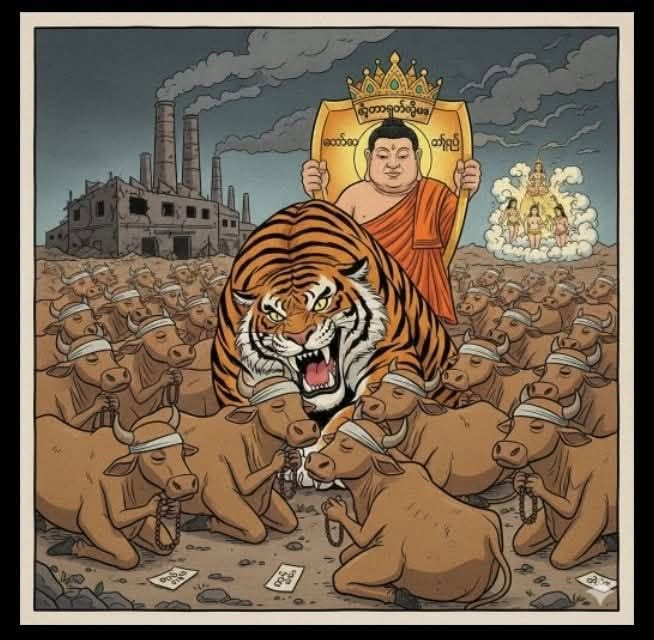
In the hallowed halls of Naypyidaw, Ma Ah La and his circle of advisors have discovered what they believe to be the cure for Myanmar’s demographic woes: let monks marry, and let everyone else marry more than one wife.
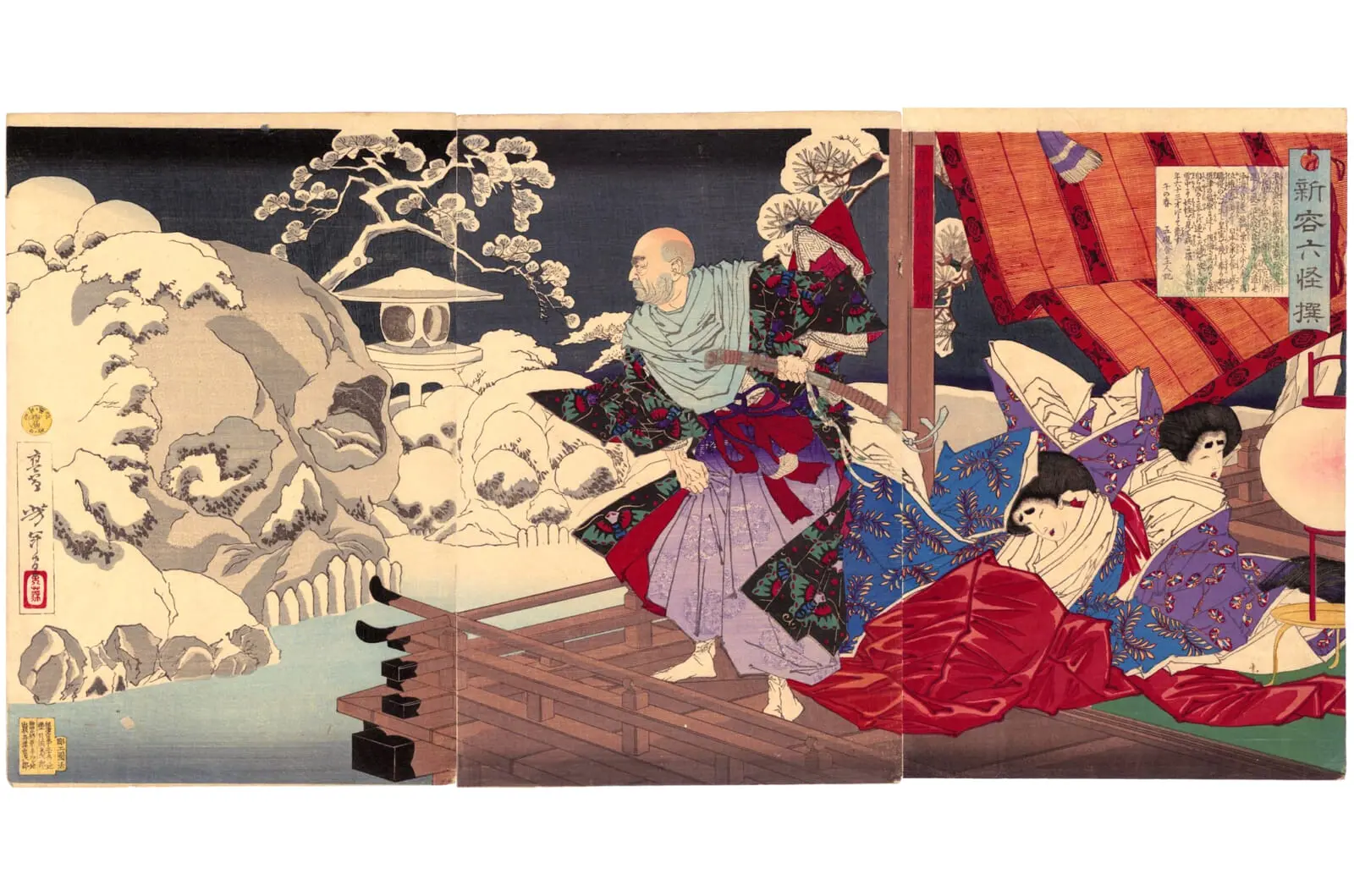
After all, history provides precedent. Japan’s Meiji government, faced with a shortage of bachelors after the Sengoku and Boshin wars, issued Edict No. 133 in 1872, declaring monks free to “eat meat, take wives, and shave their heads.” The Japanese clergy, once celibate, suddenly found themselves eligible bachelors — and the temple bells rang not only for meditation but also for wedding ceremonies.
Now, Myanmar faces its own crisis. Decades of civil war, revolution, and conscription have drained the pool of young men. Many have died, many have fled abroad, and many more are hiding from military service. The result? A surplus of women, with fewer men to marry them.
But here’s the twist: Theravada monks are supposed to remain celibate. Yet rumors abound of secret wives, hidden households, and even polygamous arrangements tucked behind monastery walls. The law may forbid it, but human nature has a way of bending rules like bamboo in the wind.
So Ma Ah La proposes a bold reform: monks may marry openly, and citizens may take multiple wives. “Why should Japan have all the fun?” he reportedly quipped, while drafting the new edict. His advisors nodded solemnly, calculating how many surplus brides could be absorbed by the clergy.
Not everyone is amused. Strict monks and devout Buddhists argue that such changes would erode the sanctity of the sangha. “If monks marry, who will meditate? If men take many wives, who will remain faithful?” one elder asked, before pointing out that Myanmar’s women are already migrating abroad and marrying foreigners. “Soon, we will have neither monks nor brides left,” he lamented.
Meanwhile, the women of Myanmar have mixed feelings. Some joke that polygamy would at least guarantee them a husband, even if shared. Others mutter that if monks are allowed to marry, they might as well start running nightclubs too.
And so the debate rages: should Myanmar follow Japan’s Meiji path, or cling to Theravada tradition? Should monks swap alms bowls for wedding rings? Should citizens swap monogamy for polygamy?
In the end, perhaps the most satirical truth is this: in a country where war has taken so many men, the government now looks to monks — the very symbols of renunciation — to solve the bachelor crisis.
NOTE: This satire plays with irony: monks, who renounce worldly pleasures, being asked to rescue the marriage market; women, more numerous than men, being offered polygamy as a “solution”; and the government borrowing ideas from Japan’s Meiji reforms as if history were a handbook for social engineering.