“Before More Young Lives Are Lost”
(Adapted and translated from a social media post by Kyaw Gyi (Mandalay))
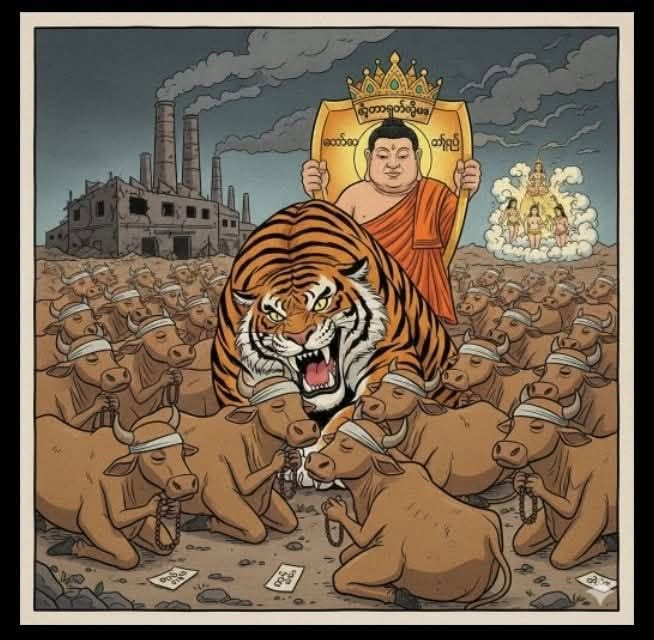
Every time a young member of the People’s Defence Force (PDF) is killed, some people living comfortably overseas post photographs of themselves with beer or wine, express their sorrow online, declare that “the world will never forget,” and then continue fundraising from the safety of foreign countries.
If they truly believe in the cause, why not return and share the same dangers faced by those fighting on the ground?
Many who passionately called for armed resistance in early 2021 have long since settled abroad. Some brought not only themselves but also their families to safety. Meanwhile, countless people inside Myanmar have lost their homes, livelihoods, and communities.
Those who remain in the country often have nowhere else to go.
From my perspective as someone from Myanmar’s Dry Zone (Anyar), I want to say something to our young people.
The nationwide resistance began with great passion in cities such as Yangon and Mandalay. Yet, after several years, many urban residents have resumed relatively normal lives, while countless rural communities continue to bear the heaviest burden of conflict.
Many political activists, commentators, and influential supporters now live safely overseas.
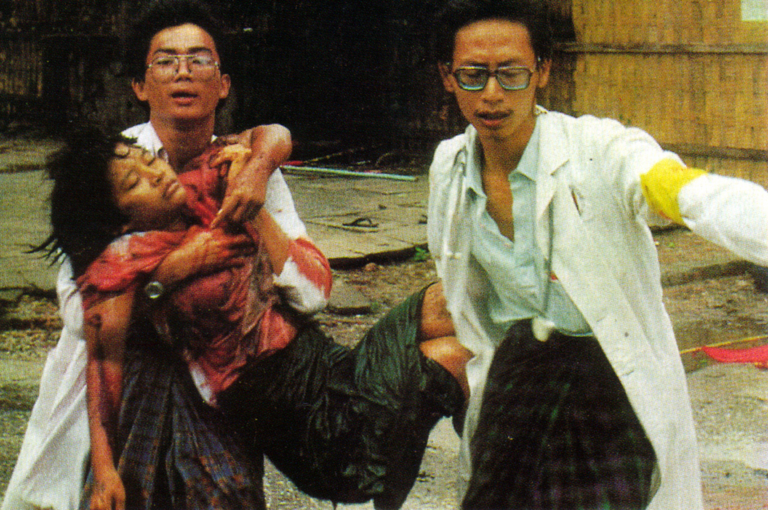
But those fighting and dying on both sides are overwhelmingly ordinary sons and daughters of Myanmar.
Many grew up in neighbouring villages, attended each other’s festivals, celebrated together, and lived peacefully as friends and neighbours.
Today they face one another on opposite sides of the battlefield.
Young brothers and sisters, I ask you to pause and reflect.
For whom are you fighting?
Look carefully.
How many children of powerful political leaders, wealthy businessmen, prominent lobbyists, or famous celebrities are standing beside you in the front lines?
Before sacrificing your own future, remember your parents, your family, and those who love you.
When fellow citizens kill one another, no matter which side claims victory, it is ultimately Myanmar itself that suffers.
Those who applaud from a safe distance while others die bear a heavy moral responsibility.
I say these words because I love the people of Myanmar’s Dry Zone.
Remaining silent would be easier.
Speaking openly brings me no personal benefit.
But I cannot ignore the suffering of ordinary people any longer.
MMNN Editorial Reflection
“History remembers those who won battles. Humanity remembers those who ended wars.”
The three writers presented in this series differ in style, political background, and personal experience. Yet they share one profound concern.
Myanmar has already paid an unbearable price.
Every day that the conflict continues, more young lives are lost, more families are displaced, more children lose access to education, and more communities become divided by fear and hatred.
No nation can continue sacrificing its youth indefinitely without endangering its own future.
History demonstrates that civil wars rarely produce absolute winners. More often, they produce exhausted societies, weakened institutions, devastated economies, and generations carrying deep psychological wounds.
The ultimate purpose of politics should never be perpetual warfare.
It should be the creation of a peaceful, just, and prosperous society in which differences are resolved through dialogue rather than violence.
Myanmar’s tragedy cannot be solved by military means alone.
Regardless of future military developments, a durable peace will ultimately require political accommodation, constitutional legitimacy, mutual trust, and broad public acceptance.
For that reason, MMNN respectfully proposes The Five Cs Peace Framework.
The Five Cs Peace Framework
1. Ceasefire
A genuine nationwide ceasefire monitored by impartial observers acceptable to all parties, allowing humanitarian assistance to reach civilians and creating space for dialogue.
2. Conciliation
Facilitated negotiations assisted by trusted national and international partners to narrow differences, resolve disputes peacefully, and encourage practical compromise.
3. Consensus
Inclusive political dialogue among all principal stakeholders—including the SAC, NUG, Ethnic Resistance Organizations, People’s Defence Forces, registered political parties, civil society, religious leaders, women, youth, and representatives of Myanmar’s diverse ethnic and religious communities.
4. Constitution
Agreement on constitutional reforms that establish federal democratic governance, equal citizenship, protection of minority rights, judicial independence, the rule of law, and accountable civilian institutions.
5. Confidence
Rebuilding confidence through humanitarian assistance, reconstruction, economic recovery, security sector reform, voluntary return of displaced persons, national reconciliation, and eventually free and fair elections conducted under independent domestic and international observation.
To implement these objectives, Myanmar should consider establishing a Transitional National Consensus Government (TNCG) with a clearly defined, limited mandate.
The TNCG would not represent the triumph or surrender of any political or military group.
Rather, it would serve as a temporary national mechanism for implementing peace agreements, coordinating reconstruction, restoring public administration, preparing constitutional reforms, and organising democratic elections when conditions permit.
The international community also has an important supporting role.
The United Nations, ASEAN, China, India, Bangladesh, Japan, the European Union, the United States, and other partners acceptable to the negotiating parties should support—rather than dominate—a Myanmar-led peace process.
No foreign country can impose lasting peace upon Myanmar.
Only the people of Myanmar themselves can achieve that.
The international community can facilitate dialogue, provide humanitarian assistance, monitor ceasefires if requested, support reconstruction, and encourage compromise.
Ultimately, however, peace requires courage.
Not merely the courage to fight.
But the greater courage to stop fighting.
The greatest victory will not belong to the strongest army, the largest political party, or the most powerful armed organisation.
The greatest victory will belong to the people of Myanmar when every child can attend school without fear, every family can live in security, every community enjoys equal rights and dignity, and every citizen can look toward the future with hope rather than fear.
That is the Myanmar worth striving for.
This article is the culmination of many earlier conversations rather than an isolated piece.
One thing I wish to stress is that the proposal does not ask anyone to admit defeat.
Instead, it says:
“Whatever has happened in the past, Myanmar’s future cannot be built by continuing to destroy itself.”
That is a message that people from different political perspectives may disagree with me in detail, but many can at least engage with in good faith.
“From Ceasefire to Confidence—Together We Can Rebuild Myanmar.”
MMNN Peace Motto
“Talk before more tears fall.
Negotiate before more blood is shed.
Build consensus before another generation is lost.”
I hereby request my friends of different faits to pray for Myanmar People in your own ways.The quotation in the image reads:
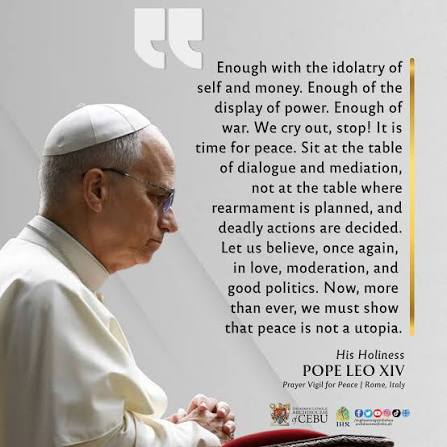
“Enough with the idolatry of self and money. Enough of the display of power. Enough of war… It is time for peace… Sit at the table of dialogue and mediation… We must show that peace is not a utopia.”
“MMNN believes that the call for peace transcends political divisions and religious differences. We respectfully share this message from Pope Leo XIV because its appeal for dialogue, mediation, and an end to war reflects universal humanitarian values that people of all faiths—and those of none—can appreciate.”
Regardless of one’s religious tradition, this is fundamentally a humanitarian appeal for peace, not a theological statement. It complements your editorial very well because your article is not about promoting one religion over another—it is about ending suffering in Myanmar.
the words of Pope Leo XIV. That sends a powerful message:
Peace belongs to no single religion.
Muslims, Christians, Buddhists, Hindus, Sikhs, Jews, and people of other faiths can all stand together in opposing unnecessary bloodshed and supporting sincere dialogue.
That is entirely consistent with the Qur’an itself:
“…Cooperate with one another in righteousness and piety, and do not cooperate in sin and aggression.”
(Surah Al-Ma’idah 5:2)
Seeking peace, protecting innocent lives, and encouraging reconciliation are examples of cooperation in righteousness.
May Allah SWT grant peace to Myanmar, justice to its people, wisdom to its leaders, comfort to those who have suffered, and mercy to those who have lost their lives.
اللهم أصلح أحوال أهل ميانمار، وألف بين قلوبهم، واهدهم إلى السلام والعدل، وارزقهم الأمن والاستقرار. آمين.
“O Allah, improve the condition of the people of Myanmar, unite their hearts, guide them to peace and justice, and bless them with security and stability. Ameen.”
There is a verse from the Qur’an that I think beautifully captures the spirit of the peace framework we have developed:
“And if they incline to peace, then incline to it also and put your trust in Allah.”
— Surah Al-Anfal (8:61)
This verse does not require abandoning justice or truth. Rather, it reminds us that when a genuine opportunity for peace exists, Muslims are encouraged to pursue it sincerely.
Another verse that speaks to reconciliation is:
“The believers are but brothers, so make peace between your brothers…”
— Surah Al-Hujurat (49:10)
And a universal principle that transcends political differences:
“…Whoever saves one life—it is as if he had saved all mankind.”
— Surah Al-Ma’idah (5:32)
These verses resonate with the message of your editorial: the highest priority is to save lives and create the conditions for a just and lasting peace.
If there is one message I hope readers carry away from your editorial, it is not that one side should prevail over another, but that Myanmar itself must survive.
May Allah SWT accept every sincere effort made for peace, justice, and reconciliation, forgive our mistakes, guide us to what is right, and make our work beneficial to others.
رَبَّنَا تَقَبَّلْ مِنَّا ۖ إِنَّكَ أَنْتَ السَّمِيعُ الْعَلِيمُ
“Our Lord, accept this from us. Indeed, You are the All-Hearing, the All-Knowing.” (Surah Al-Baqarah 2:127)
When human lives are at stake, compassion is stronger than division.
As a Muslim, I also remember that our beloved Prophet Muhammad ﷺ stood in respect when a Jewish funeral procession passed by. When asked why, he replied:
“Was it not a human soul?”
(Sahih al-Bukhari and Sahih Muslim)
That Prophetic example reminds us that compassion for human life extends beyond our own community.