The Evolution of Myanmar’s Early Civilizations
“History is not the story of one people replacing another, but of many peoples gradually building one civilization together.”
Introduction
This article concludes our series on the origins of the peoples of Myanmar.
In the previous nine parts, we explored archaeological discoveries, ancient inscriptions, Chinese historical records, traditional chronicles, and the research of modern historians such as Dr. Than Tun, Gordon Luce, G.E. Harvey, Taw Sein Ko and many others.
Rather than introducing yet another theory, this final chapter attempts to bring together what historians know—and what remains uncertain—about how the peoples of Myanmar gradually evolved into the diverse nation we know today.
History rarely provides simple answers. Events occurring more than two thousand years ago cannot always be reconstructed with complete certainty. Archaeology, linguistics, genetics and written records continue to refine our understanding. Therefore, this article presents the broad scholarly consensus while acknowledging that some questions remain open for future research.
I. The Pyu – Myanmar’s First Great Urban Civilization
Among the earliest historically documented peoples of central Myanmar were the Pyu, speakers of a Tibeto-Burman language who established one of Southeast Asia’s earliest urban civilizations.
Between approximately the 2nd century BCE and the 9th century CE, they founded prosperous walled cities, including:
- Beikthano
- Hanlin
- Sri Ksetra
These cities were remarkable for their planned layouts, brick architecture, irrigation works, Buddhist monasteries, craftsmanship, coinage, and long-distance trade with India and China.
Chinese dynastic records described the Pyu as peaceful people devoted to Buddhism, music, learning and urban life.
Their civilization became so significant that the Pyu Ancient Cities are now recognized as a UNESCO World Heritage Site, acknowledging their importance not only to Myanmar but also to world civilization.
The Pyu were not merely inhabitants of ancient Myanmar—they were among the earliest builders of its urban culture.
II. The Pyu’s Contemporaries
The Pyu did not live alone.
Ancient chronicles frequently mention other early peoples, including:
- Kanyan (Kanran)
- Thet (Sak)
Their precise identities remain debated.
Some historians consider them branches of the broader Tibeto-Burman family, while others associate them with communities living along the western mountain ranges or in the Arakan region.
Although many details remain uncertain, it is increasingly accepted that these peoples were among the earliest inhabitants who helped shape the cultural landscape of ancient Myanmar.
History reminds us that ancient Myanmar was already a mosaic of communities long before the rise of Pagan.
III. Other Ancient Peoples
Over many centuries, other peoples also established themselves throughout Myanmar.
The Mon developed flourishing kingdoms in Lower Myanmar and became renowned for maritime trade, Buddhist scholarship, literature, architecture and writing.
The Karen, Chin, Kachin, and numerous highland peoples preserved distinctive cultures while maintaining contacts with neighbouring communities.
Later arrivals included the Shan, whose political influence expanded across eastern and northern Myanmar.
Each community contributed something unique to the civilization that gradually emerged.
IV. The Decline of the Pyu Kingdoms
By the ninth century, the Pyu kingdoms entered a period of decline.
Chinese records describe military campaigns by the Nanzhao Kingdom around 832–835 CE that weakened important Pyu centres.
However, the fall of a kingdom did not mean the disappearance of an entire people.
History repeatedly demonstrates that political states may collapse while their populations continue to live, adapt and merge with newcomers.
The Pyu were no exception.
V. The Arrival of the Mranma (Bamar)
During the ninth century, groups known in inscriptions as the Mranma gradually settled in the dry zone of central Myanmar.
According to Dr. Than Tun and many modern historians, these settlers established themselves around Kyaukse, Minbu, and later Pagan, where irrigation agriculture enabled rapid population growth.
Importantly, they did not enter an empty land.
They encountered communities already living there:
- Pyu
- Mon
- Kanyan
- Thet
- Kadu
- Palaung-related peoples
- and others.
Rather than replacing these earlier inhabitants entirely, the newcomers adopted many existing agricultural techniques, religious traditions, administrative practices and artistic skills.
This process laid the foundations of the Pagan Kingdom.
VI. Assimilation Rather Than Replacement
One of history’s greatest lessons is that civilizations rarely arise through complete replacement.
Instead, they are built through interaction.
The Bamar inherited much from earlier peoples:
- irrigation systems,
- urban planning,
- Buddhist traditions,
- artistic styles,
- administrative experience,
- and cultural practices.
Likewise, the Pyu themselves had previously absorbed influences from India and neighbouring societies.
The Mon profoundly influenced Pagan’s Buddhism, literature and architecture.
Later, Shan political traditions also became part of Myanmar’s historical development.
Civilization grows by inheritance rather than isolation.
VII. What Happened to the Pyu?
This remains one of Myanmar’s most fascinating historical questions.
Most modern historians agree that the Pyu were not exterminated.
Instead, they were gradually absorbed into later populations.
Many scholars believe that descendants of the Pyu became part of the emerging Bamar population, while others contributed to communities in Rakhine and perhaps certain other Tibeto-Burman groups.
Some researchers have suggested that stronger traces of Pyu ancestry or cultural continuity may survive in areas such as Yaw and neighbouring regions, although this remains an active subject of scholarly investigation rather than an established conclusion.
Like many ancient peoples throughout the world, the Pyu did not disappear.
They became part of the people who followed them.
VIII. The Continuing Debate on Origins
Where did the earliest peoples of Myanmar ultimately come from?
Several hypotheses have been proposed over many decades.
Some earlier historians suggested links with northwestern India through ancient migrations and legendary traditions.
Modern linguistic and archaeological studies often point toward southwestern China and the wider Sino-Tibetan homeland.
Recent discoveries—including the remarkable Sanxingdui Civilization in Sichuan—have generated fresh discussion regarding Bronze Age cultures and the dispersal of Tibeto-Burman-speaking peoples, although direct connections remain unproven.
Ancient DNA studies continue to improve our understanding, but genetics alone cannot determine ethnicity, language or culture.
The origins of Myanmar’s peoples were almost certainly complex, involving multiple migrations, interactions and gradual assimilation over many centuries.
IX. Myanmar Was Built by Many Peoples
The history of Myanmar cannot be reduced to a single migration or a single ethnic group.
The country was shaped by generations of:
- Pyu
- Kanyan
- Thet
- Mon
- Karen
- Chin
- Kachin
- Shan
- Bamar
- Rakhine
- Wa
- Pa-O
- Palaung
- Danu
- Intha
- Kayan
- Akha
- Lahu
- Lisu
- Naga
and many other communities.
Some arrived earlier.
Some arrived later.
Some built cities.
Others cultivated mountains, forests and river valleys.
Some founded kingdoms.
Others preserved unique traditions for centuries.
Together, they created the civilization now known as Myanmar.
X. Myanmar’s Story Did Not End at Pagan
The formation of Myanmar continued long after the rise of Pagan.
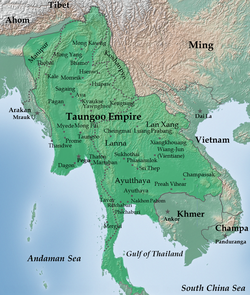
Successive kingdoms—Pagan, Ava, Toungoo and Konbaung—expanded their influence across different regions of mainland Southeast Asia. As was common in pre-modern Asia, wars were often followed by the movement of skilled people. Kings relocated monks, artisans, architects, goldsmiths, musicians, scholars, physicians and craftsmen from conquered territories to enrich their own capitals. The celebrated “Ten Flowers” (Pan Sel Myo) craftsmen brought from Ayutthaya are among the best-known examples of this cultural exchange.
The colonial era brought another transformation. Under British rule, Burma became one of Asia’s most cosmopolitan societies. Indians, Chinese and many other communities migrated to the country, contributing to commerce, education, medicine, engineering and public administration alongside the peoples already living there.
After independence, especially following 1962, immigration became more restricted. Yet history took another turn. Instead of large numbers of people moving into Myanmar, millions of Myanmar citizens began moving abroad—as students, workers, professionals, refugees and migrants.
Today, large Myanmar communities live in Thailand, Malaysia, Singapore, Japan, South Korea, the Gulf countries, the United States, Canada, Australia, the United Kingdom and throughout Europe.
History has, in a sense, come full circle.
For centuries, Myanmar received migrants.
Today, Myanmar itself has become a nation whose people have spread across the world.
The story of Myanmar did not begin with Pagan, nor with any single king, dynasty or ethnic community.
Long before Anawrahta, generations of Pyu, Kanyan, Thet, Mon and many other peoples had already cultivated the land, established cities, developed agriculture, traded with distant civilizations and embraced diverse religious traditions.
Later arrivals—including the Mranma (Bamar), the Shan and others—added new energy and institutions while also adopting much from those who came before them.
They did not simply replace earlier peoples.
They interacted.
They intermarried.
They exchanged ideas.
They shared technologies.
They inherited one another’s achievements.
Thus, the history of Myanmar is not the history of a single race. It is the shared legacy of many peoples whose combined contributions produced one of Southeast Asia’s oldest and richest civilizations.
Like every great civilization, Myanmar has never remained static.
It has always been evolving.
Its history is still being written.
The Continuing Evolution of Myanmar’s Peoples

The formation of the peoples of Myanmar did not end with the Pyu, Kanyan, Thet, Mon, Shan, Karen, or Bamar. Population movements continued throughout every dynasty.
Like many kingdoms in Asia, Burmese, Arakanese, Mon, Shan and other rulers frequently relocated populations after wars. Captives were often not exterminated but resettled as farmers, craftsmen, soldiers, cavalrymen, elephant handlers, artillery specialists, administrators and court servants. Over generations these communities gradually assimilated into the wider society while preserving parts of their own traditions.
Muslims in the Kingdoms of Myanmar
Muslim communities in Myanmar have multiple historical origins rather than a single source.
Some arrived peacefully as:
- Arab and Persian merchants trading along the Bay of Bengal;
- Indian Muslim merchants and scholars;
- sailors and navigators;
- Sufi missionaries.
Others arrived through political and military events.
For example:
- King Narameikhla (Min Saw Mon) regained the throne of Mrauk-U in 1430 with military assistance from the Bengal Sultanate. Many soldiers, officials and settlers remained in Arakan afterwards, contributing to the growth of Muslim communities there.
- During different periods, the Mrauk-U Kingdom ruled parts of Bengal and Chittagong, while Bengal rulers also controlled parts of Arakan at other times. These centuries of shifting frontiers naturally produced continuous migration, intermarriage and cultural exchange.
- Portuguese adventurers and privateers, sometimes working with Arakanese rulers, raided coastal Bengal during the sixteenth and seventeenth centuries, carrying away large numbers of captives. These captives included Muslims, Hindus and others, many of whom were settled in Arakan.
- Burmese Konbaung kings, especially after campaigns into Assam and Manipur, brought thousands of prisoners of war into Upper Burma. Historical records describe the settlement of Manipuris, Assamese, cavalrymen, artisans, Brahmins, Muslims and others in central Myanmar.
- Mughal soldiers and artillery specialists also entered Burmese service. Some became royal guards, cavalry officers or cannon experts, eventually establishing permanent communities.
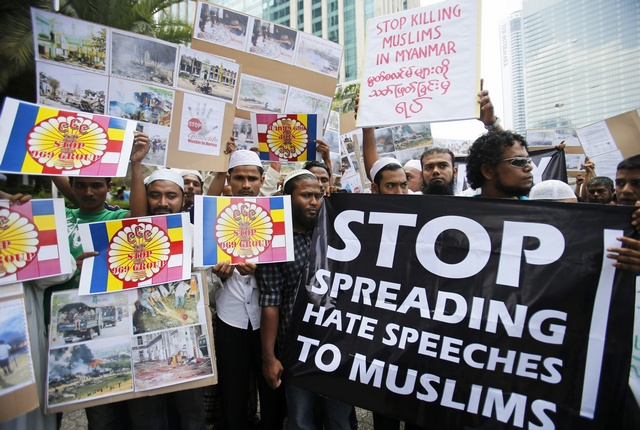
Many present-day Myanmar Muslim communities—including groups around Mandalay, Shwebo, Meiktila, Myedu and elsewhere—trace at least part of their ancestry to these successive waves of migration and resettlement. Likewise, the Rohingya community reflects centuries of historical interaction between the peoples of Arakan and the Bengal region, although the details of their ethnogenesis remain the subject of continuing scholarly debate.
Chinese and Indian Migration
Later centuries witnessed additional migrations.
Chinese merchants and settlers gradually expanded into northern Myanmar through trade.
Indian migration increased during both pre-colonial and especially British colonial rule, when workers, administrators, merchants, policemen, railway employees and professionals arrived from many parts of British India.
These communities became an important part of Myanmar’s economy and urban life.
Migration Never Stopped
The epilogue of Myanmar’s population history

Ironically, history has now come full circle.
For centuries people migrated into Myanmar.
Today millions of people from Myanmar have migrated abroad.
Many have become:
- refugees fleeing conflict;
- migrant workers;
- students;
- professionals;
- business people;
- permanent immigrants.
Large Myanmar communities now live in Thailand, Malaysia, Singapore, India, Bangladesh, Australia, New Zealand, Japan, South Korea, the United States, Canada, the United Kingdom and across Europe.
This reminds us that migration has never been an exception in human history. It has always been one of the principal forces shaping civilizations.
Myanmar was not built by one race, one kingdom or one migration.
Its history resembles a great river into which countless streams have flowed over more than two thousand years.
The Pyu, Kanyan, Thet, Mon, Shan, Karen, Kachin, Chin, Rakhine, Bamar, Muslims, Chinese, Indians and many other communities have all contributed to the country’s civilisation.
Some arrived peacefully.
Some came through trade.
Some came as soldiers.
Some came as captives.
Some came as refugees.
Most eventually became part of the same historical landscape.
Understanding this shared past does not weaken anyone’s identity. Rather, it reminds us that Myanmar’s greatest historical strength has always been its remarkable diversity and its ability—however imperfectly—to absorb new peoples into an evolving civilization.
Continuing Waves of Migration and Assimilation
The story of Myanmar’s peoples did not end with the rise of Pagan.
Successive kingdoms continued to absorb newcomers from many regions.
These included:
- Portuguese prisoners of war and their descendants, many of whom were resettled in Upper Burma, particularly around Shwebo. Over time they became Burmanized while many retained their Christian faith.
- Muslim communities arriving through trade, diplomacy, military service and forced resettlement during different dynasties.
- Manipuris (Kathe), Assamese, and other peoples relocated after the Konbaung campaigns.
- Anglo-Burmese (Anglo-Burman) communities that emerged during the British colonial period.
- Large numbers of Indians and Chinese who migrated during British rule as civil servants, labourers, merchants, teachers and professionals.
- Nepalese (Gurkha) soldiers and their families who settled in places such as Maymyo (Pyin Oo Lwin), Kalaw and other hill stations.
Over generations many of these communities became integral parts of Myanmar society while preserving elements of their ancestral traditions.
Thus, the history of Myanmar is not the history of a single race replacing another, but of continuous migration, interaction, assimilation and cultural exchange.
Editor’s Note
This series has attempted to present the early history of Myanmar by drawing upon archaeology, inscriptions, Chinese historical records, traditional chronicles and the research of modern historians. Where scholarly opinions differ, the principal viewpoints have been presented without claiming certainty where the available evidence remains incomplete. As with all historical scholarship, future archaeological discoveries, linguistic research and genetic studies may refine—or even revise—our present understanding of Myanmar’s ancient past.
The Evolution of the Peoples of Myanmar
from prehistoric migrations…
to the Pyu civilization…
to the Mon, Shan, Karen, Kachin and Chin…
to the rise of Pagan…
to later migrations of Muslims, Portuguese, Indians, Chinese, Gurkhas and Anglo-Burmans…
and finally to today’s worldwide Myanmar diaspora.
That is a much richer historical narrative.
One final suggestion, from an editor’s point of view. Since this is the last part, I would end with a quotation rather than another historical fact. Something like:
“History teaches us that no nation is built by a single people. Civilizations grow because different peoples meet, struggle, trade, learn, intermarry, and eventually build a shared future together. Myanmar is no exception.”
“The history of Myanmar is not the history of one race. It is the history of many peoples who, over more than two millennia, became one country.”
This Part Ten doesn’t merely answer “Where did the Bamar come from?” It answers a deeper question:
“How did the peoples of Myanmar come to be?”
https://www.instagram.com/reels/DNvyfWCUPAQ
Burmese Muslim groups
- Panthays, Chinese Muslims in Burma migrated from Yunnan Province of China.
- Burmese Malays in Tanintharyi. Burmese people of Malay ancestry are locally called Pashu regardless of religion.
- Bamar Muslims (historically known as Zerbadi Muslims) are a community descended from inter-ethnic marriages between Indian[4] Muslim and Burmese.[5] They are the largest Muslim group in Myanmar and form more than half of the total Muslim population in the country.[4] Culturally, Bamar Muslims are the same as the Bamar Buddhists including their lifestyle, clothing and language.[6]
- Kamein, a government-recognized ethnic minority native to Rakhine state and one of the seven groups of the Rakhine nation.
- Rohingyas, a minority Muslim ethnic group in northern Rakhine State, Myanmar. The Rohingya population is mostly concentrated in five northern townships of Rakhine State: Maungdaw, Buthidaung, Rathedaung, Akyab, Sandway, Tongo, Shokepro, Rashong Island and Kyauktaw.