Legal Memorandum: Assessment of Ashin Nyanissara (Sitagu Sayadaw)’s Role Under International Human Rights and Legal Norms
Prepared for:
- Office of the United Nations High Commissioner for Human Rights (OHCHR)
- International Criminal Court (ICC)
- International Court of Justice (ICJ)
- ASEAN Human Rights Mechanisms
- Myanmar Transitional Justice and Documentation Bodies
Prepared by: Myanmar Muslims News Network (MMNN) – Legal Affairs Division
Date: June 2025
I. INTRODUCTION
This memorandum evaluates the statements, actions, and influence of Ashin Nyanissara, also known as Sitagu Sayadaw or Thidagu, under applicable international human rights and legal frameworks. It considers whether his conduct—including public sermons, ideological alignment with military junta leaders, and association with extremist groups—violates international legal standards regarding incitement, religious discrimination, and complicity in crimes against humanity.
II. FACTUAL BACKGROUND
- Religious Authority and Reach: Ashin Nyanissara is one of Myanmar’s most prominent monks, heading the Shwe Kyin Nikaya monastic order and formerly serving as patron of Ma Ba Tha (Association for the Protection of Race and Religion).
- Leadership in Ma Ba Tha: Ma Ba Tha, an ultranationalist group, has been linked to widespread anti-Muslim rhetoric and violence. As its patron, Thidagu provided ideological and spiritual legitimacy to the organization’s campaigns that fueled religious tensions.
- Rhetoric of Religious Supremacy:
- Thidagu has stated in sermons that non-Buddhists are “not human” and that killing non-Buddhists does not amount to sin, statements that undermine the fundamental human dignity of minority groups.
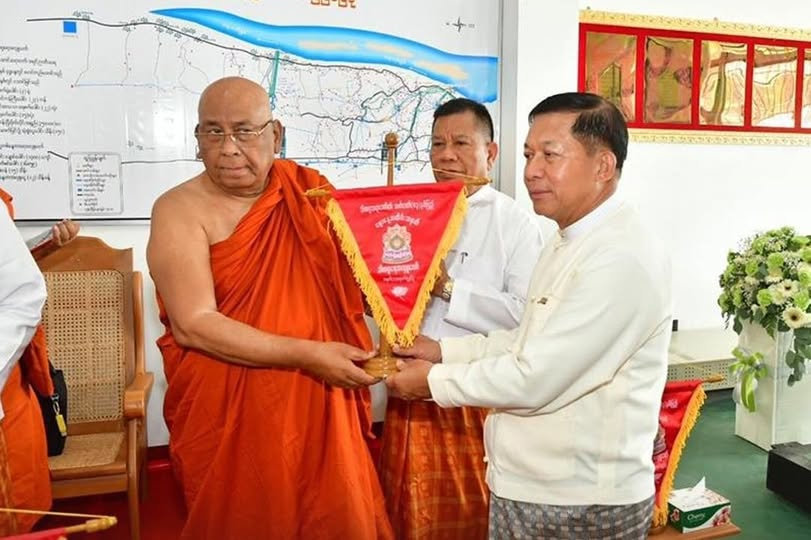
- He defended the military junta and encouraged the public to forgive Commander-in-Chief Min Aung Hlaing despite well-documented atrocities committed under his leadership.
- Association with Extremists:
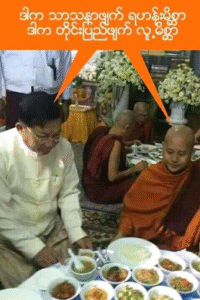
- In prison and later at Ma Ba Tha conferences, Thidagu publicly embraced Ashin Wirathu—known for inciting anti-Muslim violence—calling him “Comrade” (Yae Baw).
- Decline in Public Trust: Once revered by the majority Bamar Buddhist population, Thidagu has lost significant credibility. Surveys and social sentiment analysis indicate that 75–80% of Myanmar citizens now disapprove of his pro-military stance.
III. RELEVANT LEGAL FRAMEWORKS
- ICCPR (International Covenant on Civil and Political Rights):
- Article 20(2): Prohibits incitement to religious hatred.
- Article 19: Guarantees freedom of expression but limits it when it infringes on the rights or dignity of others.
- Rome Statute (ICC):
- Article 7: Crimes against humanity, including persecution and instigation.
- Article 25(3)(c): Holds individuals criminally liable for aiding or abetting international crimes.
- Convention on the Prevention and Punishment of the Crime of Genocide:
- Article III(c): Penalizes direct and public incitement to commit genocide.
- UN Strategy and Plan of Action on Hate Speech:
- Provides guidelines for addressing speech that incites discrimination or violence.
- UDHR (Universal Declaration of Human Rights):
- Articles 1 and 2: Affirm the dignity and equality of all people regardless of religion or ethnicity.
IV. LEGAL AND ETHICAL ANALYSIS
- Thidagu’s public dehumanization of non-Buddhists constitutes hate speech, violating international human rights obligations.
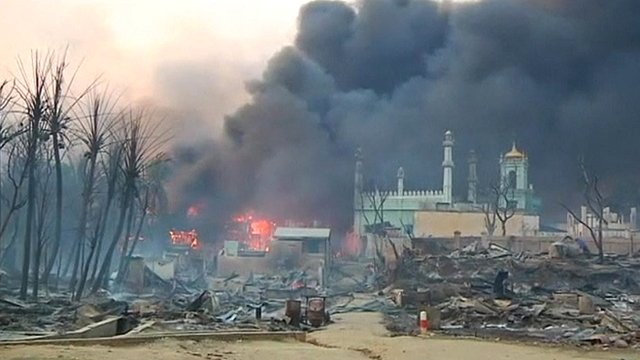
- His spiritual authority and ideological influence were instrumental in fostering a climate conducive to violence, particularly during Rohingya displacement and broader anti-Muslim violence.
- His alliance with Ma Ba Tha and his religious cover for state-led abuses amount to ideological complicity in crimes against humanity.
V. RISK IMPLICATIONS FOR FUTURE GOVERNANCE
- A future civilian or federal union government must address the role of religious hate speech in national reconciliation efforts.
- Thidagu may face accountability under transitional justice mechanisms, including domestic or international prosecution.
- Allowing high-profile monks to incite hatred without consequence risks deepening polarization and potential retaliatory violence among ethnic and religious minorities.
VI. ADDITIONAL CONTEXTUAL CONSIDERATIONS
- Thidagu’s Role in Buddhist Institutional Networks:
- As a senior member of the Shwe Kyin Nikaya and a leading religious voice, Thidagu’s sermons carry institutional authority and shape mainstream monastic sentiment.
- Public Support and Rejection:
- His early popularity among Myanmar’s Buddhist population was based on scholarship and social works. However, his alignment with the military junta post-2021 coup, and sermons urging forgiveness for its crimes, triggered widespread backlash.
- Political Entrenchment:
- His fraternization with extremist monks like Wirathu and leadership within Ma Ba Tha place him firmly within Myanmar’s right-wing ethno-religious political movement.
- Potential for Regional Consequences:
- As similar patterns of religious nationalism rise across South and Southeast Asia, failure to hold such figures accountable could embolden others regionally.
VII. RECOMMENDATIONS
- International Documentation and Monitoring:
- UN and independent documentation projects should preserve audio, video, and text of Thidagu’s sermons and public appearances.
- Legal Accountability:
- National and international bodies must examine whether Thidagu’s conduct constitutes prosecutable offenses under international criminal law.
- Community Engagement:
- International stakeholders should support alternative Buddhist voices promoting tolerance and pluralism.
- Policy Reform:
- Myanmar’s future constitution and legal codes should prohibit religious hate speech by clerics and enforce accountability.
VIII. CONCLUSION
Ashin Nyanissara’s ideological influence, support for the junta, and hate-based rhetoric targeting religious minorities present serious violations of international norms. His actions represent more than religious speech—they constitute incitement, endorsement of systemic violence, and obstruction of peace and accountability. This demands thorough scrutiny and appropriate action in Myanmar’s post-conflict justice process.
Submitted by: Myanmar Muslims News Network (MMNN) Legal Affairs Division
Contact: [email protected]