Legal Memorandum: Assessment of Ashin Wirathu’s Actions Under International Human Rights and Criminal Law
Prepared for:
- United Nations High Commissioner for Human Rights (OHCHR)
- International Criminal Court (ICC)
- International Court of Justice (ICJ)
- ASEAN Human Rights Mechanisms
- Myanmar Transitional Justice Bodies
Prepared by: Myanmar Muslims News Network (MMNN) – Legal Affairs Division
Date: June 2025
I. INTRODUCTION
This memorandum evaluates the conduct of Ashin Wirathu under international criminal and human rights law, particularly in relation to hate speech, incitement to violence, persecution, and potential complicity in crimes against humanity. As a prominent Buddhist monk and former leader of the 969 Movement and Ma Ba Tha, Wirathu’s actions are not only a cause for domestic instability but also pose a serious threat to international norms and interfaith peace.
II. FACTUAL BACKGROUND
- Military Intelligence Ties: Ashin Wirathu was identified by foreign journalists in 2003 as an agent of the Myanmar Military Intelligence Service (MIS), operating under the influence of ex-General Khin Nyunt. He maintained connections with political figures such as U Aung Thaung, U Ye Myint, and President Thein Sein, forming what has been referred to as an “Axis of Evil.”
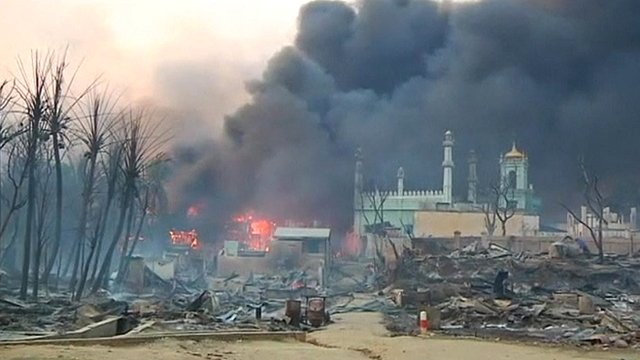
- Meiktila Muslim Massacre (2013): Eyewitness reports and photographic evidence show that Wirathu incited and later justified violence in Meiktila, where coordinated attacks on Muslim communities left dozens dead and thousands displaced. His role has been well-documented in the report “Meiktila Muslim Massacre (4M)” by Mg Mg Shwe Keraweik.
- Promotion of Religious Extremism:
- As a founding figure of the 969 Movement and Ma Ba Tha, Wirathu promoted Islamophobia, boycotts of Muslim businesses, and supported the Race and Religion Protection Laws (2015), which severely restricted interfaith rights.
- He maintained public relationships with hardline clerics, including Thidagu Sayadaw, and praised known ultranationalist monk Thidagu monk, referring to him as “Yae Baw” (comrade) in public events.
- Incitement and Hate Speech: Wirathu repeatedly used sermons and social media to demonize Muslims, claiming they were existential threats to Myanmar. UN Special Rapporteurs and international NGOs have noted his speech patterns as dehumanizing and genocidal.
- Complicity in State Violence: He coordinated with military-linked organizations and encouraged public support for junta leaders, including Min Aung Hlaing.
III. LEGAL FRAMEWORKS AND VIOLATIONS
- Rome Statute (ICC):
- Article 7: Defines crimes against humanity, including persecution on ethnic or religious grounds.
- Article 25: Establishes criminal responsibility for individuals inciting such crimes.
- Convention on the Prevention and Punishment of the Crime of Genocide:
- Article III: Criminalizes direct and public incitement to commit genocide.
- International Covenant on Civil and Political Rights (ICCPR):
- Article 20(2): Prohibits advocacy of hatred that constitutes incitement to discrimination, hostility, or violence.
- UN Strategy on Hate Speech (2019):
- Recommends legal action, accountability, and counter-narratives to address extremist rhetoric.
- Universal Declaration of Human Rights (UDHR):
- Articles 1 & 2 affirm rights to equality and non-discrimination regardless of religion or ethnicity.
IV. EVIDENCE OF COMPLICITY AND INCITEMENT
- Public Sermons: Statements calling Muslims “non-humans” and urging Buddhists to resist Islamic influence. His sermons stating that he would made Muslims of Myanmar, homeless, jobless and foodless was notorious. He even called Ms Yanghee Lee, special rapporteur of the UN on the situation of human rights in Myanmar as a prostitute.
- Political Mobilization: Directed followers through Ma Ba Tha to endorse anti-Muslim policies.
- Strategic Propaganda: Aligned with junta goals to suppress minority groups and redirect public dissent.
- Organizational Leadership: Oversaw Buddhist ultranationalist efforts through Ma Ba Tha and maintained influence within Shwe Kyin Nikaya, one of the state-sanctioned religious orders.
V. RISKS AND IMPLICATIONS
- Religious and Ethnic Polarization: Ongoing incitement undermines national reconciliation and exacerbates existing interfaith tensions.
- Regional Instability: Wirathu’s ideology resonates beyond Myanmar’s borders, fueling Islamophobic sentiments in South and Southeast Asia.
- Impunity and Erosion of Rule of Law: His continued freedom despite widespread evidence emboldens other extremists and discredits transitional justice mechanisms.
VI. CONTEXTUAL AND SOCIAL IMPACTS
- Community Devastation: Victims of religious violence continue to suffer from trauma, economic loss, and displacement.
- International Reputation: Myanmar’s tolerance of figures like Wirathu harms its diplomatic credibility.
- Loss of Public Support: Once revered, he is now widely discredited among Myanmar citizens for siding with military interests.
VII. RECOMMENDATIONS
- Criminal Investigation and Prosecution: ICC and UN bodies should prioritize an investigation into Wirathu’s role in incitement and crimes against humanity.
- Preservation of Evidence: Digital and eyewitness documentation of speeches, social media, and coordinated events must be archived securely.
- Travel Restrictions and Asset Freezes: Recommend UN or ASEAN-imposed sanctions targeting Wirathu and his affiliated organizations.
- Community Resilience Programs: Support interfaith dialogue and deradicalization campaigns to rebuild trust.
- Legal and Religious Reform: Reinforce domestic laws on hate speech and end impunity for religious leaders who propagate violence.
VIII. CONCLUSION
Ashin Wirathu exemplifies how religious authority can be manipulated for political violence and persecution. His documented actions meet international legal thresholds for prosecution, and his continued impunity undermines peacebuilding. A coordinated international legal response is crucial to prevent further atrocities and support Myanmar’s democratic and pluralist future.
Submitted by: Myanmar Muslims News Network (MMNN) Legal Affairs Division
Contact: [email protected]