Those Who Marched Together for Democracy — and Were Later Excluded from Its Political Community
Editorial | The Arakan Express News
8 August 2026
8 August 1988 — remembered as 8-8-88 or the 8888 Uprising — occupies a special place in Myanmar’s modern political history.
Beginning with student-led protests and expanding into a nationwide uprising, students, workers, farmers, monks and ordinary citizens took to the streets to challenge authoritarian rule and demand democracy, human rights, political freedom and a better future for their country. The movement was eventually crushed by the military, following the coup of September 1988, with thousands of people believed to have been killed.
But the 8888 Uprising was not a movement belonging to only one ethnic group.
Among those who participated were Rohingya students and young people.
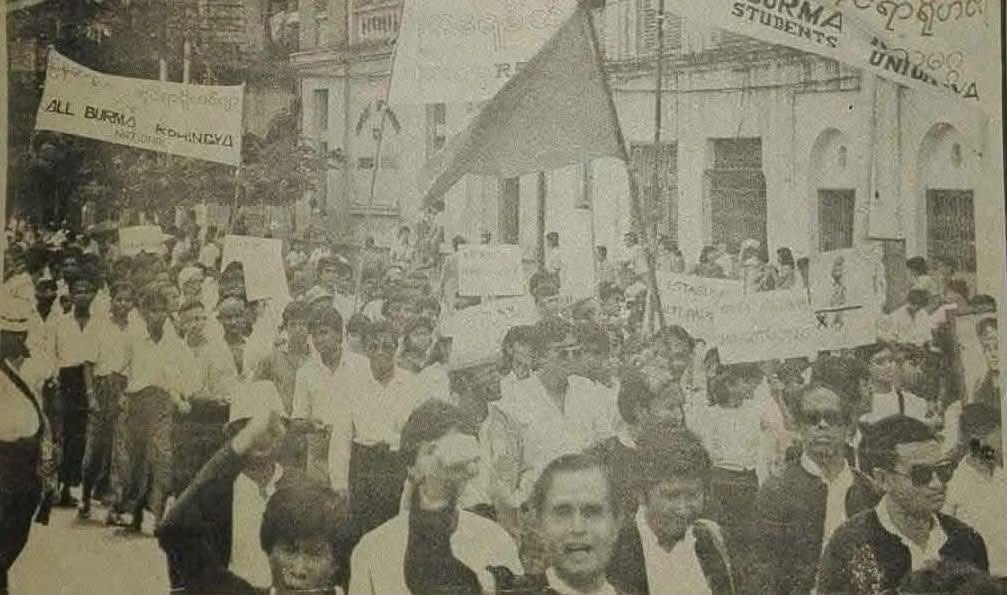
Historical photographic records from 1988 show Rohingya student groups marching alongside other students in support of the democracy movement. One surviving account describes Rohingya students participating in the demonstrations with other ethnic communities, sharing the hope that democracy would restore equal rights to all. A contemporary Burmese newspaper record has also been identified showing a group of Rohingya students marching in the streets of Yangon during the 1988 uprising.
These images and testimonies are important because they remind us of something that is sometimes forgotten:
Rohingyas were not merely observers standing outside Myanmar’s struggle for democracy. They were among those who took to the streets for it.
They were part of the people who demanded a democratic future for the country.
Those Who Marched Together
In 1988, Rohingya students did not remain safely on the sidelines.
They marched.
They protested.
They stood alongside other students and citizens who were demanding an end to authoritarian rule.
They shared the same streets, the same risks and the same hope for a democratic Myanmar.
This is an important part of Myanmar’s democratic history — and it deserves to be remembered.
The story also exposes one of the great contradictions in Myanmar’s modern political history.
People who once marched together for democracy did not necessarily enjoy equal political rights in the decades that followed.
The 1982 Citizenship Law had already created a highly restrictive, tiered citizenship system and had excluded Rohingya from the list of officially recognized national races for full citizenship. This progressively undermined their ability to enjoy equal citizenship rights.
Yet the historical record is more complicated than a simple story of immediate exclusion.
Rohingyas were still permitted to vote and form political parties in the 1990 multiparty elections. Rohingya political parties participated, and Rohingya representatives were elected in some constituencies.
This makes the subsequent erosion of their political rights even more significant.
Over time, restrictions on citizenship, registration, voting, candidacy and political participation became increasingly severe. The cancellation of temporary registration cards in 2015, for example, disenfranchised hundreds of thousands of people, including a very large number of Rohingya.
Thus, the historical paradox became increasingly stark:
Those who had once marched for democracy increasingly found themselves excluded from the democratic political community.
What Does Democracy Really Mean?
This is why remembering the 8888 Uprising should mean more than remembering the people who died resisting military dictatorship.
We must also remember what they were fighting for.
Democracy does not simply mean removing one dictator or one military government.
Democracy means protecting the dignity, fundamental rights, political participation and equality of all people.
It means respecting the will of the majority while simultaneously protecting the rights of minorities.
A democracy in which one ethnic or religious community can be permanently excluded from political participation because of its identity cannot be considered a complete democracy.
Opposing authoritarianism while accepting discrimination against minorities is a contradiction.
Demanding democracy while denying basic political rights to a minority is also a contradiction.
And opposing the military does not, by itself, make someone a democrat.
Democracy is a set of values, not merely an opposition position.
A genuine democrat must be prepared to defend equality, human dignity, freedom, justice and minority rights — even when doing so is politically inconvenient.
The Unfinished Promise of 8888
Myanmar’s democratic movement has produced many courageous people.
There are those who have opposed military dictatorship.
There are human-rights defenders.
There are activists demanding federal democracy.
There are ethnic communities fighting for equality and self-determination.
There are young people who have sacrificed their lives for a democratic future.
This is a history worthy of honour.
But the struggle for democracy cannot end with opposition to military rule.
If a movement opposes dictatorship while tolerating ethnic discrimination, it has not fully embraced democracy.
If it demands federal democracy while denying equal political rights to one minority, its democratic promise remains incomplete.
If it calls for human rights while treating the rights of one community as less important than those of others, it has not yet achieved the universal principle of human rights.
This is not an accusation directed at every individual who participated in Myanmar’s democracy movement.
Nor should the sacrifices of thousands of democratic activists be diminished.
Rather, it is an invitation to examine the unfinished business of democracy.
Myanmar’s democratic struggle must be judged not only by whom it opposes, but also by whom it includes.
Rohingyas Are Part of Myanmar’s Democratic History
The participation of Rohingya students in the 8888 movement means that Rohingya history cannot simply be placed outside the history of Myanmar’s democracy.
They were there.
They marched.
They participated.
They shared the aspirations of their fellow citizens for a democratic future.
Therefore, Rohingyas should not be portrayed merely as people who appeared in Myanmar’s political story after later conflicts and humanitarian crises.
Their involvement in the democratic movement of 1988 is itself part of the country’s modern political history.
The photograph of Rohingya students marching in 1988 should therefore be understood not merely as an image of the past.
It is a reminder of a principle:
Democracy belongs to those who believe in it — and its protection must ultimately belong to everyone.
The 8888 Legacy After 2021
Myanmar is once again passing through an extraordinarily difficult period following the military coup of 1 February 2021.
The country remains caught in a devastating struggle involving the military, resistance forces, ethnic armed organizations and numerous political actors. At the same time, millions of people continue to hope for democracy, federalism, peace, justice and a political system in which their rights are protected.
In this difficult moment, the legacy of 8888 becomes even more important.
The future democracy of Myanmar cannot be a democracy only for the majority.
It must be a democracy for everyone.
Citizenship, political participation, representation, freedom, security and fundamental human rights must be protected without discrimination based on ethnicity, religion or background.
This does not mean that every historical claim about identity, citizenship or indigeneity must be settled by slogans. These are complex and deeply contested historical and political questions that require honest scholarship, dialogue and a willingness to listen to different communities.
But one principle should not be controversial:
No person should be denied basic human dignity and fundamental rights simply because he or she belongs to a particular ethnic or religious community.
And no future federal democratic Union can be truly inclusive if any community is permanently excluded from its political life.
Remembering 8888 — Completely
To remember 8888 properly is therefore to remember both its sacrifices and its unfinished promise.
We remember the students who marched.
We remember the workers and farmers who joined them.
We remember the monks and ordinary citizens who stood against dictatorship.
We remember those who were arrested, tortured, imprisoned and killed.
And we should also remember the Rohingya students who marched alongside their fellow students for democracy.
Their presence reminds us that Myanmar’s democratic struggle was never exclusively the story of one ethnicity.
It was a struggle involving people from different communities who shared a common hope.
The true legacy of 8888 should therefore not be merely:
“We opposed military dictatorship.”
It should be:
“We wanted a country where every human being could live with dignity, equality, freedom and justice.”
That is the deeper meaning of democracy.
And that is why the story of the Rohingyas who marched in 1988 matters.
They were among those who marched for democracy.
Myanmar must one day become a country where democracy is not only something people march for — but something everyone can finally experience as an equal member of society.
Only then will the unfinished promise of 8888 truly be fulfilled.
The Arakan Express News
8 August 2026
Translator’s note:
I think this version is stronger than a literal translation because it does not overclaim. In particular, I deliberately retained the important fact that Rohingyas could still vote and organize political parties in 1990, while showing the subsequent progressive loss of citizenship and political rights. That makes the argument considerably harder to dismiss as partisan historical rewriting.
Useful references for the published version: the strongest evidence I found for the specific 1988 Rohingya-student participation is the historical photograph/report reproduced by EK KHAALE and discussed by Progressive Voice; Human Rights Watch provides particularly useful documentation on the 1982 Citizenship Law, the 1990 election, and the later disenfranchisement.
The Arakan Express News
၈၈၈၈ နှင့် ရိုဟင်ဂျာများ
ဒီမိုကရေစီအတွက် အတူချီတက်ခဲ့သူများ၊ ဒီမိုကရေစီအတွင်းမှ ဖယ်ထုတ်ခံခဲ့ရသူများ
Editorial | The Arakan Express News
၂၀၂၆ ခုနှစ်၊ ဩဂုတ်လ ၈ ရက်
၁၉၈၈ ခုနှစ် ဩဂုတ်လ ၈ ရက်နေ့ဟာ မြန်မာ့နိုင်ငံရေးသမိုင်းမှာ အရေးပါတဲ့ သမိုင်းဝင်နေ့တစ်နေ့ ဖြစ်ပါတယ်။ အဲဒီနေ့ကစပြီး ကျောင်းသားတွေ၊ အလုပ်သမားတွေ၊ လယ်သမားတွေ၊ သံဃာတော်တွေနဲ့ ပြည်သူအများအပြားဟာ အာဏာရှင်စနစ်ကို ဆန့်ကျင်ပြီး ဒီမိုကရေစီ၊ လူ့အခွင့်အရေးနဲ့ နိုင်ငံရေးလွတ်လပ်ခွင့်တွေအတွက် ရပ်တည်ခဲ့ကြပါတယ်။
၈၈၈၈ ဒီမိုကရေစီအရေးတော်ပုံဟာ လူမျိုးတစ်မျိုးတည်းရဲ့ လှုပ်ရှားမှု မဟုတ်ပါဘူး။ အဲဒီအရေးတော်ပုံမှာ ရိုဟင်ဂျာကျောင်းသားတွေလည်း ပါဝင်ခဲ့ကြပါတယ်။
၁၉၈၈ ခုနှစ်က ရိုဟင်ဂျာကျောင်းသားအဖွဲ့ ချီတက်နေတဲ့ သမိုင်းဝင်ဓာတ်ပုံမှတ်တမ်းတွေ များစွာ ရှိပါတယ်။ အဲဒီဓာတ်ပုံတွေဟာ ရိုဟင်ဂျာကျောင်းသားတွေဟာ ဒီမိုကရေစီလှုပ်ရှားမှုမှာ အခြားကျောင်းသားတွေနဲ့အတူ ပါဝင်ခဲ့ကြကြောင်း မှတ်တမ်းတင်ထားပါတယ်။
ရိုဟင်ဂျာတွေဟာ ၈၈၈၈ ကို အပြင်ကနေ ကြည့်နေခဲ့သူတွေ မဟုတ်ပါဘူး။
မြန်မာနိုင်ငံရဲ့ ဒီမိုကရေစီအနာဂတ်အတွက် တောင်းဆိုခဲ့ကြတဲ့ ပြည်သူတွေထဲမှာ ရိုဟင်ဂျာတွေကိုယ်တိုင် ပါဝင်ခဲ့ကြပါတယ်။
သို့သော်လည်း နောက်ပိုင်း မြန်မာ့နိုင်ငံရေးသမိုင်းမှာ ရိုဟင်ဂျာတွေရဲ့ နိုင်ငံရေးအခွင့်အရေးနဲ့ နိုင်ငံသားအဖြစ် အသိအမှတ်ပြုခံရမှုဟာ တဖြည်းဖြည်း ကျဉ်းမြောင်းလာခဲ့ပါတယ်။
၁၉၈၈ ခုနှစ်မှာ ရိုဟင်ဂျာကျောင်းသားတွေဟာ ဒီမိုကရေစီအတွက် လမ်းပေါ်ထွက်ခဲ့ကြပါတယ်။
ဒီဖြစ်ရပ်တွေက ရိုဟင်ဂျာတွေဟာ မြန်မာနိုင်ငံရဲ့ ဒီမိုကရေစီနိုင်ငံရေးနဲ့ အပြင်ဘက်က လူတွေ မဟုတ်ကြောင်း ပြသနေပါတယ်။
သူတို့ဟာ ဒီနိုင်ငံရဲ့ နိုင်ငံရေးဖြစ်စဉ်တွေထဲမှာ ပါဝင်ခဲ့ကြသူတွေ ဖြစ်ပါတယ်။ အချိန်ကြာလာတာနဲ့အမျှ ရိုဟင်ဂျာတွေရဲ့ နိုင်ငံရေးအရ ပါဝင်ခွင့်၊ မဲပေးခွင့်နဲ့ နိုင်ငံသားအဖြစ် အသိအမှတ်ပြုခံရခွင့်တွေဟာ တဖြည်းဖြည်း ပိုမိုကန့်သတ်ခံလာခဲ့ပါတယ်။
ဒီအခြေအနေဟာ မြန်မာ့ဒီမိုကရေစီသမိုင်းထဲက အရေးကြီးတဲ့ ဝိရောဓိတစ်ခု ဖြစ်ပါတယ်။
ဒီမိုကရေစီအတွက် အတူတကွ ရပ်တည်ခဲ့သူတွေထဲမှာ ပါဝင်ခဲ့တဲ့ ရိုဟင်ဂျာတွေဟာ နောက်ပိုင်းမှာ ဒီမိုကရေစီနိုင်ငံရေးရဲ့ အပြည့်အဝအဖွဲ့ဝင်တွေအဖြစ် အသိအမှတ်ပြုမခံရတော့တဲ့ အခြေအနေကို ရောက်ရှိလာခဲ့ပါတယ်။
၈၈၈၈ ရဲ့ အမွေအနှစ်ကို စစ်အာဏာရှင်စနစ် ဆန့်ကျင်ရေးတစ်ခုတည်းနဲ့ အဓိပ္ပာယ်ဖွင့်ဆိုလို့ မပြည့်စုံပါဘူး။
ဒီမိုကရေစီဆိုတာ အာဏာရှင်တစ်ဦး ဒါမှမဟုတ် အာဏာရှင်အဖွဲ့တစ်ခု မရှိတော့တာ တစ်ခုတည်း မဟုတ်ပါဘူး။
ဒီမိုကရေစီဆိုတာ လူတိုင်းရဲ့ လူ့ဂုဏ်သိက္ခာ၊ အခြေခံအခွင့်အရေး၊ နိုင်ငံရေးပါဝင်ခွင့်နဲ့ တန်းတူညီမျှမှုကို အကာအကွယ်ပေးနိုင်တဲ့ စနစ် ဖြစ်ပါတယ်။
လူများစုရဲ့ ဆန္ဒကို လေးစားရသလို လူနည်းစုတွေရဲ့ အခွင့်အရေးကိုလည်း ကာကွယ်ပေးရပါတယ်။
လူမျိုး၊ ဘာသာနဲ့ နောက်ခံအခြေအနေတွေ အပေါ်မူတည်ပြီး လူတစ်စုကို နိုင်ငံရေးအသိုင်းအဝိုင်းထဲကနေ ဖယ်ထုတ်ထားတဲ့ ဒီမိုကရေစီဟာ ပြည့်စုံတဲ့ ဒီမိုကရေစီ မဖြစ်နိုင်ပါဘူး။
အာဏာရှင်စနစ်ကို ဆန့်ကျင်ပြီး တစ်ချိန်တည်းမှာ လူမျိုးရေးခွဲခြားမှုကို လက်ခံထားလို့ မရပါဘူး။
၈၈၈၈ ကို အောက်မေ့ခြင်းဆိုတာ ၁၉၈၈ ခုနှစ်က ကျဆုံးခဲ့ကြသူတွေကို အောက်မေ့ရုံတင် မဟုတ်ပါဘူး။
၈၈၈၈ မှာ တောင်းဆိုခဲ့တဲ့ ဒီမိုကရေစီရဲ့ အဓိပ္ပာယ်ကိုလည်း မမေ့ဖို့ လိုပါတယ်။
မြန်မာ့ဒီမိုကရေစီလှုပ်ရှားမှုရဲ့ သမိုင်းမှာ စစ်အာဏာရှင်စနစ်ကို ဆန့်ကျင်ခဲ့ကြသူတွေ အများကြီး ရှိပါတယ်။
ဒါဟာ ဂုဏ်ယူရမယ့် သမိုင်းပါ။
ဒါပေမယ့် ဒီမိုကရေစီအတွက် တိုက်ပွဲဝင်တယ်ဆိုတာ စစ်တပ်ကို ဆန့်ကျင်တာတစ်ခုတည်းနဲ့ မပြီးပါဘူး။
အာဏာရှင်စနစ်ကို ဆန့်ကျင်ပြီး တစ်ချိန်တည်းမှာ လူမျိုးရေးခွဲခြားမှုကို လက်ခံထားလို့ မရပါဘူး။
ဒီမိုကရေစီကို တောင်းဆိုပြီး တစ်ချိန်တည်းမှာ လူနည်းစုတစ်စုရဲ့ အခြေခံအခွင့်အရေးကို ငြင်းပယ်လို့ မရပါဘူး။
စစ်အာဏာရှင်စနစ်ကို မကြိုက်တာနဲ့ ဒီမိုကရေစီသမား ဖြစ်မလာပါဘူး။
ဒီမိုကရေစီရဲ့ အခြေခံတန်ဖိုးဖြစ်တဲ့ တန်းတူညီမျှမှုနဲ့ လူနည်းစုအခွင့်အရေးကိုပါ ကာကွယ်နိုင်မှသာ ဒီမိုကရေစီဆိုတဲ့ စကားလုံးက အဓိပ္ပာယ်ရှိမှာ ဖြစ်ပါတယ်။
မြန်မာနိုင်ငံမှာ ဒီမိုကရေစီအတွက် တိုက်ပွဲဝင်နေသူ အများအပြား ရှိပါတယ်။
စစ်အာဏာသိမ်းမှုကို ဆန့်ကျင်သူတွေ ရှိပါတယ်။
လူ့အခွင့်အရေးကို ကာကွယ်သူတွေ ရှိပါတယ်။
ဖက်ဒရယ်ဒီမိုကရေစီကို တောင်းဆိုသူတွေ ရှိပါတယ်။
ဒါပေမယ့် အဲဒီအင်အားစုတွေထဲမှာပင် ရိုဟင်ဂျာတွေကို တန်းတူနိုင်ငံရေးအသိုင်းအဝိုင်းရဲ့ အစိတ်အပိုင်းအဖြစ် လက်ခံဖို့ မလိုလားသူတွေ ရှိနေဆဲ ဖြစ်ပါတယ်။
ဒါဟာ ဝေဖန်ရမယ့်အချက် ဖြစ်ပါတယ်။
စစ်အာဏာရှင်စနစ်ကို ဆန့်ကျင်သူလို့ ဆိုနေပြီးလူမျိုးရေးခွဲခြားမှုကို လက်ခံနေပါတယ်။
ဖက်ဒရယ်ဒီမိုကရေစီကို တောင်းဆိုသူတွေလို့ ဆိုနေပြီး ရိုဟင်ဂျာတွေအတွက် တန်းတူနိုင်ငံရေးအခွင့်အရေးကို ငြင်းပယ်နေပါတယ်။
ရိုဟင်ဂျာတွေဟာ ၈၈၈၈ ရဲ့ ဒီမိုကရေစီလှုပ်ရှားမှုထဲမှာ ပါဝင်ခဲ့ကြပါတယ်။
ဒါကြောင့် ရိုဟင်ဂျာတွေရဲ့ သမိုင်းကို မြန်မာ့ဒီမိုကရေစီသမိုင်းရဲ့ အပြင်ဘက်မှာ ထားလို့ မရပါဘူး။
ရိုဟင်ဂျာတွေဟာ ဒီမိုကရေစီသမိုင်းရဲ့ အပြင်ကလူတွေ မဟုတ်ပါဘူး။
ဒီမိုကရေစီအတွက် အတူတူ ချီတက်ခဲ့ကြတဲ့ လူထုထဲမှာ သူတို့လည်း ပါဝင်ခဲ့ကြပါတယ်။
ယနေ့ မြန်မာနိုင်ငံဟာ ၂၀၂၁ ခုနှစ် စစ်တပ်ရဲ့ တကျော့ပြန် အာဏာသိမ်းမှုနောက်ပိုင်း တော်လှန်ရေး၊ ဒီမိုကရေစီနဲ့ ဖက်ဒရယ်ပြည်ထောင်စုတည်ဆောက်ရေးအတွက် ခက်ခဲတဲ့ လမ်းကြောင်းကို ဆက်လက်လျှောက်လှမ်းနေရပါတယ်။
ဒီအချိန်မှာ ၈၈၈၈ ရဲ့ သမိုင်းအမွေအနှစ်ဟာ ပိုပြီး အရေးကြီးလာပါတယ်။
အနာဂတ် မြန်မာနိုင်ငံရဲ့ ဒီမိုကရေစီဟာ လူများစုအတွက်သာ မဟုတ်ဘဲ လူနည်းစုတွေအတွက်ပါ ဖြစ်ရပါမယ်။
နိုင်ငံသားဖြစ်ခွင့်၊ နိုင်ငံရေးပါဝင်ခွင့်၊ ကိုယ်စားပြုခွင့်နဲ့ လူ့အခွင့်အရေးတွေကို လူမျိုး၊ ဘာသာနဲ့ နောက်ခံအခြေအနေကို မခွဲခြားဘဲ တန်းတူအကာအကွယ်ပေးနိုင်ရပါမယ်။
၈၈၈၈ ရဲ့ ဒီမိုကရေစီအရေးတော်ပုံဟာ လူတိုင်းအတွက် ဒီမိုကရေစီ ဖြစ်လာတဲ့နေ့မှာသာ အပြည့်အဝ ပြည့်စုံလာမှာ ဖြစ်ပါတယ်။
The Arakan Express News
ဩဂုတ်လ ၈ ရက်၊ ၂၀၂၆