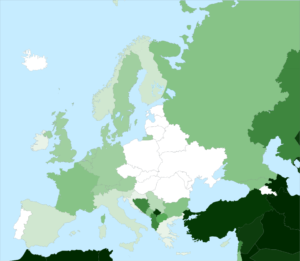
By Eeemoji – Own work, CC BY 4.0, https://commons.wikimedia.org/w/index.php?curid=152118087
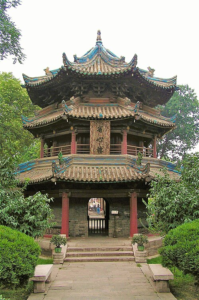
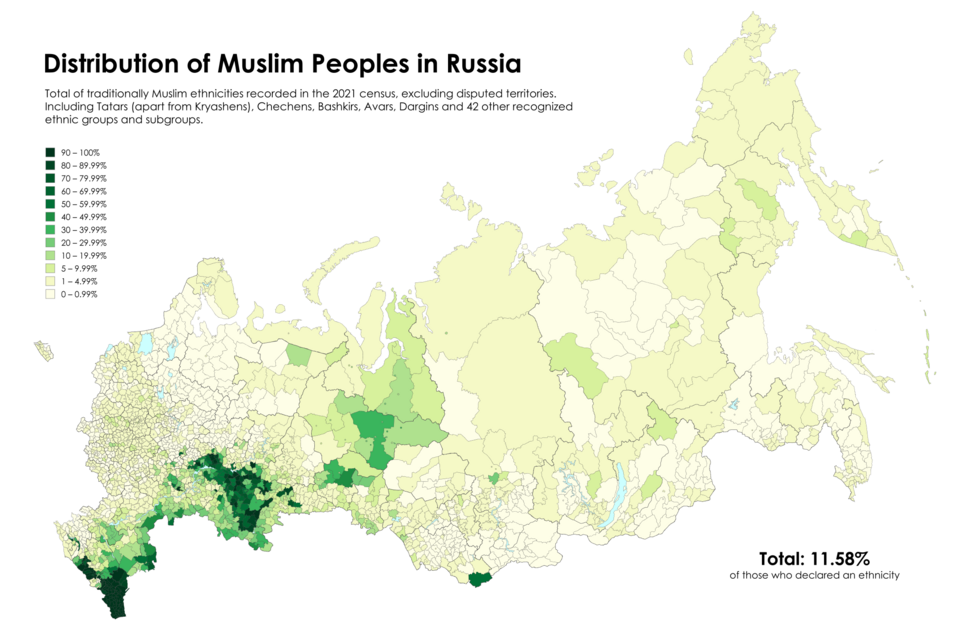
Islam in Russia is not a peripheral faith but a pillar of national identity, woven into centuries of conquest, coexistence, and revival. Today, Muslims represent between 10–15% of Russia’s population, concentrated in the Volga region, the North Caucasus, and increasingly in Moscow’s migrant communities. Their story mirrors Russia’s own — a tale of expansion, suppression, and adaptation.
From Steppes to Tsardom
The arrival of Islam in Russian lands dates back to the 7th–8th centuries, when Arab armies brought the faith into the Caucasus. By the 10th century, the Volga Bulgars had embraced Islam, laying foundations for Tatar identity. Later, the Golden Horde’s conversion in the 14th century spread Islam across vast Eurasian territories.
When Ivan the Terrible conquered Kazan in 1552, Islam became both a subject of repression and negotiation. Catherine the Great, in contrast, institutionalized Islam through the Orenburg Assembly (1788), integrating clerics into the imperial bureaucracy. This duality — suppression and accommodation — became a hallmark of Russia’s governance of its Muslim subjects.
Soviet Shadows and Post-Soviet Revival
The Soviet Union’s militant atheism brought mosque closures, persecution of clerics, and the dismantling of Islamic education. Yet Islam survived underground, sustained by family traditions and Sufi brotherhoods.
With the collapse of the USSR in 1991, Islam re-emerged as one of Russia’s “traditional religions.” Mosques reopened, Islamic universities flourished, and pilgrimages to Mecca resumed. Vladimir Putin later emphasized Islam as part of Russia’s “cultural code,” subsidizing mosques and encouraging immigration from Muslim-majority former Soviet states.
Demographics and Diversity
- Majority Muslim republics: Chechnya, Ingushetia, Dagestan, Kabardino-Balkaria, Karachay-Cherkessia, Tatarstan, and Bashkortostan.
- Urban centers: Moscow alone hosts up to 1.5 million Muslim migrant workers, though only four mosques are officially permitted.
- Branches: Over 90% of Russian Muslims are Sunni (Hanafi and Shafi’i), with Shia minorities among Azeris and Dagestanis. Sufi traditions remain strong in the Caucasus.
Conflict and Accommodation
The Chechen wars of the 1990s–2000s brought radical Islamist movements into sharp conflict with Moscow. Yet the Kremlin leaned on traditional clerics and loyal leaders like Akhmad and Ramzan Kadyrov to stabilize the region.
At the same time, Islamophobia and mosque shortages in cities highlight ongoing tensions. Still, Islam remains state-recognized, and Russia participates as an observer in the Organisation of Islamic Cooperation, underscoring its geopolitical interest in Muslim-majority states.
Historical Parallels
Russia’s relationship with Islam echoes its broader imperial pattern:
- Conquest and incorporation (Kazan, Caucasus, Central Asia).
- Suppression and survival (Soviet atheism).
- Accommodation and revival (post-Soviet recognition).
Just as Orthodoxy defines Russia’s spiritual core, Islam defines its diversity — a reminder that Russia is not merely European but Eurasian.
Conclusion
Islam in Russia is both ancient and modern, both contested and celebrated. From the steppes of Tatarstan to the mountains of the Caucasus, Muslim communities continue to shape Russia’s demographic and cultural fabric. The balance between state control, religious revival, and ethnic diversity ensures that Islam’s role in Russia remains dynamic — a faith intertwined with empire and identity.