Myanmar Was Never Isolated.
“History should build bridges, not walls.”
By Dr. Ko Ko Gyi Abdul Rahman Zafrudin
Many of us grew up believing that Myanmar has always stood apart from its neighbours—a unique civilisation shaped almost entirely from within. Like many others, I once accepted that simplified narrative without asking too many questions.
However, after decades of reading history, contributing to historical articles on Wikipedia, and studying the works of respected scholars such as Professor Than Tun, D. G. E. Hall, Maurice Collis, George Coedès, Moshe Yegar and many others, I came to a different conclusion.
Myanmar’s history is far richer, more diverse, and more interconnected than many of us were taught in school.
This article is not written to glorify India, nor is it intended to diminish Myanmar. Rather, it is an invitation to rediscover an important chapter of our shared past—one that has often been forgotten or ignored in modern political debates.
“History should never be used as a weapon to humiliate others. Its highest purpose is to teach us humility. Every civilisation is a mosaic, not a monolith. Myanmar became great not because it remained untouched, but because it welcomed ideas, adapted them wisely, and made them its own.”
The Highway Between Two Great Civilisations
The late Professor Than Tun, one of Myanmar’s most respected historians, described Burma as “the highway between India and China.” That simple phrase captures one of the most important facts of our history.
Our country has never been isolated.
For thousands of years, merchants crossed the Bay of Bengal. Buddhist monks travelled in both directions. Hindu scholars, craftsmen and traders settled in coastal towns. Pilgrims, diplomats and adventurers carried not only goods but also ideas, languages, religious beliefs and systems of government.
The Irrawaddy valley became one of Asia’s great meeting places.
Long before modern borders existed, the peoples of present-day Myanmar participated in a wider network that linked India, Sri Lanka, Southeast Asia and southern China.
Understanding “Greater India”
Some readers may have encountered terms such as “Greater India,” “Farther India,” or “the Indianised States of Southeast Asia.”
These expressions have sometimes been misunderstood.
They do not mean that Myanmar was simply another province of India, nor do they deny the uniqueness of Myanmar’s own civilisation.
Rather, these are historical terms used by many scholars to describe the remarkable spread of Indian religions, literature, political ideas, legal traditions, scripts and artistic styles across much of Southeast Asia over many centuries.
Just as European civilisation profoundly influenced the Americas without making every American nation “European,” Indian civilisation profoundly influenced many parts of Southeast Asia without erasing local identities.
Myanmar was one of those creative centres where foreign ideas were adopted, adapted and transformed into something uniquely Burmese.
The Bay of Bengal Was Not a Barrier
Today we often imagine the Bay of Bengal as separating India from Myanmar.
Ancient merchants viewed it very differently.
For them, the sea was a highway.
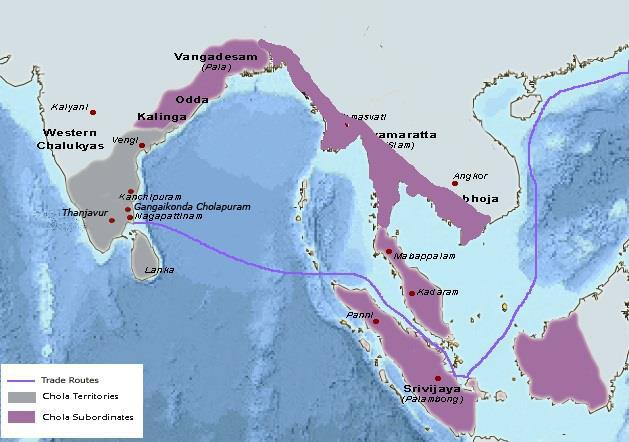
Ships regularly sailed between the eastern coast of India and the ports of Lower Myanmar, carrying textiles, precious stones, spices, ivory, religious manuscripts and skilled craftsmen.
Along these same maritime routes came Buddhist monks, Brahmin scholars and merchants who introduced new ideas about writing, architecture, kingship and law.
These exchanges took place peacefully over centuries, through commerce, marriage, scholarship and pilgrimage rather than conquest.
The Buddha’s World
Around the lifetime of the Buddha, more than 2,500 years ago, present-day northern India formed the heartland of Buddhism.
The Buddha referred to his homeland as Majjhima Desa, or the “Middle Country,” reflecting the geographical understanding of his time.
Meanwhile, the coastal regions around the Bay of Bengal were already connected through flourishing maritime trade. These commercial networks gradually linked eastern India with the lands that are today known as Rakhine and Lower Myanmar.
Centuries later, Buddhism would travel along these same routes, eventually becoming one of the defining foundations of Myanmar’s civilisation.
Civilisations Grow Through Exchange
Some people still believe that every civilisation develops independently.
History tells us otherwise.
The Roman world borrowed from Greece.
Europe learned mathematics from the Islamic world.
Japan adopted writing from China before creating its own distinctive civilisation.
Likewise, early Myanmar absorbed ideas from India while preserving and developing its own identity.
There is no shame in learning from others.
On the contrary, that is how every great civilisation grows.
Why This History Matters Today
Sadly, some people continue to use the word kalar as an insult against Indians or people of Indian ancestry.
History suggests a different perspective.
For more than two thousand years, the peoples of India and Myanmar have shared trade, religions, literature, law, languages and culture. The alphabets, Buddhist scriptures, legal traditions and many artistic forms that enriched Myanmar all bear witness to centuries of interaction.
Recognising these historical connections does not make Myanmar less Myanmar.
It makes our understanding of Myanmar more complete.
A mature nation is never afraid of historical truth.
Instead, it embraces every chapter of its past—whether indigenous or foreign—and recognises that its civilisation was shaped by many peoples working together across many centuries.
To Be Continued…
In Part Two, we shall examine the archaeological and historical evidence left by the Pyu, Mon and early Rakhine kingdoms—evidence preserved in inscriptions, sculptures, ancient cities and the writings of Chinese travellers—which reveals how Indian influences became woven into the very foundations of early Myanmar civilisation.
Selected References
- Than Tun. The Story of Myanmar Told in Pictures.
- Than Tun. Bagan Culture.
- D. G. E. Hall. Burma.
- D. G. E. Hall. A History of South-East Asia.
- George Coedès. The Indianized States of Southeast Asia.
- Maurice Collis. Arakan’s Place in the Civilization of the Bay.
- Moshe Yegar. The Muslims of Burma.