The Vidhura Jataka teaches us that a person of true wisdom and virtue can overcome any danger or adversity through steadiness of mind, moral integrity, and unwavering truthfulness. It also serves as a powerful warning that the greed for power and the recklessness of gambling carry grave and far-reaching consequences.
Political and Human Capital Lessons from the Vidhura Jataka
In the ancient Vidhura Jataka, King Dhananjaya nearly lost his wisest advisor, Vidhura, by recklessly gambling him away in a game of dice. This story serves as a powerful timeless lesson for modern governance and leadership.
To build a thriving nation, Heads of State and Governments must deeply value their educated and experienced human resources. True national progress relies on preserving and growing this intellectual wealth through specific, strategic actions:
- Practice Meritocracy: Governments must implement a strict merit-based system. True talent and experts must be placed in the right positions, free from nepotism or political favoritism.
- Prevent Brain Drain: Leaders must create stable, rewarding environments that encourage local professionals, intellectuals, and skilled workers to stay and build their futures at home.
- Foster Brain Recirculation: Instead of shutting out those who have left, governments should actively welcome back their exiled citizens and global diaspora. Bringing this expertise back into the country creates a powerful flow of knowledge.
- Attract Global Talent: A forward-thinking nation should make itself attractive to skilled, talented migrants from other countries, turning the nation into a hub for global innovation.
Ultimately, a country’s greatest asset is its Human Power. Whether they are indigenous citizens or migrant workers, a nation can only truly prosper when its leaders recognize, protect, and value human capital.
Just like in the Jataka story, when a government fails to value its wisest minds, it is the entire country that suffers. Heads of State need to prioritize a system of Meritocracy to halt Brain Drain. By embracing Brain Recirculation—actively bringing back our diaspora and welcoming global talent—we can maximize our human resources and pave the way for true national development.”
The Vidhura Jataka (The Great Birth Story of Vidhura)
The Vidhura Jataka is one of the Ten Great Birth Stories of the Buddha, centered on the virtues of a wise man and the power of truth and integrity.
The Story
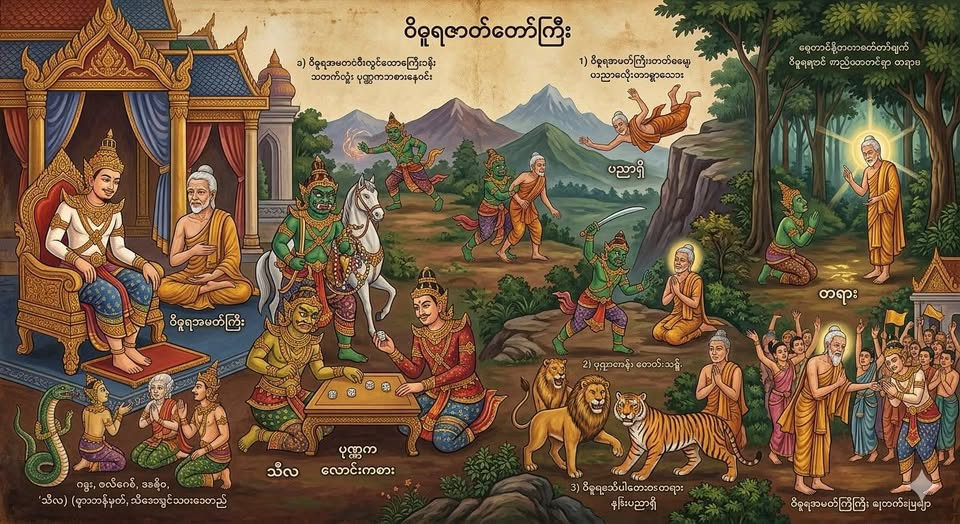
Long ago, in the city of Indapatta, there ruled a great king named Dhananjaya. In his court served a remarkably wise minister named Vidhura. Blessed with extraordinary intellect and the rare gift of offering counsel that truly satisfied the king’s heart, Vidhura was deeply cherished and held in the highest regard by the king.
One day, the King of the Nagas (serpents), the King of the Garudas (divine eagles), and Sakka, King of the Gods, having observed the precepts, all wished to hear the Dhamma taught by the wise minister Vidhura. A dispute arose among them as to whose teaching was superior, and they ultimately resolved to seek out Vidhura and receive his teaching directly.
Into this scene entered Punnaka, a great yaksha (demon) who served as the military commander of Kuvera, the God of Wealth. Punnaka sought to win King Dhananjaya’s prized horses and precious jewels through gambling. Calculating that capturing the minister Vidhura would win him even greater favor with his lord Kuvera than merely hearing the Dhamma, Punnaka devised a cunning plan.
Punnaka challenged King Dhananjaya to a game of dice, wagering extraordinarily valuable rubies and horses as stakes. He then pressed the king to wager Vidhura himself. Overconfident in his minister’s legendary wisdom and certain he could not lose, the king accepted the wager — and by misfortune, Punnaka won through the power of sorcery.
Punnaka seized Vidhura and carried him away. Along the journey, he made repeated attempts on the minister’s life — hurling him from a mountaintop, striking at him with a sword, and throwing him to wild beasts — yet through the power of his virtue, righteousness, and wisdom, Vidhura survived every attempt unharmed.
Witnessing Vidhura’s absolute composure and complete fearlessness in the face of death, Punnaka was struck with profound amazement. His schemes collapsed before him.
In the end, Punnaka abandoned all intention of killing the minister and instead listened to the words of Dhamma that Vidhura spoke. Vidhura, bearing no ill will, taught Punnaka with loving-kindness and shared with him the wisdom of the righteous. Moved and convinced by Vidhura’s extraordinary power and wisdom, Punnaka resolved to return him safely home.
When Vidhura arrived back in Indapatta, King Dhananjaya and the people received him with great joy. Vidhura gently but clearly pointed out the king’s grave error in gambling, and guided the kingdom to continue being governed with justice and righteousness.
Aung Myo Lwin Agga
ဝိဓူရဇာတ်တော်ကြီး
ဝိဓူရဇာတ်တော်ကြီးသည် ဗုဒ္ဓ၏ ဆယ်ဘွဲ့ရ ဇာတ်တော်ကြီးများထဲတွင် ပါဝင်ပြီး ပညာရှိ၏ အရည်အချင်းနှင့် တရားသစ္စာကို အခြေခံထားသော ဇာတ်လမ်းဖြစ်သည်။ ၎င်း၏ မူရင်းဇာတ်ကြောင်းကို စကားပြေဖြင့် အနှစ်ချုပ်ဖော်ပြလိုက်ပါသည်။
ဝိဓူရဇာတ်တော်ကြီး –
ရှေးအခါက ဣန္ဒပတ္တနဂိုရ်ပြည်တွင် ဓနဉ္ဇယမင်းကြီး စိုးစံတော်မူသည်။ ထိုမင်းကြီးထံတွင် ဝိဓူရအမည်ရှိသော ပညာရှိအမတ်ကြီးတစ်ဦးရှိသည်။ ဝိဓူရသည် အလွန်ပင် ဉာဏ်ပညာကြီးမားပြီး မင်းကြီး၏ စိတ်တိုင်းကျ ဆုံးမစကားများကို ပြောကြားနိုင်သူ ဖြစ်သောကြောင့် မင်းကြီးက သူ့ကို အလွန်ပင် ချစ်ခင်မြတ်နိုးသည်။
တစ်နေ့သောအခါတွင် နဂါးမင်း၊ ဂဠုန်မင်း၊ သိကြားမင်းတို့သည် သီလဆောက်တည်ကြပြီး ဝိဓူရအမတ်ကြီး၏ တရားကို ကြားနာရန် ဆန္ဒရှိကြသည်။ သို့သော်လည်း မည်သူ့တရားက ပို၍သာလွန်သည်ကို အငြင်းပွားကြရာမှ နောက်ဆုံးတွင် ဝိဓူရအမတ်ကြီးထံသို့ သွားရောက်တရားနာရန် ဆုံးဖြတ်ခဲ့ကြသည်။
ဤတွင် ပုဏ္ဏကဘီလူးကြီးက ဝင်ရောက်လာသည်။ ပုဏ္ဏကသည် ကုဝေရနတ်မင်း၏ ဗိုလ်ချုပ်ဖြစ်ပြီး ဓနဉ္ဇယမင်းကြီး၏ အဖိုးတန်သော မြင်းနှင့် ကျောက်မျက်ရတနာများကို လောင်းကစားပွဲတွင် ရရှိရန် ကြိုးပမ်းနေသူ ဖြစ်သည်။ သူသည် ဝိဓူရအမတ်ကြီး၏ တရားကို ကြားနာရန်ထက်၊ အမတ်ကြီးကို ဖမ်းဆီးခေါ်ဆောင်သွားနိုင်လျှင် သူ့အရှင် ကုဝေရနတ်မင်း၏ စိတ်ကို ရယူနိုင်မည်ဟု တွက်ဆလိုက်သည်။
ပုဏ္ဏကသည် ဓနဉ္ဇယမင်းကြီးနှင့် လောင်းကစားရန် စိန်ခေါ်ပြီး အလွန်အဖိုးတန်သော ပတ္တမြားနှင့် မြင်းတို့ကို လောင်းကြေးထပ်သည်။ နောက်ဆုံးတွင် ဝိဓူရအမတ်ကြီးကိုပင် လောင်းကြေးထပ်ရန် မင်းကြီးကို တိုက်တွန်းသည်။ မင်းကြီးသည် ဝိဓူရ၏ ပညာရှိမှုကို ယုံကြည်လွန်းသဖြင့် အရှုံးမပေးနိုင်ဟု ယူဆကာ လောင်းကြေးထပ်လိုက်သည်။ ကံဆိုးစွာပင် ပုဏ္ဏကသည် မှော်အတတ်ဖြင့် လောင်းကစားပွဲကို အနိုင်ရရှိသွားခဲ့သည်။
ပုဏ္ဏကသည် ဝိဓူရအမတ်ကြီးကို ဖမ်းဆီးခေါ်ဆောင်သွားခဲ့သည်။ လမ်းခရီးတွင် ပုဏ္ဏကသည် အမတ်ကြီးကို သတ်ဖြတ်ရန် အမျိုးမျိုး ကြိုးပမ်းခဲ့သည်။ တောင်ထိပ်မှ ပစ်ချခြင်း၊ ဓားဖြင့်ခုတ်ခြင်း၊ သားရဲတိရစ္ဆာန်များထံ ပစ်ပေးခြင်းတို့ကို ပြုလုပ်သော်လည်း ဝိဓူရအမတ်ကြီးသည် မိမိ၏ သီလ၊ တရားနှင့် ဉာဏ်ပညာကြောင့် မသေဘဲ ပြန်လည်ရှင်သန်နေခဲ့သည်။
ဝိဓူရ၏ တည်ငြိမ်မှုနှင့် အကြောက်အရွံ့မရှိသော စိတ်ထားကို မြင်သောအခါ ပုဏ္ဏကဘီလူးကြီးသည် အလွန်အံ့သြသွားပြီး သူ၏ အကြံအစည်များ ပျက်ပြားသွားသည်။
နောက်ဆုံးတွင် ပုဏ္ဏကသည် အမတ်ကြီးကို သတ်ဖြတ်ရန် အကြံကို စွန့်လွှတ်လိုက်ပြီး အမတ်ကြီး ပြောကြားသော တရားစကားများကို နာယူသည်။ ဝိဓူရသည် ပုဏ္ဏကကိုလည်း မေတ္တာတရားဖြင့် ဆုံးမပြီး ပညာရှိတို့၏ တရားကို ဟောကြားသည်။ ပုဏ္ဏကသည် ဝိဓူရ၏ အစွမ်းနှင့် ပညာကို လက်ခံယုံကြည်သွားပြီး အမတ်ကြီးကို ပြန်လည် ပို့ဆောင်ပေးရန် ဆုံးဖြတ်သည်။
ဝိဓူရအမတ်ကြီးသည် ဣန္ဒပတ္တနဂိုရ်ပြည်သို့ ပြန်လည်ရောက်ရှိလာသောအခါ ဓနဉ္ဇယမင်းကြီးနှင့် ပြည်သူများက ဝမ်းမြောက်စွာ ကြိုဆိုကြသည်။ ဝိဓူရသည် မင်းကြီး၏ အမှားကိုလည်း သိမ်မွေ့စွာ ထောက်ပြဆုံးမပြီး နိုင်ငံတော်ကို ဆက်လက်၍ တရားသဖြင့် စိုးမိုးစေခဲ့သည်။
ဇာတ်တော်၏ အနှစ်ချုပ်သင်ခန်းစာ
ဤဇာတ်တော်သည် ဉာဏ်ပညာရှိသူသည် မည်သည့်အန္တရာယ်နှင့် ကြုံတွေ့ရစေကာမူ မိမိ၏ တည်ငြိမ်မှု၊ သီလနှင့် သစ္စာတရားကြောင့် အောင်မြင်မှုကို ရရှိနိုင်ကြောင်း၊ အာဏာလောဘနှင့် မဆင်မခြင် လောင်းကစားခြင်းသည် မည်မျှအန္တရာယ်ကြီးမားကြောင်းကို ဖော်ညွှန်းထားခြင်း ဖြစ်သည်။ “