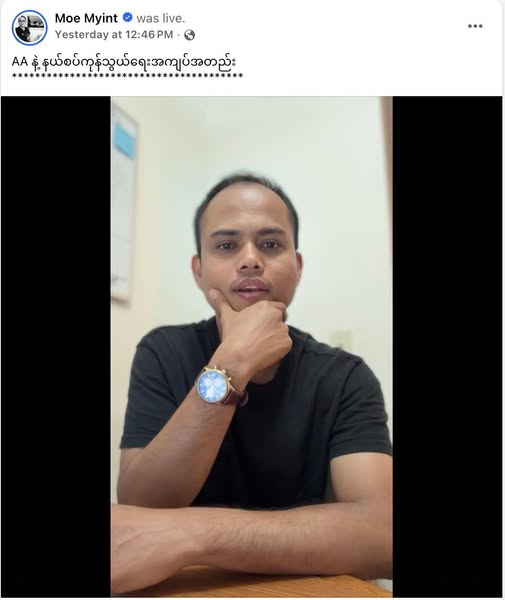
Journalist Ko Moe Myint — who faced death threats from Rakhine nationalists after calling for the preservation of Sittwe’s ancient mosque as a historical heritage site — has spoken out in a nearly one-hour interview. Below is a summarized extract for those who cannot spare the full time.
1. Drug Trafficking Networks in Rakhine State
Key figures identified in drug trafficking operations in Rakhine include Wirathu, Soe Thun Shein, U Kyauk Taung, Kambawza U Khin Shwe, certain monastery networks, the Arakan Army (AA), and the Myanmar military (Tatmadaw). This reflects a well-documented pattern — multiple reports by the United Nations Office on Drugs and Crime (UNODC) have identified Myanmar’s border regions, including Rakhine State, as transit corridors for methamphetamine and heroin trafficking, with armed groups on multiple sides involved in or taxing the trade.
2. Cross-Border Trade with Bangladesh — One-Sided and Exploitative
U San Kyaw Hla — former Speaker of the Rakhine State Parliament and son-in-law of General Thura Tun Myat Naing — is said to be leading trade operations between Rakhine and Bangladesh. However, the trade is heavily skewed: Bangladesh, having depleted its own timber resources, purchases timber from Rakhine but offers little to nothing in return. Sellers who attempt to trade goods back are reportedly arrested. What is framed as “bilateral trade” functions in practice as a unilateral extraction.
This echoes broader concerns raised by economists and regional analysts about extractive informal trade dynamics along the Bangladesh-Myanmar border, where formal mechanisms are absent and armed actors set the terms.
3. The AA’s Subordinate Posture Toward Bangladesh
Because the Arakan Army is not a recognized government, it must engage Bangladesh with a degree of deference and flattery — a posture its own media rarely scrutinizes. Rakhine media outlets, aware of this dynamic, choose not to report on it critically. Instead, they largely amplify AA narratives of strength and prestige.
4. Fundamentalism Within the AA’s Ranks
Ko Moe Myint noted — without using the term “extremists” — that there are fundamentalist elements within both the military and civilian wings of the AA. These individuals insist on inserting the question of “Rohingya or Bengali?” into virtually every conversation, making rational, good-faith dialogue nearly impossible.
He referenced a remark by U Bu Le Hla Zwe, who once observed that Rakhine lawmakers reflexively begin every parliamentary address by recounting historical grievances — “what Bamar did to our Rakhine land” — before ever getting to the actual matter at hand.
5. Smuggler Mentality Cannot Govern Rakhine
Running Rakhine State with the mindset of black-market operators is simply not viable for long-term governance. The AA must transition from a wartime, extractive logic to one capable of administering a complex, diverse society.
6. Ethno-Religious Nationalism Within the AA
Similar to the Tatmadaw, significant elements within the AA hold the view that Rakhine must be a Buddhist Rakhine state — an ideology that mirrors the military’s own ethno-religious nationalism and leaves little room for minority communities, particularly the Rohingya.
7. Bangladesh Will Engage the AA Only Transactionally
Bangladesh cannot officially recognize a non-state actor like the AA. Any engagement will remain limited to economic necessities — not a broader diplomatic or political relationship.
8. The Rohingya Issue Remains the Core Obstacle
Until the AA can present a credible, politically viable framework for resolving the Rohingya crisis, Bangladesh will not extend any meaningful or distinctive relationship. The Rohingya crisis — which the UN has described as one of the world’s most severe humanitarian emergencies, with over one million refugees in Cox’s Bazar alone — cannot be sidestepped indefinitely.
9. Pro-AA Destabilization Groups in Bangladesh Must Be Reined In
There are Rakhine-affiliated groups operating inside Bangladesh that admire the AA and seek to create internal instability there. The AA must address and control these groups if it hopes to build any credibility with Dhaka.
10. India’s Engagement Is More Limited
India’s interest in the AA is narrower compared to Bangladesh’s. Providing security for projects like the Kaladan Multi-Modal Transit Transport Project — a strategic Indian infrastructure initiative connecting Kolkata to Mizoram via Rakhine — is likely the extent of what India requires from a working relationship.
11. India Will Not Engage the AA Directly at the National Level
Any Indian engagement with the AA will be channeled through state-level actors, such as the government of Mizoram, rather than through New Delhi directly — reflecting India’s cautious, deniability-conscious approach to non-state armed groups.
12. India Views the AA as a Chinese Proxy
India does not trust the AA, which it widely perceives as an instrument of Chinese influence in the region. This suspicion significantly limits the prospect of deeper India-AA cooperation. China’s extensive ties to the AA — including reported arms supply and political backing — have been noted by multiple regional security analysts.
13. The AA Must Clarify the “Rakkhitta” Roadmap
The AA has yet to clearly articulate what its political vision — the Rakkhitta framework — actually means in concrete terms: for governance, for minority rights, and for international engagement. This lack of clarity undermines its legitimacy both domestically and abroad.
14. Rakhine Civilians Caught Between Two Military Forces
The AA has now grown to approximately 13 battalions, actively recruiting Rakhine youth to expand its forces. Simultaneously, the Tatmadaw continues its own conscription drives in the region. Ordinary Rakhine civilians are being ground between these two competing military machines — facing displacement, forced recruitment, and the destruction of civilian infrastructure.
15. Why He Speaks Out
“I speak out because no other media outlet will. The people of Rakhine deserve accurate information and verified facts.”
Ko Moe Myint’s willingness to report on uncomfortable truths — drug networks, AA accountability deficits, Bangladesh relations — represents exactly the kind of independent journalism that remains under severe threat in conflict zones like Rakhine State.
Note: This summary was compiled rapidly from a live listening session. Any errors or omissions are unintentional — corrections and additions are welcome.
— Ko Moe Myint Link
Aung Tin is with Aung Tin and 11 others.
opntrdoesS6f1950uh4u91hh876f17u5t42lcg4ul02ta74099c1i3tt9l56 ·
စစ်တွေရှေးဟောင်းဗလီကြီးကို သမိုင်းအမွေအနှစ်အဖြစ် ထိန်းသိမ်းထားသင့်တယ်ပြောလို့ ရခိုင်တွေက သတ်မယ်လို့ ခြိမ်းခြောက်ခံရသူ ဂျာနယ်လစ်ကိုမိုးမြင့် ပြောပြီ။
တစ်နာရီနီးပါးဖြစ်လို့ အချိန်မပေးနိုင်သူတွေအတွက် မှတ်မိသမျှ ကောက်နှုတ်ချက် တင်ပေးတယ်။
(၁) ရခိုင်မှာမူးယစ်ဆေးဝါးကုန်ကူးခဲ့သူတွေက ဝီရသူ၊ စိုးထွန်းရှိန်၊ ဦးကျောက်တောင်၊ ကမ္ဘောဇဦးခင်ရွှေ၊ ဘုန်းကြီးတွေ၊ အေအေနဲ့ စစ်တပ်တို့ဖြစ်တယ်။
(၂) ဗိုလ်ချုပ်ထွန်းမြတ်နိုင်ရဲ့ယောက္ခမ ရခိုင်ပြည်နယ်လွှတ်တော်ဥက္ကဟောင်း ဦးစံကျော်လှက ရခိုင်နဲ့ဘဂ်လာဒက်ရှ် ကုန်သွယ်ရေးကို ဦးဆောင်နေတယ်။ သို့သော် သစ်ခုတ်ရောင်းတာလောက်ပဲ လုပ်နိုင်ပါတယ်။ ဘကုန်းက သူ့နိုင်ငံမှာ သစ်မခုတ်၊ သစ်မရှိတော့ လာရောင်းတဲ့သစ်တွေကို ယူလိုက်တယ်။ သို့သော် ဘာမှပြန်မရောင်းဘူး။ ရောင်းတာကို ဖမ်းတယ်။ ကုန်သွယ်ရေးလို့သာ ဆိုနေပေမယ့် တဘက်သတ်ကြီးဖြစ်နေတယ်။
(၃) အေအေက အစိုးရမဟုတ်တော့ ဘကုန်းနဲ့ဆက်ဆံတဲ့အခါမှာ မျက်နှာချိုသွေး အောက်ကြို့ဆက်ဆံနေရတယ်။ သို့သော် ရခိုင်မီဒီယာတွေက သိလျှက်နဲ့ မရေးရဲကြဘူး။ အေအေကကြွားတာ၊ ဟိတ်ဟန်ထုတ်တာတွေကိုပဲ ရေးနေကြရတယ်။
(၄) အေအေမှာက စစ်ဘက်ကော၊ အရပ်ဘက်ကောကပါ အယူသည်းသူ fundamentalistsတွေ (သူက အစွန်းရောက်တွေဆိုတဲ့ စကားကိုမသုံးခဲ့ဘူး။)ဖြစ်ကြလို့ စကားတစ်ခွန်းပြောရင် သူတို့ပါးစပ်က ရိုဟင်ဂျာလား၊ ဘဂ်ါလီလားဆိုတာကို မဖြစ်မနေထည့်ပြောရမယ်ထင်နေကြတော့ ရေတောင်ဖြောင့်အောင် သောက်နိုင်ကြမယ် မထင်ဘူး။
(“ရခိုင်တွေက သူတို့ဘာလိုအပ်နေပါတယ်လို့ လွှတ်တော်မှာ ရိုးရိုးမပြောတတ်ဘူး။ ဆိုင်ဆိုင်မဆိုင်ဆိုင် ဘိုးတော်မောင်ဝိုင်းက ကျနော်တို့အဘရခိုင်ပြည်ကြီးကို ဘာလုပ်တယ်၊ ညာလုပ်တယ်ဆိုတာကို အရင်ပြောတယ်”လို့ ဘူးလက်လှဆွေ ပြောခဲ့တာ အမှတ်ရမိတယ်။)
(၅) အေအေက မှောင်ခိုသမားအတွေးအမြင်မျိုးနဲ့ ရခိုင်ဒေသကြီးကို အုပ်ချုပ်မယ်ဆိုရင် လက်တွေ့မကျဘူး။
(၆) အေအေက စစ်တပ်လိုပဲ ဗုဒ္ဓဘာသာနိုင်ငံ၊ ရခိုင်ဗုဒ္ဓဘာသာဆိုတဲ့ အမြင်မျိုးတွေရှိနေတယ်။
(၇) ဘကုန်းက အစိုးရမဟုတ်သော အေအေကို တရားဝင်ဆက်ဆံဖို့ မဖြစ်နိုင်ဘူး။ စီးပွါးရေးလိုအပ်ချက်အရလောက်ပဲ ဆက်ဆံမယ်။
(၈) ရိုဟင်ဂျာပြသနာကို နိုင်ငံရေးအရ ဖြေရှင်းနိုင်တဲ့နည်းလမ်းတွေကို အနည်းဆုံးမချပြနိုင်သေးသရွေ့ ဘကုန်းဘက်က ထူးခြားတဲ့ဆက်ဆံရေးမျိုး မမျှော်လင့်နိုင်ဘူး။
(၉) နောက်ပြီး အေအေကိုအားကျပြီး ဘကုန်းနိုင်ငံထဲမှာ မတည်မငြိမ်ဖြစ်အောင်လုပ်ချင်နေတဲ့ ရခိုင်အုပ်စုတွေကိုလည်း အေအေက ကိုင်တွယ်ပေးဖို့လိုအပ်တယ်။
(၁၀) အိန္ဒိယနဲ့ကျတော့ ဘကုန်းလို အဆက်အဆံ မများဘူး။ အိန္ဒိယလုပ်တဲ့ ကုလားတန် စီမံကိန်းလိုမျိုးကို လုံခြုံအောင် ကူညီပေးနိုင်ရင် လုံလောက်တယ်။
(၁၁) သို့သော် အိန္ဒိယလိုနိုင်ငံကြီးက အေအေနဲ့ဆက်ဆံမှာတော့ မဟုတ်ဘူး။ မီဇိုရမ်လို ပြည်နယ်အဆင့်နဲ့ပဲ ဆက်ဆံရမယ်။
(၁၂) နောက်တစ်ချက်က အိန္ဒိယက အေအေကို တရုတ်ရဲ့သားလို့ မြင်နေလို့ မယုံကြည်ဘူး။
(၁၃) အေအေက ရက္ခိတလမ်းစဉ်ကိုလည်း တိတိကျကျ ရှင်းပြဖို့လိုအပ်တယ်။
(၁၄) အခုဆိုရင် အေအေက တပ်မ၁၃ခုလောက်ဖြစ်လာပြီ။ တပ်အင်အားကြီးဖို့ ရခိုင်လူငယ်တွေကို စစ်ထဲသွင်းတယ်။ မြန်မာစစ်တပ်ကလည်း သွင်းနေတယ်ဆိုတော့ နှစ်ဘက်စစ်အင်အားစုမှုအောက်မှာ ရခိုင်ပြည်သူတွေ အင်မတန် အလူးအလှိမ့်ခံစားနေရတယ်။
(၁၅) ဒါတွေကို ကျနော်ကဘာလို့ပြောရသလဲဆိုရင် ဘယ်မီဒီယာကမှ မပြောလို့ ရခိုင်ပြည်သူတွေ အချက်အလက်မှန် သတင်းမှန်ကိုသိဖို့ ပြောရတာပါ။
(မအားရတဲ့ကြားက ကမန်းကတန်း နားထောင်၊ မှတ်စုထုတ်ရတာဖြစ်လို့ ကျန်တာ၊ လွဲတာရှိရင် ပြောပါ။ ပြင်ပေးဖြည့်ပေးမယ်။)
ကိုမိုးမြင့်လင့် https://www.facebook.com/watch/live/?extid=CL-UNK-UNK-UNK-IOS_GK0T-GK1C&ref=watch_permalink&v=1335551838524141