Ancient Religious Buildings, Forgotten Quarters and My Childhood Memories
Based on the historical account of Htet Naung Oo, with personal memories and reflections by Dr Ko Ko Gyi @ Abdul Rahman Zafrudin
When we speak of Mandalay, we usually think of the royal palace, Mandalay Hill, Mahamuni Pagoda, the great monasteries, and the carefully planned city established by King Mindon in 1857.
But Mandalay did not begin with the royal palace.
Long before the formal establishment of Mandalay, villages, neighbourhoods, religious buildings, places of worship and communities already existed across the area. When King Mindon selected the site for his new capital, he reportedly instructed officials to preserve existing religious buildings and settlements rather than simply destroy everything and start afresh.
This historical account by Htet Naung Oo provides a fascinating glimpse into that earlier Mandalay—and, for me personally, it brings back memories of a childhood Mandalay that I can never forget.
Mandalay before the city was built
According to the account, in 1857 King Mindon decided that he no longer wished to continue ruling from Amarapura. He ordered ministers, senior officials and knowledgeable persons to survey the area around Mandalay Hill and select a suitable location for a new capital.
The name “Mandalay” itself may have been older than the city.
The account points to an image from the Ava period that was preserved at the site that later became Eindawya Pagoda. The inscription on the image reportedly referred to it as “Mandalay Buddha”, suggesting that the name Mandalay may have been in use before the royal city was established.
More importantly, the area was not an empty wilderness.
There were already villages, neighbourhoods and religious establishments.
When the land was being cleared and prepared for the new capital, King Mindon reportedly ordered that existing religious buildings and settlements should be avoided and preserved wherever possible. Officials were instructed to make detailed lists and records of these structures.
That means that some of the religious landmarks we associate with Mandalay today were actually older than Mandalay itself.
Ancient Buddhist religious sites
The historical account lists numerous Buddhist sites that existed before or around the establishment of the city.
Among them were:
- Mahamuni Pagoda, whose history extends far beyond the founding of Mandalay.
- Shin Ma Lay Pagoda, within the Mahamuni precinct, attributed to Shin Saw, son of King Alaungsithu of the Bagan period.
- Shwe Kyi Myin Pagoda, also attributed to Shin Saw.
- Pagoda-ni Pagoda, built during the reign of King Bodawpaya of the Amarapura period.
- Taw Gyi Pagoda, attributed to the Ava period.
- Baung-daw-kya Pagoda, attributed to Shin Saw of the Bagan era.
- Chan-tha-gyi Pagoda, associated with the Amarapura period and the Crown Prince Shwe Taung.
- Chan-tha-ya Pagoda, also associated with Shwe Taung.
- Ayeik-mat-thout Pagoda, attributed to King Kyansittha of Bagan.
- Shin Bo Mae Pagoda, associated with Queen Shin Bo Mae of the Ava period.
- Lan Lae Pagoda, literally the “Pagoda in the Middle of the Road,” associated with the Konbaung period.
- Eindawya Pagoda, built during the reign of King Pagan.
- Inn-khru Pagoda and Laymyet-hna Pagoda, both associated with King Alaungsithu.
- Several ancient ordination halls connected with Shin Arahan, including the Sunrise, Midday, Sunset and Midnight ordination halls.
The important point is not merely the age of individual monuments.
It is that Mandalay’s religious landscape was already developing before Mandalay became a royal capital.
The Muslim heritage of pre-Mandalay
The account is equally interesting when it comes to Muslim religious buildings.
Several mosques are identified as having been established during the Konbaung and Amarapura periods, before or around the creation of Mandalay.
Among them are:
Taung Myint Mosque
The account attributes the mosque to the reign of King Bodawpaya, saying that it was established for Manipuri (Kathe) royal servants who served the king by supplying milk.
Thoke Kyan Mosque
This mosque is attributed to the period of King Bodawpaya and associated with the wealthy U Aung Thu.
Kan Ywa Mosque
According to the account, King Bodawpaya established this mosque and settlement for Muslim military personnel, including Manipuri, Rakhine and Kaman archers.
Shwe Phone Shein Mosque
The mosque is attributed to U Shwe O, a Kaman military commander during the reign of King Bodawpaya.
Daung Yoe Mosque
This is particularly interesting.
The account says that during the reign of King Pagan, when Eindawya Pagoda was being constructed, U Yoe, a palace bachelor/royal servant, established a mosque for Muslim royal servants.
Thus, according to this historical account, the mosque and the pagoda belonged to the same broad period of royal construction.
Kula Pyaw Taung Mosque
This mosque was established during the reign of King Mindon while Mandalay was being built, so that royal servants could perform their prayers.
The account claims that it was established about one year before the official establishment of Mandalay.
Ye Twin Pye Mosque and Kothali Mosque
The account also mentions two mosques associated with prisoners brought from Kosala during the Amarapura period. Settlements and mosques were reportedly established for these communities. Both were later destroyed during the Second World War.
Whether every detail of these traditions can be independently verified requires further historical research. Nevertheless, they form an important part of the remembered history of Mandalay’s Muslim communities.
A Chinese Buddhist temple
The account also records a Chinese Buddhist religious building:
Kyaing Taw Yan Temple, said to have been established by Yunnanese Chinese merchants during the reign of King Hsinbyushin.
Thus the religious landscape of the area before and during the creation of Mandalay was not exclusively Buddhist in a narrow sense.
It included Buddhist, Muslim and Chinese religious communities, together with the villages and settlements in which they lived.
That diversity is one of the most important things we should remember when looking at Mandalay’s history.
My own Mandalay memories
Reading this account brought back a completely different Mandalay to me—not the Mandalay of history books alone, but the Mandalay of my childhood.
I was born on 29th Street, directly opposite Taung Oh Bo Mosque.
My maternal great-grandmother lived in Taung Oh Bo Quarter.
To the north of Taung Oh Bo Mosque was North Myauk Oh Bo Mosque, also known as North Obo Mosque, another historic mosque associated with the Muslim community of Mandalay.
I still remember these places not as historical monuments but as part of everyday life.
They were simply our neighbourhood.
My family home was in Taung Balu Quarter, and we used to pray at the nearby Taung Balu Mosque.
My father served as the Chief Trustee of Taung Sin Kyone Mosque on 29th Street.
These were not distant historical names to me. They were places where my family lived, prayed, visited friends and conducted our ordinary lives.
30th Street and the memories of my childhood
I also lived on 30th Street, near Lan Lae Pagoda—the pagoda situated in the middle of the road.
Shin Bo Mae Pagoda was also nearby.
Opposite our house was a Chinese temple.
And behind our house was Yama Nat Sin, the Rama Shrine, in what was known as Yama Nat Sin Quarter.
According to local tradition, Yama Nat Sin was associated with Yodaya (Ayutthaya/Siamese) refugees who had settled in the area.
The names themselves preserve fragments of Mandalay’s multicultural past.
A short distance to the east, only two or three blocks away along the same 30th Street, were Yodaya Bazaar and Yodaya Bazaar Police Station.
As a child, I did not think about these things as “ethnic history.”
They were simply the streets, neighbourhoods, religious buildings and people among whom I grew up.
Only much later did I begin to understand how extraordinary that historical landscape actually was.
From Amarapura to Mandalay
The historical account also describes an intriguing story concerning Dhathana Quarter.
In 1844, King Shwebo—the father of Kings Pagan, Mindon and Kanaung—became seriously ill.
Astrologers reportedly advised that he might recover if he temporarily moved from Amarapura to a temporary palace and religious retreat.
He therefore came to an area where Mandalay had not yet been established.
The place subsequently became known as Dhathana Quarter.
His sons also accompanied him to care for their father.
The future King Pagan reportedly had a residence at the site where Eindawya Pagoda now stands.
After their father died, Pagan became king and established the pagoda at the site of his former residence.
The story becomes even more interesting.
The minister responsible for leading the construction of Eindawya Pagoda was Myat Taung Minister U Hmaw. According to the account, he used surplus bricks from Eindawya Pagoda to construct Lan Lae Pagoda, the famous pagoda situated in the middle of the road.
Therefore, the account argues that Eindawya Pagoda, Lan Lae Pagoda and Daung Yoe Mosque were established during approximately the same period, around twelve years before the formal founding of Mandalay.
This is precisely the sort of historical connection that can disappear when we look at each religious building separately.
The old villages that became Mandalay neighbourhoods
Another fascinating example is Khattiya Village.
During the Ava period, King Thalun conquered the region of Manipur and prisoners were brought back and settled in the area. A village known as Khattiya Village subsequently existed there.
Queen Shin Bo Mae, the chief queen of King Minkhaung, reportedly established Shin Bo Mae Pagoda at the entrance to Khattiya Village.
When King Mindon later established Mandalay, Khattiya Village became incorporated into the new urban area.
Other quarters were then designated for palace servants, female attendants, merchants and other groups.
The people already living in the area were given a settlement known as Khattiya Ward to the west.
Another historical place name, Taung Balu Quarter, also emerged from this process of reorganising the older settlements into the new royal city.
For me, the name Taung Balu has a particularly personal meaning because my family home was there and I prayed at the Taung Balu Mosque.
History and memory therefore meet in a single street.
The crocodile bridge and elephant bridge
The account also preserves memories of two remarkable bridges connected with Eindawya Pagoda.
The area west of the pagoda had once been the site of an old city known as Than-paet.
When people travelled from Amarapura to worship at Eindawya Pagoda, the area was low-lying and prone to water, mud and marshes.
King Pagan’s brother-in-law, Prince U Kyauk Lone, reportedly constructed a large bridge as a religious donation to make the journey easier.
At the pagoda end of the bridge were two crocodile statues, while two enormous lion statues stood at the other end.
After Mandalay was founded, people came to call it Crocodile Bridge.
The bridge was reportedly about eight pyay in length and, according to the account, remained in its original form for generations.
There was also an Elephant Bridge on the eastern side of Eindawya Pagoda.
During the reign of King Bodawpaya, a famous royal elephant died. The elephant’s own funds were reportedly used to construct a bridge as an act of merit in its name.
A stream known as Shwe Ta Chaung once flowed through the area. The Elephant Bridge therefore extended a considerable distance across the waterway.
The account says that it once stretched beyond the area south of Zegyo Market and, in today’s geographical terms, reached toward the area around 82nd Street.
During the colonial period, Zegyo Market was expanded into the large twelve-section market complex, while Shwe Ta Chaung was converted into a drainage channel.
As a result, much of the original Elephant Bridge was destroyed.
The Crocodile Bridge, however, reportedly survived much closer to its original length.
Even today, remnants of the Elephant Bridge and the original donor elephant statue can still be seen.
What Mandalay meant to us
For today’s generation, these may look like isolated pagodas, mosques, temples, bridges and old place names.
But for those of us who grew up there, they were something much more intimate.
They were home.
I was born on 29th Street, opposite Taung Oh Bo Mosque.
My maternal great-grandmother lived in Taung Oh Bo.
My father was a trustee of Taung Sin Kyone Mosque.
Our family home was in Taung Balu.
We prayed at Taung Balu Mosque.
I lived on 30th Street near Lan Lae Pagoda.
Shin Bo Mae Pagoda was nearby.
A Chinese temple stood opposite our house.
Behind us was Yama Nat Sin, associated with the Yodaya community.
Yodaya Bazaar was only a few blocks away.
North Obo Mosque, Taung Oh Bo Mosque and the other mosques were not merely entries in a historical list.
They were part of the physical and emotional landscape of my childhood.
Only now, many decades later and far away from Mandalay, do I fully appreciate how extraordinary that landscape was.
A multicultural Mandalay before modern identity politics
Perhaps the greatest lesson from these old records is that Mandalay was never simply a city created overnight around a palace.
It grew upon an older human landscape.
Buddhist communities, Muslim communities, Chinese communities, Yodaya/Siamese communities and various ethnic and occupational groups had already left their footprints there.
Kings changed.
Capitals moved from one place to another.
Villages became quarters.
Royal servants became neighbourhood communities.
Old religious buildings survived beside newly constructed ones.
Some disappeared through war, urban development or neglect.
Yet their names survived.
And sometimes, a child’s memory preserves what an official history book cannot.
That is why I believe these old accounts deserve to be recorded and translated.
They remind us that the history of Mandalay belongs not only to kings and palaces, but also to ordinary people who prayed in its mosques, worshipped in its pagodas and temples, traded in its bazaars, crossed its bridges and raised their families in its neighbourhoods.
A personal farewell to old Mandalay
I have lived away from Myanmar for many decades.
Time, distance and circumstances have changed almost everything.
But when I read the names 29th Street, 30th Street, Taung Oh Bo, Taung Balu, Taung Sin Kyone, North Obo, Lan Lae, Shin Bo Mae, Yama Nat Sin and Yodaya Bazaar, I do not see them merely as points on a map.
I see my childhood.
I see my family.
I see the streets where I walked.
I see the mosques where we prayed.
I see the pagodas and temples that surrounded our homes.
And I remember a Mandalay in which different communities lived close to one another as part of the same urban landscape.
Perhaps that is the Mandalay we should remember today—not only the Mandalay of kings, wars and political history, but also the Mandalay of shared neighbourhoods, shared streets and shared memories.
Some buildings may disappear.
Some quarters may change their names.
Bridges may be demolished.
Streams may become drains.
Markets may be rebuilt.
But the memories remain.
And sometimes, after many decades, an old historical account can suddenly bring an entire childhood city back to life.
That is what Mandalay means to me.
Historical note: The historical details above are based primarily on the Burmese account attributed to Htet Naung Oo (“Mandalay Before Mandalay – Part 2”) supplied for translation. Some dates, attributions and local traditions would benefit from comparison with primary Burmese royal records, archaeological records and specialist scholarship before being treated as definitively established history. The personal memories are my own recollections of Mandalay.
“Mandalay was not only where I was born and grew up; it was also where I began my married life.”
I was born opposite Taung Oh Bo Mosque → childhood around Taung Balu and 30th Street → later married life near Shwe Kyi Myin Pagoda.
Edited with the assistance of ChatGPT for MMNN English.
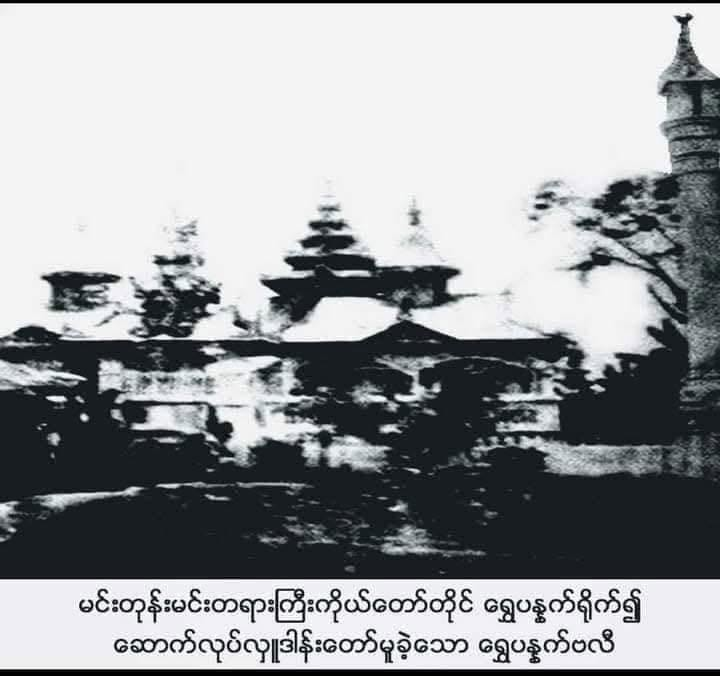
“ မန္တလေးမတည်ခင်က မန္တလေး အပိုင်း ( ၂ ) “
ခရစ်နှစ် ၁၈၅၇ မှာ မင်းတုန်းမင်းက
အမရပူရမှာ ဆက်လက်မစိုးစံချင်တော့တာကြောင့်
မန္တလေးတောင်ရိပ်ကိုမှီးပြီး နေပြည်တော်သစ် မြို့တော်သစ်တည်ဖို့ ဝန်ကြီး မှူးမတ် ပညာရှိတွေကို မြေနေရာသွားရောက်ကြည့်ရှု့စေပြီး သတ်မှတ်စေခဲ့တာပါ
မန္တလေးတောင်ခြေမှာမြို့တည်လို့မန္တလေးမြို့လို့လဲဆိုကြသလို
အခု နန်းတွင်းထဲမှာ နန်းမြို့ဆုတောင်းပြည့်ဘုရားဖြစ်သွားတဲ့ဘုရားမှာ အင်းဝခေတ်ထဲက ရုပ်ပွါးတော်တစ်ဆူရှိခဲ့ရာ
ရေးထိုးထားတဲ့ဘွဲ့တော်က မဏ္ဍလေးဘုရားသခင်လို့ရေးထိုးထားတာကိုတွေ့ရတာကြောင့်
မဏ္ဍလေးခေါ်ခဲ့တာ အရင်ဖြစ်မယ်လို့ ခန့်မှန်းရပါတယ်
မန္တလေးကလဲမြို့မတည်ခင်ထဲက ရွာတွေရပ်ကွက်တွေ ရှိနှင့်နေတာကို မင်းတုန်းမင်းက
တောခုတ်ရှင်းလင်းတဲ့အခါ သာသနိကအဆောက်အဦတွေရပ်ရွာတွေကို
မူလအတိုင်းထားရှိဖို့နဲ့ရှောင်ရှားပြီး ဆက်လက်လုပ်ဆောင်သွားဖို့ ညီလာခံမှာ
အမိန့်တော်မှတ်ပါတယ်
အဆောက်အဦတွေကိုလဲစာရင်းအတိအကျပြုစုပြီး
မှတ်တမ်းတင်စေခဲ့ရာ ဗုဒ္ဓဘာသာမှာ
မဟာမုနိဘုရားကြီး ( အပိုင်း ၁ မှာ သမိုင်းဖော်ပြခဲ့ပြီးဖြစ် )
မဟာမုနိဘုရားကြီးတံတိုင်းအတွင်းက ရှင်မာလဲဘုရား
( ပုဂံခေတ် အလောင်းစည်သူသားတော် မင်းရှင်စော တည်ခဲ့ )
ရွှေကျီးမြင်ဘုရား
( ပုဂံခေတ် မင်းရှင်စောတည်ခဲ့ )
ဘုရားနီဘုရား
( အမရပူရခေတ် ဘိုးတော်ဘုရားလက်ထက်
ရွှေတိုက်ဝန်မောင်နှမတည်ခဲ့ )
တဝဂူဘုရား
( အင်းဝခေတ် ရွှေနန်းကြော့ရှင်မင်းတည်ခဲ့)
ဗောင်းတော်ကျဘုရား
( ပုဂံခေတ် မင်းရှင်စောတည်ခဲ့)
ချမ်းသာကြီးဘုရား
( အမရပူရခေတ် ဘိုးတော်ဘုရားသားတော် အိမ်ရှေ့စံရွှေတောင်မင်းတည်ခဲ့)
ချမ်းသာရဘုရား
( အမရပူရခေတ် ရွှေတောင်မင်းတည်ခဲ့ )
အရိပ်မထွက်ဘုရား
( ပုဂံခေတ် ကျန်စစ်သား တည်ခဲ့)
ရှင်ဘို့မယ်ဘုရား
( အင်းဝခေတ် ရှင်ဘို့မယ်မိဖုရားတည်ခဲ့)
လမ်းလယ်ဘုရား
( ကုန်းဘောင်ခေတ် ပုဂံမင်းလက်ထက် မြတောင်ဝန်ကြီးတည်ခဲ့ )
အိမ်တော်ရာဘုရား
( ကုန်းဘောင်ခေတ် ပုဂံမင်းတည်ခဲ့ )
အင်းခရုဘုရား
( ပုဂံခေတ် အလောင်းစည်သူတည်ခဲ့)
လေးမျက်နှာဘုရား
( ပုဂံခေတ် အလောင်းစည်သူတည်ခဲ့ )
ရှင်အရဟံ
နေထွက်သိမ် မွန်းတည့်သိမ် နေဝင်သိမ် သန်းခေါင်ယံသိမ်
( ပုဂံခေတ် အလောင်းစည်သူလက်ထက် ရှင်အရဟံ သိမ်သမုတ်ခဲ့)
အစ္စလာမ်ဘာသာမှာ
တောင်မြင့်ဗလီ
( ကုန်းဘောင်ခေတ် ဘိုးတော်ဗဒုံမင်းက ကသည်းနွားနို့တော်ဆက် အမှု့ထမ်းများအတွက် တည်ပေးခဲ့ )
သိုးခြံဗလီ
( ကုန်းဘောင်ခေတ် ဘိုးတော်ဗဒုံမင်းလက်ထက် သူဌေးမင်းဦးအောင်သူ )
ကံရွာဗလီ
( ကုန်းဘောင်ခေတ် ဘိုးတော်ဗဒုံမင်းက
ကသည်းရခိုင် လေးသည်တော်
ကမန်တပ်များအတွက်
တည်ပေးခဲ့ )
ရွှေဘုန်းရှိန်ဗလီ
( ကုန်းဘောင်ခေတ် ဘိုးတော်ဗဒုံမင်းလက်ထက် ကမန်တပ်မှူးဦးရွှေအိုး )
( မှတ်တမ်းများကို အပိုင်း ၁ တွင်ဖော်ပြခဲ့ပြီးလဲဖြစ် )
ဒေါင်းရိုးဗလီ
( ကုန်းဘောင်ခေတ် ပုဂံမင်းလက်ထက်
အိမ်တော်ရာဘုရားတည်စဉ်
အစ္စလာမ်ဘာသာဝင် အမှု့တော်ထမ်းများ
အတွက် လူပျိုတော်ဦးရိုးမှ
တည်ခဲ့ )
ကုလားပျိုတောင်ဗလီ
( မင်းတုန်းမင်းလက်ထက် မန္တလေးတည်နေစဉ် မင်းမှု့ထမ်းများ ဝတ်ပြုရန်တည်ပေးခဲ့၍ မြို့သက်ထက် ရှေ့တစ်နှစ်စော )
ရေတွင်းပျက်ဗလီ
ကော့ဗ်သာလီဗလီ
( အမရပူရခေတ် ဘိုးတော်ဗဒုံမင်းလက်ထက်
ကောသလတိုင်းပြည်မှသုံ့ပန်းများအတွက်ရပ်ကွက်နှင့်တကွဗလီဝတ်ကျောင်းတော်များတည်ဆောက်ပေးခဲ့ရာ
၎င်း ဗလီ ၂ လုံးမှာ ဒုတိယကမ္ဘာစစ်အတွင်း
ပျက်စီးသွားခဲ့ )
တရုတ်ဗုဒ္ဓဘာသာမှာ
ကြင်းတော်ရန်ဘုရားကျောင်း
( ကုန်းဘောင်ခေတ် ဆင်ဖြူရှင်မင်းလက်ထက် ယူနန်တရုတ်ကုန်သည်များမှတည်ခဲ့)
တွေကို မှတ်တမ်းများမှာမှတ်သားခဲ့ရပါတယ်
ကုန်းဘောင်ခေတ်နှောင်းပိုင်းမရောက်တရောက်အချိန် ၁၈၄၄ မှာ
ပုဂံမင်း မင်းတုန်းမင်း ကနောင်မင်း တို့ရဲ့ခမည်းတော် ရွှေဘိုမင်းက နာမကျန်းဖြစ်လာတာ ဗေဒင်ကိန်းခန်းအရ အမရပူရနေပြည်တော်ကနေ
ယာယီနန်းတော်တခုနဲ့ဓာတ်နန်းစံခဲ့ရင် ရောဂါဝေဒနာသက်သာမယ် ဟောချက်ထုတ်ခဲ့ကြလို့ အခု မန္တလေးမတည်ရသေးတဲ့ အရပ်မှာဓာတ်နန်းဆောင်နဲ့လာနေခဲ့တာကြောင့်
အခုထိ အဲ့ဒီအရပ်ကို ဓာတ်နန်းရပ်အမည်ခေါ်တွင်ခဲ့ပါတယ်
ခမည်းတော်ကိုစောင့်ရှောက်ဖို့သားတော်များပါလိုက်ပါနေခဲ့ကြပြီး
အိမ်တော်ရာဘုရားနေရာမှာ ပုဂံမင်းအိမ်တော်ရှိခဲ့ပြီး ခမည်းတော်နတ်ရွာစံသွားတော့ ပုဂံမင်းက မင်းအဖြစ်ရရှိတဲ့အခါမှာ အိမ်တော်နေရာကို ဘုရားစေတီတည်ခဲ့တယ်
အိမ်တော်ရာဘုရားကိုဦးစီးဦးဆောင်ပြုပြီးတည်ခဲ့တဲ့ မြတောင်ဝန်ကြီးဦးမှိုက အိမ်တော်ရာဘုရားက ပိုလာတဲ့အုတ်တွေနဲ့ လမ်းလယ်ဘုရားကိုတည်ခဲ့တယ်
အဲ့ဒါကြောင့်မို့ အိမ်တော်ရာဘုရား လမ်းလယ်ဘုရားနဲ့ ဒေါင်းရိုးဗလီတွေက တချိန်တည်းတည်ခဲ့တာဖြစ်ပြီး မန္တလေးမြို့သက်ထက် ၁၂ နှစ်စောခဲ့တယ်
အနီးအနားပတ်ဝန်းကျင်မှာ အင်းဝခေတ် သာလွန်မင်းလက်ထက် မဏိပူရနယ်ကိုအောင်နိုင်ခဲ့လို့ သုံ့ပန်းတွေထားခဲ့တဲ့ ခတ္တိယရွာရှိခဲ့တယ်
ဘုရင်မင်းခေါင်ရဲ့မိဖုရားကြီးစောဘို့မယ်က ခတ္တိယရွာဦးထိပ်မှာ ရှင်ဘို့မယ်ဘုရားကိုတည်ခဲ့တယ်
မန္တလေးမြို့တည်တော့ ခတ္တိယရွာကြီးက
မြို့ကွက်ထဲပါသွားခဲ့ရာ
အင်းဝတောင်ဘီလူရပ်က လူပျိုတော်အပျိုတော် ကုန်သည်တော်များအတွက် ရပ်ကွက်သတ်မှတ်ပေးခဲ့လို့
တောင်ဘလူရပ်ဖြစ်ခဲ့ပြီး
ရှိရင်းစွဲ ခတ္တိယလူမျိုးတွေအတွက် အနောက်ဘက်မှာ ခတ္တိယဝင်း
သတ်မှတ်ပေးခဲ့တယ်
ခတ္တိယရွာရဲ့တောင်ဘက်
မင်းတုန်းမင်းလူပျိုတော်ဘဝက
အိမ်တော်ရာနေရာက
သားတော်သီပေါမင်းလက်ထက်မှ
ဆင်ဖြူမရှင်မိဖုရားကြီးက
သကျသီဟဘုရားတည်ခဲ့တယ်
ဘုရင့်ယောက္ခမဖြစ်ခဲ့တဲ့ မလွန်မင်းသားကြီးနေထိုင်ခဲ့တဲ့အရပ်ကို အခုထိ မလွန်ရပ် တွင်ခဲ့တယ်
အနောက်ဘက်မှာ ရှေးက သံပါတ်မြို့ဟောင်းနေရာကြီးဖြစ်ခဲ့ပြီး
ပုဂံမင်းက အိမ်တော်ရာဘုရားတည်ပြီးတော့
အမရပူရကနေ ဘုရားဖူးကြွလာရင်
မန္တလေးမတည်ရသေးတဲ့အရပ်က အနိမ့်ပိုင်းဖြစ်နေပြီး ရေဝပ်နေရာတွေ ရွှံ့နွံတွေရှိနေတာကြောင့်
ဘုရင်ရဲ့ယောက်ဖတော် မင်းသားကြီးဦးကျောက်လုံးက တံတားကြီးတစ်စင်း ကုသိုလ်ပြုလှူဒါန်းပြန်ခဲ့လို့
သံပါတ်မြို့ဟောင်းနေရာကြီးရဲ့အလယ်မှာ တံတားကြီးဖြစ်ခဲ့တယ်
တံတားကြီးရဲ့ထိပ် ဘုရားဘက်အခြမ်းမှာ မိကျောင်းရုပ်ထုနှစ်ခုရှိခဲ့ပြီး
ခြေရင်းဘက်မှာ ဧရာမခြင်္သေ့
ကြီးနှစ်စီးထည့်သွင်းထားခဲ့တာ
မန္တလေးမြို့တည်ပြီးတော့ မြိို့သူမြို့သားတွေက မိကျောင်းတံတားပဲ ခေါ်ခဲ့ကြတယ်
အိမ်တော်ရာဘုရားရဲ့အနောက်မုခ်မှာ မိကျောင်းတံတားရှိခဲ့သလို
အရှေ့မုခ်မှာလဲ ဘိုးတော်ဘုရားလက်ထက်ထဲက ရှိခဲ့တဲ့ ဆင်မင်းကြီး ကံကုန်သွားလို့ ဆင်မင်းပိုင်ငွေတော်နဲ့ဆင်မင်းကြီးရဲ့အလှူအဖြစ်
ဆင်တံတားကြီးကိုလဲ ဆောက်လုပ်ခဲ့တာ
အဲ့ဒီခေတ်က ရွှေတစ်ချောင်းကလဲ ရေရှင်စီးခဲ့တဲ့ချောင်းကြီးမို့
ဆင်တံတားကြီးက ရွှေတစ်ချောင်းအလွန်
မန္တလေးစျေးချိုတောင်ဘက် ၆ ရုံနေရာတွေထိကျော်ပြီး
အခုအမြင်နဲ့ ၈၂ လမ်းပေါ်ထိ တံတားအရှည်ကြီးဖြစ်ခဲ့တယ်လို့ မှတ်သားခဲ့ရပါတယ်
ကိုလိုနီခေတ်ရောက်တော့
မန္တလေးစျေးချို ၁၂ ရုံကြီးချဲ့ထွင်အသစ်ဆောက်လိုက်တာတစ်ကြောင်းနဲ့ ရွှေတချောင်းမြောင်းကိုလဲ
ရေဆိုးထုတ်မြောင်းအဖြစ်ပြောင်းလဲလိုက်တာတွေကြောင့်
ဆင်တံတားကြီးကို မူလအရှည်ရဲ့ ၄ ပုံ ၃ ပုံ
ဖျက်လိုက်တာ
မိကျောင်းတံတားကြီးက အရှည် ၈ ပြရှိခဲ့သလို
ဆင်တံတားကြီးကလဲ အရှည် ၈ ပြရှိခဲ့တာလို့ မှတ်သားခဲ့ရပါတယ်
မိကျောင်းတံတားကတော့ မူလအရှည်အတိုင်းရှိနေဆဲပါ
အခုထက်ထိ ဆင်တံတားကြီးနဲ့မူလဒကာဆင်မင်းရုပ်ထုကလဲ တွေ့မြင်နေရဆဲပါ
နိဂုံး – စာရေးသူမှတ်မိတဲ့မြို့မတည်ခင်နေရာအချို့နဲ့ရေးသားတင်ပြခဲ့တာဖြစ်ပြီး
အမှားပါရင်လဲပြင်ဆင်ဖတ်ရှု့ပေးပါ
ထက်နောင်ဦး ( Prince)