Introduction
History is not merely a record of victories and dynastic lineages; it is a mirror reflecting the diverse societal fabric that built a nation. In Myanmar, mainstream historical narratives have often suffered from selective memory, casting a shadow of obscurity over the integral roles played by non-Buddhist minority communities. Among these, Myanmar Muslims—encompassing royal artillery officers, administrators, scholars, and diplomats—have contributed significantly to the country’s governance, defense, and cultural heritage from the early kingdoms through the Konbaung Dynasty. Reclaiming these forgotten pages is essential not only for historical accuracy, but also for fostering a mature, inclusive national consciousness.
Early Settlement and Military Integration
Muslim presence in Myanmar dates back to as early as the 9th and 10th centuries, when Arab, Persian, and Moorish traders arrived along the coastal regions of Rakhine and the ports of Lower Burma. Over centuries, these early settlers integrated into local societies while retaining their faith and distinct traditions.
During the Konbaung Dynasty (1752–1885), Muslims became deeply embedded in the royal military architecture:
- Elite Artillery Corps (Ahnan-kaing): Kings such as Alaungpaya and Hsinbyushin enlisted Muslim artillerymen—many from Manipur, Mizoram, and surrounding regions—who settled around Shwebo, Sagaing, and Amarapura. These corps formed crucial divisions in royal campaigns, including the Ayutthaya expeditions.
- Kaman Archers of Arakan: Following the integration of Arakan under King Bodawpaya in 1784, Muslim Kaman archers and transport units were commissioned into royal service. Notably, they provided security and transport logistics during the historical conveyance of the Mahamuni Buddha Image to the royal capital via the arduous Sandoway–Taungup pass.
Prominent Historical Figures and Civic Leadership
Beyond military service, Myanmar Muslims held distinguished administrative and diplomatic roles in the royal courts:
1. U Bha Sat (U Bysat) – Myowun of Amarapura
During the reign of King Pagan (1846–1853), U Bha Sat served as the Myowun (City Governor) of the royal capital, Amarapura. Known for his civic administration, his life ended tragically due to court intrigue and political rivalry involving Maung Kyauk Lone, the King’s brother-in-law. The tragic execution of U Bha Sat remains a poignant memory in local tradition, commemorated symbolically by his descendants through lotus flower motifs.
2. U Pe Khine and Pre-Independence Statecraft
In the mid-20th century, as Burma navigated its transition toward independence, Muslim leaders played vital roles in national unity:
- U Pe Khine: A key diplomat and associate of General Aung San, U Pe Khine served as a negotiator during the historic Panglong Conference in 1947, helping craft the political consensus that laid the foundation for the modern Union of Burma.
- U Raschid (M.A. Raschid): A prominent student leader alongside Aung San and U Nu during the 1930s Rangoon University strikes, U Raschid later served as a cabinet minister in post-independence Burma, overseeing labor, industry, and mines with distinction.
Royal Patronage and Interfaith Harmonization
The relationship between royal authority and the Muslim community was marked by mutual respect and royal patronage, particularly under King Mindon (1853–1878):
- The Mecca Rest House (Rubat): Known for his diplomatic vision and religious tolerance, King Mindon financed the construction of a dedicated rest house (Rubat) in Mecca using royal funds sent via Arab merchants. This facility accommodated Burmese Muslim pilgrims undertaking the Hajj, demonstrating a rare example of royal patronage for Islamic pilgrimage by a Buddhist monarch.
- Mosques and Royal Grants: King Mindon and King Tharrawaddy granted royal lands for the establishment of mosques within the royal capitals of Amarapura and Mandalay. They formally recognized Muslim religious leaders under the royal title of Pathi-sayah, integrating Muslim community affairs into the royal administrative framework.
Conclusion: History as a Foundation for the Future
The post shared by Ye Min Nyi Nyi highlights a critical flaw in conventional historiography: the practice of stripping history of its multicultural reality to serve narrow nationalistic agendas. History studied through a single lens fosters a fragile pride reliant on romanticized myths rather than hard truths.
Acknowledging the contributions of Myanmar Muslims—from royal artillerymen in Shwebo to civic leaders in Amarapura and diplomats at Panglong—does not diminish the country’s heritage; it enriches it. True patriotism is built on a clear-eyed understanding of the past, recognizing that every community that contributed to the nation’s story deserves a place in its collective memory.
Ko Ko Htay
မြန်မာ့သမိုင်းဆရာတွေရဲ့ စောက်ကျင့်
Post by Ye Min Nyi Nyi
ကုန်းဘောင်ခေတ် အကြောင်း ရေးတဲ့သမိုင်းဆရာက မင်းတုန်းမင်း မက္ကာမှာ ဇရပ်ဆောက်ပြီးလှူတာ ကိုလုံးဝမသိဖူး ….ပုဂံမင်းရဲ့ယောက်ဖ မောင်ကျောက်လုံးက မြို့ဝန်ဘိုင်ဆပ်ရဲ့ သမီး မြကြေးမှုံ ကို လိုချင်တာ မရလို့ ဘုရင့်သောက်ရေလှည်းကို မဖွယ်မရာလုပ်တယ်ဆိုပြီး ဘုရင်ကိုတိုင်…..ဘုရင်က မြို့ဝန်ဘိုင်ဆပ်ကို စဉ့်အိုးထဲထည့်ပြီး မြစ်သောင်ပြင်မှာ လိမ့်ပြီးသတ် …စဉ့်အိုးလိုက်မြေမြှုတ်ပြီး မြေပေါ်မှာကြာပန်းတွေ စိုက်လိုက်တယ်….ဘိုင်ဆပ်ရဲ့အနွယ်တွေ ခုထိ အိမ်တွေမှာအမှတ်တရ ကြာပန်းတွေထားနေသေးတာ မသိဖူး….၁၁၂၅ တုန်းက သဘာဝဘေးကြောင့် တိုင်းပြည်ငတ်ပြတ်နေလို့ ဆင်ဖြူရှင်မင်းက ယိုးဒယားသွားတိုက်တာကို မသိဖူး(ref: Dr Than Tun)
…သူ့တပ်ဖွဲ့မှာ ရွှေဘိုတဝိုက်မှာ လာရောက်အခြေချတဲ့(တချို့ ကစစ်သုံးပန်း) မစ်ဇူရမ် နယ်သား ဘာသာခြား အမြောက်တပ်ဖွဲ့တွေပါတာ မသိဖူး……ဘိုးတော်ဘုရား ၁၁၄၆ မှာ ရခိုင်ကိုသွားတိုက်ပြီး မဟာမြတ်မုနိရုပ်ပွားတော်ကို ပန်းတောင် ဥယဉ်ပု တောင်ဂုတ်လမ်းကြောင်းကနေ သယ်ယူလာတော့ ရခိုင် ကမန် မွတ်စလင် လေးသည်တော်တွေကို သယ်ခိုင်းခဲ့တာ …မသိဖူး….
မသိဖူး ဆိုတာထက် သိရက်နဲ့ မရေးတာ …အမှန်ကိုဖျောက်ပစ်တာ ပိုပြီးဖြစ်နိုင်ပါတယ်…
သမိုင်းနဲ့ အမျိုးသားရေးစိတ်ဓါတ် က ရောလို့မရပါဖူး….သမိုင်းဆိုတာ လေ့လာဖို့ သင်ယူဖို့ သင်္ခန်းစာယူဖို့ ပါ…..အမျိုးသာရေးစိတ်ဓါတ်ဆိုတာက ပညာဥာဏ် လက်ရုံးရည် နှလုံးရည်တွေ တိုးတက်မြင့်မားလာအောင် လှုံဆော်ပေးရမဲ့ ကြိုးစားလာအောင် ဆော်သြပေးရမဲ့ အရာပါ…..
ခေတ်အဆက်ဆက် သွေးစွန်းနေတဲ့ သားအဖညီအကိုတတွေ သတ်ဖြတ်နေကြတဲ့ သမိုင်းထဲကို ယဉ်ကျေးပါတယ် ခမ်းနားပါတယ် တွေလုပ် အမျိုးသားရေးစိတ်ဓါတ်တွေအတင်းသွတ်ထဲ့ပြီး ဂုဏ်ယူနေ တာနဲ့ပဲ ….လူ ခြောက်သန်းလောက် ပြည်ပထွက် ကျွန်ခံရတဲ့ ကျွန်နိုင်ငံဖြစ်လာတာ…..သမိုင်းရေးတဲ့သူတွေ သောက်ကျင့် ပြင်ဖို့လိုတယ် ….လူငယ်တွေ အမှန်ကိုမမြင်ပဲ မကြိုးစားပဲ အတိတ်ကရွှေထီးဆောင်းခဲ့ဖူးသလိုလို တွေမှတ်ထင်ပြီး လုံးလ ဝီရိယ မဲ့တ့ဲ့ နိုင်ငံချစ်စိတ် ….သောက်လုပ်မလုပ်ပဲ ထိုင်ပြီးဂုဏ်ယူနေတဲ့ မျိုးချစ်စိတ်တွေ …နည်းလမ်းမမှန်တဲ့ တိုင်းပြည်ချစ်စိတ်တွေ ဖြစ်ပေါ်လာတာဟာ သမိုင်းအမှန်မရေး တဲ့ သောက်သမိုင်းဆရာ ဆိုတဲ့ လဒူ အများစုကြောင့်လဲ ပါတယ်…..
References:
1/ https://en.wikipedia.org/wiki/Islam_in_Myanmar
4/ ဗုဒ္ဒေါမောကန် (သို့) မွတ်စလင်မ် သူတော်စဉ်ကြီးအကြောင်း
5/ မြန်မာ လူနည်းစုတွေရဲ့ အိပ်မက်
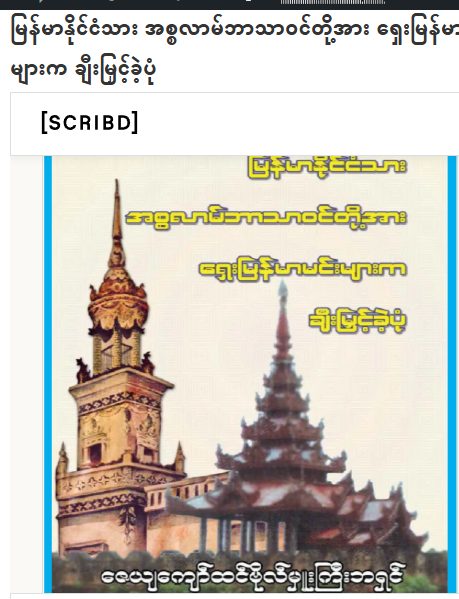
6/ မြန်မာနိုင်ငံသား အစ္စလာမ်ဘာသာဝင်တို့အား ရှေးမြန်မာမင်းများက ချီးမြှင့်ခဲ့ပုံ