I wrote this from memory without live searches, and some Malaysian details are still developing, so please verify the items I flag before publishing.
1. What the article says, in plain terms
Dr. Myo Nyunt makes four points:
- “Decentralization” is a slippery word. It covers four different things. Deconcentration means head office keeps all decisions and only sends staff to branch offices. Delegation means the center lends some authority and can take it back. Devolution means real powers are given to local governments, but the center still holds sovereignty and can legally take them back. Privatization means handing services to the private sector.
- Devolution is not federalism. In devolution, power is a gift from the center and can be withdrawn. In federalism, power is shared by the constitution itself, so the center cannot cancel a state’s powers on its own.
- Other countries’ experience. Spain, Kenya, South Africa, Iraq, and Nepal each shared power differently after conflict or dictatorship. The lessons are that money must be shared clearly, local administrators need real capacity, and an independent constitutional court must settle disputes.
- Myanmar’s trap. Past “decentralization” was a gift from the generals, so ethnic regions never trusted it. Neither side trusts the other, and each fears the other will cheat, which is a prisoner’s-dilemma situation. His answer is fiscal federalism: write the sharing of taxes and resource revenue into the constitution. Then promises become binding rules and trust is no longer needed.
2. Fact check of the article
Mostly sound, with a few caveats:
- Spain is formally a unitary state, but with 17 autonomous communities it works much like a federation. Catalonia’s 2017 crisis shows that unequal autonomy can still produce tension.
- Kenya: 47 counties under the 2010 constitution, after the 2007–08 post-election violence. Correct.
- South Africa is usually called “quasi-federal” or a system of “cooperative government.” It is not formally a federation.
- Iraq: 2005 constitution, with Kurdistan as a region. Oil revenue-sharing disputes there are long-running. Correct.
- Nepal: federal republic since 2015, with 7 provinces. Correct.
- Game theory: “prisoner’s dilemma” and “zero-sum” are technically different things, but the main idea of a credible commitment is valid.
- Missing point: fiscal federalism alone doesn’t solve things. Resource-rich and resource-poor states need an equalization system, which is exactly your Malaysia point.
Myanmar points to double-check
- “Federal Shan States” is an aspiration, not an existing structure. It’s safer to say “Shan areas with significant self-administration.”
- Wa State (UWSA) is de facto self-governing, and the Arakan Army controls most of Rakhine. “Confederate” is not a formal term, so “de facto autonomous” is safer.
- The 1947 Constitution gave Shan and Kayah states a right of secession after ten years. The 1962 coup ended that system. This history is worth including.
“Many countries have found that when regions differ in resources, history, and identity, stability comes from clear, constitutionally protected power- and revenue-sharing. Malaysia offers a thoughtful example of this ongoing conversation: its constitution and the 1963 Malaysia Agreement provide a framework in which Sabah, Sarawak, and the peninsular states discuss revenue shares, representation, and autonomy through negotiation, courts, and elections. I mention this with respect and only as a point of learning for Myanmar, where we also began as a union by agreement at Panglong in 1947. Myanmar’s challenge is to rebuild that spirit by writing fair revenue-sharing and self-rule into a binding constitution, with an equalization system so that states without minerals are not left behind.”
Federalism examples that work
| Country | Key feature | Lesson |
|---|---|---|
| USA | Powers reserved to states by the 10th Amendment; strong courts | Needed the Civil War and long struggles to settle limits |
| Australia | Commonwealth Grants Commission shares GST to equalize | Mining-rich Western Australia complained of unfairness, so the rules were adjusted. Very similar to Sarawak’s debate |
| Canada | Equalization payments; Quebec’s distinct status | Alberta oil and Quebec referendums show peaceful bargaining |
| Germany | Länder equalization system; states share in federal law-making | Rich states support poorer ones by agreed formula |
| Switzerland | 26 cantons, four languages, referenda | Small, diverse groups coexist through shared power |
| India | Finance Commission every 5 years; states drawn largely on language lines | Works well, but critics cite center-state friction and the 2019 Kashmir change |
| Belgium | Language-based regions | Complicated but peaceful |
Cautionary cases: Ethiopia’s ethnic federalism (with a secession clause) led to the Tigray war, and Iraq’s resource disputes continue. These show that unclear revenue rules and ethnic-only borders are risky.
အာဏာခွဲဝေရေးလား?အာဏာကိုပြည်သူလူထဆီကလာသလား?နဲ့ဝေါဟာရထောင်ချောက်။ အခန်း-၁
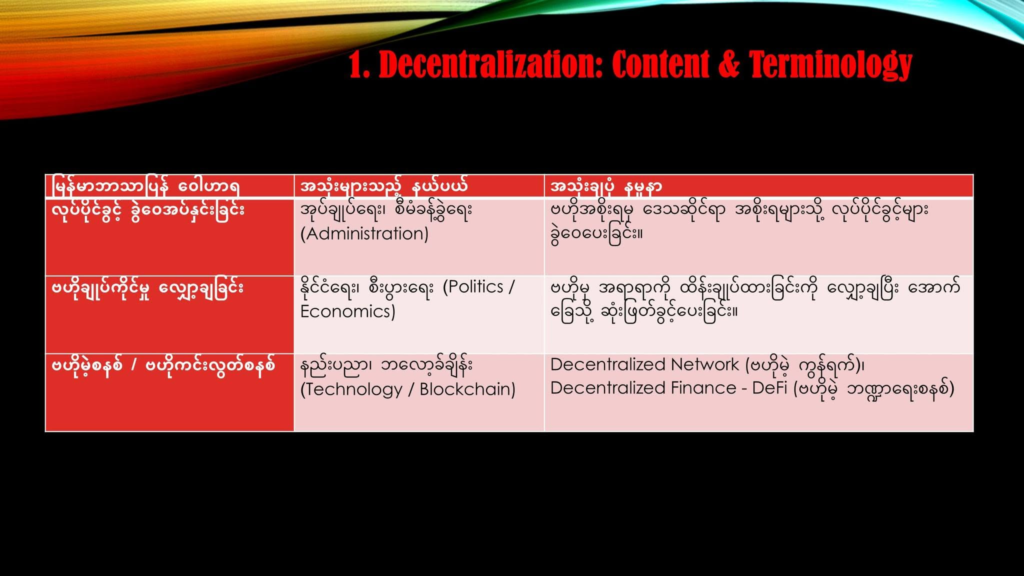
Decentralization ကို မြန်မာဘာသာစကားဖြင့် သုံးစွဲသည့်အခါ အဓိပ္ပာယ်နှင့် အကြောင်းအရာ (Context) ပေါ်မူတည်၍ အောက်ပါ Terminology (ဝေါဟာရ) များကို ပြန်ဆိုသုံးစွဲလေ့ရှိပါသည်။ ဇယား-၁
အများဆုံး သုံးစွဲသည့် ဝေါဟာရမှာ –
1. အုပ်ချုပ်ရေးနှင့် မူဝါဒဆိုင်ရာများတွင်: “လုပ်ပိုင်ခွင့် ခွဲဝေအပ်နှင်းခြင်း” သို့မဟုတ် “ဗဟိုချုပ်ကိုင်မှု လျှော့ချခြင်း” ဟု သုံးစွဲခြင်းက အထိရောက်ဆုံးနှင့် အသုံးအများဆုံးဖြစ်ပါသည်။
2. IT နှင့် ဘလော့ခ်ချိန်း (Blockchain) နည်းပညာတွင်: “ဗဟိုမဲ့စနစ်” ဟု လိုရင်းတိုရှင်း ပြန်ဆိုသုံးစွဲကြပါသည်။
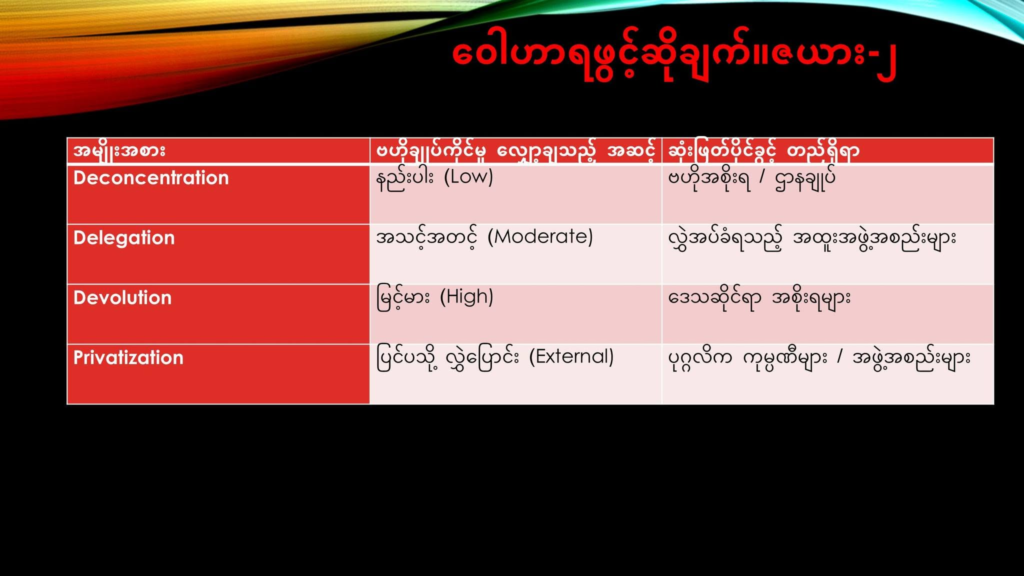
အုပ်ချုပ်ရေးဆိုင်ရာ Decentralization (လုပ်ပိုင်ခွင့် ခွဲဝေအပ်နှင်းခြင်း) တွင် အဓိကအားဖြင့် အဆင့်နှင့် သဘောသဘာဝပေါ် မူတည်၍ အမျိုးအစား (၄) မျိုး ခွဲခြားနိုင်ပါသည်။
၁။ Deconcentration (ဗဟိုမှ တာဝန်ခွဲဝေခြင်း / အာဏာခွဲဝေမှု လျှော့)
ဒါကတော့ ဗဟိုအစိုးရ သို့မဟုတ် ဗဟိုဌာနချုပ်က လုပ်ပိုင်ခွင့် ဆုံးဖြတ်ပိုင်ခွင့် အပြည့်အဝကို ထိန်းသိမ်းထားပြီး ရုံးခွဲများ၊ ဒေသဆိုင်ရာ ဌာနခွဲများသို့ လုပ်ငန်းဆိုင်ရာ တာဝန်အချို့ကိုသာ ခွဲဝေပေးအပ်ခြင်း ဖြစ်ပါသည်။
• အင်္ဂါရပ်: ဆုံးဖြတ်ချက်ဆိုင်ရာ မူဝါဒအာဏာသည် ဗဟိုတွင်ပင် ရှိနေပြီး စီမံခန့်ခွဲမှု လုပ်ငန်းစဉ်များကိုသာ ခွဲဝေပေးခြင်း ဖြစ်သည်။
၂။ Delegation (အာဏာလွှဲအပ်ခြင်း / လုပ်ပိုင်ခွင့် ပေးအပ်ခြင်း)
ဗဟိုအစိုးရက သီးခြား လွတ်လပ်သော အဖွဲ့အစည်းများ၊ ကော်မတီများ သို့မဟုတ် ဒေသဆိုင်ရာ အာဏာပိုင်များထံသို့ သီးခြားလုပ်ငန်းစနစ်များကို ဆုံးဖြတ် စီမံခန့်ခွဲပိုင်ခွင့် လွှဲအပ်ပေးခြင်း ဖြစ်ပါသည်။
• အင်္ဂါရပ်: လွှဲအပ်ခံရသည့် အဖွဲ့အစည်းသည် တာဝန်ယူထားသည့် လုပ်ငန်းအပေါ်တွင် ဆုံးဖြတ်ပိုင်ခွင့်ရှိသော်လည်း ဗဟိုအစိုးရက လိုအပ်ပါက အာဏာကို ပြန်လည်ရုပ်သိမ်းပိုင်ခွင့် ရှိသည်။
၃။ Devolution (အာဏာနှင့် လုပ်ပိုင်ခွင့် အပြီးအပိုင် ခွဲဝေပေးခြင်း)
ဒါကတော့ စစ်မှန်သော အုပ်ချုပ်ရေးဆိုင်ရာ Decentralization ဖြစ်ပါသည်။ ဗဟိုအစိုးရထံမှ ဒေသဆိုင်ရာ အစိုးရများ (Local Governments) သို့ ဥပဒေပြုပိုင်ခွင့်၊ အုပ်ချုပ်ပိုင်ခွင့်နှင့် ဘဏ္ဍာရေး ဆုံးဖြတ်ပိုင်ခွင့်များကို အတိုင်းအတာတစ်ခုအထိ အပြီးအပိုင် သို့မဟုတ် ဖွဲ့စည်းပုံအခြေခံဥပဒေအရ ခွဲဝေပေးခြင်း ဖြစ်ပါသည်။
• အင်္ဂါရပ်: ဒေသဆိုင်ရာ အစိုးရများသည် မိမိတို့ ဒေသအတွက် သီးခြား လွတ်လပ်စွာ ဆုံးဖြတ်ချက်များ ချမှတ်နိုင်ပြီး ဗဟိုအစိုးရ၏ တိုက်ရိုက် စွက်ဖက်မှုနည်းပါးသည်။
၄။ Privatization / Deregulation (ပုဂ္ဂလိကသို့ လွှဲပြောင်းခြင်း / စည်းမျဉ်းများ ဖြေလျှော့ခြင်း)ဇယား-၂
အစိုးရ သို့မဟုတ် ဗဟိုအာဏာပိုင်များ တာဝန်ယူထားသည့် ပြည်သူ့ဝန်ဆောင် မှု လုပ်ငန်းများ (ဥပမာ – လျှပ်စစ်၊ ရေပေးဝေရေး၊ လမ်းပန်းဆက်သွယ်ရေး) ကို ပုဂ္ဂလိက ကဏ္ဍ (Private Sector) သို့မဟုတ် အစိုးရမဟုတ်သော အဖွဲ့အစည်းများ (NGOs) ထံသို့ လွှဲပြောင်း စီမံခန့်ခွဲစေခြင်း ဖြစ်ပါသည်။
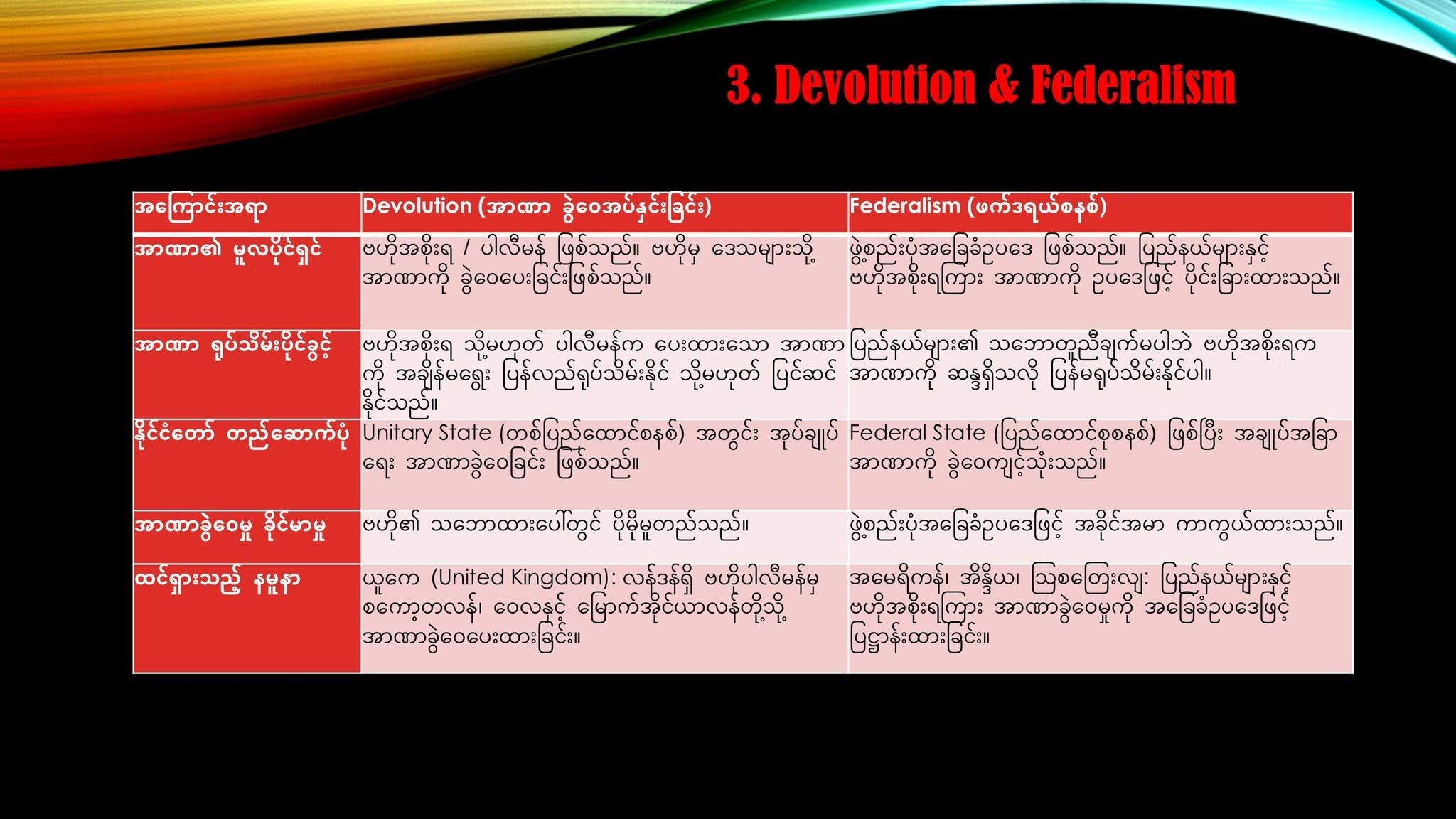
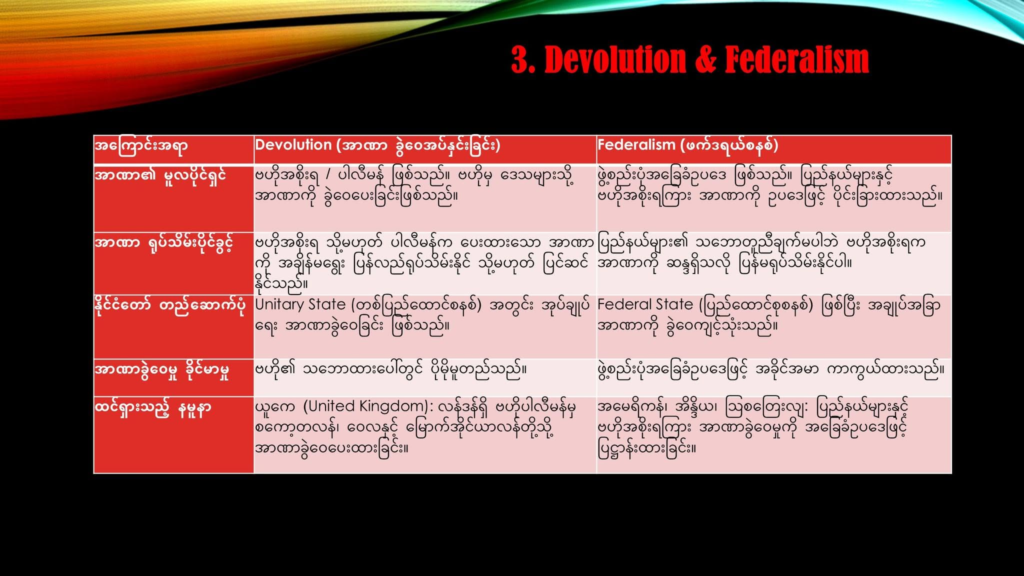
Devolution နှင့် Federalism (ဖက်ဒရယ်စနစ်) တို့သည် အာဏာကို ဗဟိုမှ အောက်ခြေသို့ ခွဲဝေပေးသည့် စနစ်များ ဖြစ်ကြသော်လည်း အာဏာ၏ မူလအရင်းအမြစ် (Origin of Power) နှင့် ဥပဒေကြောင်းအရ ခိုင်မာမှု (Legal Permanence) တို့တွင် အဓိက မတူညီကြပါ။
Devolution နှင့် Federalism နှိုင်းယှဉ်ချက်။ ဇယား-၃
အဓိက ကွာခြားချက်၏ အနှစ်ချုပ်
• Devolution တွင် အချုပ်အခြာအာဏာသည် ဗဟို၌သာ စုစည်းတည်ရှိပြီး ဒေသဆိုင်ရာ အစိုးရများကို လုပ်ပိုင်ခွင့် လွှဲပေးထားခြင်းဖြစ်၍ ဗဟိုက လိုအပ်ပါက ထိုအာဏာကို ပြန်ရုတ်သိမ်းနိုင်သည်။
• Federalism တွင်မူ အချုပ်အခြာအာဏာကို ဗဟိုအစိုးရနှင့် ပြည်နယ်အစိုးရများအကြား ဖွဲ့စည်းပုံအခြေခံဥပဒေအရ တန်းတူခွဲဝေကျင့်သုံးခြင်း ဖြစ်သဖြင့် ဗဟိုအစိုးရက မိမိသဘောဖြင့် ပြည်နယ်များ၏ အာဏာကို ပယ်ဖျက်၍ မရပါ။
ပဋိပက္ခလွန် သို့မဟုတ် အာဏာရှင်စနစ်မှ ဒီမိုကရေစီသို့ ကူးပြောင်းနေသော အကူးအပြောင်းကာလ နိုင်ငံများ (Transition Countries) တွင် Devolution နှင့် Federalism တို့ကို ကျင့်သုံးသည့်အခါ နိုင်ငံ၏ သမိုင်းကြောင်း၊ လူမျိုးစု မတူကွဲပြားမှုနှင့် တည်ငြိမ်မှုအပေါ် မူတည်၍ ပုံစံအမျိုးမျိုးဖြင့် အကောင်အ ထည် ဖော်ကြပါသည်။
အဓိက အတွေ့အကြုံများနှင့် သင်ခန်းစာများကို အောက်ပါအတိုင်း လေ့လာနိုင်ပါသည်။
၁။ Devolution ကို ကျင့်သုံးခဲ့သည့် အတွေ့အကြုံများ။
Devolution သည် တစ်ပြည်ထောင်စနစ် (Unitary State) မူဘောင်ကို မပျက်စီးစေဘဲ ဒေသအလိုက် တောင်းဆိုချက်များကို ဖြေရှင်းရန် သုံးလေ့ရှိပါသည်။
• စပိန်နိုင်ငံ (Spain):
o အခြေအနေ။ ဖရန်ကို၏ အာဏာရှင်စနစ်အလွန် ၁၉၇၈ ဖွဲ့စည်းပုံအခြေခံဥပဒေတွင် စပိန်သည် တရားဝင်အားဖြင့် Unitary State ဖြစ်သော်လည်း Autonomies System ဖြင့် ဒေသ ၁၇ ခုသို့ အာဏာများ ခွဲဝေပေးခဲ့သည်။
o သင်ခန်းစာ။ ကာတာလိုနီယာ (Catalonia) နှင့် ဘာစခ် (Basque) ကဲ့သို့ သမိုင်းကြောင်းအရ ကိုယ်ပိုင်အုပ်ချုပ်ခွင့် တောင်းဆိုမှု မြင့်မားသော ဒေသများကို ငြိမ်းချမ်းစွာ စီမံနိုင်ခဲ့သည်။ သို့သော် အာဏာခွဲဝေမှု အနိမ့်အမြင့် မညီမျှခြင်းနှင့် ဗဟို-ဒေသ တင်းမာမှုများ နောက်ပိုင်းတွင် ပြန်လည်ဖြစ်ပေါ်ခဲ့သည်။
• ကင်ညာနိုင်ငံ (Kenya):
o အခြေအနေ။ ၂၀၀၇ ရွေးကောက်ပွဲလွန် အကြမ်းဖက်မှုများအပြီး ၂၀၁၀ ဖွဲ့စည်းပုံအခြေခံဥပဒေအရ ဗဟိုအာဏာစုစည်းမှုကို လျှော့ချရန် ခရိုင် (County) ၄၇ ခုသို့ Devolution စနစ်ဖြင့် အာဏာနှင့် ဘဏ္ဍာရေး ခွဲဝေပေးခဲ့သည်။
o သင်ခန်းစာ။ ဒေသအသီးသီးသို့ ပြည်သူ့ဝန်ဆောင်မှုများနှင့် ဘဏ္ဍာရေး ရောက်ရှိသွားသဖြင့် ဒေသတွင်း ဖွံ့ဖြိုးရေးအတွက် အောင်မြင်မှုရရှိခဲ့သည်။ သို့သော် ခရိုင်အဆင့် အဂတိလိုက်စားမှုနှင့် စီမံခန့်ခွဲမှု စွမ်းရည် (Capacity) နိမ့်ကျမှုများ အခက်အခဲဖြစ်ခဲ့သည်။
၂။ Federalism ကို ကျင့်သုံးခဲ့သည့် အတွေ့အကြုံများ။
Federalism သည် မတူကွဲပြားသော လူမျိုးစု သို့မဟုတ် ပြည်နယ်များကို စည်းလုံးစေရန် သို့မဟုတ် ပဋိပက္ခအဆုံးသတ်ရန် ဖွဲ့စည်းပုံအခြေခံဥပဒေအရ ရေရှည်စာချုပ်အဖြစ် ကျင့်သုံးကြသည်။
• တောင်အာဖရိကနိုင်ငံ (South Africa):
o အခြေအနေ။ အပါသာအိဒ် (အသားအရောင်ခွဲခြားမှု) စနစ်အလွန် ၁၉၉၆ တွင် ပြည်နယ် ၉ ခုပါဝင်သော Cooperative Federalism (ပူးပေါင်းဆောင်ရွက်သော ဖက်ဒရယ်စနစ်) ကို ကျင့်သုံးခဲ့သည်။
o သင်ခန်းစာ။ ဗဟိုနှင့် ပြည်နယ်များအကြား အာဏာပြိုင်ဆိုင်ခြင်းထက် ပူးပေါင်းဆောင်ရွက်ရေးဆိုင်ရာ ဖွဲ့စည်းပုံဆိုင်ရာ မူဘောင်များကို တိကျစွာ ထည့်သွင်းထားခြင်းကြောင့် အကူးအပြောင်းကာလကို အောင်မြင်စွာ ကျော်လွှားနိုင်ခဲ့သည်။
• အီရတ်နိုင်ငံ (Iraq):
o အခြေအနေ။ ၂၀၀၃ နောက်ပိုင်း ၂၀၀၅ ဖွဲ့စည်းပုံအခြေခံဥပဒေဖြင့် ဖက်ဒရယ်စနစ်ကို စတင်ခဲ့ပြီး ကာဒစ်စတန် (Kurdistan) ဒေသကို အဆင့်မြင့် ကိုယ်ပိုင်အုပ်ချုပ်ခွင့်ပေးခဲ့သည်။
o သင်ခန်းစာ။ လူမျိုးစု/ဘာသာရေးအပေါ် အခြေခံလွန်းသော အာဏာခွဲဝေမှုကြောင့် ဗဟိုအစိုးရ အားနည်းသွားပြီး သယံဇာတ ခွဲဝေရေးနှင့် နယ်နိမိတ် အငြင်းပွားမှုများ စဉ်ဆက်မပြတ် ဖြစ်ပေါ်ခဲ့သည်။
• နီပေါနိုင်ငံ (Nepal):
o အခြေအနေ။ ပဒေသာရာဇ် ဘုရင်စနစ်နှင့် မောင်းသူမဲ့ စစ်ပွဲအပြီး ၂၀၁၅ တွင် တစ်ပြည်ထောင်စနစ်မှ ဖက်ဒရယ် ဒီမိုကရက်တစ် သမ္မတနိုင်ငံအဖြစ် ပြောင်းလဲခဲ့သည်။
o သင်ခန်းစာ။ ဖက်ဒရယ် ပြည်နယ် နယ်နိမိတ်များ ပိုင်းခြားရာတွင် လူမျိုးစု နယ်နိမိတ်နှင့် စီးပွားရေးအရ ရေရှည်ရပ်တည်နိုင်မှု (Economic Viability) ကြား ညှိနှိုင်းရခက်ခဲမှုများ ကြုံတွေ့ခဲ့ရသည်။
၃။ အကူးအပြောင်းကာလ အဓိက သင်ခန်းစာများ (Key Takeaways)။
၁။ ဘဏ္ဍာရေး အာဏာခွဲဝေမှု (Fiscal Decentralization)။ နိုင်ငံရေးအာဏာ သက်သက် ခွဲဝေပေးရုံဖြင့် မလုံလောက်ဘေ ဒေသများ အမှန်တကယ် လည်ပတ်နိုင်ရန် သယံဇာတနှင့် အခွန်အတိုးအဆုတ်ဆိုင်ရာ ဘဏ္ဍာရေး အာဏာခွဲဝေမှုပါ ရှင်းလင်းစွာ ရေးဆွဲရပါမည်။
၂။ စီမံခန့်ခွဲမှု စွမ်းရည် တည်ဆောက်ခြင်း (Capacity Building)။ အောက်ခြေ ဒေသဆိုင်ရာ အဖွဲ့အစည်းများ၏ စီမံခန့်ခွဲနိုင်စွမ်း အဆင်သင့်မဖြစ်မီ အာဏာအလျင်စလို လွှဲပေးပါက အဂတိလိုက်စားမှုနှင့် အုပ်ချုပ်ရေး ပျက်ပြားမှုများ ဖြစ်ပေါ်နိုင်သည်။
၃။ တရားစီရင်ရေး၏ အခန်းကဏ္ဍ (Role of Judiciary)။ ဖက်ဒရယ်စနစ်တွင် ဗဟိုနှင့် ပြည်နယ်ကြား အဓိပ္ပာယ်ဖွင့်ဆိုချက် အငြင်းပွားမှုများကို ဖြေရှင်းပေးနိုင်သည့် လွတ်လပ်သော အခြေခံဥပဒေခုံရုံး (Constitutional Court) ရှိရန် မရှိမဖြစ် လိုအပ်ပါသည်။
ဗမာနိုင်ငံ၏ ပထဝီနိုင်ငံရေး၊ သမိုင်းကြောင်းဆိုင်ရာ လူမျိုးစုပဋိပက္ခများနှင့် လက်ရှိပဋိပက္ခလွန် သို့မဟုတ် အကူးအပြောင်းကာလ အခြေအနေများအရ တစ်ပြည်ထောင်စနစ်သုံး ဗဟိုချုပ်ကိုင်မှုပုံစံဖြင့် စီမံရန် မဖြစ်နိုင်တောဘဲ ဖက်ဒရယ်နှင့် ဒီမိုကရေစီစနစ်ကို အခြေခံသည့် အာဏာခွဲဝေမှု မူဘောင်များ သို့ သွားရန်လိုအပ်ကြောင်း အကဲခတ်များနှင့် မူဝါဒရေးဆွဲသူများက လက်ခံထားကြပါသည်။
ဗမာ့အကူးအပြောင်းကာလတွင် ထည့်သွင်းစဉ်းစားနိုင်သည့် အာဏာခွဲဝေမှု မူဘောင်များ၊ ရင်းနှီးရမည့် စိန်ခေါ်မှုများနှင့် ကျော်လွှားနိုင်မည့် နည်းလမ်းများကို အောက်ပါအတိုင်း သုံးသပ်နိုင်ပါသည်။
၁။ ကိုယ်စားပြုနိုင်မည့် အာဏာခွဲဝေမှု မူဘောင်များ (Power-Sharing Frameworks)
(က) ဘက်စုံ အာဏာခွဲဝေမှု မူဘောင် (Multi-dimensional Power-Sharing)
• နိုင်ငံရေး အာဏာခွဲဝေမှု (Political Power-Sharing): ဗဟိုအစိုးရတွင် အမျိုးသားညီညွတ်ရေး သို့မဟုတ် ညွန့်ပေါင်းအစိုးရ ပုံစံဖြင့် တိုင်းရင်းသားလူနည်းစုများ၊ ဒေသအသီးသီးမှ ကိုယ်စားလှယ်များ ပူးပေါင်းပါဝင်ခွင့် ရရှိစေခြင်း။
• နယ်မြေဆိုင်ရာ အာဏာခွဲဝေမှု (Territorial Power-Sharing / Federalism): ပြည်နယ်နှင့် တိုင်းဒေသကြီး အစိုးရများကို သီးခြား ဥပဒေပြုပိုင်ခွင့်နှင့် အုပ်ချုပ်ပိုင်ခွင့်များ ဖွဲ့စည်းပုံအခြေခံဥပဒေအရ အာမခံချက်ပေးခြင်း။
• ဘဏ္ဍာရေး အာဏာခွဲဝေမှု (Fiscal Power-Sharing): အခွန်ကောက်ခံပိုင်ခွင့်နှင့် သယံဇာတမှ ရရှိသော ဝင်ငွေများကို ဗဟိုနှင့် ပြည်နယ်များအကြား တရားမျှတစွာ ခွဲဝေရေး မူဘောင်များ ချမှတ်ခြင်း။
(ခ) မညီမျှသော ဖက်ဒရယ်စနစ် (Asymmetric Federalism)
• ဒေသအားလုံးတွင် အုပ်ချုပ်ရေးနှင့် စီမံခန့်ခွဲနိုင်စွမ်း (Capacity) သို့မဟုတ် သမိုင်းကြောင်း တောင်းဆိုချက်များ မတူညီသည့်အတွက် အချို့ဒေသများ (ဥပမာ – သမိုင်းဝင် တိုင်းရင်းသား ပြည်နယ်များ) သို့ ကိုယ်ပိုင်အုပ်ချုပ်ခွင့် ပိုမိုပေးအပ်ပြီး၊ အချို့ဒေသများသို့ လုပ်ပိုင်ခွင့် အဆင့်လိုက် ခွဲဝေပေးသည့် မူဘောင် ဖြစ်ပါသည်။
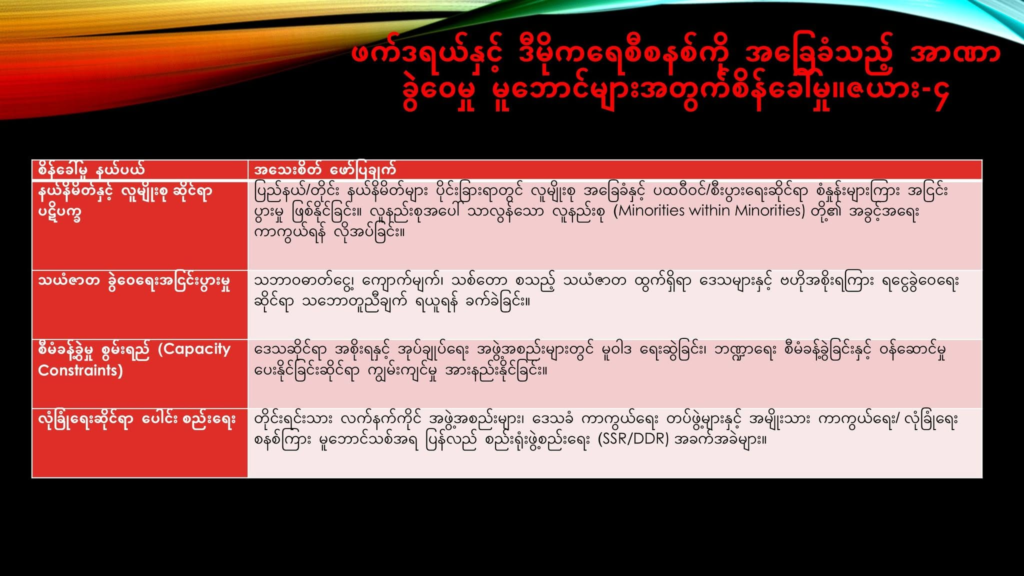
၂။ ရင်ဆိုင်ရမည့် အဓိက စိန်ခေါ်မှုများ (Key Challenges)ဇယား-၄
၃။ စိန်ခေါ်မှုများကို ကျော်လွှားရန် နည်းလမ်းများ။
၁။ အကူးအပြောင်းကာလ ဖွဲ့စည်းပုံအခြေခံဥပဒေ မူဘောင် (Interim Constitutional Framework): ရေရှည် ဖွဲ့စည်းပုံ မပြီးမီ အကူးအပြောင်းကာလ တည်ငြိမ်ရေးနှင့် ဝန်ဆောင်မှုများ မပြတ်တောက်စေရန် ယာယီ အာဏာခွဲဝေမှု မူဘောင်ဖြင့် အဆင့်လိုက် အကောင်အထည်ဖော်ခြင်း။
၂။ အောက်ခြေမှ အထက်သို့ သွားသော စနစ် (Bottom-up Approach): ဗဟိုမှ အာဏာခွဲပေးသည်ထက် ဒေသအလိုက် တကယ့်လိုအပ်ချက်များကို အောက်ခြေမှ စတင်စုစည်း၍ အထက်သို့ စနစ်တကျ တည်ဆောက်ခြင်း။
၃။ လွတ်လပ်သော အဖွဲ့အစည်းများ ထူထောင်ခြင်း: ဘဏ္ဍာရေး ခွဲဝေရေး ကော်မရှင် (Fiscal Commission) နှင့် အခြေခံဥပဒေဆိုင်ရာ အငြင်းပွားမှု ဖြေရှင်းရေး ခုံရုံးများကို မူဝါဒအခြေခံ၍ လွတ်လပ်စွာ ရပ်တည်နိုင်အောင် ဖွဲ့စည်းပေးခြင်း။
အထက်ပါဝေါဟာရထောင်ကျောက်မှထွက်ပေါက်သည် Fiscal Federalism
ထိုအဆိုပြုချက်သည် မြန်မာ့နိုင်ငံရေးနှင့် ဖက်ဒရယ် ပြန်လည်တည်ဆောက်ရေးအတွက် လွန်စွာ ထိရောက်ပြီး နက်ရှိုင်းသော စီးပွားရေး-နိုင်ငံရေး (Political Economy) ဆိုင်ရာ သုံးသပ်ချက်တစ်ခု ဖြစ်ပါသည်။
ထိုအဆိုပြုချက် ပါဝင်သည့် သဘောတရားနှင့် အချက်အလက်များကို အောက်ပါအတိုင်း အပိုင်းလိုက် သုံးသပ်နိုင်ပါသည်။
၁။ “ဝေါဟာရ ထောင်ချောက်” (Semantic / Conceptual Trap) မှ လွတ်မြောက်ခြင်း>
အတိတ်နှင့် လက်ရှိ သမိုင်းအတွေ့အကြုံများအရ ဗမာနိုင်ငံတွင် Decentralization (သို့မဟုတ်) Devolution ဟု အမည်တပ်ခဲ့သော ပြုပြင်ပြောင်းလဲမှုများသည် “ဗဟိုအစိုးရ/စစ်အာဏာပိုင်များက သဘောထားကြီးစွာဖြင့် အောက်ခြေသို့ အာဏာအချို့ ခွဲဝေပေးအပ်ခြင်း” (Benevolent/Top-down Grant) ဆိုသည့် အယူအဆအောက်တွင်သာ လည်ပတ်ခဲ့ပါသည်။
• ထိုသို့သော ဝေါဟာရ ထောင်ချောက်အောက်တွင် ဗဟိုက ပေးထားသော အာဏာဖြစ်၍ ဗဟိုက အချိန်မရွေး ပြန်လည်ရုပ်သိမ်းနိုင်ခြင်း၊ ဗဟို၏ စိစစ်ကွပ်ကဲမှုကို အပြည့်အဝ ခံယူရခြင်း တို့ဖြင့်သာ အဆုံးသတ်ခဲ့ရပြီး စစ်မှန်သော ကိုယ်ပိုင်ပြဋ္ဌာန်းခွင့်ကို မရရှိစေခဲ့ပါ။
၂။ ဘာကြောင့် ဂိမ်းပြဿနာ (Game-Theoretic Problem) ဖြစ်ရသနည်း?
ဗဟိုအစိုးရနှင့် တိုင်းရင်းသား/ဒေသခံ ပြည်သူများကြား တည်ဆောက်ထားသော ဆက်ဆံရေးသည် ဂိမ်းသီအိုရီ (Game Theory) အရ “သံသယဖြစ်ဖွယ် အပြန်အလှန် ပိတ်မိနေသော ဂိမ်း” (Prisoner’s Dilemma / Zero-Sum Game) ဖြစ်နေခဲ့ပါသည်။
• ဗဟို၏ ရှုထောင့်။ ဒေသများကို အာဏာနှင့် ဘဏ္ဍာရေး ပိုပေးလိုက်ပါက ခွဲထွက်သွားမည် သို့မဟုတ် ဗဟိုကို ပြန်လည်စိန်ခေါ်မည်ဟု စိုးရိမ်သည်။
• ဒေသများ/တိုင်းရင်းသားများ၏ ရှုထောင့်။ ဗဟို၏ ဂတိကဝတ်များနှင့် Decentralization စကားလုံးများကို မယုံကြည်ဘဲ ဗဟိုချုပ်ကိုင်မှု ပြန်လည်ရောက်ရှိလာမည်ကို စိုးရိမ်သည်။
• ရလဒ်။ အပြန်အလှန် ယုံကြည်မှု မရှိသဖြင့် နှစ်ဦးစလုံး ဆုံးရှုံးရသော (Zero-Sum သို့မဟုတ် Negative-Sum) စစ်ပွဲနှင့် ပဋိပက္ခ သံသရာထဲတွင် ပိတ်မိနေခဲ့ပါသည်။
၃။ Fiscal Federalism က ဤဂိမ်းပြဿနာကို မည်သို့ ဖြေရှင်းနိုင်မည်နည်း?
Fiscal Federalism (ဘဏ္ဍာရေး ဖက်ဒရယ်စနစ်) သည် နိမိတ်ပြ စကားလုံးများ မဟုတ်ဘဲ “တိကျသော စည်းမျဉ်း၊ အခွန်အတိုးအဆုတ်ဆိုင်ရာ မူဘောင်နှင့် ဘဏ္ဍာရေး အခွင့်အာဏာ ခွဲဝေမှု” ဖြင့် အောက်ပါအတိုင်း ဂိမ်း၏ စည်းမျဉ်းများကို ပြောင်းလဲပေးနိုင်ပါသည်။
1. အာဏာ၏ အရိုးစွဲမှုကို ဘဏ္ဍာရေးဖြင့် သက်သေပြခြင်း (Structural Commitment)။
အခွန်ကောက်ခံပိုင်ခွင့် (Taxing Power)၊ သယံဇာတ ရငွေ ခွဲဝေရေး (Resource Revenue Sharing) နှင့် ဘဏ္ဍာရေး လွှဲပြောင်းမှု (Intergovernmental Transfers) များကို ဖွဲ့စည်းပုံအခြေခံဥပဒေအရ အခိုင်အမာ ခွဲဝေပေးလိုက်သည့်အခါ ဗဟိုအစိုးရသည် ဒေသများကို အနိုင်ကျင့် သို့မဟုတ် အာဏာပြန်လည် ရုပ်သိမ်းရန် ဘဏ္ဍာရေးအရ မဖြစ်နိုင်တော့ဘဲ Self-enforcing Game (မိမိဘာသာ ထိန်းကျောင်းပြီးသား ဖြစ်သွားသော စနစ်) သို့ ပြောင်းလဲသွားသည်။
2. အောက်ခြေမှ အထက်သို့ စီးဆင်းသော အာဏာ (Bottom-Up Bargaining)။
Fiscal Federalism တွင် ဒေသအသီးသီးက မိမိတို့ဒေသ၏ ဖွံ့ဖြိုးရေးအတွက် သီးခြား ဘဏ္ဍာရေးအရ ရပ်တည်နိုင်စွမ်း (Fiscal Autonomy) ရရှိသွားသဖြင့် ဗဟို၏ “သနားခံမှု/ပေးသနားမှု” ပေါ်တွင် အမှီအခိုပြုနေရသည့် အခြေအနေမှ လွတ်မြောက်သွားသည်။
3. Win-Win Game သို့ ပြောင်းလဲခြင်း။
ဒေသများ ဘဏ္ဍာရေးအရ ကြံ့ခိုင်ပြီး စီးပွားရေး ဖွံ့ဖြိုးတိုးတက်လာပါက တိုင်းပြည်တစ်ခွင်လုံး၏ စီးပွားရေး ချဲ့ထွင်နိုင်မှု မြင့်မားလာမည်ဖြစ်ရာ ဗဟိုနှင့် ဒေသများကြား စီးပွားရေးဆိုင်ရာ အပြန်အလှန် အကျိုးပြုမှု (Positive-Sum Game) အဖြစ်သို့ ကူးပြောင်းသွားမည် ဖြစ်သည်။
အချုပ်အားဖြင့်ဆိုရသော် ဗဟိုချုပ်ကိုင်မှုစနစ် (Centrally Planned System) ကို တိုက်ဖျက်ရာတွင် “Decentralization” ဆိုသည့် အာဏာခွဲဝေရေးစကားလုံးနောက်၌ ပိတ်မိမနေဘဲ၊ အမှန်တကယ် လက်တွေ့ကျသော Fiscal Federalism (ဘဏ္ဍာရေး ဖက်ဒရယ်စနစ်) ဖြင့် အဓိက အခွန်နှင့် သယံဇာတဆိုင်ရာ ဖွဲ့စည်းပုံအခြေခံဥပဒေဆိုင်ရာ အာမခံချက်များ တည်ဆောက်ခြင်းကသာလျှင် မြန်မာနိုင်ငံ၏ သမိုင်းရှည် စိတ္တဇနှင့် ဂိမ်းပြဿနာကို ရေရှည်ဖြေရှင်းပေးနိုင်မည် ဖြစ်ပါသည်။
မျိုးညွန့်(နိုင်ငံတကာမာခရိုစီးပွါးရေးပါရဂူ)
ကနေ့နိုင်ငံရေးအကျပ်အတည်းဟာဝေါဟာရထောင်ချောက်မှာပိတ်မိနေပြီးယင်းကိုအခန်း-၂ ဂိမ်းသီဝရီဖြင့်ဖြေရှင်းပြီးတာနဲ့ သမိုင်းရုပ်ပကတိနိုင်ငံရေးသီဝရီနဲ့ဆက်လက်ဖြေရှင်းပါမည်။