Article 1
No One Chooses to Become a Refugee
“Every refugee was once an ordinary person with an ordinary life.”
Around the world today, millions of people have been forced to flee their homes because of war, persecution, violence, political instability, or natural disasters. They come from different races, religions, cultures, and languages. Some escape civil wars. Others flee military conflict, ethnic persecution, or fear for their lives.
Yet they all share one painful truth.
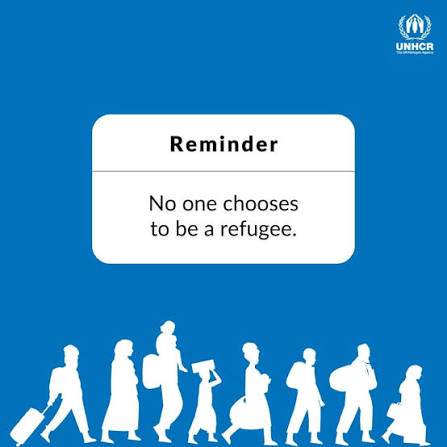
No one chooses to become a refugee.
Behind every refugee registration card is a human story.
A father who left behind his home.
A mother who worries every day about feeding her children.
A student whose education was interrupted.
A doctor, engineer, teacher, farmer, or shopkeeper who suddenly became a stranger in another country.
They did not leave because they wanted a better job or a more comfortable life. Many left because staying meant imprisonment, forced recruitment, persecution, or death.
For them, leaving home was not a choice.
It was survival.
Refugees are not statistics
Discussions about refugees often become debates over numbers.
How many entered the country?
How much do they cost?
How many should be accepted?
These are legitimate questions for governments and taxpayers.
However, before discussing policies and numbers, we should remember that refugees are first and foremost human beings.
Like every one of us, they have hopes, fears, talents, and dreams.
Many were productive citizens before conflict destroyed their lives.
Given the opportunity, many can become productive members of their host communities once again.
Host countries also face genuine challenges
Compassion alone cannot solve a refugee crisis.
Host countries must consider many legitimate concerns:
- national security,
- public health,
- employment,
- housing,
- education,
- public opinion,
- and financial costs.
Countries that receive large numbers of refugees often carry responsibilities that should not fall upon them alone.
Their citizens also deserve employment opportunities, affordable healthcare, quality education, and public services.
Recognizing these concerns does not diminish compassion.
Rather, it reminds us that humanitarian solutions must also be practical and sustainable.
Moving beyond charity
Emergency humanitarian assistance saves lives.
Food, shelter, healthcare, and protection are essential during crises.
But what happens after one year?
Or five years?
Or twenty years?
If refugees remain dependent on aid indefinitely, everyone loses.
Refugees lose dignity and opportunities.
Host countries experience increasing financial and social pressures.
The international community faces ever-growing humanitarian costs.
Surely we can do better.
A different way of thinking
Instead of asking,
“How can we support refugees forever?”
perhaps we should ask,
“How can refugees become partners in rebuilding their own futures?”
The answer lies not in endless dependency but in education, skills, lawful employment, shared international responsibility, and ultimately, peace in the countries from which refugees have fled.
This is not only good for refugees.
It is good for host countries.
It is good for employers.
It is good for taxpayers.
And eventually, it will be good for the countries that refugees hope one day to return to when peace is restored.
That is the true meaning of a win–win solution.
Looking ahead
This series does not seek to assign blame.
It does not argue that any country or organization has all the answers.
Instead, it invites governments, international organizations, civil society, employers, academics, and refugees themselves to consider a simple question:
Can we build a refugee system that protects human dignity while also serving the legitimate interests of host countries?
I believe the answer is yes.
The following articles will explore practical ideas—from education and lawful employment to international burden-sharing and long-term peacebuilding—that can help transform refugees from passive recipients of aid into active contributors to society.
Because when refugees succeed, host countries benefit.
When host countries are supported, the international community becomes stronger.
And when peace finally returns, everyone gains.
Coming next:
Why Host Countries Cannot Carry the Burden Alone