Entering Sri Ksetra
“The history of Burma (now Myanmar) is not merely the story of kings and kingdoms. It is the story of ordinary people who, despite wars, floods, exile, and hardship, never stopped searching for a place to call home.”
Imagine that you are a traveller approaching ancient Burma nearly 1,500 years ago.
The morning sun has just risen above the eastern hills. Before you lies a vast plain watered by the Ayeyarwady River. Farmers are already working in the fields. Oxen pull wooden ploughs through fertile soil, while smoke rises gently from villages scattered across the countryside.
In the distance, something unexpected appears.
Not a lonely village.
Not a military camp.
But a great walled city.
This is Sri Ksetra.
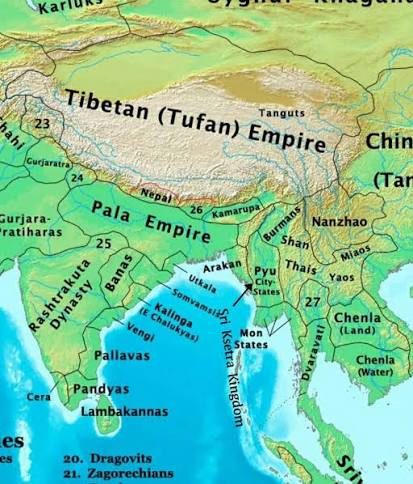
Long before the famous temples of Bagan were built, Sri Ksetra stood as one of the greatest cities in ancient Burma. Its broad walls enclosed homes, monasteries, workshops, reservoirs, and places of worship. Wide roads connected different quarters, while traders entered through its gates carrying goods from distant lands.
Listen carefully.
You hear the ringing of a blacksmith’s hammer.
Potters shape clay into jars that will carry rice and water.
Children chase one another beneath shady trees.
Monks walk quietly on their morning rounds.
Merchants bargain in more than one language.
Some have travelled down the Ayeyarwady.
Others have crossed mountains from Yunnan.
Still others have sailed across the Bay of Bengal from the eastern shores of India.
Sri Ksetra was more than a city.
It was a meeting place.
Ideas travelled here as surely as merchants did.
Buddhist teachings spread through monasteries.
Artisans borrowed artistic styles from distant lands while giving them a distinctly Burmese character.
Foreign visitors were welcomed, yet the city remained confidently itself.
Its people did not simply imitate the outside world.
They absorbed new ideas, adapted them, and created something unique.
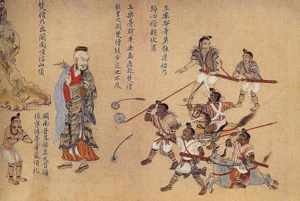
Centuries later, archaeologists would uncover inscriptions, sculptures, coins, and magnificent stupas buried beneath the earth. Chinese records would describe a cultured people whose music reached the imperial court. Burmese chronicles would preserve memories linking this land to ancient traditions and royal lineages.
Each source tells only part of the story.
Together they allow us to hear the heartbeat of a civilization that once flourished on the banks of the Ayeyarwady.
Today, the quiet ruins of Sri Ksetra remind us that great civilizations are not built in a single generation.
They grow slowly—through the labour of farmers, the skill of craftsmen, the wisdom of monks, the courage of travellers, and the curiosity of people willing to learn from the wider world.
The story of Burma did not begin with mighty kings.
It began with ordinary men and women who built extraordinary communities.
Their city still whispers to those who are willing to listen.
Kingdoms rise and fall. Rivers change their course. Cities become ruins. Yet truth, compassion, and the search for wisdom remain among humanity’s greatest treasures.
Continue to read: 10/ Part 10 (Final): “Myanmar Evolution up to date” – The Making of the Myanmar Peoples @ https://myanmarmuslim.news/en/2026/07/11/part-10-final-myanmar-evolution-up-to-date-the-making-of-the-myanmar-peoples/