From Dhammasat to Modern Burma
History Should Unite Rather Than Divide
“A civilisation is judged not by the purity of its blood, but by the richness of its ideas.”
By Dr. Ko Ko Gyi Abdul Rahman Zafrudin
The story of Burma did not begin with Bagan, nor did it begin with the arrival of any single ethnic group.
As we have seen in the previous two articles, the Pyu, Mon and Arakanese kingdoms flourished long before King Anawrahta unified Upper Burma. Archaeology, inscriptions and historical records all reveal a land enriched by centuries of interaction with neighbouring civilisations.
The greatness of Burma was never founded upon isolation.
It was founded upon exchange.
Bagan: A Meeting Point of Civilisations
When King Anawrahta established the Pagan Empire in the eleventh century, he inherited more than territory.
He inherited centuries of accumulated knowledge.
From the Pyu came urban traditions and Buddhist foundations.
From the Mon came literary culture, Theravāda scholarship and artistic refinement.
From India came Pali scriptures, Sanskrit political ideas, architecture, religious philosophy and systems of law.
The genius of Pagan was not that it invented everything anew.
Its genius lay in bringing these traditions together and transforming them into a civilisation unmistakably its own.
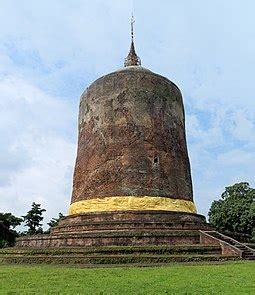
The thousands of temples still standing on the plains of Pagan testify to that remarkable synthesis.
Law Beyond Borders
One of the clearest examples of cultural exchange is found in Burma’s legal history.
King Wareru commissioned the compilation of what became known as the Wareru Dhammathat, among the earliest surviving Burmese legal codes.
Although influenced by the ancient Indian Dharmaśāstra tradition, the code was thoroughly adapted to the Buddhist values and social realities of Burma.
Over the following centuries, the Dhammathats shaped Burmese customary law concerning marriage, inheritance, property and kingship.
This was not imitation.
It was creative adaptation.
Great civilisations borrow wisely and improve what they inherit.
The Bay of Bengal: Asia’s Great Highway
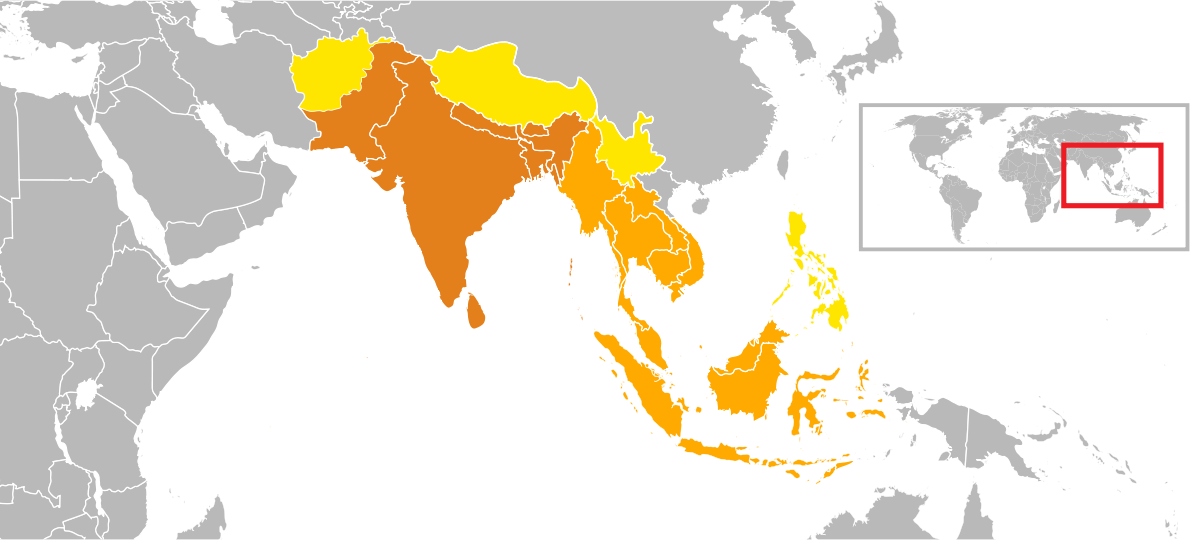
The Bay of Bengal has sometimes been described as separating South and Southeast Asia.
History suggests the opposite.
For over two thousand years it functioned as one of Asia’s busiest maritime highways.
Merchants sailed from the ports of Bengal, Odisha and southern India to Thaton, Martaban, Syriam and Arakan.
Alongside trade came monks, scholars, artisans and diplomats.
Religious ideas crossed the sea.
So did artistic styles, systems of writing, architecture, astronomy, medicine and legal thought.
The Bay of Bengal united civilisations long before modern nations drew political boundaries.
British Burma and British India
History created another important connection in the nineteenth century.
Following the Anglo-Burmese Wars, Burma gradually became part of British India. For more than a century, until 1937, the country was administered as a province of British India.
During this period, large numbers of Indians came to Burma as teachers, doctors, lawyers, engineers, civil servants, labourers and merchants.
They helped build roads, railways, ports, hospitals, universities and municipal institutions.
Many also made Burma their permanent home.
Like earlier migrants throughout history, they became part of Burma’s complex social fabric.
Remembering Without Hatred
History also reminds us that periods of cooperation were sometimes followed by tragedy.
Economic hardship, colonial policies and political manipulation contributed to anti-Indian riots and communal violence during the twentieth century.
Many innocent people suffered.
Remembering those painful chapters is important.
But remembering should never become an excuse for hatred.
The purpose of history is understanding.
Not revenge.
One Nation, Many Roots
No modern nation is ethnically pure.
Every civilisation is the product of countless encounters across centuries.
Burma is no exception.
The indigenous peoples of the Irrawaddy valley, the Pyu, Mon, Rakhine, Bamar, Shan, Kachin, Chin, Karen and many other communities all contributed to the country’s identity.
So too did generations of migrants who arrived peacefully from India, China and elsewhere, bringing skills, knowledge and traditions that became woven into Burma’s own civilisation.
Recognising these contributions diminishes no one.
Instead, it enriches our understanding of ourselves.
The Lesson for Our Generation
Today, the people of Burma continue to face many political, social and economic challenges.
Building a peaceful future requires more than constitutional reform or economic development.
It also requires historical honesty.
We should reject myths of racial superiority.
We should reject prejudice based on religion or ancestry.
And we should remember that every community has contributed something valuable to our common heritage.
The strength of Burma has never come from uniformity.
Its strength has always come from diversity, resilience and the willingness of different peoples to learn from one another.
A Personal Reflection
As I look back over a lifetime of reading, teaching, practising medicine and studying history, I have come to appreciate one simple truth.
History should never be used as a weapon.
It should be a mirror.
When we look honestly into that mirror, we discover that our ancestors were not isolated from the world.
They travelled.
They traded.
They learned.
They taught.
They disagreed.
They cooperated.
And together they built the civilisation we have inherited today.
May future generations have the wisdom to preserve that inheritance with truth, humility and mutual respect.
Conclusion
History belongs to everyone.
It cannot be owned by one race, one religion or one political ideology.
The story of Burma is not the story of a single people.
It is the shared story of many peoples whose journeys crossed in this beautiful land between India and China.
Understanding that truth does not weaken our patriotism.
It strengthens it.
For only when we know where we truly came from can we decide wisely where we wish to go.
Selected References
- Than Tun. Bagan Culture.
- Than Tun. The Story of Myanmar Told in Pictures.
- D. G. E. Hall. Burma.
- D. G. E. Hall. A History of South-East Asia.
- George Coedès. The Indianized States of Southeast Asia.
- Maurice Collis. Arakan’s Place in the Civilization of the Bay.
- Moshe Yegar. The Muslims of Burma.
- Chinese dynastic chronicles on the Pyu kingdoms.