Dr Ko Ko Gyi @ Abdul Rahman Zafrudin
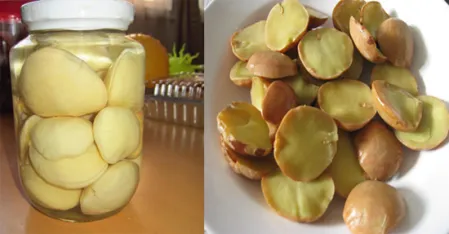
Many people in Malaysia, Myanmar, and across ASEAN mistakenly believe that the strong-smelling urine experienced the day after eating Da Nyin Thee is a sign that harmful toxins are being flushed out of the body. This is incorrect. Most doctors in Myanmar are well aware of this misconception. We have treated many patients presenting with dysuria, haematuria, and renal failure — largely because people consume large quantities of specially prepared boiled Da Nyin Thee.
The beans are mildly toxic due to the presence of djenkolic acid, an amino acid that causes a condition known as djenkolism (jengkol bean poisoning). Symptoms include spasmodic pain, gout, urinary obstruction, and acute renal failure. (Wong, J.S., et al. (2007). Acute anuric renal failure following jering bean ingestion. Asian J Surg 30:1, 80–81.)
Importantly, the condition predominantly affects men and is not determined by how the beans are prepared. An individual may consume them on multiple occasions without any ill effects, only to develop renal failure on a subsequent occasion. (Adler, S.G. and Weening, J.J. (2006). A case of acute renal failure. Clin J Am Soc Nephrol 1: 158–165.)
(Source: Wikipedia)
A Personal Clinical Experience
In the early 1980s, I was posted as a Demonstrator and Assistant Surgeon in Surgical Unit 2 (SU2). During one of my on-call duties, a Paediatric Nurse called me to attend to a 10-year-old boy with acute urinary retention. The Paediatric Surgeon, Dr. U Han Saw, and Dr. U Myo Nyunt were occupied in the operating theatre at the time.
While I was taking the history, examining the distended bladder, and preparing for catheterisation, I was unaware that Dr. U Han Saw had quietly left the theatre and was observing me from behind. He then advised me to compress the boy’s penis in a gentle milking motion. Startled, I followed his guidance — and to my astonishment, a white, cheesy, chalk-like material was expressed, much like squeezing a toothpaste tube, followed immediately by a gush of urine.
That was my one and only personal experience of acute urinary retention caused by Da Nyin Thee.
All Myanmar doctors — including general practitioners — are aware that Da Nyin Thee can cause haematuria, urinary stones, and urinary tract infection symptoms.
During my time at Mandalay General Hospital, the younger brother of one of my lady House Officers — a third-year MBBS student — was admitted with renal failure after consuming 150 boiled Da Nyin Thee seeds.
At that time, approximately 45 years ago, there were only two dialysis machines in the entire country of Burma, and both were reserved exclusively for Daw Khin May Than, the wife of General Ne Win.
The Situation in Malaysia
In Malaysia, Da Nyin Thee is not widely consumed — except among the Myanmar community. Strikingly, even a prominent urologist I encountered was unaware of its nephrotoxicity. After I raised the issue, he fell silent. It was only the following day — after researching it at home — that he acknowledged its toxic effects on the kidneys.
A Misleading Media Report
This makes it all the more concerning to see an article in The Star newspaper promoting jering as a health food, under the headline “Snack much sought after for health properties” by Farik Zolkepli:
“KUALA TERENGGANU: The buah jering, which grows wild and is eaten as ulam (table salad) by many Malaysian families, has become a sought-after snack, thanks to 79-year-old trader Ali Omar. He sells it both as a snack and as a remedy for various ailments, claiming it can reduce blood sugar levels and improve digestion…”
This type of reporting, which presents jering as beneficial to health, is medically irresponsible and potentially dangerous to public health.
Below is translated and Summarised from Dr. Khin Maung Lwin‘s FB post:
Da Nyin Thee / Jengkol / Buah Jering contains no beneficial vitamins or nutritional value. It contains djenkolic acid — a toxic amino acid present at concentrations of 0.3% to 1.3%. This toxin is poorly water-soluble (only 0.5% solubility) and cannot be neutralised by boiling, as it only breaks down at temperatures exceeding 300°C — far above the 100°C boiling point of water.
If roasted or baked rather than boiled, 100% of the toxin is retained and absorbed into the body. Repeated boiling with fresh water (at least 3–5 times) can reduce — but not eliminate — the toxic load. Soaking in brine is more effective, as the toxin is more soluble in salt solution.
The distinctive foul smell of urine following consumption of Da Nyin Thee is not a sign of detoxification. It is a sign that toxic compounds have entered the bloodstream.
In severe cases, the needle-like molecular structure of djenkolic acid obstructs the renal tubules and perforates small blood vessels, leading to haematuria, oliguria, complete urinary obstruction, and ultimately bilateral acute renal failure — which can be fatal without timely dialysis.
Regions of Myanmar with the highest prevalence of Da Nyin Thee poisoning include Rakhine State, Kayin State, Bago Region, Shwekyin, and Thaton — where deaths occur annually during the harvest season.
The recommendation is clear: Da Nyin Thee should not be eaten.