Myanmar Minorities Still Have a Dream (2026 Edition)
On 12 February 1947, all the ethnic nationalities of Burma — now called Myanmar — shared a historic dream: to build a genuine Union of equals through the signing of the Panglong Agreement.
That dream inspired hope among the peoples of Shan, Kachin, Chin, Karen, Mon, Rakhine and all other ethnic communities. It promised equality, mutual respect, and a future founded upon justice and partnership.
Yet for many citizens, that dream gradually turned into a painful nightmare under successive military rulers and authoritarian systems that dominated Myanmar for decades.
His Royal Highness Prince Hso Khan Pha, also known as Tiger Yawnghwe, the eldest son of Sao Shwe Thaik — the former Saopha (Prince) of Yawnghwe and the first President of independent Burma — once explained this tragedy clearly:
“The problem is not ethnic ‘minority’ rights versus the ‘majority’ Burmese rights, but equality of rights for all.
The 1948 Union of Burma was understood by us to be a federal union of equals. Although the intent of the 1948 Constitution was federal, the Union became unitary in practice.
When we attempted constitutional reforms between 1958 and 1962 to establish a more equitable federal system envisioned by the 1947 Panglong Agreement, General Ne Win staged his military coup. Thereafter, military troops committed widespread abuses in Shan areas to oppress and intimidate the people.”
Those words still echo painfully in 2026.
The Panglong Agreement once appeared like a sunrise of hope to millions of ethnic minorities and religious communities who had long suffered injustice, discrimination, and neglect. It was meant to end the nightmare of oppression and establish a Union built on equality and brotherhood.
But nearly eight decades later, we must face a tragic reality.
Many ethnic minorities, religious minorities, and mixed-heritage citizens still experience discrimination, marginalization, displacement, and exclusion. Although political eras have changed, the promise of equal citizenship remains incomplete.
For many communities:
- Equality remains delayed.
- Justice remains selective.
- Citizenship remains unequal.
- Trust remains broken.
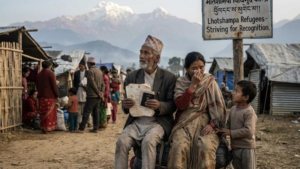
Even today, many ethnic and religious minorities continue to live under the shadow of fear, conflict, poverty, statelessness, and insecurity.
Many still feel like strangers in their own homeland.
The Unfulfilled Promise
When the architects of the Union of Burma drafted the outcomes of the Panglong Conference, the 1948 Constitution, and the Declaration of Independence on 4 January 1948, they were effectively signing a promissory note to every citizen of the Union.
That promise declared that all citizens — regardless of race, religion, or ethnicity — would enjoy equal dignity, equal opportunity, liberty, and justice.
General Aung San famously spoke of equality among the races, symbolized in the phrase:
“Bama ta kyat, Shan ta kyat”
(“If Burman got a kyat then a Shan kyat must have equal one Kyat.”)
It was a powerful metaphor for equality among all peoples of the Union.
Yet history has shown that successive governments often failed to honor this promise fully.
Instead of equal rights, many minorities received discrimination.
Instead of equal opportunities, many faced restrictions.
Instead of unity, many experienced suspicion and division.
It was as though the peoples of Myanmar were handed not genuine currency, but a counterfeit promise — what many jokingly called a “Khae Mu seat,” a fake coin without value.
But we refuse to believe that the bank of justice is bankrupt.
We refuse to believe that Myanmar lacks enough compassion, wisdom, and humanity to build equality for all its people.
We refuse to surrender to hopelessness.
The Urgency of Now
This is not the time for gradual excuses or endless delays.
The suffering of Myanmar’s people — ethnic minorities, religious minorities, political dissidents, displaced civilians, and ordinary citizens — has lasted far too long.
Now is the time:
- to rise from the dark valley of discrimination,
- to reject hatred and racial supremacy,
- to open the doors of opportunity to all communities,
- and to rebuild Myanmar on the foundations of justice and federal equality.
The future stability of Myanmar depends not on military domination, but on trust, inclusion, and equal partnership among all peoples.
A nation cannot achieve peace while sections of its population feel excluded from citizenship, opportunity, dignity, or protection.
A Call for Dignity, Not Hatred
However, in our struggle for justice…
We must never descend into hatred or revenge.
We must not answer injustice with cruelty.
We must not replace one form of discrimination with another.
We must conduct our struggle with dignity, discipline, wisdom, and humanity.
Violence, racism, religious hatred, and extremism will only deepen Myanmar’s wounds.
Many ordinary soldiers, civil servants, and citizens are themselves trapped within systems they did not create. Their future is also tied to the future of the nation.
We cannot walk toward peace alone.
All communities must walk together.
When Will We Be Satisfied?
There are those who ask:
“When will Myanmar’s minorities and oppressed peoples finally be satisfied?”
We cannot be satisfied:
- as long as ethnic communities remain displaced by war;
- as long as villages continue to be destroyed;
- as long as religious minorities fear discrimination;
- as long as citizenship rights remain unequal;
- as long as corruption and cronyism dominate opportunity;
- as long as peaceful critics are imprisoned;
- as long as people are judged by race or religion instead of character and ability.
We cannot be satisfied until genuine federalism becomes reality rather than rhetoric.
We cannot be satisfied until all citizens — regardless of ethnicity or faith — are allowed to vote freely, participate equally, worship freely, and live peacefully.
We cannot be satisfied until democratic principles are respected:
- freedom of speech,
- freedom of religion,
- freedom of association,
- free and fair elections,
- independent courts,
- accountable government,
- equal protection under the law,
- and protection of minorities from the tyranny of the majority.
A true democracy is not merely about majority rule.
It is also about protecting minorities, dissenters, vulnerable communities, and unpopular voices.
The Federal Dream
We still dream of a genuine Federal Democratic Union founded upon equality for all races and religions.
A Union where:
- the military is accountable to elected civilian leadership;
- laws protect everyone equally;
- judges are independent;
- corruption is punished;
- the media is free;
- religious freedom is protected;
- and no citizen is treated as lesser because of race, religion, language, or ancestry.
We dream of a Myanmar where diversity is not feared, but celebrated.
Where Buddhists, Muslims, Christians, Hindus, animists, and free thinkers coexist peacefully.
Where Bamar, Shan, Kachin, Karen, Chin, Mon, Rakhine, Rohingya, Chinese, Indians, Gurkhas, mixed-heritage citizens, and all others stand together as equal children of the Union.
I Still Have a Dream
Despite decades of disappointment, conflict, and bloodshed, I still have a dream.
It is inspired by the universal human dream of equality and justice.
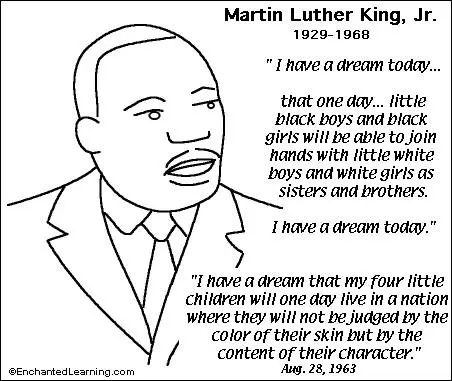
I have a dream that one day Myanmar will become a truly secular, democratic federal union that lives out the principle that all human beings are created equal.
I have a dream that one day the sons and daughters of former enemies will sit together at tables of brotherhood and reconciliation.
I have a dream that one day the people of Shan State, Kachin State, Chin State, Karen State, Mon State, Rakhine State, and every region of Myanmar will live without fear.
I have a dream that one day children in Myanmar will not be judged by race, religion, or ancestry, but by the content of their character.
I have a dream that one day Rakhine and Rohingya children, Bamar and Chinese children, Muslim and Buddhist children, Christian and Hindu children, will walk hand in hand as brothers and sisters.
I have a dream that one day all the displaced, oppressed, and forgotten peoples of Myanmar will regain dignity and hope.
Let Freedom Ring Across Myanmar
Let freedom ring from the mountains of Kachin.
Let freedom ring from the hills of Chin State.
Let freedom ring from Shan Yoma.
Let freedom ring from the plains of Sagaing.
Let freedom ring from Mandalay Hill.
Let freedom ring from Popa.
Let freedom ring from every village, every town, every monastery, every church, every mosque, every temple, every school, and every home throughout Myanmar.
And when freedom finally rings for all people equally, then the peoples of Myanmar — Bamar, Shan, Kachin, Karen, Chin, Mon, Rakhine, Rohingya, Chinese, Indians, Muslims, Buddhists, Christians, Hindus, and all others — will finally be able to join hands together in genuine peace and sing with renewed meaning the song of our Union.
Only then will the dream of Panglong truly live again.