At 77, with a body that is no longer as obedient as before, I find myself returning again and again to one powerful word:
Invictus — unconquered.
This famous poem by William Ernest Henley was not written in comfort or ease. It was born in pain. Henley suffered from tuberculosis of the bone from a young age, and after the amputation of his leg, he wrote Invictus—not as a complaint, but as a declaration of inner strength.
This alone is a lesson for all of us.
Darkness, Yet Gratitude
The poem opens in darkness:
Out of the night that covers me…
But instead of asking for help, Henley gives thanks—for something already within him:
“My unconquerable soul.”
This is deeply meaningful. True strength is not always something we beg for. Often, it is something we discover—hidden within us—only when life tests us.
Pain Without Surrender
Henley speaks of suffering not as destiny, but as circumstance:
“Under the bludgeonings of chance
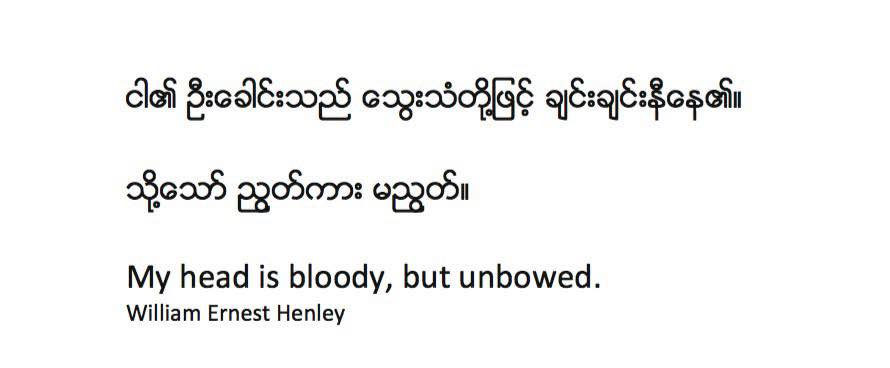
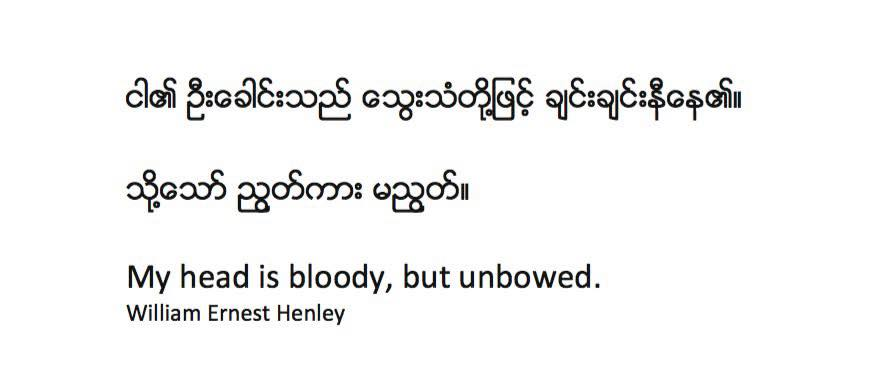
My head is bloody, but unbowed.”
Here is dignity. Here is courage. Life may wound us—through illness, loss, or injustice—but we still have a choice: to bow, or not to bow.
Facing Death Without Fear
The poem does not promise comfort in the hereafter. It does not rely on theology or certainty. Instead, it confronts death directly—and refuses to fear it.
For Henley, even death cannot defeat a spirit that refuses to surrender.
The Final Declaration
The most famous lines:
“I am the master of my fate:
I am the captain of my soul.”
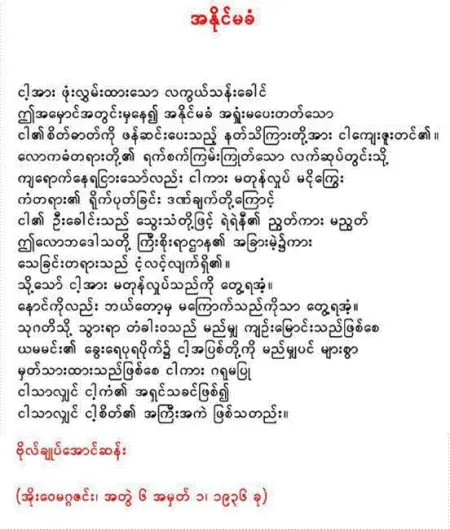
These words have inspired generations—including our own hero, Aung San, who translated Invictus into Burmese and published it in Oway Magazine, stirring a spirit of resistance and dignity among young Burmese at a critical time in history.
A Personal Note
As I grow older, I feel the truth of this poem more deeply.
The body weakens. Diseases come uninvited. Energy fades.
But the mind—if we guard it carefully—and the spirit—if we nourish it—can remain unconquered.
Like the old Pyinma tree of Min Thu Wun, even a worn and weathered trunk can sprout new leaves when touched by the right season.
Invictus in Our Lives
We may not face amputation like Henley. We may not face the same struggles as our forefathers.
But each of us has our own battles:
- Illness
- Ageing
- Loss
- Injustice
- Regret
The lesson of Invictus is simple, but not easy:
Do not surrender your inner self.
Final Reflection
Whether we are 17 or 77, life will test us.
But we can still say:
- I will not bow to despair.
- I will not surrender to fear.
- I will live with dignity.
And above all:
I remain unconquered.