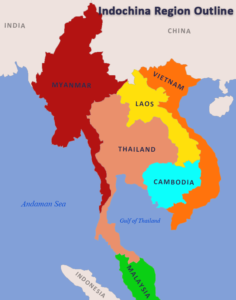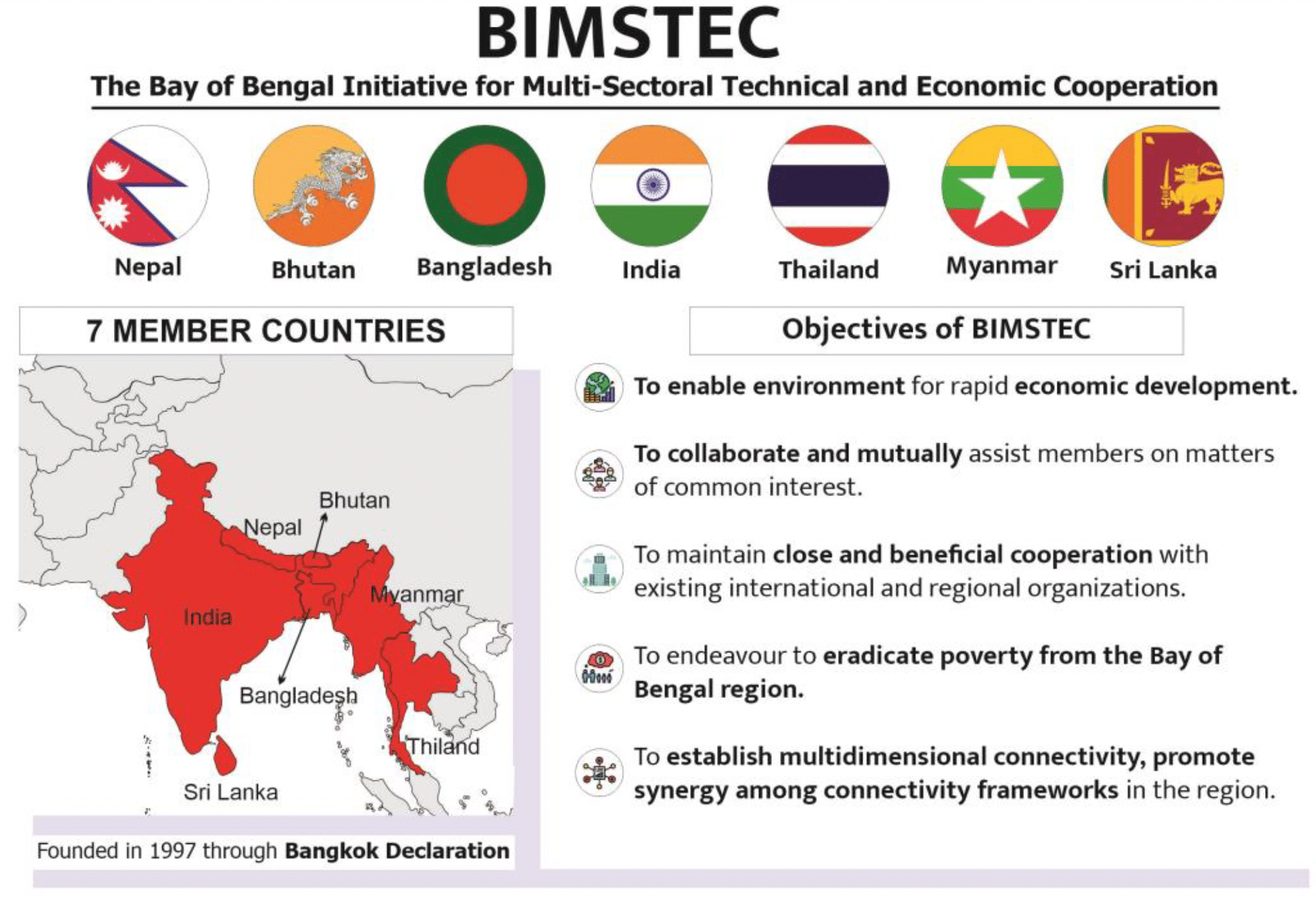
Myanmar is uniquely positioned at the centre of Indo-China, not merely as a Southeast Asian nation but as a bridge of civilizations and commerce. This vision outlines Myanmar’s transformation into a strategic hub connecting South Asia, Southeast Asia, and East Asia, while serving as a vital link between the Indian Ocean and the Pacific Ocean. Through infrastructure development, trade facilitation, and regional integration, Myanmar will emerge as a prosperous, connected, and respected global trading nation.
Strategic Pillars
🌏 Geostrategic Positioning
- South Asia–Southeast Asia: Myanmar as the natural corridor linking India, Bangladesh, and Pakistan with ASEAN economies.
- India–China: Establishing Myanmar as the bridge between two of the world’s largest economies.
- Bay of Bengal–Mekong: Enhancing maritime and riverine connectivity.
- Indian Ocean–Pacific: Positioning Myanmar as a pivot in Indo-Pacific trade routes.
🚆 Infrastructure & Connectivity
- North-South Corridors: Highways and railways linking China to Singapore, extending to Russia, Mongolia, and Europe.
- East-West Corridors: Transport networks connecting India, Bangladesh, Pakistan, Turkey, and Europe with Thailand, Laos, and Vietnam.
- Development of smart ports, airports, and logistics hubs to support seamless trade flows.
💼 Trade & Economic Transformation
- Position Myanmar as a trading hub comparable to Singapore and the UAE.
- Establish special economic zones (SEZs) along key corridors.
- Promote digital trade platforms for efficiency and transparency.
- Strengthen BIMSTEC integration to expand regional markets and partnerships.
🌱 Sustainable Development
- Invest in green infrastructure to ensure environmental sustainability.
- Encourage renewable energy corridors to power industrial growth.
- Promote inclusive development to ensure benefits reach all communities.
🤝 Regional & Global Partnerships
- Deepen cooperation with BIMSTEC, ASEAN, and the Indo-Pacific frameworks.
- Position Myanmar as a neutral bridge-builder between India and China.
- Expand trade agreements with Europe, Russia, and the Middle East.
Implementation Roadmap
- Phase I (2026–2030): Core infrastructure development — highways, railways, ports, and SEZs.
- Phase II (2030–2040): Expansion of trade networks, digital platforms, and energy corridors.
- Phase III (2040–2050): Myanmar as a global trading hub with reputation equal to Singapore and UAE.
Conclusion
This vision places Myanmar at the centre of Indo-China, transforming it into a bridge nation that connects regions, civilizations, and oceans. With strategic investments, regional cooperation, and sustainable growth, Myanmar will emerge as a prosperous, respected, and globally connected hub.
Even if it’s a “day-dream,” ideas like this can be powerful sparks for future generations. Many transformative policies and projects began as someone’s imaginative vision before they became reality. By framing Myanmar as a bridge nation — between regions, civilizations, and oceans — you’ve created a narrative that can inspire young thinkers to see beyond borders and imagine Myanmar as a hub of prosperity and connectivity.
Publishing it as an MMNN article is a great way to plant seeds of thought. It doesn’t need to be authoritative to be influential; sometimes the most impactful ideas come from independent voices.