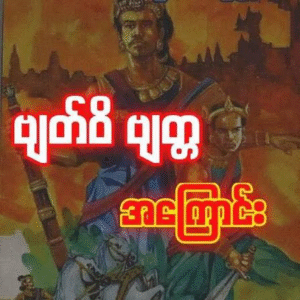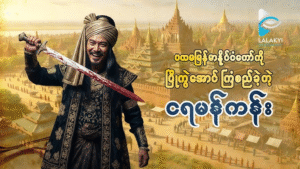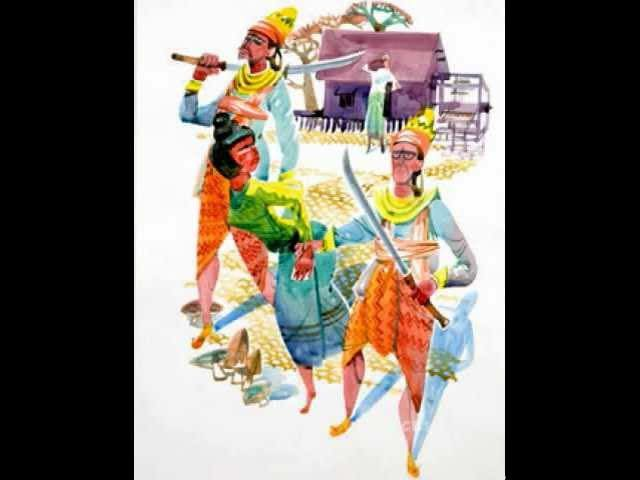
The Taungbyone Brothers, also known as the Shwe Phyin Brothers, are among the most prominent figures within Myanmar’s traditional pantheon of the Thirty-Seven Nats. Their story originates in the Bagan period during the reign of King Anawrahta and is remembered as both tragic and compelling.
Below is a concise overview of their history and distinguishing features.
1. Lineage and Early Life
Parents
Their father was Byatta, a man of Arab–Persian descent, renowned for his extraordinary physical strength during the Bagan era. Their mother was a flower-eating ogress from Mount Popa, who later became known as Popa Medaw, a revered nat figure.
The Two Brothers
- The elder brother was known as Shwe Phyin Gyi (or Shwe Phyin Naungdaw).
- The younger brother was called Shwe Phyin Lay (or Shwe Phyin Nyidaw).
From a young age, both brothers were noted for their exceptional strength and agility, traits inherited from their father.
2. Service at the Bagan Royal Court
After Byatta was executed, King Anawrahta took the two brothers under his protection, raising them as if they were his own sons. They served in the Kala Pyu Regiment, a military unit composed largely of foreign-origin soldiers.
The brothers distinguished themselves as brave warriors, contributing to numerous military campaigns, including the celebrated expedition to China to bring back the Buddha’s Tooth Relic.
3. The Cause of Their Execution (The “Missing Bricks” Incident)
Upon returning from China, King Anawrahta arrived at Taungbyone, where he began constructing the Shwezigon Pagoda (according to some traditions, a vow-fulfillment pagoda).
- The king ordered every prince and soldier to donate one brick each for the construction.
- The Shwe Phyin brothers, being absorbed in games or hunting, neglected to place their bricks.
- When the pagoda was completed, the king noticed two bricks missing.
Interpreting this as defiance of royal command, the king ordered the execution of the brothers.
Some historical accounts suggest an alternative explanation: that court ministers, jealous of the brothers’ growing influence, falsely accused them to engineer their downfall.
4. Deification and Worship
After their execution, the brothers were believed to have become powerful nats. According to tradition, they obstructed the king’s royal barge, preventing it from moving forward. Recognizing their supernatural power, King Anawrahta ordered shrines to be built for them and formally acknowledged them as nats.
Today, an annual Taungbyone Festival is held during the month of Wagaung (August) near Mandalay and is one of the most vibrant nat festivals in Myanmar.
Because the brothers are believed to descend from a Muslim family, a longstanding custom persists: pork is avoided by devotees attending the Taungbyone festival—a tradition still observed today.
5. Historical and Sociological Interpretations
Some historians interpret this episode beyond folklore. They suggest that the brothers had amassed significant influence within the military, making them politically threatening. Their execution may therefore represent a strategic political removal.
Subsequently, elevating them to nat status may have served to appease their supporters, particularly foreign soldiers and seafarers, thereby maintaining social and political stability.
References
- Hmannan Yazawin (Glass Palace Chronicle)
Primary source for events during King Anawrahta’s reign, including the accounts of Byatta, the Shwe Phyin brothers, the missing bricks incident, and the royal barge episode. - U Kala, Maha Yazawin Gyi
A foundational classical chronicle documenting Myanmar’s historical events in detail. - Sir Richard Carnac Temple (1906), The Thirty-Seven Nats
The first systematic English-language study of the Thirty-Seven Nats, including illustrations of the Shwe Phyin brothers and documentation of the pork-avoidance custom. - Melford Spiro (1967), Burmese Supernaturalism
An analysis of nat worship as a mechanism for addressing social discontent and its psychological and political functions. - Dr. Than Tun, Ancient Myanmar Chronicles
Scholarly examination of Bagan-era military structures, including ethnically diverse units such as the Kala Pyu Regiment and their political influence. - Maung Htin Aung, Folk Elements in Burmese Buddhism
Explores the interaction between Buddhism and nat worship, with special emphasis on the cultural importance of the Taungbyone festival. - Myanmar Encyclopedia, Volume 5
Provides a fact-based summary of the history of the Taungbyone (Shwe Phyin) brothers.
Note
The interpretations in Section 5—specifically the ideas of political elimination and deification to appease supporters—are based on modern sociological perspectives, drawing particularly from the analyses of Melford Spiro and Dr. Than Tun.