Dr Ko Ko Gyi
A landmark scientific study provides new evidence of the Rohingya people’s mixed ancestry, including substantial genetic connections with populations in present-day Myanmar.
Introduction
A new genetic study published on 17 November 2026 in Scientific Reports, a peer-reviewed journal published by the Nature Portfolio, has shed important new light on the ancestral origins and population history of the Rohingya people.
Entitled “The Mosaic Genetic Ancestry of Rohingya,” the research presents the first high-resolution, genome-wide genetic analysis specifically examining the Rohingya population.
The study finds that the sampled Rohingya population has a predominantly South Asian-related genetic ancestry, together with a substantial East/Southeast Asian component associated with populations in Myanmar.
Using one of its ancestry-modelling approaches, the researchers estimated approximately:
- 59% Kol-related ancestry, used as a proxy for a North Indian-related ancestral component.
- 41% Burmese-related ancestry, representing a Myanmar-related East/Southeast Asian component.
For comparison, neighbouring Bangladeshi Muslim participants were estimated to have approximately 69% Kol-related ancestry and 31% Burmese-related ancestry.
These findings provide scientific evidence of long-standing genetic connections between the Rohingya population and communities in both South and Southeast Asia.
1. Who conducted the research?
The study was conducted by 12 researchers affiliated with institutions in India, Bangladesh and Europe.
The participating institutions include the University of Dhaka, Banaras Hindu University, the Centre for DNA Fingerprinting and Diagnostics in India, the University of Tartu in Estonia, the University of Bern in Switzerland, KU Leuven in Belgium, and other research institutions.
The researchers generated a new genetic dataset from:
- 25 Rohingya individuals living in refugee camps in Cox’s Bazar, Bangladesh.
- 27 Bangladeshi Muslim individuals.
- 9 Bangladeshi Hindu individuals.
- 9 members of the Bawm community, an ethnic group speaking a Tibeto-Burman language.
The researchers then compared these samples with previously available genetic information from 2,217 individuals across Eurasia.
This enabled them to examine the Rohingya population in relation to a much wider range of South Asian, East Asian and Southeast Asian populations.
2. What does the DNA evidence reveal?
The researchers used several scientific methods, including Principal Component Analysis (PCA), ADMIXTURE, ChromoPainter, fineSTRUCTURE and SOURCEFIND.
In simple terms, these methods examine similarities and differences in inherited genetic patterns among populations.
The PCA analysis placed the Rohingya close to Bangladeshi populations, while also showing a shift towards the East and Southeast Asian genetic clusters.
The results indicate that the Rohingya have a distinctive genetic profile, combining a substantial South Asian-related ancestral foundation with significant genetic contributions from populations associated with Myanmar and surrounding regions.
One particularly important finding is that the Rohingya have a higher proportion of Myanmar-related genetic ancestry than the neighbouring Bangladeshi Muslim comparison group.
The estimated figures were:
| Population | Kol-related ancestry | Burmese-related ancestry |
|---|---|---|
| Rohingya | 59% | 41% |
| Bangladeshi Muslims | 69% | 31% |
An important scientific clarification: These percentages are estimates produced by a particular statistical model using present-day reference populations as proxies. They do not mean that precisely 59% of Rohingya ancestors were members of the present-day Kol community or that 41% were members of today’s Bamar population.
The term Kol-related refers to the closest-fitting reference ancestry used in the researchers’ model. Likewise, Burmese-related describes genetic similarity to the selected Myanmar reference population. These are scientific approximations, not exact historical family trees.
Nevertheless, the results demonstrate substantial genetic connections with Myanmar-related populations.
3. When did these ancestral populations mix?
Another important part of the research concerns the estimated timing of genetic admixture.
When populations with different ancestral backgrounds intermarry over successive generations, their descendants inherit DNA from both sides.
Over time, recombination breaks inherited DNA into progressively smaller segments. Scientists can examine the lengths and distribution of these segments to estimate approximately when ancestral populations began mixing.
Using the ALDER statistical method, the researchers estimated that the major South Asian-related and Southeast Asian-related admixture event among the sampled Rohingya occurred approximately 701–974 years ago.
This corresponds roughly to the period between the 11th and 14th centuries.
For comparison, the corresponding estimate for the neighbouring Bangladeshi Indo-European-speaking populations was approximately 1,440–1,720 years ago.
The researchers interpret the Rohingya findings as consistent with substantial genetic interaction after their ancestors had settled in the Arakan region.
This is particularly significant because it suggests that the Rohingya population’s genetic history is not simply a recent development associated with British colonial rule or modern migration across the Bangladesh–Myanmar border.
However, the estimated date refers to a genetic admixture event, not necessarily the first arrival of South Asian ancestors in Arakan, the precise date of the formation of Rohingya ethnic identity, or the beginning of every historical migration into the region.
4. What does this tell us about the history of Arakan?
Arakan, now known as Rakhine State, has historically occupied an important geographical position between South Asia and Southeast Asia.
The Bay of Bengal connected the coastal areas of Bengal and Arakan through maritime trade, migration, political interaction and cultural exchange.
For centuries, populations on both sides of this region interacted.
People moved through trade routes, settlements, marriage, political alliances and other forms of contact. Such interactions contributed to the complex cultural and genetic composition of the region.
The new research provides genetic evidence consistent with this long history of interaction.
It also demonstrates why the history of the Rohingya cannot adequately be explained through an overly simplistic claim that they are exclusively recent migrants from the territory of present-day Bangladesh.
At the same time, the study does not establish that all Rohingya ancestors originated exclusively in Arakan. Rather, it provides evidence of a population history involving both South Asian and Myanmar-related ancestral contributions.
5. Genetics, language and ethnic identity
The researchers also examined the relationship between genetic ancestry and language.
Rohingya is an Eastern Indo-Aryan language closely related to the Chittagonian variety of Bengali.
This linguistic connection is consistent with the substantial South Asian-related ancestry identified in the study.
However, language, genetic ancestry and ethnic identity are three different but sometimes interconnected aspects of human history.
A community can preserve its own language, culture and collective identity while sharing genetic ancestry with neighbouring populations.
Likewise, populations that speak different languages may have substantial genetic similarities because of centuries of intermarriage and geographical proximity.
Therefore, genetic similarities do not erase a community’s distinct ethnic identity.
The Rohingya can have South Asian-related ancestral connections while also possessing a distinctive historical, cultural and linguistic identity associated with Arakan.
6. Did the researchers discover genetic adaptations?
The study also investigated possible genetic differences associated with natural selection.
The researchers identified several candidate genetic regions, including BAG3, ITPR3 and SNAP91, which are associated with biological processes such as cellular stress responses, calcium signalling and neuronal functions.
Other identified regions included genes potentially involved in immune responses and other biological processes.
These findings may provide useful starting points for future medical and population-genetics research.
However, an important qualification is necessary.
The statistical method used, Population Branch Statistics (PBS), identifies differences in genetic variation between populations. Such differences can arise through natural selection, genetic drift and other demographic processes.
Consequently, the researchers themselves acknowledge that these findings are preliminary and that PBS alone cannot establish that a particular gene was positively selected.
Nor does the study establish that Rohingya people have particular diseases or medical conditions because of these genetic findings.
Further research is necessary before any medical conclusions can be drawn.
7. Limitations of the research
Although this is an important scientific contribution, the findings should be interpreted responsibly.
The study examined only 25 Rohingya individuals, all recruited from refugee camps in Cox’s Bazar, Bangladesh.
This is a relatively small sample compared with the size and diversity of the Rohingya population.
The participants were not sampled across different townships and communities within Rakhine State.
Consequently, the results should not automatically be treated as a complete genetic profile of every Rohingya community.
The researchers themselves acknowledge that larger samples, including geographically diverse participants, would improve future research.
Furthermore, the estimated ancestry proportions depend on the reference populations selected and the statistical models employed.
These limitations do not invalidate the research. Rather, they indicate why further studies are necessary.
8. The political and historical significance: DNA cannot determine citizenship
Perhaps the most important lesson is that scientific evidence, historical records, ethnic identity and citizenship law should not be confused with one another.
For decades, the Rohingya have faced political disputes over their identity and historical presence in Myanmar.
Some political narratives have portrayed them as illegal immigrants who arrived from Bengal during British colonial rule.
The new DNA study does not support reducing their entire population history to that simplistic explanation.
It provides evidence of substantial South Asian-related ancestry as well as significant genetic connections with populations in Myanmar, with the estimated admixture dating back several centuries.
Nevertheless, we should not make the opposite mistake of claiming that DNA alone proves citizenship or determines who is indigenous.
Citizenship and nationality are legal and political matters involving historical residence, descent, birth, family connections, laws and international human rights principles.
There is also important historical documentary evidence.
The United Nations Independent International Fact-Finding Mission on Myanmar, in its 2018 detailed findings, documented that many Rohingya held National Registration Cards and were treated as citizens during the post-independence period.
It also examined how the 1982 Citizenship Law introduced an increasingly ethnic-based system of citizenship and excluded the Rohingya from the officially recognised list of national ethnic groups.
The law’s implementation and subsequent administrative practices contributed significantly to their statelessness.
The issue therefore cannot be settled simply by demanding that a population prove its identity through DNA testing.
A person’s right to nationality and protection against discrimination should not depend on passing a genetic ancestry test.
9. A lesson for Myanmar: Our shared history should unite us
Myanmar is a country of extraordinary ethnic, linguistic, religious and cultural diversity.
Its people have developed through centuries of migration, intermarriage, trade, cultural exchange and shared geographical experiences.
No modern ethnic or national community can be understood through an artificially simplified narrative of completely isolated ancestry.
The Rohingya findings illustrate this reality particularly clearly.
Their genetic history reflects connections with South Asian populations as well as communities associated with Myanmar.
This should encourage us to recognise the complex and interconnected history of the peoples of this region rather than use ancestry as a weapon for political exclusion.
We should also remember that ethnic identity, religion and citizenship are not interchangeable concepts.
A Muslim, Buddhist, Hindu or Christian can belong to Myanmar. Likewise, a person may have ancestors from different geographical regions and still possess a genuine historical, cultural and familial connection to Myanmar.
The country needs a future based on equal citizenship, mutual respect, justice and peaceful coexistence.
Equal Rights for All, with Additional Safeguards for Ethnic Nationalities.
This principle should apply to every community, including the Rohingya, Rakhine, Kaman, Bamar, Shan, Kachin, Karen, Chin, Mon, Kayah, Lisu, Pa-O and all other peoples of Myanmar.
We should learn from science and history rather than allow political narratives, racial prejudice or religious hatred to divide us.
Conclusion
The new study, The Mosaic Genetic Ancestry of Rohingya, is an important contribution to understanding the population history of the Rohingya.
Its findings suggest that the sampled Rohingya population has a substantial South Asian-related ancestral foundation alongside significant Myanmar-related genetic contributions.
The estimated admixture period of approximately 701–974 years ago provides further evidence of historical interaction between populations in Arakan and neighbouring regions.
Although additional research involving larger and more geographically representative samples is needed, this study adds valuable scientific evidence to a subject that has too often been dominated by political arguments.
The history of Myanmar should be studied honestly, comprehensively and without prejudice.
Our ancestors may have travelled from different parts of the world, but our common future must be built on justice, equality, dignity and peace.
Primary Scientific Reference
Singh, P. P., Sultana, G. N. N., Pathak, A. K., Montinaro, F., Ongaro, L., Desai, S., Mishra, R. K., Tamang, R., Nandineni, M. R., Metspalu, M., van Driem, G., & Chaubey, G. (2026). The mosaic genetic ancestry of Rohingya. Scientific Reports, 16, Article 36734. Published 17 November 2026.
https://doi.org/10.1038/s41598-026-69009-0
Additional References
- Sharma, P. (2026, November 17). Rohingya DNA study reveals South Asian roots and centuries of links with Myanmar. The Week.https://www.theweek.in/news/world/2026/11/17/rohingya-genetic-study-ancestry-origins.html
- United Nations Independent International Fact-Finding Mission on Myanmar. (2018). Report of the detailed findings of the Independent International Fact-Finding Mission on Myanmar. UN Human Rights Council, A/HRC/39/CRP.2.https://www.ohchr.org/Documents/HRBodies/HRCouncil/FFM-Myanmar/A_HRC_39_CRP.2.pdf
- United Nations Human Rights Council. (2018). Report of the Independent International Fact-Finding Mission on Myanmar. A/HRC/39/64.https://digitallibrary.un.org/record/1648304
- United Nations Human Rights Council. (2019). Situation of human rights of Rohingya Muslims and other minorities in Myanmar. Resolution 42/3.https://undocs.org/A/HRC/RES/42/3
MMNN Editorial Note: This article is intended to explain the scientific findings and their historical significance. Genetic ancestry estimates should not be interpreted as a definitive determination of ethnic identity, indigeneity, nationality or citizenship.
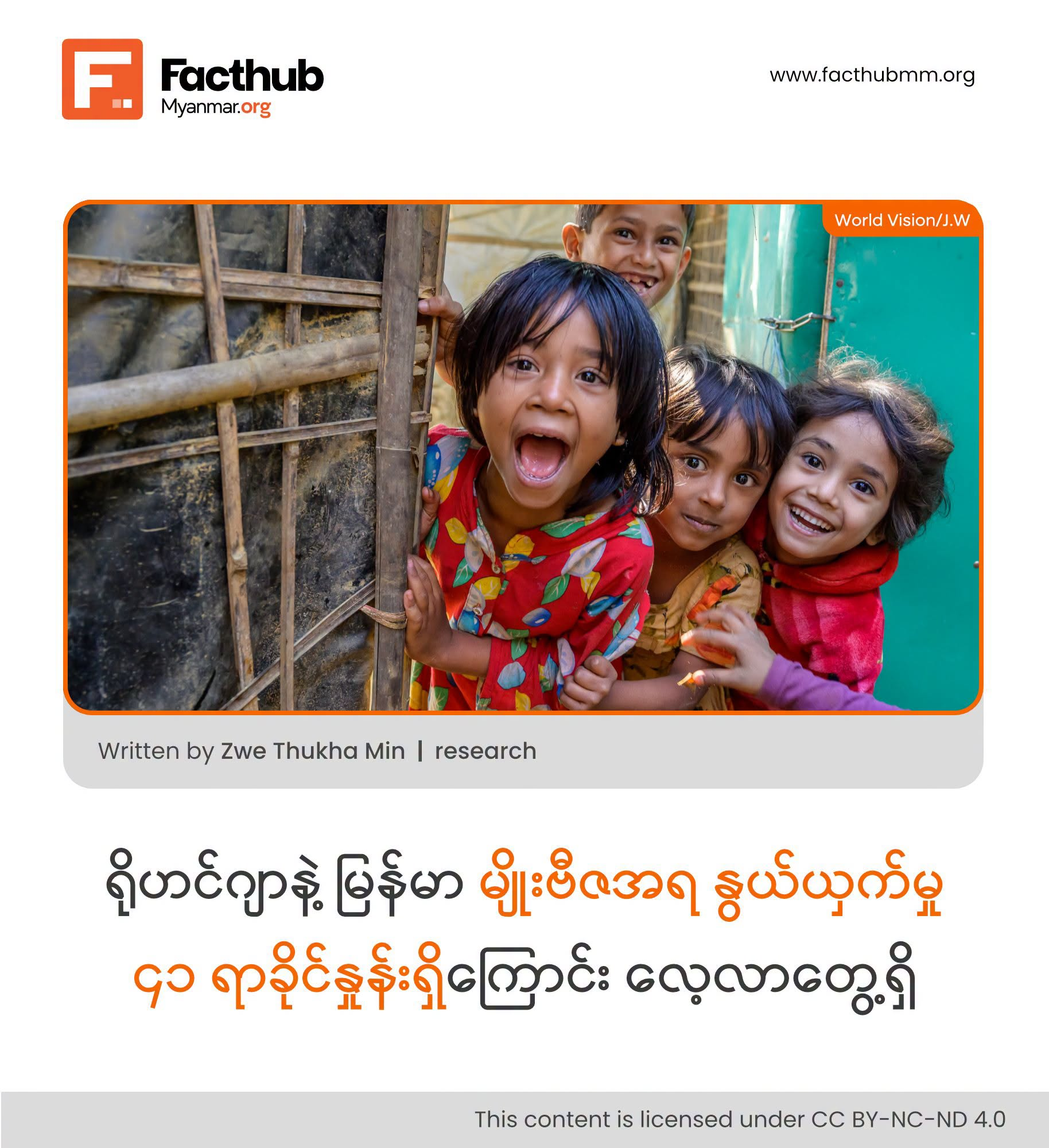
ပြီးခဲ့တဲ့ နိုဝင်ဘာလ ၁၇ ရက်က နာမည်ကျော်သိပ္ပံဂျာနယ် Nature မှာ ထုတ်ဝေခဲ့တဲ့ မျိုးဗီဇဆိုင်ရာသုတေသနသစ်တစ်ခုအရ ရိုဟင်ဂျာလူမျိုးတွေရဲ့ DNA ဇာစ်မြစ် ၅၉ ရာခိုင်နှုန်းဟာ တောင်အာရှမျိုးနွယ်စုတွေဆီ မြစ်ဖျားခံပြီး ကျန် ၄၁ ရာခိုင်နှုန်းကတော့ မြန်မာနိုင်ငံတွင်း အခြေချနေထိုင်တဲ့ လူမျိုးတွေနဲ့ နွယ်ယှက်မှုရှိတယ် ဆိုပါတယ်။ ဒီမျိုးရိုးနှစ်စုဟာ လွန်ခဲ့တဲ့ နှစ်ပေါင်း ၇၀၀ ကနေ ၁,၀၀၀ ဝန်းကျင်လောက်ကတည်းက ပေါင်းစပ်ရောယှက်ခဲ့ကြပြီး ရိုဟင်ဂျာလူမျိုးစုတွေရဲ့ မြစ်ဖျားခံရာ ဖြစ်တယ်လို့ ယူဆရတာပါ။
Nature ရဲ့ ဂျာနယ်အခွဲဖြစ်တဲ့ Scientific Reports မှာ ထုတ်ဝေခဲ့တဲ့ “ရိုဟင်ဂျာတို့ရဲ့ ရောင်စုံမှန်စီရွှေချသဖွယ် ရောယှက်နေတဲ့ မျိုးဗီဇဇာစ်မြစ်” (The mosaic genetic ancestry of Rohingya) အမည်ရ ဒီလေ့လာချက်မှာ မြန်မာနိုင်ငံ၊ ရခိုင်ပြည်မှာ နေထိုင်တဲ့ ရိုဟင်ဂျာလူမျိုး လူနည်းစုရဲ့ မျိုးရိုးဗီဇကို ပထမဆုံးအကြိမ် အသေးစိတ်လေ့လာဆန်းစစ်ထားပါတယ်။ ဒီသုတေသနကို ဒါကာတက္ကသိုလ် (University of Dhaka) နဲ့ ဗာရာဏသီ ဟိန္ဒူတက္ကသိုလ် (Banaras Hindu University) တို့က အဖွဲ့တွေအပါအဝင် အိန္ဒိယ၊ ဘင်္ဂလားဒေ့ရှ်နဲ့ ဥရောပတို့က သုတေသနဌာန ၁၀ ခုရဲ့ သုတေသီ ၁၂ ဦး ဦးစီးထုတ်ဝေခဲ့တာပါ။
နှစ်ပေါင်းများစွာကြာအောင် ရိုဟင်ဂျာလူမျိုးတွေဟာ တရားမဝင်ရွှေ့ပြောင်းဝင်ရောက်လာသူတွေအဖြစ် သတ်မှတ်ခံခဲ့ရပြီး သူတို့ ဘယ်က လာသလဲ ဆိုတဲ့ မေးခွန်းအတွက် အဖြေရေရေရာရာ ရှာတွေ့ဖို့ ခက်ခဲခဲ့ပါတယ်။ မြန်မာအစိုးရကတော့ ရိုဟင်ဂျာတွေဟာ ကိုလိုနီခေတ်တုန်းက ဘင်္ဂလားဒေ့ရှ်နိုင်ငံ၊ စစ်တကောင်းဒေသကနေ ပြောင်းရွှေ့ဝင်ရောက်လာသူတွေ ဖြစ်တယ်လို့ သတ်မှတ်ဖော်ပြလေ့ရှိပါတယ်။ ရိုဟင်ဂျာတွေကတော့ သူတို့က သမိုင်းကြောင်းအရ အာရကန်လို့ ခေါ်တွင်တဲ့ ရခိုင်ပြည်နယ်က သူတို့ဘိုးဘွားတွေ အခြေချခဲ့တဲ့ ဇာတိမြေ လို့ ဆိုကြပါတယ်။
အခု လေ့လာတွေ့ရှိချက်မှာတော့ သုတေသနအဖွဲ့ဟာ ဘင်္ဂလားဒေ့ရှ်နိုင်ငံ၊ ကော့ဇ်ဘဇား ဒုက္ခသည်စခန်းတွေမှာ နေထိုင်ကြတဲ့ ရိုဟင်ဂျာ ၂၅ ဦးဆီက DNA နမူနာတွေကို ကောက်ယူခဲ့ပါတယ်။ နှိုင်းယှဉ်လေ့လာနိုင်ဖို့အတွက် အနီးဝန်းကျင်က လူမျိုးစုတွေထဲက နောက်ထပ် လူ ၄၅ ဦး—ဘင်္ဂလားဒေ့ရှ် မွတ်စလင် ၂၇ ဦး၊ ဘင်္ဂလားဒေ့ရှ် ဟိန္ဒူ ၉ ဦးနဲ့ တိဘက်-မြန်မာ ဘာသာစကားအုပ်စုဝင် စကားပြောတဲ့ ဘွမ် (Bawm) လူမျိုး ၉ ဦးတို့—ဆီက နမူနာတွေကိုလဲ ရယူခဲ့ပါတယ်။ အဲဒီနောက်မှာတော့ သူတို့အားလုံးရဲ့ DNA ကို ယူရေးရှား (Eurasia) ဒေသတစ်ဝှမ်းက လူပေါင်း ၂,၂၁၇ ဦးရဲ့ မျိုးရိုးဗီဇ အချက်အလက်တွေနဲ့ တိုက်ဆိုင်စစ်ဆေးခဲ့ကြတာပါ။
ကမ္ဘာပေါ်မှာ ရှိသမျှ လူသားအားလုံးရဲ့ မျိုးဗီဇဟာ တစ်ယောက်နဲ့တစ်ယောက် ဆွေမျိုးတော်စရာ မလို၊ နေတဲ့ အရပ် တူစရာ မလိုဘဲ ၉၉.၉၉ ရာခိုင်နှုန်း ထပ်တူကျပြီး ၀.၁ ရာခိုင်နှုန်းဝန်းကျင်ပဲ ကွဲပြားတာ ဖြစ်ပါတယ်။ ကွဲပြားသွားတဲ့ အဲဒီပမာဏအနည်းငယ်ကပဲ အသားအရောင်၊ အရပ်အမောင်း၊ ရုပ်ရည်နဲ့ ပုံပန်းသွင်ပြင်တို့ကို အဆုံးအဖြတ်ပေးတာပါ။ ရှေးတုန်းက လူသားမျိုးနွယ်စုတွေ ကမ္ဘာ့ဒေသအသီးသီးကို ပြောင်းရွှေ့အခြေချကြချိန်မှာ မတူညီတဲ့ ပထဝီ၊ ရာသီဥတုနဲ့ နေထိုင်စားသောက်ပုံတွေကြောင့် ဆင့်ကဲဖြစ်စဉ်ရဲ့ သဘောအရ မျိုးဆက်တွေကြာလာချိန်မှာ DNA ထဲ ဗီဇပြောင်းလဲမှုတွေ နည်းနည်းစီ ဖြစ်လာပါတယ်။ ဒီပြောင်းလဲမှုတွေက မိဘကနေ သားသမီးဆီ အမွေဆက်ခံ စီးဆင်းသွားတာကြောင့် တစ်ဒေသတည်းမှာ ရာစုနှစ်ပေါင်းများစွာ အတူပေါင်းစည်းနေထိုင်ကြတဲ့ လူမျိုးစုတွေဆိုရင် ဗီဇပြောင်းလဲမှုပုံစံ ဆင်တူလာပြီး အချိန်ကြာတာနဲ့အမျှ DNA စဉ်တန်းထဲ ဒီလူမျိုးစုမှာပဲ ပိုသိသိသာသာတွေ့ရမဲ့ ‘မာကာ’ အမည်ရ အမှတ်အသားငယ်တွေ စုပုံလာပါတယ်။ သိပ္ပံပညာရှင်တွေဟာ ကမ္ဘာတစ်ဝှမ်းက ဒေသခံလူမျိုးစုတွေရဲ့ DNA ဒေတာဘေ့စ်တွေကို စုဆောင်းထားပြီး လူတစ်ယောက်ရဲ့ DNA ထဲ အဲလိုအပြောင်းအလဲတွေကြောင့် ထင်းကျန်တဲ့ မာကာအမှတ်အသား သိန်းပေါင်းများစွာကို တိုက်ဆိုင်စစ်ဆေးပြီး ဘယ်ဒေသက လူမျိုးစုတွေနဲ့ ဆက်နွယ်ရောယှက်မှု ရှိသလဲ ခြေရာခံဖော်ထုတ်ကြတာပါ။
အခုသုတေသနစာတမ်းမှာတော့ ပညာရှင်တွေဟာ ရိုဟင်ဂျာလူမျိုးတွေရဲ့ DNA ထဲက မျိုးဗီဇကုဒ်တွေကို နှိုင်းယှဉ်လေ့လာဖို့ ပထမဆုံးအဆင့်အဖြစ် Principal Component Analysis (PCA) နည်းလမ်းကို သုံးပြီး မျိုးရိုးတူညီမှုပြမြေပုံတစ်ခုကို ရေးဆွဲခဲ့ပါတယ်။ ဒီနည်းလမ်းက လူတစ်ဦးချင်းစီကို အစက်ကလေး (dot) တစ်စက်စီအဖြစ် ပြောင်းလဲလိုက်ပြီး မျိုးရိုးဗီဇချင်း နီးစပ်သူတွေကို တစ်နေရာတည်းမှာ နီးနီးကပ်ကပ် စုစည်းဖော်ပြပေးပါတယ်။ ဒီမြေပုံမှာ တောင်အာရှနွယ်ဖွားတွေက အစက်တန်း တစ်တန်းတည်းမှာ ကျရောက်နေပြီး အရှေ့အာရှနဲ့ အရှေ့တောင်အာရှ နွယ်ဖွားတွေကတော့ နောက်ထပ် အစက်တန်း တစ်ခုမှာ ရှိနေပါတယ်။ ရိုဟင်ဂျာတွေကတော့ ဘင်္ဂလားဒေ့ရှ် လူမျိုးတွေနဲ့ အနီးစပ်ဆုံးနေရာမှာ သီးသန့်အစုအဝေးလေး တစ်ခုအဖြစ် စုစည်းနေပေမဲ့ အရှေ့အာရှနဲ့ အရှေ့တောင်အာရှ အစက်တန်းဘက်ကို အနည်းငယ် ရွေ့လျားတိမ်းညွတ်နေတာကို တွေ့ရပါတယ်။
အဲဒီလို တိမ်းညွတ်နေမှုကြောင့်ပဲ ရိုဟင်ဂျာတွေဟာ ဒေသနှစ်ခုစလုံးဆီက DNA တွေကို ပေါင်းစပ်သယ်ဆောင်ထားကြောင်း အတည်ပြုနိုင်ခဲ့တာပါ။ ဘယ်မျိုးစုဆီက ဘယ်လောက်အချိုးအစားအထိ ပါဝင်နေသလဲ တိုင်းတာဖို့အတွက်တော့ သုတေသီတွေဟာ ADMIXTURE နဲ့ SOURCEFIND အမည်ရ ကွန်ပျူတာပရိုဂရမ်တွေကို အသုံးပြုခဲ့ကြပါတယ်။ ဒီပရိုဂရမ်တွေက လူတစ်ဦးချင်းစီရဲ့ မျိုးရိုးဗီဇတစ်ခုလုံး (genome) ကို အကိုးအကားပြု နှိုင်းယှဉ်စရာ လူမျိုးစုအုပ်စုတွေနဲ့ တိုက်ဆိုင်စစ်ဆေးပြီး မျိုးရိုးဗီဇရဲ့ ဘယ်လောက်ရာခိုင်နှုန်းက ဘယ်အုပ်စုနဲ့ အကိုက်ညီဆုံးလဲဆိုတာကို ခန့်မှန်းတွက်ချက်ပေးတာပါ။ တွက်ချက်မှုအရ ရိုဟင်ဂျာတွေရဲ့ မျိုးရိုးဇာစ်မြစ် ၅၉ ရာခိုင်နှုန်းခန့်ဟာ တောင်အာရှလူမျိုးစုတွေနဲ့ ကိုက်ညီနေပြီး ကျန်တဲ့ ၄၁ ရာခိုင်နှုန်းဝန်းကျင်ကတော့ မြန်မာမျိုးရိုးဗီဇ (Burmese genomes) တွေနဲ့ ကိုက်ညီနေတာကို တွေ့ရပါတယ်။ စာတမ်းထဲမှာတော့ တောင်အာရှဇာစ်မြစ်ကို အိန္ဒိယနိုင်ငံက ကိုးလ် (Kol) လူမျိုးစုရဲ့ အချက်အလက်တွေနဲ့ အကိုက်ညီဆုံး ဖြစ်နေတာကြောင့် ‘ကိုးလ်နှင့် ဆက်နွယ်သော’ (Kol-related) လို့ အညွှန်းတပ်ထားတာပါ။ DNA ထုတ်ယူလေ့လာခဲ့တဲ့ ရိုဟင်ဂျာလူမျိုးတွေရဲ့ အိမ်နီးချင်း ဘင်္ဂလားဒေ့ရှ် မွတ်စလင်တွေမှာလဲ အလားတူ ရောယှက်မှုမျိုး တွေ့ရပေမဲ့ မြန်မာဘက်အခြမ်းက ပါဝင်မှုနှုန်း ပိုနည်းပါတယ်။ တောင်အာရှမျိုးရိုး ၅၉ ရာခိုင်နှုန်းခန့်နဲ့ မြန်မာမျိုးရိုး ၄၁ ရာခိုင်နှုန်းခန့် ပါဝင်နေတာပါ။ တစ်နည်းပြောရရင် ရိုဟင်ဂျာတွေဟာ ဘင်္ဂလားဒေ့ရှ် လူမျိုးတွေနဲ့ မျိုးရိုးဗီဇချင်း နီးစပ်ကြပေမဲ့ မြန်မာနဲ့ နွယ်ယှက်တဲ့ မျိုးရိုးဗီဇဝေစုကို ထင်ထင်ရှားရှား ပိုင်ဆိုင်ထားပါတယ်။
သုတေသီတွေဟာ ဒီမျိုးရိုးနှစ်ခု ဘယ်အချိန်တုန်းက စတင်ပေါင်းစပ်ခဲ့ကြသလဲကိုပါ ခန့်မှန်းတွက်ချက်နိုင်ခဲ့ကြပါတယ်။ မတူညီတဲ့ လူမျိုးစုနှစ်စု စတင်အိမ်ထောင်ပြုပြီး သားသမီးတွေ မွေးဖွားလာတဲ့အခါ ကလေးတစ်ဦးချင်းစီဟာ မိဘနှစ်ဖက်စလုံးဆီက ဗီဇပိုင်းတွေ အမွေဆက်ခံပါတယ်။ အဲဒီနောက်ပိုင်း မျိုးဆက်တစ်ဆက် ဖြတ်သန်းသွားတိုင်း မိဘတွေရဲ့ DNA တွေ ကုလားဖန်ထိုးခံရတာကြောင့် ရှည်လျားလှတဲ့ DNA အပိုင်းအစတွေဟာ ပိုတိုတောင်းတဲ့ အပိုင်းအစလေးတွေအဖြစ် ဖြည်းဖြည်းချင်း ပြတ်တောက်ကုန်ပါတယ်။ ဒီတော့ ဒီနေ့ခေတ် မျိုးဆက်ဆီမှာ ကျန်နေတဲ့ အဲဒီ DNA အပိုင်းအစတွေကို ဘယ်လောက် ရှည်သလဲ တိုင်းတာရင်း မျိုးနွယ်စုတွေ စတင်ရောယှက်ခဲ့တဲ့ ကာလကို နောက်ပြန်ရေတွက်နိုင်ကြတာပါပဲ။ ရိုဟင်ဂျာတွေအတွက်တော့ အဲဒီတွက်ချက်မှုအရ လွန်ခဲ့တဲ့ နှစ်ပေါင်း ၇၀၁ နှစ်ကနေ ၉၇၄ နှစ်ကြား—တစ်နည်း ၁၁ ရာစုကနေ ၁၄ ရာစုဝန်းကျင်လောက်—မှာ မျိုးရိုးရောယှက်မှု စတင်ခဲ့တယ် လို့ အဖြေထွက်ပါတယ်။ ဘင်္ဂလားဒေ့ရှ်လူမျိုးစုတွေမှာတော့ ဒီထက်အများကြီး ပိုစောတဲ့ (လွန်ခဲ့တဲ့ နှစ်ပေါင်း ၁,၄၄၀ ကနေ ၁,၇၂၀ ဝန်းကျင်လောက်) ရောယှက်မှုမျိုး တွေ့ရတာပါ။
ဒီလေ့လာမှုထဲမှာ သဘာဝရဲ့ ရွေးချယ်မှု (natural selection) ကြောင့် ပုံစံပြောင်းလဲလာနိုင်ခြေရှိတဲ့ မျိုးဗီဇတွေကိုပါ ရှာဖွေဆန်းစစ်ခဲ့ပါတယ်။ အဲဒီလို စစ်ဆေးဖို့အတွက်တော့ Population Branch Statistic (PBS) လို့ခေါ်တဲ့ ဆန်းစစ်နည်းကို အသုံးပြုပြီး ရိုဟင်ဂျာ၊ ပြင်သစ်နဲ့ အရှေ့အာရှ မျိုးရိုးဗီဇတွေကို ယှဉ်ကြည့်ခဲ့တာပါ။ ဒီစမ်းသပ်နည်းက လူမျိုးစုတစ်စုချင်းစီကို မျိုးရိုးသစ်ပင် (family tree) ရဲ့ သစ်ကိုင်းတစ်ကိုင်းစီအဖြစ် သဘောထားပြီး သတ်မှတ်ထားတဲ့ မျိုးဗီဇနေရာတစ်ခုဆီမှာ သစ်ကိုင်းတစ်ကိုင်းချင်းစီ ဘယ်လောက် ပြောင်းလဲသွားသလဲ ဆိုတာကို တိုင်းတာပါတယ်။ တကယ်လို့ မျိုးဗီဇတစ်ခုက တခြားအုပ်စုနှစ်စုထက် စာရင် ရိုဟင်ဂျာတွေဆီမှာ သိသိသာသာ ပိုပြောင်းလဲနေရင် အဲဒီနေရာမှာ ရိုဟင်ဂျာသစ်ကိုင်းက ပိုရှည်ထွက်နေပါလိမ့်မယ်—အဲဒီမျိုးဗီဇဟာ သူတို့နေထိုင်ရာ ပတ်ဝန်းကျင်မှာ အသက်ရှင်ရပ်တည်နိုင်ဖို့ အထောက်အကူပြုခဲ့တဲ့ သဘောပါ။ အခုသုတေသနမှာတော့ ရိုဟင်ဂျာလူမျိုးတွေရဲ့ ဗီဇမှာ ကိုယ်ခံအားတုံ့ပြန်မှု၊ ကယ်လ်ဆီယမ်အချက်ပြပေးပို့မှုနဲ့ ဦးနှောက်လုပ်ဆောင်ချက်ကို သက်ရောက်စေတဲ့ ဗီဇတွေက ပြင်သစ်နဲ့ အရှေ့အာရှတို့ထက် ပိုထင်ရှားနေတာ တွေ့ရပါတယ်။
သုတေသနကို ဦးဆောင်သူတွေကတော့ လက်ရှိလေ့လာချက်က ကနဦးအဆင့်မှာပဲ ရှိသေးပေမဲ့ ရိုဟင်ဂျာလူမျိုးစုတွေဟာ တောင်အာရှမျိုးရိုးအပြင် မြန်မာနိုင်ငံက လူမျိုးစုတွေနဲ့ပါ ရာစုနှစ်ပေါင်းများစွာ ကူးလူးယှက်နွယ်နေထိုင်ခဲ့တဲ့ သိပ္ပံနည်းကျ သမိုင်းအထောက်အထားမျိုး တွေ့ရတယ်လို့ ကောက်ချက်ချပါတယ်။ ။
_______
References:
Sharma, P. (2026, November 17). Rohingya DNA study reveals South Asian roots and centuries of links with Myanmar. The Week.
Singh, P. P., Sultana, G. N. N., Pathak, A. K., Montinaro, F., Ongaro, L., Desai, S., Mishra, R. K., Tamang, R., Nandineni, M. R., Metspalu, M., Van Driem, G., & Chaubey, G. (2026). The mosaic genetic ancestry of Rohingya. Scientific Reports, 16(1).
Written by — Zwe Thukha Min
Edited and Approved by — Fact Hub Myanmar Editorial Board
2026-2027 | Fact Hub Myanmar