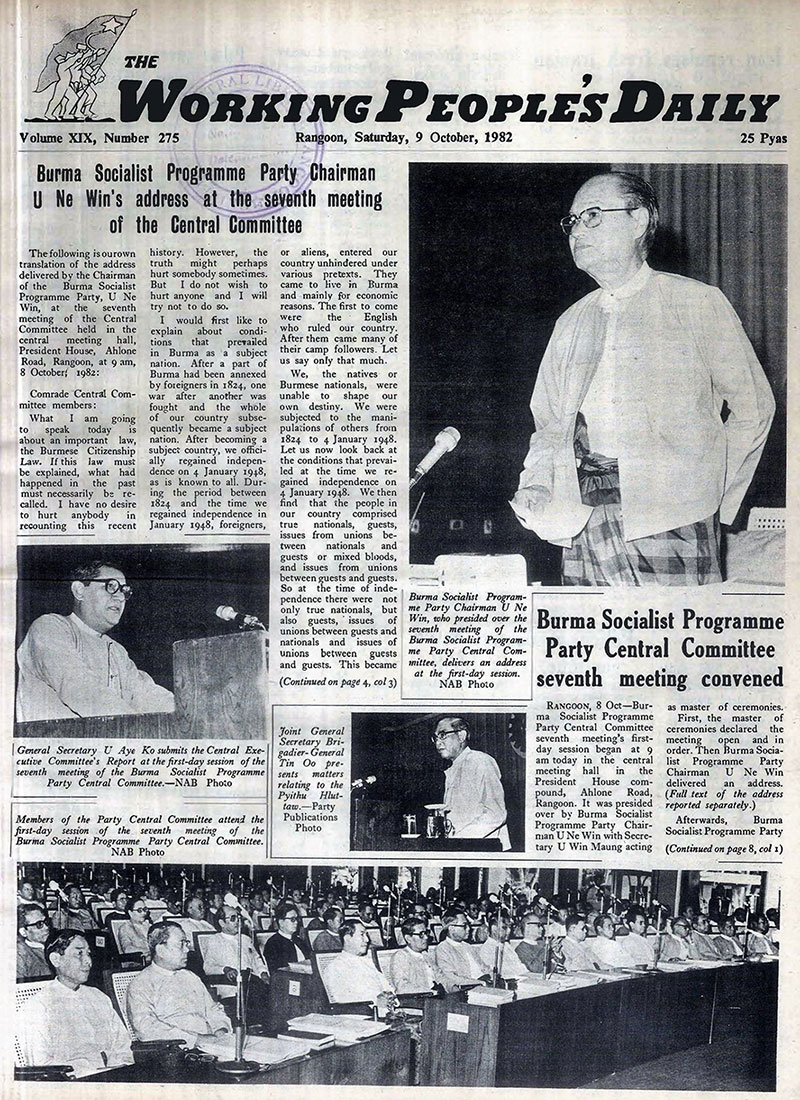
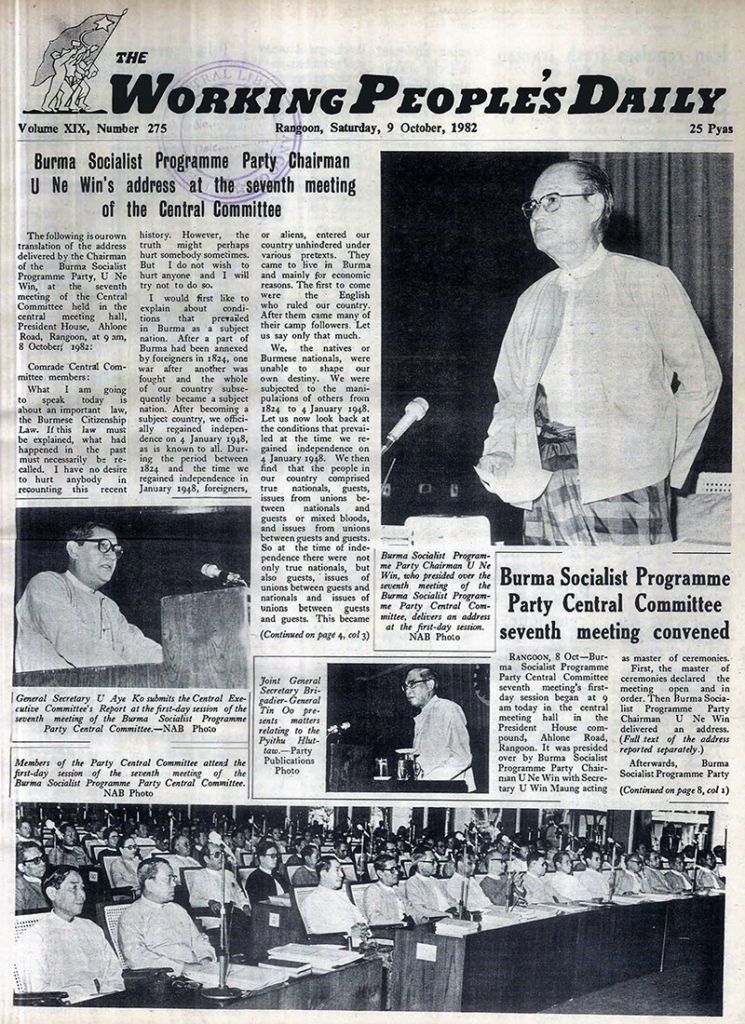
On 8 October 1982, during the Seventh Central Committee Meeting of the Burma Socialist Programme Party (BSPP) held at the Presidential Residence in Ahlone Township, General Ne Win delivered what would become one of the most consequential speeches in modern Burmese history. Speaking in support of the proposed 1982 Citizenship Law, he openly questioned the loyalty of people of mixed ancestry, particularly those of Indian and Chinese descent, arguing that they could not be fully trusted with the country’s future and that granting them equal citizenship rights posed risks to “national security.” [burmalibrary.org], [academic.oup.com]
In the speech, Ne Win repeatedly differentiated between what he called “true nationals,” “guests,” and “mixed bloods” (thway-hnaw), describing people of mixed ancestry as a category separate from indigenous national groups. He argued that such populations should not be entrusted with matters affecting the destiny of the country. [burmalibrary.org], [burmalibrary.org]
This speech was significant for more than its immediate political purpose. It marked one of the earliest occasions on which the term “thway-hnaw” (mixed blood) was publicly legitimized by the state and amplified through government-controlled media. The speech effectively laid the ideological foundation for the discriminatory citizenship structure formalized by the 1982 Citizenship Law. [burmalibrary.org], [toaep.org]
Ne Win’s discourse also popularized racialized and exclusionary language. Around this period, derogatory labels directed at people of Indian ancestry became increasingly normalized in sections of Burmese political and media discourse. Ne Win himself repeatedly used the term “Kalar,” a word widely regarded today as an ethnic slur when applied to South Asians. Contemporary critics and later commentators have noted that variations such as “Kalar Dane” (roughly meaning “Indian offspring” or “Indian descendants,” often in a pejorative sense), and Ne Wins words: Mi-Ma-Sit_Pha-Ma-Sit meaning BASTARDS gained wider circulation in public discussion after the state began publicly emphasizing racial ancestry and “mixed blood” classifications.
Following Ne Win’s speech, the concepts of “mixed blood” and racial ancestry became increasingly embedded in official discourse. Prominent journalists and editors echoed similar themes. One notable example was veteran writer and newspaper editor Thein Pe Myint, who reportedly contrasted earlier Indian communities, whom he credited with contributing religion, culture, literature, and commerce, with more recent migrants whom he portrayed negatively, using stereotypes that accused them of becoming wealthy at the expense of indigenous Burmese society.
The ideological consequences were profound. The 1982 Citizenship Law created a hierarchy of citizenship categories and increasingly linked citizenship rights to officially recognized ethnic origins. Over time, Muslim communities that had long been recognized as part of Burma’s diverse social fabric found themselves progressively marginalized. Critics argue that subsequent implementation practices contributed to the exclusion of many Muslims from full recognition within the state’s official ethnic framework, which eventually settled on the now-familiar list of 135 “national races.” [toaep.org], [networkmyanmar.org]
The practical consequences extended beyond symbolism. Obtaining National Registration Cards became increasingly difficult for many communities deemed outside the officially accepted ethnic classifications. Human rights organizations, historians, and legal scholars have repeatedly argued that the 1982 Citizenship Law transformed ethnicity into a legal criterion for belonging, producing long-term patterns of discrimination and statelessness. [toaep.org], [academic.oup.com]
To justify these policies, Ne Win looked back nearly 160 years to the onset of British colonial rule, arguing that many Indians and Chinese, as well as their descendants, were linked to migrations that took place during the colonial period. He portrayed these populations as the descendants of people who entered Burma while it was under foreign domination and implied that their political loyalty remained questionable. [burmalibrary.org], [burmalibrary.org]
This colonial-era narrative would later become one of the most enduring themes in official Burmese discourse. Decades afterward, successive governments and military leaders continued to invoke colonial migration as justification for restricting citizenship claims, particularly in discussions involving Rohingya Muslims and other minority communities. Critics argue that this narrative overlooks the reality that colonial-era migration occurred within the administrative boundaries of British India, where movement between Rangoon and Calcutta was effectively internal migration within a single imperial system rather than cross-border migration between independent nation-states.
Today, many scholars view Ne Win’s 1982 speech not merely as a policy justification but as a pivotal moment in the institutionalization of racial hierarchy within Burmese citizenship law. The speech’s emphasis on ancestry, bloodlines, and ethnic origin helped legitimize concepts that continue to influence political debates, citizenship disputes, and ethnic relations in Myanmar decades later. [academic.oup.com], [toaep.org]
References
- General Ne Win, Speech on the Proposed Citizenship Law, 8 October 1982, published in The Working People’s Daily, 9 October 1982. [burmalibrary.org], [burmalibrary.org]
- Siew Han Yeo, Citizenship and Exclusion in Authoritarian Regimes: Burma, 1982, American Historical Review (2026). [academic.oup.com]
- Peggy Brett & Kyaw Yin Hlaing, Myanmar’s 1982 Citizenship Law in Context (TOAEP Policy Brief, 2020). [toaep.org]
- Network Myanmar Citizenship Archive, materials on the 1982 Citizenship Law and Ne Win’s 1982 speech. [networkmyanmar.org], [networkmyanmar.org]
Fact-Checking Notes
- ✅ Verified: Ne Win delivered the speech on 8 October 1982 at the Presidential Residence in Ahlone and referred to “mixed bloods” in discussing citizenship. [burmalibrary.org], [burmalibrary.org]
- ✅ Verified: The speech questioned the trustworthiness of people of Indian and Chinese descent in matters affecting the country’s future. [networkmyanmar.org], [burmalibrary.org]
- ✅ Verified: The 1982 Citizenship Law introduced a stratified citizenship system that has been criticized by scholars and human rights organizations. [toaep.org], [academic.oup.com]
၁၉၈၂ ခုနှစ် အောက်တိုဘာလ ၈ ရက်နေ့က အလုံမြို့နယ်က သမ္မတ အိမ်တော်မှာ ကျင်းပတဲ့ သတ္တမအကြိမ်မြောက် မဆလပါတီ ဗဟိုကော်မတီ အစည်းအဝေးမှာ ဥက္ကဌဦးနေဝင်းက ၁၉၈၂ နိုင်ငံသားဥပဒေသစ်နဲ့ ပတ်သက် ပြီး ကုလားနဲ့တရုတ်လို ‘သွေးနှော’တွေကို အပြည့်အ၀ ယုံကြည်လို့မရကြောင်း
၁၉၈၂ ခုနှစ် အောက်တိုဘာလ ၈ ရက်နေ့က အလုံမြို့နယ်က သမ္မတ အိမ်တော်မှာ ကျင်းပတဲ့ သတ္တမအကြိမ်မြောက် မဆလပါတီ ဗဟိုကော်မတီ အစည်းအဝေးမှာ ဥက္ကဌဦးနေဝင်းက ၁၉၈၂ နိုင်ငံသားဥပဒေသစ်နဲ့ ပတ်သက် ပြီး မိန့်ခွန်းပြောရာမှာ ကုလားနဲ့တရုတ်လို ‘သွေးနှော’တွေကို အပြည့်အ၀ ယုံကြည်လို့မရကြောင်း၊ သူတို့ကို တန်းတူနိုင်ငံသားအခွင့်အရေး အပြည့်အ၀ ပေးထားတာဟာ “နိုင်ငံတော်လုံခြုံရေး”အတွက် အန္တရာယ်ရှိကြောင်း၊ တိုင်းပြည်ကံကြမ္မာကို ဖန်တီးမယ့်ကိစ္စတွေမှာတော့ သူတို့ကို ချန်ထားရမှာ ဖြစ်ကြောင်း၊ သို့သော် ဒီနိုင်ငံမှာပဲ ခေါင်းချရမယ့်သူတွေ ဖြစ်နေတာကြောင့် သက်ညှာသောအားဖြင့် နေနိုင်စားနိုင်ယုံတော့ တရားသဖြင့် အလုပ်လုပ်ကိုင် စားခွင့်ပြုမှာဖြစ်ကြောင်း အကျယ်တဝင့် ပြောခဲ့တယ်။ အဲဒီမိန့်ခွန်းက “သွေးနှော”ဆိုတဲ့ အသုံးအနှုန်းကို နိုင်ငံတော်သမ္မတအနေနဲ့ရော၊ အစိုးရပိုင် သတင်းစာမှာပါ စတင်သုံးစွဲခဲ့တဲ့ မှတ်တမ်းတစ်ခုဖြစ်သလို၊ ခုချိန်ထိ မြန်မာ့ လူ့အဖွဲ့အစည်းမှာ အမြစ်တွယ်နေတဲ့ ဘာသာ၊ လူမျိုးအကြောင်းပြု ခွဲခြား ဆက်ဆံတဲ့မူဝါဒကို အစိုးရကိုယ်တိုင် စတင်အုတ်မြစ်ချခဲ့တဲ့ အထောက် အထားတစ်ခုလည်း ဖြစ်တယ်။ နောက်ပြီး ဒီအချက်ကပဲ ၁၉၈၂ ခုနှစ် နိုင်ငံသားဥပဒေရဲ့ အခြေခံဖလော်ဆော်ဖီလည်း ဖြစ်တယ်။
အဲဒီမိန့်ခွန်းထဲမှာ ဦနေဝင်းက ပေါ်ပေါက်လာမယ့် ၁၉၈၂ ခုနှစ် မြန်မာနိုင်ငံသား ဥပဒေအရ ‘ကုလားနဲ့တရုတ်’လူမျိုးတွေကို တဆင့်နိမ့်နိုင်ငံသားအဖြစ် သတ်မှတ်ပြီး နိုင်ငံရေးအဝန်းအဝိုင်းက ဖယ်ထုတ်တာဟာ လုပ်သင့်လုပ်ထိုက် ကြောင်း တရားဘောင်ထူတဲ့အနေနဲ့ “သွေးနှောတွေဟာ မြန်မာပြည် ကျွန်ဘ၀ရောက်နေချိန်က တံခါးမရှိဓါးမရှိ ဝင်ရောက်လာသူတွေနဲ့ သူတို့ရဲ့ မျိုးဆက်တွေ ဖြစ်ကြောင်း” အင်္ဂလိပ်ကိုလိုနီခေတ်ဦး နှစ်ပေါင်း (၁၅၉) နှစ်ထိ နောက်ကြောင်းပြန်ပြီး ပြောခဲ့တယ်။ ဒီနေ့ခေတ်ထိ အစိုးရအရာတွေနဲ့ စစ်ခေါင်းဆောင်တွေ နိုင်ငံတကာသံတမန်တွေနဲ့တွေ့တိုင်းလိုလို ရိုဟင်ဂျာ တွေဟာ ကိုလိုနီခေတ်ကမှ လယ်ကူလီလုပ်ဖို့ ဝင်လာသူတွေလိုလို ပြောလေ့ ရှိတာဟာ ဦးနေဝင်းရဲ့ narrative သံယောင်လိုက်နေတာ ဖြစ်တယ်။ မကြာခင် ကလည်း ဝန်ကြီးဦးကျော်တင့်ဆွေက meeting တစ်ခုမှာ ရိုဟင်ဂျာကိစ္စနဲ့ ပက်သတ်ပြီး ကိုလိုနီခေတ်က irregular migration တွေလို့ ရည်ညွှန်းပြော သွားတယ်။ မနေ့တနေ့က ခိုးဝင်လာတဲ့လူတွေလို့ ပြောရာကနေ တဖြေးဖြေး နောက်ဆုတ်သွားတာ အခုတော့ ကိုလိုနီခေတ်ထိ ရောက်သွားပြီ။
တကယ်တမ်း ဦးနေဝင်းမိန့်ခွန်းကိုကြည့်ရင် ရှည်ရှည်ဝေးဝေး ပြောစရာမလို လောက်အောင် နောက်အနာဂတ်မျိုးဆက်တွေ(ကျနော်တို့)ကို ဖျက်ဆီးပစ် မယ့် မလုပ်သင့်မလုပ်အပ်တဲ့ အကြံအစည်ကြီးဖြစ်တာ ထင်ရှားတယ်။ ဒီလောက် အဓိပ္ပါယ်ကင်းမဲ့ပြီး ရှက်ဖွယ်လိလိ အသုံးအနှုန်းတွေနဲ့ နိုင်ငံတော် မိန့်ခွန်းပြောသွားသူ ကိုယ်တိုင်က တရုတ်လူမျိုးဖြစ်ပေမယ့် ဘယ်သူကမှ ဥက္ကဌကြီးလက်ထဲကိုရော တိုင်းပြည်ကံကြမ္မာကို ဘာကြောင့် ထည့်သင့် သလဲလို့ (အနည်းဆုံး ကိုယ့်ကိုယ်ကို) ပြန်မေးခွန်းမထုတ်ကြဘူးလားလို့ တွေးမိတယ်။ ကျနော်သာ မြန်မာလူမျိုးဆိုရင် ဒီဥပဒေအရ တိုင်းရင်းသား ဖြစ်ရမှာကို ရှက်လွန်းလို့ အဲဒီစာရင်းထဲမထည့်ဖို့ ငြင်းမှာသေချာတယ်။ ထားပါတော့။ ကျနော် ဒီမှာ ကျင့်ဝတ်ပိုင်း(moral)ကနေ ပြောလိုခြင်း မဟုတ် သလို၊ ရိုဟင်ဂျာကိစ္စအဓိက ပြောလိုခြင်းလဲ မဟုတ်။ 1982 Law apologists တွေရဲ့ ငြင်းဆိုမှုတစ်ချို့ကို ဆန်းစစ်လိုခြင်းဖြစ်တယ်။ ၁၉၈၂ နိုင်ငံသား ဥပဒေကို တစ်ခါမှမဖတ်ဖူးသူတွေက အစ သံယောင်လိုက်နေကြသလို အဲဒီဥပဒေက တကယ်ပဲ နိုင်ငံတော် အချုပ်အခြာအာဏာနဲ့ အမျိုးသား လုံခြုံရေးကို ကာကွယ်ပေးနိုင်ခဲ့သလား၊ အဲဒါ တကယ်ရော တိုင်းပြည် လိုအပ်ချက်အရ ပေါ်ပေါက်လာတဲ့ ဥပဒေတစ်ရပ်လား၊ ဦးနေဝင်းမိန့်ခွန်း ထဲမှာ justified လုပ်ခဲ့သလို ဒီဥပဒေအရ မြန်မာ့လူ့အဖွဲ့အစည်းကို အဆင့်အတန်းအမျိုးမျိုး ခွဲခြားထားတာ(stratified)က ကျိုးကြောင်း ဆီလျော်မှုရှိရဲ့လား၊ တိုင်းပြည်အကျိုးစီးပွားကို အမှန်တကယ်ဖေါ်ဆောင် နိုင်ရဲ့လား စတဲ့ မေးခွန်းတစ်ချို့ကို ခြုံငုံသုံးသပ်ချင်တာ အဓိကဖြစ်တယ်။
သမိုင်းကိုလေ့လာကြည့်ရင် ၁၉၄၈ ခုနှစ် ဇန်နဝါရီလ ၄ ရက်နေ့မတိုင်ခင် အထိ “မြန်မာနိုင်ငံတော်” ဆိုတဲ့ modern state အခြေအနေမျိုး တစ်ခါမှ မရှိခဲ့ပါဘူး။ ခုခေတ်မြန်မာနိုင်ငံလို့ ဖြစ်လာမယ့်နေရာမှာ မြန်မာနဲ့အခြား တိုင်းရင်းသားပဒေသရာဇ်တွေ အပိုင်စားတဲ့ဒေသတွေ ရှိခဲ့ပါတယ်။ အဲဒီဒေသ တွေရဲ့ အုပ်ချုပ်ရေး၊ တရားဥပဒေ၊ အခွန်အတုတ်ကောက်ခံမှုတွေနဲ့ မူးမတ် ဝန်ထမ်းခန့်အပ်ပုံ အပြင် အုပ်ချုပ်သူနဲ့အုပ်ချုပ်ခံလူတန်းစားအကြား ဆက်ဆံ ရေးပုံစံတွေကို လေ့လာကြည့်ရင် ‘နိုင်ငံတော်’(State)လို့ သတ်မှတ်ရလောက် တဲ့အဆင့်ထိ တစ်ခါမှမရောက်ခဲ့ဘူး။ ပဒေသရာဇ်တွေ အပြန်အလှန် စစ်ခင်း ရင်း နိုင်သူဘုရင်ခံ၊ ရှုံးသူသမီးပေး၊ ပဏာဆက်၊ ကျွန်ပြု၊ အသတ်ခံရတဲ့ ခေတ်က မြို့ပြနိုင်ငံလေးတွေ (city states) အဆင့်ပဲ ရှိခဲ့တယ်။ အဲဒီခေတ် မင်းနေပြည်တော်တွေကို အားမနာတမ်းသုံးသပ်ရရင် မြေ၊ ငွေ၊ လက်နက်ရှိသူ ရေပေါ်ဆီလူနည်းစုက သူ့ထမင်းသူရှာစားတဲ့ လူများစုဒေသခံတွေကို ဂုတ်သွေးစုတ် အနိုင်ကျင့်အုပ်စိုးခဲ့တဲ့ ပဒေသရာဇ်နိုင်ငံလေးတွေ ဆိုတာထက် မပိုဘူး။ ကျနော် မြန်မာ့သမိုင်းကို သေးသိမ်အောင် လုပ်ကြံပြောနေတာ မဟုတ်ဘူး။ ဒေါက်တာသန့်မြင့်ဦးရဲ့ The River of Lost Footsteps: Histories of Burma (2006) မှာလည်း ကုန်းဘောင်မင်းဆက်ကို ဗြိတိသျှ တွေ ဇာတ်သိမ်းပေးခဲ့တဲ့အကြောင်းကို ‘အရှေ့ဘက် ဖူးခက်ကမ်းခြေကနေ အနောက်ဘက် ဟိမ၀န္တာတောင်ခြေအရောက် လှည့်ပတ်တိုက်ခိုက်နေတဲ့ ရန်လိုသောကိုလိုနီလေးရဲ့ ရည်မှန်းချက်တွေကို ကိုလိုနီကြီးက ရပ်တန့် ပစ်လိုက်တဲ့ ဖြစ်ရပ်’သဖွယ် ရေးထားတယ်။ ဒါက ခေတ်အခြေအနေကို တနည်းတဖုံထင်ဟပ်တယ်လို့ ကျနော်ယူဆတယ်။
သီပေါမင်းနန်းချခံရတဲ့ ၁၈၈၅ ခုနှစ်ကစပြီး မြန်မာနယ်နိမိတ်ကို ဗြိတိသျှ ကိုလိုနီ အိန္ဒိယရဲ့ ပြည်နယ်တစ်ခုအဖြစ် သွတ်သွင်းလိုက်တယ်ဆိုပေမယ့် ဝန်းသိုစော်ဘွားတို့၊ ကျွံဘိခ်တို့လို တိုင်းရင်းသားတစ်ချို့က ၁၈၉၄ ခုနှစ် လောက်အထိ ဗြိတိသျှတပ်တွေကို ဆက်လက် တိုက်ခိုက်ခဲ့ကြတဲ့ မှတ်တမ်းတွေ ရှိတယ်။ အဲဒီဒေသတွေက မြန်မာနယ်နိမိတ်ထဲ မပါလို့ ကိုယ့်ဒေသ ကိုယ်ကာကွယ်နေတာ ဖြစ်နိုင်တယ်။ နောက်ပြီး အဲဒီခေတ် မြန်မာ့လူ့အဖွဲ့အစည်းမှာ လွတ်လပ်ရေး (Independence)၊ အချုပ်အခြာအာဏာ (sovereignty) စတဲ့ သဘောတရား တွေ ထွန်းကားခဲ့တဲ့ အထောက်အထားမရှိတာကို ကြည့်ရင် တိုင်းရင်းသား တစ်ချို့ရဲ့ လက်နက်ကိုင်ပုန်ကန်မှုတွေဟာ သီပေါမင်းပါတော်မူသွားလို့၊ တတိယမြန်မာနိုင်ငံတော်ကြီး ‘သူ့ကျွန်ဘ၀ရောက်သွားလို့ မခံမရပ်နိုင်တဲ့ တိုင်းရင်းသားတွေ လွတ်လပ်ရေးအတွက် ဗြိတိသျှနယ်ချဲ့ကို လက်နက်စွဲကိုင် တော်လှန်ခဲ့တယ်’ ဆိုတဲ့ မြန်မာ့သမိုင်းထဲက discourse တွေဟာ ဦးနှောက် ဆေးဖို့ ရည်ရွယ်ချက်ရှိရှိ ဖန်တီးထားတဲ့ အလိမ်အညာ သတ်သတ်ပဲလို့ ပြောရမယ်။
ဖြစ်ချင်းဖြစ် ဆရာစံလို ဗြိတိသျှကိုမောင်းထုတ်ပြီး ကိုယ်တိုင်ဘုရင် လုပ်မယ်ဆိုတဲ့ ပဒေသရာဇ်အတွေးအခေါ် သတ်သတ်နဲ့ အင်္ဂလိပ်စစ်တပ်ကို သွားချတာမျိုး ဖြစ်နိုင်တယ်။ တိုင်းရင်းသားတွေ အသာထား၊ သာမာန် အခွန်ထမ်း ဒေသခံ မြန်မာလူမျိုးတွေအတွက်တောင် လွတ်လပ်ရေးဆုံးရှုံး သွားတယ်ဆိုတဲ့ ခံစားချက်ထက်စာရင် ပါးစပ်ဥပဒေနဲ့အုပ်ချုပ်တဲ့ လူမျိုးတူ သက်ဦးဆံပိုင်ပဒေသရာဇ်တွေ လက်အောက်ခံဘ၀ကနေ (ကိုလိုနီ)ဥပဒေနဲ့ အုပ်ချုပ်တဲ့ လူမျိုးခြား ဗြိတိသျှနယ်ချဲ့လက်အောက် ရောက်သွားတာပဲ ကွာခြားလိမ့်မယ်။ ဆိုလိုချင်တာက ကိုလိုနီခေတ်ဆိုတာ ကမ္ဘာနဲ့အဝှမ်း တခြားနိုင်ငံတွေနည်းတူ မြန်မာတွေ ဖြတ်သန်းခဲ့ရတဲ့ သမိုင်းအတွေ့အကြုံ တစ်ရပ်သာ ဖြစ်တဲ့အတွက် အဲဒါတွေက မှတ်တမ်းအဖြစ်သာ ရှိသင့်ပြီး၊ အဲဒီခေတ်ရဲ့ ဒေသတွင်းအခြေအနေက ခေတ်သစ်မြန်မာပြည်ရဲ့ ကံကြမ္မာကို ဆက်ပြီးပြဌါန်းနေတယ်ဆိုရင် ဒါက ပုံမှန်မဟုတ်ပါဘူး။ ဘာကြောင့်ဆို လွတ်လပ်ရေးရတဲ့အချိန်က စတွက်ရင် နှစ်ပေါင်း ၇၁ နှစ်ဆိုတာ တိုင်းပြည် ထူထောင်ဖို့၊ ဖွံ့ဖြိုးတိုးတက်အောင်လုပ်ဖို့ လုံလောက်တာထက် ပိုတဲ့ အချိန်အတိုင်းအတာ ဖြစ်တယ်ဆိုတာ မြန်မာနဲ့မရှေးမနှောင်း လွတ်လပ်ရေး ရခဲ့တဲ့ တိုင်းပြည်တွေနဲ့ ယှဉ်ကြည့်ရင် သိနိုင်ပါတယ်။
တဆက်စပ်တည်းပြောရရင် ပထမ၊ ဒုတိယ၊ တတိယ၊ စတုတ္ထနဲ့ ခုနောက်ဆုံး ပဉ္စမမြန်မာနိုင်ငံတော် ဆိုပြီး အလွန်အကျူးတင်စားထားတဲ့ ဥပစာစကား တွေက လူတွေစိတ်ထဲ ဒီနေ့ခေတ်မြန်မာပြည်ဆိုတာ ပုဂံခေတ်ကစလို့ နှစ်ပေါင်းတစ်ထောင်လောက် တဆက်စပ်တည်း အပြောင်းအလဲမရှိ တည်ရှိ နေခဲ့သယောင် ထင်မှတ်မှားစေတယ်။ ‘မြန်မာပြည်မှာ ရိုဟင်ဂျာမရှိဘူး’ ဆိုတဲ့ ငြင်းချက်တွေကို လေ့လာကြည့်ရင် အများစုက အဲဒီလို sense of continuity ကို အခြေခံပြီး ‘ဒီသွင်ပြင်သဏ္ဍာန်နဲ့ ဒီဘာသာဝင်တွေ ဒီနယ်နိမိတ်အတွင်း ဘယ်တုန်းကမှ မရှိခဲ့ ဆိုတာမျိုး တွေ့ရတယ်။ အမှန်က ကျနော်တို့ ခုပြော နေတဲ့ မြန်မာနိုင်ငံတော်ဆိုတာ လွတ်လပ်ရေးနဲ့အတူ ပေါ်လာတာဖြစ်ပြီး အဲဒီအချိန်ကတည်းက ၁၉၄၈-ခုနှစ် မြန်မာနိုင်ငံသားဖြစ်မှုဆိုင်ရာ အက်ဥပဒေ နဲ့ ၁၉၅၁ ခုနှစ် ပြည်ထောင်စုမြန်မာနိုင်ငံအတွင်း နေထိုင်သူများ မှတ်ပုံတင်ရေးနည်းဥပဒေလည်း ရှိပြီး ဖြစ်တယ်။ (ရိုဟင်ဂျာတွေသာ နိုင်ငံခြားသားမှန်ရင် အဲဒီအချိန်ကတည်းက အမျိုးသား မှတ်ပုံတင်ကတ်တွေအစား FRC ကတ်ကိုင်ခဲ့ကြရမှာ ဖြစ်တယ်။ ဒါပေမယ့် FRC ကတ် ကိုင်ဆောင်သူတွေထဲ ရိုဟင်ဂျာတွေ မပါခဲ့ဘူး။)
ဒီတော့ ‘နိုင်ငံတော်’ဆိုတာနဲ့ပတ်သက်ပြီး ကျနော်တို့ဆက်စပ်စဉ်းစားရမှာက ‘နိုင်ငံသား’ဆိုတဲ့ အသုံးအနှုန်းပါ။ နိုင်ငံသားဖြစ်မှု(citizenship)ဆိုတဲ့ သဘော တရား ပေါ်ပေါက်လာတာတောင် နှစ်သိပ်မကြာသေးပါဘူး။ အထက်မှာ ကျနော်ရှင်းပြခဲ့သလိုပဲ မြန်မာပြည်ဟာ သက်ဦးဆံပိုင် ပဒေသရာဇ်ခေတ် မှာရော ကိုလိုနီခေတ်မှာပါ ‘နိုင်ငံတော်’လို့ သတ်မှတ်ရလောက်တဲ့ အဆင့် အတန်းမျိုး မရှိခဲ့တဲ့အတွက် အဲဒီခေတ်မှာ ‘နိုင်ငံသား’ ဆိုတဲ့ သတ်မှတ်ချက်က undefined ပါ။ သဘောက အဲဒီခေတ်မှာ နိုင်ငံသားဖြစ်မှု(citizenship) ဆိုတဲ့ ခေတ်သစ်သဘောတရားတွေ မရှိဘဲ လက်အောက်ခံတွေ (subject/ inhabitant) သဘောပဲ တွေ့ရပါတယ်။ ကိုလိုနီခေတ်က မြန်မာပြည် နယ်နိမိတ်ကို အိန္ဒိယရဲ့ ပြည်နယ်လေးတစ်ခုအဖြစ် တဆင့်ခံအုပ်ချုပ်တဲ့ ကာလဖြစ်လို့ ကလကတ္တားနဲ့ ရန်ကုန်ခရီးဆိုတာ ခုခေတ် မော်လမြိုင်ကနေ မန္တလေးသွားသလို ပြည်တွင်းခရီးတစ်ခုပါပဲ။ ဆိုတော့ အဲဒီခေတ်က ကူးလူး သွားလာမှုတွေကို နှစ်ပေါင်းတစ်ရာ့ငါးဆယ်ကျော်ကြာပြီးမှ နယ်စပ် ဖြတ်ကျော်ဝင်လာတဲ့ ပြဿနာအဖြစ်ပုံဖေါ်နေတာက ဘယ်လိုမှ အဓိပ္ပါယ် မရှိတဲ့အပြင် သတ်သတ် ပြဿနာဖန်တီးနေတာလို့ပဲ ပြောရမှာပါ။
နောက်ပြီး ဥပဒေရေးရာဒဿနိက (jurisprudence) အရကြည့်ရင် ၁၉၈၂ နိုင်ငံသားဥပဒေက နှစ်ပေါင်း ၁၅၀ ကျော်က ရှိခဲ့တယ်လို့ယူဆရတဲ့ အခြေ အနေတွေကို ပြန်အရေးယူဖို့ လုပ်နေတာဖြစ်တဲ့အတွက် တရားဥပဒေ တစ်ရပ်မှာ ရှိသင့်ရှိထိုက်တဲ့ စံတန်ဖိုးတွေ၊ ဂုဏ်အင်္ဂါတွေနဲ့ ကိုက်ညီမှု မရှိသလို၊ ကျိုးကြောင်းဆီလျော်မှုလည်း လုံး၀မရှိပါဘူး။ ဥပမာပြောရရင် အမေရိကန်မှာ ကျွန်စနစ်ထွန်းကားခဲ့စဉ်က ဖြစ်ပျက်ခဲ့တာတွေကို ခုခေတ်မှာ ဥပဒေထုတ်ပြီး လူဖြူတွေကို အရေးယူလို့မရသလိုပါပဲ။ ဒီထက်ရှင်းအောင် ပြောရရင် ၂၀၀၈ ခုနှစ်မှာ အတည်ဖြစ်လာတဲ့ လက်ရှိမြန်မာနိုင်ငံရဲ့ အခြေခံ ဥပဒေက ၁၉၇၂ ခုနှစ်တုန်းက နိုင်ငံခြားသားနဲ့လက်ထပ်ခဲ့တဲ့ ဒေါ်အောင်ဆန်း စုကြည်ရဲ့ ပုဂ္ဂိုလ်ရေးကိစ္စအပေါ် နောက်ကြောင်းပြန် အာဏာသက်ရောက် တဲ့ အခြေအနေနဲ့ သဘောတရားချင်း ဆင်တူပါတယ်။ ဒါကြောင့်လည်း ၁၉၈၂ နိုင်ငံသားဥပဒေဟာ ၂၀၀၈ အခြေခံဥပဒေလိုပဲ အတင်းအကျပ် အာဏာ တည်စေတဲ့ အဓမ္မဥပဒေတစ်ရပ်လို့ ပြောနေတာဖြစ်တယ်။
တစ်ချို့ကလည်း ၁၉၈၂ နိုင်ငံသားဥပဒေကို အဲဒီအချိန်က ပြည်သူတွေရဲ့ ထောက်ခံမှုနဲ့ လွှတ်တော်က အတည်ပြုခဲ့တယ်လို့ ကာကွယ်ပြောဆို ကြတယ်။ တကယ်က မဆလခေတ်မှာ ပြည်သူ့ထောက်ခံမှုတို့၊ လွှတ်တော်ရဲ့ အတည်ပြုချက်တို့ ဆိုတာကိုက ဟာသတွေမှန်း လူတိုင်းသိပါတယ်။ နောက်ပြီး ၁၉၈၂ မြန်မာနိုင်ငံသားဥပဒေက နိုင်ငံတော် အချုပ်အခြာအာဏာ ကို ကာကွယ်ပေးနေတဲ့ တံတိုင်းကြီးလို့လည်း တင်စားပြောလေ့ ရှိတယ်။ တစ်ဖက်မှာ လက်နက် ကိုင် အဖွဲ့ပေါင်းများစွာနဲ့ အားနည်းနိုင်ငံတော် (weak state)သာ ဖြစ်တဲ့ မြန်မာပြည်မှာ ‘အချုပ်အခြာ အာဏာ’ဆိုတာ ဘာကို ဆိုလိုတာလဲ အရင်ဆုံး မေးခွန်းထုတ်ဖို့လိုတယ်။ တရုတ်-မြန်မာ ဆက်ဆံရေး ကို သုတေသနလုပ်နေတဲ့ အဖွဲ့အစည်းတစ်ခုက ဦးဆောင်ပုဂ္ဂိုလ်တစ်ဦးရဲ့ အဆိုအရ ဆယ်စုနှစ်နှစ်ခုအတွင်း တရုတ်နိုင်ငံသားနှစ်သန်းကျော် မြန်မာ နိုင်ငံသားကတ်တွေ၊ အိမ်ခြံမြေတွေ ဝယ်ယူခဲ့ပြီး ပြည်တွင်းမှာ အခြေချ နေထိုင်နေကြပြီလို့ သိရပါတယ်။ တကယ်လို့များ ၁၉၈၂-ဥပဒေက တိုင်းပြည် အကျိုးစီးပွား ကာကွယ်ပေးနေတာမှန်ရင် (၃၇)နှစ်အတွင်း ဒီဥပဒေကြောင့် ရလာတဲ့ ကောင်းကျိုးချမ်းသာ တစ်ခုတစ်လေရှိရင် မသေခင် မြင်ဖူးချင် မိတယ်။
ကျနော်က ၁၉၈၂ နိုင်ငံသားဥပဒေဟာ ပြင်ဆင်ရမယ့် (ဒါမှမဟုတ်) ဖျက်သိမ်း ပစ်ရမယ့်ဥပဒေလို့ ပြောလိုက်တိုင်း ‘တိုင်းရင်းသားအခွင့်အရေး’ လိုချင်လို့ ပြောနေတာဆိုတဲ့ တုန့်ပြန်မှုက အပြောင်မြောက်ဆုံး ဟာသတစ်ခုလို့ ဆိုရမယ်။ တိုင်းရင်းသားလို့ သတ်မှတ်ခံထားရသူတွေတောင် ကိုယ့်အိမ်မှာ ကိုယ်မနေနိုင်လို့ ဒုက္ခသည်စခန်းတွေထဲ သွားနေနေရတဲ့ တိုင်းပြည်မှာ တခြားလူတွေ အားကျရလောက်တဲ့ တိုင်းရင်းသားအခွင့်အရေးဆိုတာ ဘာများရှိသေးလို့လဲ။ သူများတိုင်းပြည်တွေက the God particle အကြောင်း ပြောနေကြချိန်မှာ ကျနော်တို့ဆီမှာက နှစ်ပေါင်း ၁၅၀ ကျော်က ဖြစ်ခဲ့တဲ့ အကြောင်းအရာတွေကနေ ရှေ့မတိုးနိုင်သေးတော့၊ လူတွေလည်း ကိုယ့်ဘ၀ တိုးတက်ရာ တိုးတက်ကြောင်း အားမထုတ်နိုင်ဘဲ စစ်တပ်၊ အစိုးရနဲ့ နိုင်ငံရေးသမားတွေဖန်တီးတဲ့ ဒုက္ခမျိုးစုံထဲ တဝဲ လည်လည်ဖြစ်၊ လူ့စွမ်းအားရင်းမြစ်တွေ ဖြုန်းတီးနေရလွန်းလို့သာ ဒါတွေ အချိန်ကုန်ခံ ပြောနေတာဖြစ်တယ်။ ဒီဥပဒေအကြောင်း ပြောရမယ်ဆို နောက်ထပ်လည်း ပြောစရာတွေက အများကြီး ကျန်သေးတယ်။ ဆိုတော့ ဒီလောက်ထိ ကျိုးကြောင်းဆီလျော်မှုမရှိ၊ ရှက်ဖွယ်လိလိ အဓမ္မဥပဒေမှန်း ထင်ရှားနေပါလျက် ဒီနေ့ခေတ်ထိ အစိုးရ၊ လွှတ်တော်၊ စစ်တပ်နဲ့ မြန်မာ ပြည်သူ အများစုကပါ ၁၉၈၂ မြန်မာနိုင်ငံသားဥပဒေကို ဘုရားဟော ကျမ်းသဖွယ် ပြုပြင်ပြောင်းလဲလို့မရဘူးလို့ အသည်းအသန် ကာကွယ်နေ ကြတာကြည့်ပြီး၊ ဒီဥပဒေကို မျိုးစေ့ချခဲ့တဲ့ ဦးနေဝင်းကသာ တိုင်းပြည် ကောင်းကျိုး ရှေးရှုခဲ့သူမှန်ရင် ၁၉၈၈ လူထုအရေးတော်ပုံကြီးနဲ့ ရင်ဆိုင်ရပြီး အာဏာပလ္လင်ပေါ်က ခွေးမောင်းသလို မောင်းချခံခဲ့ရတာ ဘာကြောင့်လဲ နားမလည်နိုင် ဖြစ်ရတယ်။
ကျော်ဇေယျာဝင်း
(၁၁-၁၇-၂၀၁၉)