Before the Mountains Disappeared – A Young Doctor’s First Journey into Burma’s Largest Copper Mine (1982)
By Dr. Abdul Rahman Zafrudin (Ko Ko Gyi)
Myanmar Muslim News Network (MMNN)
“Every time I hear the name Letpadaung, my mind travels back more than forty-four years.
Long before the world associated Letpadaung with land confiscation, environmental controversy, burning monks, international documentaries and geopolitical rivalry, I knew it simply as a dusty workplace where I spent one unforgettable month serving as a young doctor.
None of us imagined that those quiet hills would one day become one of Myanmar’s most controversial places.”
A Journey I Never Expected
Around April 1982, while serving as a Demonstrator and Assistant Surgeon at the Institute of Medicine, Mandalay, I received instructions from the Director-General of Medical Education to accompany a group of matriculation students participating in a voluntary labour programme at the Letpadaung Copper Mine in Sagaing Division.
As a young doctor, I considered it just another temporary assignment.
I had no idea that the experience would remain vivid in my memory for more than four decades.
My responsibility was straightforward.
I established a temporary clinic and looked after the health of hundreds of student volunteers.
Most had grown up in towns and cities.
Few had ever carried construction materials, worked under the intense central Myanmar sun, or lived on a large industrial worksite.
Every evening they arrived with blistered hands, cuts, puncture wounds from nails, strained muscles, heat exhaustion, diarrhoea, respiratory infections and countless minor ailments.
Fortunately, there were no major injuries during my stay.
Looking back today, those cheerful young students remain one of my happiest memories of Letpadaung.
My First Encounter with Heavy Industry
There was something else that amazed me.
Myanmar in 1982 was still a largely agricultural nation.
Outside a few factories in Yangon and Mandalay, most Burmese had never seen truly large industrial machinery.
I certainly had not.
When I first entered the mining area, I stopped in astonishment.
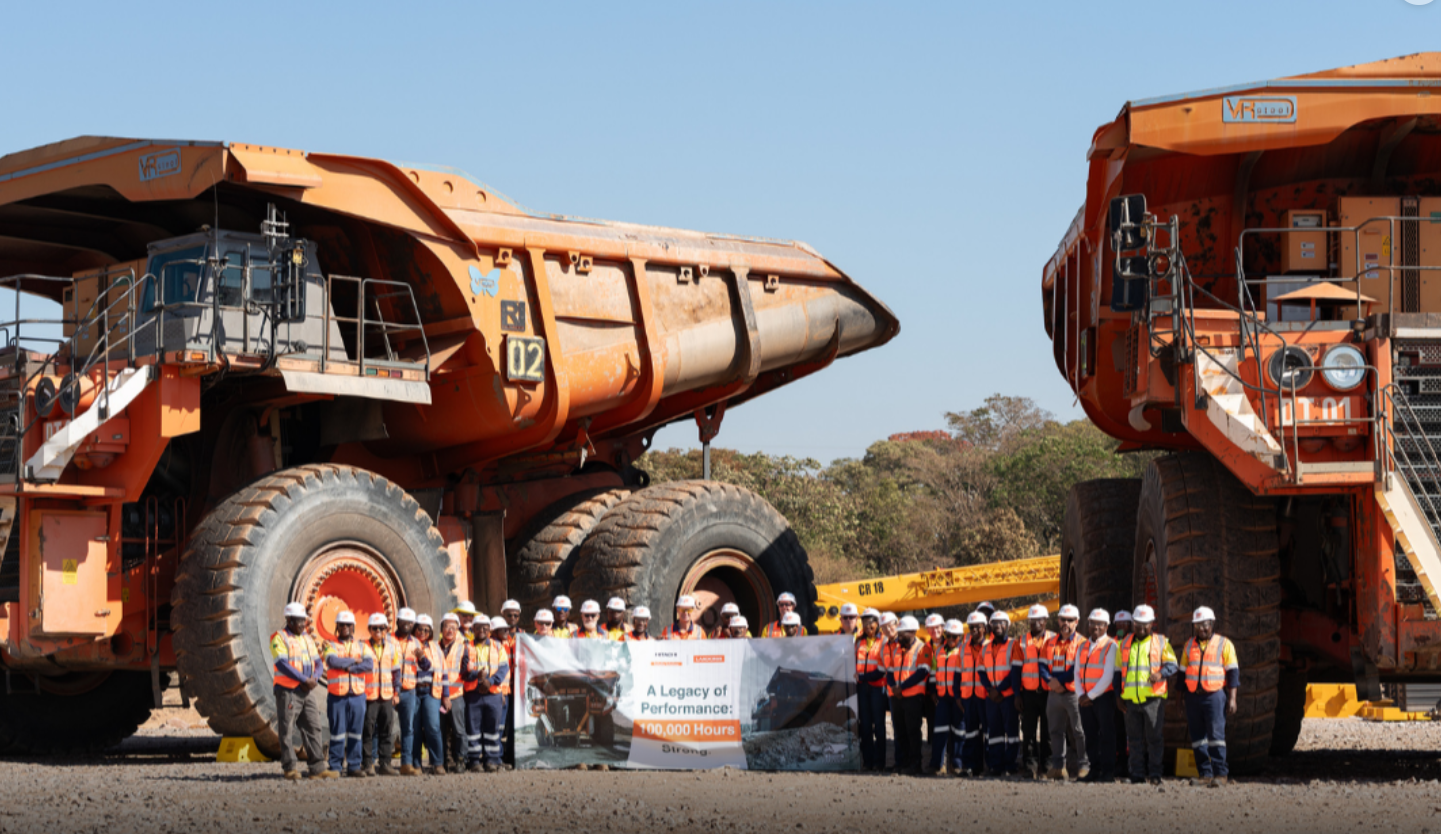
Credit Hitachi EH5000 trucks as an example
Gigantic dump trucks.
Massive bulldozers.
Huge excavators.
Machines unlike anything I had ever imagined.
I remember standing beside one of the mining trucks and looking up at its enormous tyres.
Although I stood about 5 feet 7 inches tall—considered relatively tall among Burmese at that time—the tyres were still taller than I was.
For a young doctor who had spent most of his life in classrooms, hospitals and city streets, it felt as though I had stepped into another world.
For the first time, I understood the scale of modern industrial mining.
I was fascinated.
At that time, politics never crossed my mind.
Like many young Burmese, I admired engineering, technology and human ingenuity.
Conversations with Engineers
During my stay, I often spoke with Burmese engineers supervising the project.
One conversation has remained in my memory for more than forty years.
I visited the mine’s equipment warehouse.
Its reinforced concrete roof appeared unusually thick.
One senior Burmese engineer jokingly remarked that the foreign architects had designed it strong enough to carry the weight of heavy snow.
Everyone laughed.
“This is central Myanmar,” he said.
“We don’t have snow here.”
If my memory serves me correctly, one of the foreign architects—whom I remember as being from the former Yugoslavia—smiled and replied that such a robust design could also withstand heavy dust and provide additional strength under demanding industrial conditions.
Only many years later did I wonder whether another reason might have existed.
The warehouse had been built behind a natural hill, separated from the main operational area.
Perhaps the hill itself, together with the strong construction, also offered additional protection against accidental blasting or flying rock fragments.
I cannot say this with certainty.
It is simply a reflection based upon my memory of the site’s layout.
The Mountains Before They Changed Forever
Every day I heard explosions echoing across the hills.
The blasting came from Kyay Ni Taung, where mining had already begun.
But Sabetaung still stood proudly beside it.
The engineers told me that one day mining would eventually reach Sabetaung.
At that moment, none of us imagined how completely those mountains would one day be transformed.
They also mentioned something that caught my attention.
Besides copper, geological surveys had reportedly identified traces of gold within the ore body.
In those days, however, the project remained entirely under Burmese management.
Chinese companies had not yet entered Letpadaung.
Looking Back After Forty-Four Years
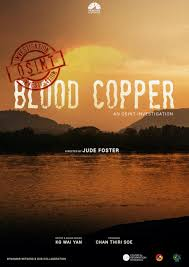
Today, when I watch the documentary Blood Copper and study recent satellite images, I realise that I unknowingly witnessed the beginning of a remarkable chapter in Myanmar’s modern history.
The quiet hills I first visited as a young doctor have become internationally known.
The villages surrounding them have experienced protests, controversy, displacement, armed conflict and immense human suffering.
Yet when I close my eyes, I still remember a different Letpadaung.
I remember eager young students laughing after work.
I remember dressing blistered hands.
I remember the smell of dust after the afternoon blasts.
I remember standing in silent amazement beside machines larger than anything I had ever seen.
History often begins quietly.
Only years later do we realise we were witnessing its opening chapter.
(To be continued in Part II: “From National Mine to International Controversy”)