KUALA LUMPUR: The spirit of hijrah as a pathway to positive change, stronger leadership and a more united ummah was a recurring theme at Maal Hijrah 1448H/2026 celebrations held nationwide today.
Marked by spiritual programmes, including Quran recitations, religious talks and the presentation of awards, this year’s celebration emphasised the importance of quality leadership in promoting public well-being and building a stronger civilisation.
In PUTRAJAYA, Deputy Yang di-Pertuan Agong Sultan Nazrin Shah graced the national-level Maal Hijrah 1448H/2026 celebration at Putra Mosque.
Also present at the event, themed “MADANI Dihayati, Ummah Diberkati”, were Deputy Prime Minister Datuk Seri Fadillah Yusof and Minister in the Prime Minister’s Department (Religious Affairs) Dr Zulkifli Hasan, together with about 5,000 attendees.
At the ceremony, Sultan Nazrin, who is also the Sultan of Perak, presented the National Tokoh Maal Hijrah Award to International Islamic University Malaysia (IIUM) rector Prof Emeritus Datuk Dr Osman Bakar, while Moroccan Islamic jurisprudence scholar Dr Ahmad Al-Raysuni received the International Tokoh Maal Hijrah Award.
In SABAH, Yang Dipertua Negeri Tun Musa Aman officiated the state-level Maal Hijrah celebration at Dewan Sa’adah, Wisma Majlis Ugama Islam Sabah.
Tun Musa and his wife Toh Puan Faridah Tussin were welcomed on arrival by Chief Minister Datuk Seri Hajiji Noor and organising committee chairman Datuk Dr Mohd Arifin Mohd Arif, who is also Sabah Local Government and Housing Minister.
Community activist Datuk Ag Sharin Alimin, also a former director of the Sabah Islamic Religious Affairs Department, received the Tokoh Maal Hijrah Award (male category), while former Sabah deputy state secretary Datuk Masnah Matsalleh was honoured in the female category.
In TERENGGANU, Menteri Besar Datuk Seri Dr Ahmad Samsuri Mokhtar called on the people to embrace hijrah as a process of transformation that shapes civilisation, strengthens society and builds a better future.
At the celebration attended by about 1,000 people, Ahmad Samsuri presented the Tokoh Maal Hijrah Award to 95-year-old Quran teacher Jusoh @ Muda Ismail, the adopted son and student of renowned Quranic scholar Tuan Guru Haji Mat Lintar.
In KEDAH, Sultan of Kedah Al Aminul Karim Sultan Sallehuddin Sultan Badlishah said the state should fully harness its strengths as a land rich in natural resources and fertile agricultural areas to drive progress through knowledge, technology, good governance and strong social unity.
The royal address was delivered by the Raja Muda of Kedah, Tengku Sarafudin Badlishah Sultan Sallehuddin, on the Sultan’s behalf at the state-level Maal Hijrah 1448H/2026 celebration at Wisma Darul Aman.
At the event, Tengku Sarafudin Badlishah presented the Kedah Tokoh Maal Hijrah 1448H Award to educational motivation expert Dr Shukri Abdullah. The Al Hana Mosque in Kuah, Langkawi and Al Fateh Mosque in Kuala Pegang, Baling were recognised as the best mosques in the urban and rural categories respectively.
In PENANG, Yang Dipertua Negeri Tun Ramli Ngah Talib urged Muslims to strengthen their faith and deepen their religious understanding based on authentic knowledge in navigating an increasingly fast-changing world.
He said technology and digital media should be used wisely and responsibly to enhance knowledge and reinforce religious values within society.
Also present at the celebration at Dewan Seri Al-Jazari TVET MARA Balik Pulau were Tun Ramli’s wife Toh Puan Raja Noora Ashikin Raja Abdullah, Deputy Chief Minister I Datuk Dr Mohamad Abdul Hamid and state leaders.
Attended by nearly 500 people, the event saw Universiti Sains Malaysia (USM) vice-chancellor Datuk Seri Dr Abdul Rahman Mohamed named Penang Tokoh Maal Hijrah for his contributions to education, research and innovation.
A nurse at Seberang Jaya Hospital, Nur Deena Nadzhiefa Musni, 31, who gained public attention for feeding an elderly Indian patient while on duty, received a Special Award.
Ahmad Hashim Al-Hafiz and Norhayati Sidikah Abu Bakar were also honoured with the Ikon Pendakwah Award and Ikon Keluarga Sakinah Award respectively.
In PAHANG, Sultan of Pahang Al-Sultan Abdullah Ri’ayatuddin Al-Mustafa Billah Shah officiated the state-level Maal Hijrah 1448H celebration at Laman Sejahtera Jelai in Sungai Koyan, Lipis.
The Sultan said the Hijrah event teaches that a society cannot be built on compassion alone, but must be founded on justice, sovereignty and the rule of law.
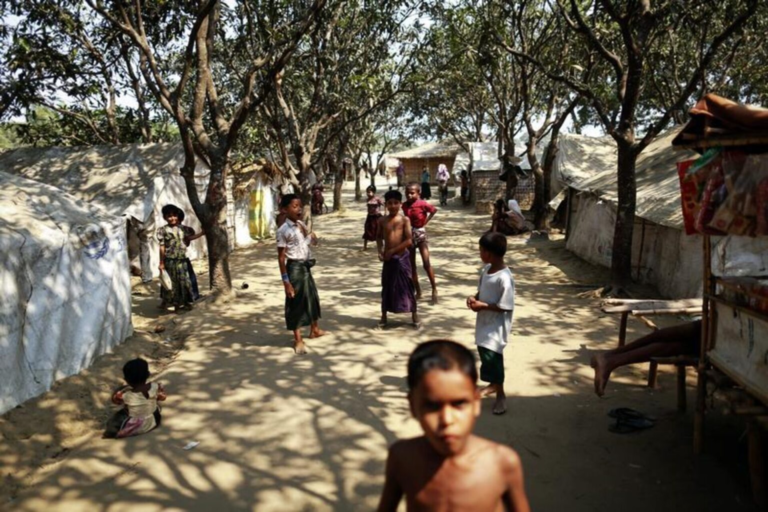
He said Islam encourages compassion towards those affected by hardship, displaced from their homeland, and victims of war and oppression.
“The people of this country have long shown generosity and compassion. However, such kindness should not be mistaken for weakness, nor should those receiving help make excessive demands,” he said.
Al-Sultan Abdullah expressed hope that the authorities would continue to act firmly, wisely and prudently in addressing the issue in accordance with the law, while safeguarding national sovereignty, preserving public security and upholding the rights of citizens.
At the event, he also presented the Tokoh Maal Hijrah Award to former Amanah Saham Pahang (ASPA) general manager Datuk Mohd Ali Hanafiah Sh Ruji, who received a certificate of appreciation, a trophy and a mock cheque for RM10,000.
Read also:
1/ Q/A No 22. How should Muslims response to unjust laws of Muslim or non-Muslim rulers?
2/ The Hijrah[a], (Arabic: الهجرة, romanized: al-Hijrah, lit. ‘migration’) , was the journey the Islamic prophet Muhammad and his followers took from Mecca to Medina. Early in Muhammad’s preaching of Islam, his followers only included his close friends and relatives. Following the spread of his religion, Muhammad and his small faction of Muslims then faced several challenges including a boycott of Muhammad’s clan, torture, killing, and other forms of religious persecution by the Meccans. Toward the end of the decade, Abu Talib, Muhammad’s uncle, who supported him amidst the leaders of Mecca, died. Finally, the leaders of Mecca ordered the assassination of Muhammad, which was to be executed by 11 men with swords.[10]
In May 622, after having convened twice with members of the Medinan tribes of Aws and Khazraj at al-‘Aqabah near Mina, Muhammad secretly left his home in Mecca to emigrate to their city, along with his friend, father-in-law and companion Abu Bakr.
3/ Ashura (Arabic: عَاشُورَاء, ʿĀshūrāʾ [ʕaːʃuːˈraːʔ]), also more formally Yawm Ashura (Arabic: يوم عاشوراء, romanized: Yawm ʿĀshūrāʾ), is a day of commemoration in Islam. It occurs annually on the tenth of Muharram, the first month of the Islamic calendar.
For Sunni Muslims, Ashura marks-
the parting of the Red Sea by Moses and the salvation of the Israelites. Also on this day, it is believed that
Noah disembarked from the Ark,
God forgave Adam, and
Joseph was released from prison, among various other auspicious events having occurred on Ashura according to Sunni tradition.
Jesus, Abraham, and Adam were born,
Muhammad was conceived,[1] and
Jonah was freed from the fish that had swallowed him.
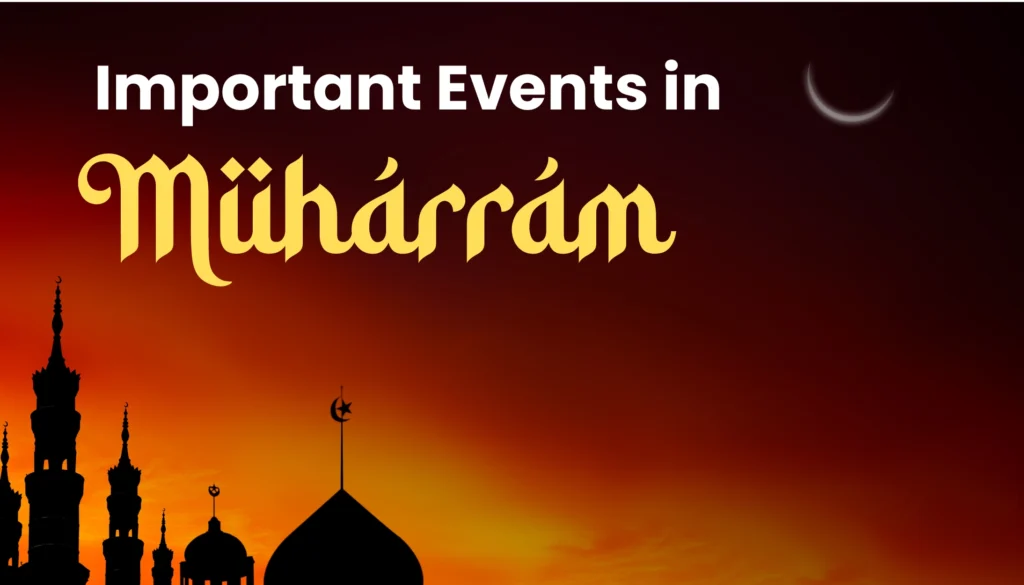
Here are some Important Events in the Month of Muharam:
1. The Creation of the Universe
Muharram marks the beginning of the Islamic year and symbolizes the creation of the universe. This month serves as a reminder of Allah’s (SWT) magnificent creation and the cycle of life and time.
2. Hazrat Adam’s (AS) Birth
We remember the birth of Hazrat Adam (AS), the first human being and prophet. His creation represents the divine wisdom behind humanity’s existence.
3. Hazrat Adam’s (AS) Repentance
During Muharram, Hazrat Adam (AS) asked Allah (SWT) for forgiveness for his mistake, and Allah accepted his repentance. This event emphasizes the importance of seeking forgiveness from Allah.
4. Hazrat Nuh’s (AS) Ark
On the 10th of Muharram, Hazrat Nuh’s (AS) ark came to rest on a mountain peak after the great flood. This symbolizes divine protection and the start of a new era after hardship.
5. Hazrat Musa (AS) and Pharaoh
On the 10th of Muharram, Hazrat Musa (AS) led the Israelites across the sea, which parted by Allah’s command. Pharaoh and his army drowned, symbolizing the triumph of virtue over tyranny.
6. Hazrat Yunus (AS) Saved from the Fish
On the 10th of Muharram, Hazrat Yunus (AS) was saved from the belly of a big fish. This miracle highlights Allah’s mercy and the power of repentance.
7. Hazrat Yusuf (AS) Released from Prison
Hazrat Yusuf (AS) was freed from an Egyptian prison during Muharram. His story teaches patience and faith in Allah’s plans.
8. Hazrat Yaqoob’s (AS) Eyesight Restored
Hazrat Yaqoob (AS) regained his eyesight in Muharram. This miracle demonstrates Allah’s power and the importance of patience and faith during difficult times.
9. Hazrat Isa (AS) Ascended to Heaven
Hazrat Isa (AS) was raised alive to the heavens, showcasing Allah’s extraordinary power and His unique treatment of prophets.
10. Martyrdom of Imam Hussain (RA)
Imam Hussain (RA) was martyred in the Battle of Karbala on the 10th of Muharram. His sacrifice symbolizes resistance to oppression and injustice.
11. Martyrdom of Hazrat Umer (RA)
Hazrat Umar ibn Al-Khattab (RA), the second Caliph of Islam, was assassinated on 1st Muharram in the year 24 AH, which corresponds to November 3, 644 CE. His death marked the end of a significant era in early Islamic history.
Conclusion
Muharram-ul-Haram is a month filled with historical events that hold great spiritual meaning for Muslims. From the creation of the universe to the martyrdom of Imam Hussain (RA) and the miracles of various prophets, this month serves as a time of reflection and commemoration. Muslims find inspiration and solace in these stories of faith, resilience, and sacrifice.