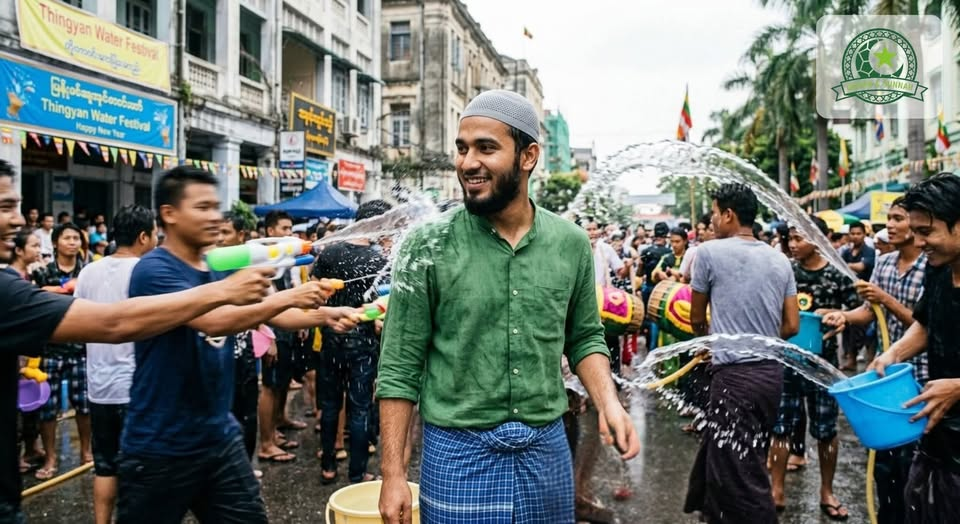
Via Myint Swe (Translated, Expanded & Framed for MMNN)
As Myanmar enters the joyful season of Thingyan, a familiar controversy resurfaces among segments of the Muslim community:
“Is water play haram?”
“Will Muslims go to hell for celebrating Thingyan?”
These questions are not new. But what is increasingly worrying is not the question itself—it is the rise of fear-driven, uninformed answers that distort Islam and alienate Muslims from their own society.
Islam Is a Religion of Evidence, Not Emotion
Islam does not operate on rumours, cultural paranoia, or loud opinions.
It is a religion built upon:
- the Qur’an
- the Hadith
- and centuries of disciplined scholarship
The foundational legal principle in Islam is clear:
Everything is permissible unless there is clear evidence prohibiting it.
Declaring something haram is not a casual matter. It requires explicit, credible textual proof—not assumptions, not exaggerations, and certainly not emotional intimidation.
Yet today, we see the opposite trend:
people declaring “haram” faster than they can provide evidence.
Water: A Tool of Purification, Not Damnation
In Islam, water is not suspicious—it is sacred.
The Qur’an states:
“We made from water every living thing.” (21:30)
Water is central to:
- Wudu (ablution)
- Ghusl (ritual purification)
There is no verse, no authentic hadith that prohibits:
- getting wet with clean water
- splashing water
- playful contact with water
To suddenly equate water play with sin—or worse, with hellfire—is not religious piety. It is religious distortion.
Thingyan Is Culture, Not Worship
Let us be absolutely clear:
For Muslims in Myanmar, Thingyan is not ibadah (worship).
It is:
- a national festival
- a social tradition
- a shared cultural moment
Participating in it does not mean adopting another religion. It does not invalidate faith.
Islam recognizes ‘urf (custom)—local traditions—as long as they do not contradict core beliefs.
The Qur’an reminds humanity:
“We made you into nations and tribes so that you may know one another.” (49:13)
Isolation is not piety.
Engagement—with integrity—is.
The Real Haram Is Being Ignored
While some obsess over water splashing, they conveniently ignore the actual prohibitions that often occur during festivals:
Alcohol Consumption
Clearly forbidden:
“Intoxicants… are from the work of Satan—avoid them.” (5:90)
Indecency and Loss of Modesty
- Revealing clothing
- Sexualized dancing
- Public immorality
These are genuine violations of Islamic ethics—not harmless water play.
Harming Others
The Prophet (peace be upon him) said:
“There should be neither harming nor reciprocating harm.”
Throwing water dangerously, targeting unwilling individuals, or creating public risk—this is where sin begins.
Wastefulness (Israf)
Even permissible acts can become sinful when excessive.
“Indeed, the wasteful are brothers of the devils.” (17:27)
Wasting large amounts of water irresponsibly contradicts both Islamic ethics and social responsibility.
The Dangerous Rise of “Instant Fatwas”
A deeper issue lies beneath this debate:
The rise of unqualified voices issuing “fatwas” on social media.
These voices:
- lack scholarly grounding
- rely on fear rather than knowledge
- push young Muslims toward rigidity and isolation
The result?
A generation confused into thinking:
- Islam is against joy
- Islam is against culture
- Islam demands withdrawal from society
This is not Islam.
This is misrepresentation in the name of religion.
A Muslim’s True Identity: Principled, Not Paranoid
A knowledgeable Muslim does not:
- abandon his religion
- nor abandon his society
He balances both.
He:
- avoids what is clearly haram
- participates in society responsibly
- preserves dignity, modesty, and ethics
Islam does not require cultural erasure.
It requires moral discipline within cultural life.
Conclusion: Stop Shrinking Islam
To equate splashing clean water with “hellfire” is not just wrong—
it shrinks Islam into something fearful, fragile, and disconnected from reality.
Islam is not that weak.
It is a religion of:
- confidence
- balance
- knowledge
Myanmar Muslims do not need to choose between:
- faith
- and belonging
They can—and must—uphold both.
Celebrate Thingyan if you wish—
but do so with dignity, modesty, and responsibility.
Avoid what is truly haram.
Reject what is falsely declared haram.
And most importantly:
Do not let ignorance speak louder than Islam itself.
“သင်္ကြန်နဲ့ အစ္စလာမ်”
အစ္စလာမ်သာသနာတော်ရဲ့ အဆုံးအမတွေဟာ
အင်မတန်ကျယ်ပြန့်ပြီး အရာရာကို အကျိုးအ
ကြောင်း ၊အထောက်အထားခိုင်ခိုင်လုံလုံနဲ့ ခွဲ
ခြားပြသထားတာဖြစ်ပါတယ် ။ “ဟလာလ်”
(ခွင့်ပြုချက်ရှိသောအရာ)နဲ့ “ဟရာမ်” (တားမြစ်
ထားသောအရာ)ဆိုတာ ကျမ်းတော်မြတ်ကုရ်
အာန်နဲ့ ဟဒီးစ်တော်တွေမှာ တိတိပပ ပြဋ္ဌာန်းပြီး
သားပါ ။
အစ္စလာမ်သာသနာဟာ လူသားတို့အတွက်
ရှင်းလင်းလွယ်ကူသော သာသနာဖြစ်တယ် ။
သာသနာတော်တွင် တားမြစ်ချက် (Haram)
တစ်ခု ဖြစ်ပေါ်လာရန်အတွက် ခိုင်လုံသော အ
ထောက်အထား(Textual Evidence) လိုအပ်ပါ
တယ် ။အခြေခံမူအရ “အရာရာတိုင်းဟာ မူလ
အားဖြင့် ခွင့်ပြုထားပြီးသား(Halal) ဖြစ်ကာ ၊
တားမြစ်ချက်ရှိမှသာ ဟရာမ်ဖြစ်သည်” လို့
ပညာရှင်များက ဆိုကြပါတယ် ။
အစ္စလာမ်တွင် “ရေ” သည် သန့်စင်ခြင်း၏ သ
င်္ကေတဖြစ်တယ် ။ကျမ်းတော်မြတ်ကုရ်အာန်နဲ့
တမန်တော်မြတ်ရဲ့ လမ်းညွှန်ချက်များမှာ မည်
သည့်နေရာ၌မျှ “သန့်ရှင်းသော ရေစိုခြင်း” (သို့
မဟုတ်) “ရေလောင်းခြင်း”ကို ဟရာမ်အဖြစ်
သတ်မှတ်ထားခြင်းမရှိပါ ။သန့်ရှင်းသော ရေ
ဟာ ဝဇူ(ကိုယ်လက်သန့်စင်ခြင်း)နဲ့ ဂုစလ်(ရေ
ချိုးသန့်စင်ခြင်း)အတွက် အဓိကအသုံးဝင်တဲ့
အရာဖြစ်တယ် ။ဒါကြောင့် ရိုးရာဓလေ့အရ
ဖြစ်စေ ၊အပျော်သဘောအရဖြစ်စေ သန့်ရှင်း
သောရေနဲ့ ထိတွေ့ခြင်းဟာ သာသနာတော်က
တားမြစ်ထားတဲ့ အကုသိုလ်အမှု မဟုတ်သည်
မှာ ထင်ရှားပါတယ် ။
အစ္စလာမ်ဘာသာဝင်တစ်ဦးဟာ မိမိနေထိုင်ရာ
ဒေသရဲ့ ရိုးရာယဉ်ကျေးမှုကို လိုက်နာပိုင်ခွင့်
ရှိတယ် ။မြန်မာနိုင်ငံသား မွတ်စလင်တစ်ဦး
အတွက် သင်္ကြန်ရေကစားခြင်းဟာ ဘာသာရေး
အရပြုလုပ်တဲ့ အခမ်းအနား(Ritual) မဟုတ်ဘဲ၊
လူမှုရေးအရဆင်နွှဲတဲ့ ရိုးရာဓလေ့(Tradition)
သာဖြစ်တယ် ။အဲ့လိုဆင်နွှဲတာဟာ အခြားဘာ
သာတစ်ခုရဲ့ ကိုးကွယ်ယုံကြည်မှု(Worship)ထဲ
မှာ ပါဝင်ပတ်သက်ခြင်းမဟုတ်ဘဲ ၊အမျိုးသား
ရေးဆိုင်ရာပျော်ပွဲရွှင်ပွဲတစ်ခုမှာ ပါဝင်ခြင်းသာ
ဖြစ်တယ် ။ဒါကြောင့် “ငရဲမီးလောင်မည်” ဆိုတဲ့
ပြောဆိုချက်တွေဟာ မဟုတ်မမှန်တဲ့ ခြောက်
လှန့်မှုတွေသာ ဖြစ်ပါတယ် ။
သာသနာတော်တွင် အမှန်တကယ် ရှောင်ကြဉ်ရ
မယ့် “ဟရာမ်” အလုပ်များမှာ သင်္ကြန်ကာလအ
တွင်း အလွယ်တကူ ဖြစ်ပွားတတ်တဲ့ …
— အရက်သေစာ သောက်စားခြင်း ။
ဒါဟာ အစ္စလာမ်မှာ ပြတ်ပြတ်သားသား
တားမြစ်ထားတဲ့ ဟရာမ်အလုပ် ဖြစ်ပါ
တယ် ။
— မဖွယ်မရာ ကခုန်ခြင်းနဲ့ဝတ်စားခြင်း ။
ကိုယ်ကျင့်သိက္ခာနဲ့ မလျော်ညီတဲ့ အပြု
အမူများကို ရှောင်ကြဉ်ရပါမယ် ။အမျိုး
သမီးတွေရေစိုရင် ခန္ဓာကိုယ်ကောက်
ကြောင်းပေါ်မယ့် အဝတ်အစားတွေဟာ
သာသနာကတားမြစ်ထားတဲ့ မဖွယ်မရာ
ကိစ္စဖြစ်ပါတယ် ။
— သူတစ်ပါးကို ဒုက္ခပေးခြင်း ။
မလိုလားအပ်ဘဲ တစ်ဖက်သား ထိခိုက်
နစ်နာအောင် ရေပက်ခြင်း (သို့မဟုတ်)
အန္တရာယ်ပြုခြင်းတို့သည်သာ ပြစ်မှု ဖြစ်
ပါတယ် ။(ဥပမာ — ရေကို တစ်ဖက်သား
နာကျင်အောင် ၊ဒုက္ခရောက်အောင် ပက်
တာမျိုး။)အပျော်လွန်ပြီး ရေတွေကို အ
တိုင်းအဆမရှိ ဖြုန်းတီးပစ်တာဟာ ဘာသာ
ရေးအရရော ၊လူမှုရေးအရပါ အကျိုးမဲ့စေ
တဲ့အပြင် “အစ္စရပ်ဖ်” (ဖြုန်းတီးခြင်း) ဆိုတဲ့
အပြစ်ထဲကို ရောက်သွားစေနိုင်ပါတယ် ။
နိဂုံးအနေနဲ့ …
ပညာမဲ့သူတို့ရဲ့ ရမ်းသန်းဟောပြောချက်တွေ
ဟာ လူငယ်တွေကို မိမိတို့ရဲ့ပတ်ဝန်းကျင်နဲ့
ကင်းကွာစေပြီး အစွန်းရောက်စေတတ်ပါတယ်။
အမှန်တကယ် ပညာတတ်တဲ့ မွတ်စလင်တစ်ဦး
ဟာ မိမိရဲ့ သာသနာရေးစည်းကမ်းကိုလည်း
မဖောက်ဖျက် ၊မိမိရဲ့ နိုင်ငံသားတာဝန်နဲ့ ရိုးရာ
ယဉ်ကျေးမှုကိုလည်း တန်ဖိုးထားတတ်သူ ဖြစ်
ရပါမယ် ။သန့်ရှင်းသောရေနဲ့ ပက်ဖျန်းခြင်းကို
“ငရဲ” နဲ့ နှိုင်းယှဉ်ခြင်းဟာ သာသနာတော်ရဲ့
ကျယ်ပြန့်တဲ့သဘောထားကို သေးသိမ်စေခြင်း
သာ ဖြစ်ပါတယ် ။
အစ္စလာမ်ဘာသာဝင်ဖြစ်ခြင်းဟာ မိမိတို့ရဲ့
ရိုးရာယဉ်ကျေးမှုကို စွန့်လွှတ်ရခြင်းမဟုတ်ပါ။
သာသနာတော်က တားမြစ်ထားတဲ့ မကောင်းမှု
တွေကိုရှောင်ကြဉ်ပြီး ၊သန့်ရှင်းစင်ကြယ်သော
နည်းလမ်းဖြင့် မိမိတို့ရဲ့ ရိုးရာပွဲတော်မှာ ပါဝင်
ဆင်နွှဲခြင်းဟာ ပညာတတ်မွတ်စလင်တစ်ဦးရဲ့
မှန်ကန်တဲ့ရပ်တည်ချက်သာ ဖြစ်ပါတယ် ။
Crd :