History Rewritten, Heritage Erased
Sebastian Manrique’s testimony stands as one of the earliest foreign records confirming that Muslims were deeply rooted in Arakan’s royal, intellectual, and spiritual life nearly four centuries ago. His reluctant acknowledgment—written despite his own bias—proves that Islam had flourished there long before the modern era.
Yet, what Manrique witnessed with his own eyes—the mosques, scholars, and Muslim officials of Mrauk-U—has now been systematically erased. The destruction of centuries-old mosques and the conversion of their remains into pagodas are not mere acts of ignorance; they are deliberate attempts to rewrite the identity of a land once known for its cultural diversity and coexistence.
Such actions echo a wider pattern in today’s Myanmar—where erasing evidence of Muslim existence has become part of a nationalist narrative that denies history itself. But even when stone and structure are destroyed, the written word remains.
The testimony of a Portuguese friar, preserved in a 17th-century travelogue, now speaks louder than those who try to silence truth.
No matter how many mosques are demolished or renamed, the past cannot be undone, and truth cannot be buried.
Credit Nay Zin‘s (via U Aung Tin), post translated into English.
When King Min Yae Kyaw Swa led the Burmese invasion of Arakan, the Arakanese initially resisted fiercely but were unable to withstand the prolonged siege. The Burmese captured Laungkyet, and King Min Saw Mon fled with his queen and family into western Bengal, seeking refuge under the Sultan of Bengal, Sulayman Shah of Gaur.
From the time of his flight until around A.D. 1430, Min Saw Mon, also known as Naramitlha, remained in political exile for 26 years under the protection of the Sultan of Bengal.
(Reference: “Basic Political History of Burma,” Vol. 1, Yangon, 1987, pp. 112–118.)
In A.D. 1430, with the military support of the Muslim Sultan of Gaur, Naramitlha (Min Saw Mon) successfully recaptured the Kingdom of Arakan from Burmese control.
(Reference: U Hla Tun Phyu, Rakhine Tansong Magazine, English Section, Vol. 21, p. 148.)
According to U Tun Myint (Mann Aung),
“In A.D. 1430, King Min Saw Mon, who had taken refuge in western Bengal, returned with the help of the Bengal army. The Burmese forces stationed in Innwa were defeated and forced to retreat, and Min Saw Mon regained the throne of Laungkyet. This marked the first arrival of Muslim (Kula) soldiers in Arakan.”
Furthermore,
“After regaining power, Naramitlha founded the new city of Mrauk-U (Myo Haung). He allowed the Bengal military commander General Sindhi Khan and other officers who had accompanied him to settle near the new city. A great mosque (Sindhi Khan Vali) was also constructed.”
(Reference: Prof. D.G.E. Hall, A History of South-East Asia, London: Macmillan, 1958, p. 328.)
Later, King Naramitlha (Min Saw Mon) adopted an Islamic title, “Sulaiman Shah,” upon ascending the throne. During the next hundred years of the First Mrauk-U Dynasty, all eleven successive Arakanese kings adopted similar Muslim honorific titles.
(Reference: “Basic Political History of Burma,” Vol. 1, p. 387.)
This raises an interesting question:
If the Arakanese kings were Buddhists, why did they take Muslim titles?
It becomes evident that during the First Mrauk-U Period, the Arakanese Kingdom existed under the suzerainty of the Sultanate of Bengal. Therefore, referring to Arakan as a vassal state (auza-khan) of the Bengal Sultanate of Gaur is historically justified. However, Rakhine chronicles never mention this relationship. Instead, they highlight the campaigns in which Arakan allegedly conquered the twelve towns of Bengal, thereby downplaying their earlier subordination.
Let us review the supporting evidence:
- Bengal’s Muslim influence in Mrauk-U cannot be denied. The presence of Sindhi Khan, Wali Khan, and other Bengali Muslim military personnel who settled there led to a steady influx of Muslims from Bengal. Their presence brought with it the cultural and political influence of the Gaur Sultanate and Islamic civilization.
The Mrauk-U period is often referred to as the Golden Age of Arakan. The eleven royal Islamic titles adopted by the Arakanese kings during this period were:
Sulaiman Shah, Ali Shah, Kalima Shah, Mago Shah, Muhammad Shah, Nuri Shah, Sheikh Abdullah Shah, Illil Shah, Ilyas Shah, Jalal Shah, and Ali Shah.
Each of these titles corresponded to one of the eleven monarchs of the First Mrauk-U Era, and later parts of this series will identify each king in detail.
Even royal traditions and court rituals reflected strong Islamic influence. - Moreover, coins and currency issued by the Arakanese kingdom during this period bore Arabic inscriptions expressing Islamic belief, such as: “La ilaha illallah” — There is no deity but Allah.
(Reference: M. Robinson, The Coins and Bank Notes of Burma, 1980, pp. 49–50.) Persian Kufic script was also inscribed on some coins.
(*Reference: Lt. Col. Ba Shin, The Coming of Islam to Burma Down to 1700 A.D.)
The Restoration of Laungkyet, the Role of Bengal Commanders, and the Early Spread of Islam in Arakan
Thus, the city of Laungkyet, which had originally been founded by King Alawmaphyu in the Myanmar Era 612 (A.D. 1250), endured for 156 years, ruled successively by 16 kings and two ministers from different dynasties, making a total of 18 rulers.
Later, Bengali military forces, led by generals and soldiers in great numbers, launched an invasion and attacked the Burmese garrison stationed in Laungkyet. Unable to withstand the assault, the Innwa (Ava) troops fled in disarray, and the city of Laungkyet fell to the invaders.
Although Laungkyet was thus recaptured, the Bengal Sultan’s commander, Ulong Khan (also known as Wali Khan), who had been sent to oversee the territory, betrayed King Min Saw Mon. He imprisoned and shackled him, ruling Laungkyet himself.
At that time, Prince Ali Khan Saw Mon, the king’s brother who had taken refuge at the residence of a wealthy merchant at Kassapanadi shore, learned of his brother’s imprisonment through his wife and her father, the same merchant. He then bribed the prison guards and wardens with large sums of gold and silver to secure Min Saw Mon’s release.
The two brothers fled to the court of the Bengal Sultan, where they were granted royal audience. The Sultan declared:
“Min Saw Mon is like my own son.”
The Sultan ordered his commander Sindhi Khan and minister Rajamani to march with their troops, defeat the treacherous Wali Khan, and restore Min Saw Mon to the throne of Laungkyet. Wali Khan was executed for his disloyalty, and his skin was ordered to be flayed and stuffed, according to royal decree. The Sultan then dispatched a grand army of 300,000 soldiers to assist in reinstating Min Saw Mon to power.
(Reference: Rakkhapura Bronze Inscription Chronicle, p. 101.)
From this account, it is clear that a Bengali ruler named Wali Khan (Ulong Khan) governed parts of Arakan for some time, though the exact duration remains uncertain. The text also makes it evident that the Sultan of Bengal treated Min Saw Mon as a royal son, sending Sindhi Khan to overthrow Wali Khan and enthrone Min Saw Mon. The army involved consisted not of Arakanese or Burmese troops but Bengali Muslim soldiers. These soldiers were later permitted to settle permanently near Mrauk-U, as confirmed in other historical records.
The now-destroyed Sindhi Khan Mosque (Vali) was most likely built by King Min Saw Mon himself in gratitude for his restoration. Moreover, Min Saw Mon’s adoption of an Islamic honorific title is well documented.
Therefore, it is historically justified to describe the First Mrauk-U Kingdom founded by Naramitlha (Min Saw Mon) as being under the suzerainty of Bengal.
In A.D. 1404, when King Minkhaung of Ava sent his 13-year-old son, Prince Min Yaza Kyaw Swa, to invade Arakan, King Naramitlha of Arakan fled westward to Gaur in Bengal, where he remained in political exile for 26 years. During that period, he became familiar with the religious, cultural, and administrative systems of the Islamic world in the East.
(*Reference: “Lost Footprints,” Than Myint U, trans. Myo Nann Si.)
By the time of the Mrauk-U period, conversions to Islam had become increasingly common.
According to Arakanese historians and writers, many people embraced Islam, and mosques (valli) were built across the kingdom.
(Reference: U Aung Tha U, History of Arakan, p. 132.)
During the reign of King Min Saw Mon’s ninth successor, Muslim preachers from Delhi — namely Qadir, Musa, and Honumia — arrived and established mosques throughout the country. Entire groups of locals converted to Islam. However, during the later reign of King Min Bar (Min Ba Gyi), a prominent Buddhist monk named Sayadaw Myaw Wa (Maraw) opposed these Islamic proselytization efforts, resulting in the suspension of missionary activities.
(Reference: Pandiṭa U Tha Htun Aung, Rakhine Yazawin Gyi (Great Chronicle of Arakan), p. 74.)
Similarly, the distinguished Buddhist monk Sayadaw U Nyanaka of Danyawadi recorded in his New Danyawadi Chronicle that many people converted to Islam during the reign of King Min Ba Gyi. Eminent political writer U Hla Tun Phyu later confirmed the accuracy of this account.
(Reference: U Hla Tun Phyu, Ethnic Groups of Rakhine State, p. 36.)
Regarding this issue, historian Dr. Khin Maung Nyunt also observed that due to Arab religious preaching, Islam took root not only in Arakan but throughout the eastern coastal regions. He further noted that among the Bengalis captured by the Portuguese, there were highly educated and cultured individuals, who were later sold into Arab, Hindu, and Arakanese families within Arakan. Many of these captives were also employed in royal agricultural projects.
(Reference: Dr. Khin Maung Nyunt, “Myanmar–Portuguese Relations,” Silver Jubilee Magazine, University of Rangoon.)
Portuguese Missionary Sebastian Manrique and His Records on Arakan
“I have failed to convert the Muslims to Christianity…”
This confession was written by the Portuguese friar Sebastian Manrique, who visited Mrauk-U (Arakan) as a Portuguese envoy in the 17th century.
He recorded this in his own travel account titled Travels of Fray Sebastian Manrique (1629–1643).
(Exact source: Sebastian Manrique, Travels of Fray 1629–1643, Vol. 1, Arakan, Oxford: Hakluyt Society, 1927, pp. 101–102)
Manrique was known for his hatred and intolerance towards Islam and Muslims, yet in his writings he could not conceal the strong presence and influence of Muslim officials, scholars, and elites in the Arakan royal court.
When he himself entered the palace to meet King Thiri Thudhamma, he noted that the Muslim officials greeted him with the Islamic salutation “Salaam” six times.
He also observed that, in his time, many Muslims in the Arakan kingdom had already performed the Hajj pilgrimage, signifying their deep Islamic faith.
(See Sebastian Manrique, Travels of Fray, pp. 335, 379, 388)
The Two Grand Mosques of Mrauk-U
In his writings, Manrique also drew and described two large mosques he personally saw in Mrauk-U, complete with maps and sketches.
Later, historian Charles D. Sheffield included in his research pictures of the Sindi Khan Grand Mosque, as well as photographs showing its later destruction and ruins.
Today, due to the actions of extremist Rakhine nationalists, those once-famous historic mosques have completely disappeared.
Some Rakhine nationalists claim that “there are stone inscriptions proving the Muslim presence in Arakan,” yet when even grand mosques that could hold hundreds of worshippers were erased without a trace, it becomes absurd to boast about a few surviving stone slabs as proof of tolerance.
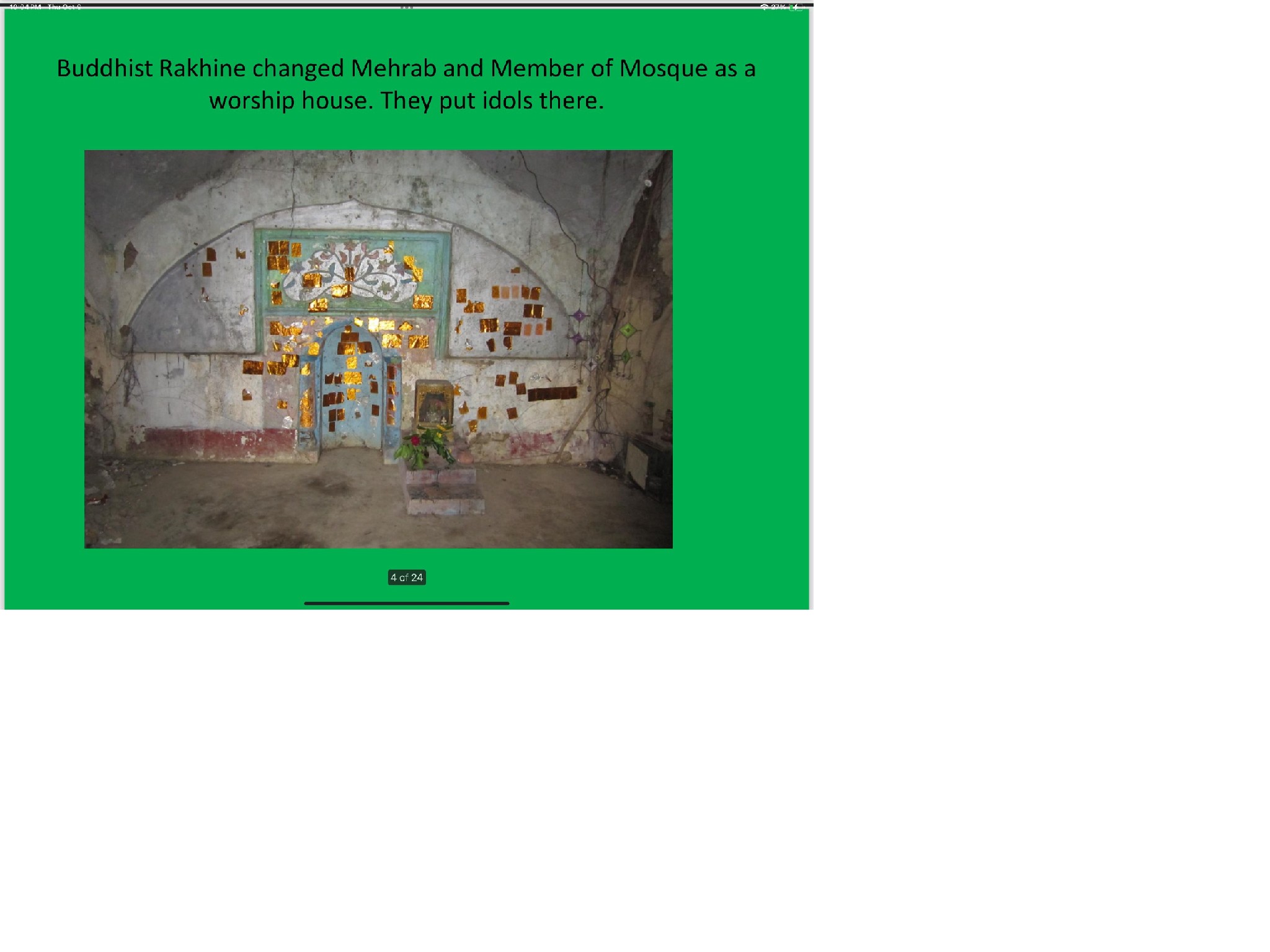
Moreover, there are documented photographs showing how some extremists transformed surviving mosque structures into Buddhist pagodas, as if rewriting history through religious vandalism.
The truth can be buried under ruins, but history itself cannot be erased.
References:
- Sebastian Manrique, Travels of Fray Sebastian Manrique 1629–1643, Vol. I, Arakan, Oxford: Hakluyt Society, 1927.
- Charles D. Sheffield, Arakan and Its Mosques: Traces of a Lost Civilization.
U Aung Tin
ဘင်္ဂလားဩဇာခံ ပထမမြောက်ဦး(၁၄၃၀-၁၅၃၀)
(ကိုနေဇင်စာလို့ထင်ပါတယ်၊ လင့်ဖွင့်မရ။)
နှင့် သမိုင်းဝင်ဗလီဖျက်၊ ဗလီခိုးသူများအကြောင်း
မင်းရဲကျော်စွာဦးဆောင်တဲ့ မြန်မာတိုက်စစ်ကို ပထမတော့ ရခိုင်တွေဟာ ခုခံကြပေမယ့် ကြာကြာတင်းမခံနိုင်ဘူး။ မြန်မာတွေလောင်းကြတ်ကိုသိမ်းလိုက်တယ်။ မင်းစောမွန်ဟာ မြန်မာတွေလည်း လောင်းကြတ်ကို သိမ်းလိုက်ရော မိဖုရား၊ သားမယားတွေနဲ့အတူ အနောက်ဘင်္ဂလားနယ်ထဲက စွလ်တန်ဘုရင်ဆီကို ထွက်ပြေးခိုလှုံပါတော့တယ်။
ထွက်ပြေးစဉ်အချိန်ကနေ အေဒီ၁၄၃၀အထိ နရမိတ်လှခေါ် မင်းစောမွန်ဟာ ဘင်္ဂလားဂေါရ်ဘုရင့်ထံမှာ ၂၆နှစ်တိုင်တိုင် နိုင်ငံရေးခိုလှုံနေခဲ့တယ်။
ကြည့်-အခြေပြု မြန်မာနိုင်ငံရေးသမိုင်း၊ ပထမတွဲ၊ ရန်ကုန် ၁၉၈၇၊စာမျက်နှာ၊၁၁၂-၁၁၈)
အဲဒီနောက် အေဒီ၁၄၃၀မှာ နရမိတ်လှခေါ်မင်းစောမွန်ဟာ အဲဒီဂေါရ်မွတ်စလင်ဘုရင်ရဲ့ စစ်တပ်အကူအညီနဲ့ပဲ
မြန်မာတွေလက်ကနေ ရခိုင်ပြည်ကိုပြန်လည်သိမ်းပိုက်နိုင်ခဲ့တယ်။
ကြည့်-ဦးလှထွန်းဖြူ ၊ရခိုင်တန်ဆောင်မဂ္ဂဇင်း English section တွဲ၂၁၊စာ-၁၄၈
ဦးထွန်းမြင့်(မာန်အောင်)ကသူ့စာအုပ်မှာ “အေဒီ၁၄၃၀ အိန္ဒိယအနောက်ဘင်္ဂလားမှာခိုအောင်းနေသော မင်းစောမွန်သည် ဘင်္ဂလားတပ်များ၏ အကူအညီဖြင့် လာရောက်တိုက်ခိုက်ရာ အင်းဝရှိမြန်မာတပ်များက ဆုံးရှုံးဆုတ်ခွာသွားရပြီး မင်းစောမွန်သည်လောင်းကြတ်ထီးနန်းကို ပြန်ရသည်။ မွတ်စလင်ကုလားစစ်သည်များ ပထမဆုံးရခိုင်သို့ ရောက်ရှိခဲ့သည့်ကာလဖြစ်သည်”လို့ ရေးသားထားတယ်။
“နရမိတ်လှသည် မြောက်ဦးမြို့သစ်တည်ထောင်ခဲ့ရာ သူနှင့်အတူပါလာသော ဘင်္ဂလားပြည် ဂေါရ်ဗိုလ်ချုပ်ကြီးစင်ဒီခန်နှင့် စစ်သည်ဗိုလ်ပါများကို မြောက်ဦးမြို့အနီး၌ အခြေစိုက်နေထိုင်စေခဲ့သည်။ စင်ဒီခန်ဗလီကြီး
ကိုလည်း တည်ဆောက်စေခဲ့သည်”
ကြည့်-Prof:D. G. E of southeast asia-London.Macmillan 1958 Page-328
အဲဒီနောက် နရမိတ်လှခေါ် မင်းစောမွန်ဟာ အစ္စလာမ်ဘွဲ့အမည် စူလိုင်မန်ရှားဟ် အမည်ခံပြီးနန်းတက်လာတယ်။
ပထမမြောက်ဦးခေတ် နှစ်၁၀၀အတွင်း အုပ်ချုပ်ခဲ့တဲ့ ရခိုင်ဘုရင်၁၁ပါးစလုံးဟာ မွတ်စလင်ဘွဲ့အမည်ခံယူခဲ့ကြတယ်။
ကြည့်-အခြေပြု မြန်မာနိုင်ငံရေးသမိုင်း၊ပထမတွဲ၊စာမျက်နှာ ၃၈၇
ဒီတော့ဒီနေရာမှာစဉ်းစားစရာဖြစ်လာတာက ရခိုင်ဗုဒ္ဓဘာသာဘုရင်ဟာ ဘာကြောင့် မွတ်စလင်ဘွဲ့အမည်ကို ခံရတာလဲ?
ပထမမြောက်ဦးခေတ်ဟာ sultanate Of Bengalရဲ့ ဩဇာခံဖြစ်နေတယ်ဆိုတာ ပေါ်လွင်နေတယ်။ ဘင်္ဂလားဂေါ်ရ်ဘုရင့်ဩဇာခံ အာရကန်ဆိုရင် ယုတ္တိမမဲ့ဘူး။ ဒါပေမဲ့ ဒါကိုရခိုင်သမိုင်းက မဖော်ဘူး။ ရခိုင်သမိုင်းက ဘင်္ဂါ၁၂မြို့ သိမ်းတဲ့သမိုင်းကိုပဲ အဓိက Highlight လုပ်တယ်။ အထောက်အထားဆက်ပေးပါ့မယ်။
၁။ ဘင်္ဂလားမွတ်စလင်တွေရဲ့ သြဇာရခိုင်မြောက်ဦးမှာရှိခဲ့တာ ငြင်းမရပါ။ အဲဒီနောက် ဘင်္ဂလားဂေါရ်စွလ်တန်က ဗိုလ်ချုပ်ကြီးဝလီခန်နဲ့ ဗိုလ်ချုပ်ကြီးစင်ဒီခန်စစ်တပ်ကြီးက တပ်သားတွေ အခြေစိုက်နေထိုင်ခဲ့မှုကြောင့် ဘင်္ဂလားက မွတ်စလင်တွေ ပိုမိုရောက်ရှိလာပြီး ဂေါရ်စွလ်တန်နဲ့ အစ္စလာမ်ယဉ်ကျေးမှုသြဇာ သက်ရောက်ခဲ့တယ်။ ရခိုင်သမိုင်းမှာ အဲဒီမြောက်ဦးခေတ်ဟာ ရွှေခေတ်ဖြစ်တယ်။
ဆိုလိုင်မန်ရှားဟ်၊ အလီရှားဟ်၊ ကလီမာရှားဟ်၊ မဂိုရှားဟ်၊ မုဟမ္မဒ်ရှားဟ်၊ နူရီရှားဟ်၊ ရှိခ်အဗ်ဒွလ်လာဟ်ရှားဟ်၊ အိလ်လီလ်းရှားဟ်၊ အိလ်ယာစ်းရှားဟ်၊ ဂျလလ်ရှားဟ်နဲ့အလီရှားဟ်စတဲ့ ဘွဲ့အမည်၁၁ခုဟာ ပထမမြောက်ဦးခေတ် မင်း၁၁ပါးစလုံးခံယူခဲ့တဲ့ ဘွဲ့အမည်ဖြစ်တယ်။နောက်ပိုင်းမှာ အဲဒီဘွဲ့အမည်၁၁ခုနဲ့ မင်းတစ်ပါးစီဖော်ပြသွားပါ့မယ်။ နန်းဓလေ့တွေမှာလည်း အစ္စလာမ်သြဇာ သက်ရောက်ခဲ့ရတယ်။
၂။ဒါ့အပြင် နိုင်ငံတော်သုံးငွေဒင်္ဂါးတွေအပေါ်မှာ အစ္စလာမ်ဘာသာရဲ့ ယုံကြည်ချက်ဆိုင်ရာ စာသားဖြစ်တဲ့ “အလ္လာဟ်မှအပ ကိုးကွယ်ရာအရှင်မရှိ”ဆိုတဲ့ အာရဗီစာတန်းကို ရိုက်နှိပ်ထားတာကိုတွေ့ရတယ်။
ကြည့်-M. Robinson, The coins and Bank notes of Burma,1980, Page 49-50
ပါရှန်ကူဖစ်ရေးဟန်များ ရိုက်ခတ်ထားသည်ကိုလည်းတွေ့ရသည်။
ကြည့် Lt. Col. Ba shin, the coming of islam to Burma Down to1700 AD.
သို့ဖြစ်လေသောကြောင့် လောင်းကြက်မြို့တော်သည်ကား ကောဇာသက္ကရာဇ်၆၁၂ခုနှစ် အလောမာဖြူ မင်းတည်ထောင်ခဲ့သော လောင်းကြက်မြို့တော်သည် မင်းစောမွန်အထိ၁၆ဆက်၊ မျိုးခြားအမတ်၂ဆက် ပေါင်း၁၈ဆက် ထီးနန်း၁၅၆နှစ် အုပ်ချုပ်ကြာညောင်းခဲ့လေတော့သည်။
ထို့နောက် ကုလားစစ်သည်ဗိုလ်ပါ မြောက်များစွာဖြင့်စစ်ချီလာကာ လောင်းကြက်မြို့တော်ရှိ အင်း၀စစ်သည်တို့အား တိုက်ခိုက်လေသော် အင်း၀စစ်သည်တို့ မခံမရပ်နိုင်ဖြစ်ပြီး ဖရိုဖရဲထွက်ပြေးကြလေကုန်၏။ ထိုအခါ လောင်းကြက်မြို့တော်အား သိမ်းပိုက်ရရှိတော်မူလေသည်။ လောင်းကြက်မြို့တော်အား ပြန်လည်ရရှိသော်လည်း စေခိုင်းလိုက်သော ဂါဝါသူရတန်အမတ် (ဂေါ်ရ်စွလ်တန်စစ်ဗိုလ်) ဥလုံခင်(၀လီခန်)သည် မင်းစောမွန်အား သံခြေချင်းခတ် ချုပ်နှောင်ကာ ၎င်းအမတ်သာ လောင်းကြက်၌ အုပ်ချုပ်နေကြောင်း၊ ကစ္ဆဖနဒီကမ်းရှိ အသေယာသူဋ္ဌေးအိမ်၌ ခိုလှုံနေသော ညီတော်အလီခင်စောမွန် ကြားသိလေသော် မိမိမယားမှတစ်ဆင့် ယောက္ခမသူဋ္ဌေးကြီးအသေယအား ပြောပြလေသောအခါ ထောင်ချုပ်ထိန်း ထောင်မူးတို့အား များစွာရွှေငွေတို့ဖြင့် တံစိုးလက်ဆောင်ပေး၍ လွတ်လေသဖြင့် ညီနောင်နှစ်ပါး သူရတာန်မင်းထံ(စွလ်တန်မင်း) အရောက်သွား၍ သံတော်ဦးတင်ကြလေရာ သူရတာန်မင်းက ငါ၏သားတော်စောမွန်အား အမတ်ဆတျာခတ် (စင်ဒီခန် -စစ်ဗိုလ်)နှင့် ရာဇမဏိတို့သည် လောင်းကြက်မြို့တော်ကိုသိမ်းပြီး နန်းတင်ကြလေ။
သစ္စာမရှိသောအမတ် ၀လီခန်အားသတ်ပြီးလျှင် ၎င်းခန္ဓာ၏ အရေကို စည်းကြက်၍ယူခဲ့ချေဟု အမိန့်ချမှတ်ကာ ယခင်ကထက်များစွာသော စစ်သည်၃သိန်းနဲ့တကွ စစ်ချီစေတော်မူလေသည်။…..
ရက္ခပူရကြေးမုံကျမ်း….စာမျက်နှာ၁၀၁]
အဲတော့ ရခိုင်မှာဘင်္ဂလီမင်း ၀လီခန်ခေါ်ဥလုံခင် အုပ်စိုးခဲ့ကြောင်း ထင်ရှားနေတယ်။ ဘယ်နှစ်နှစ် အုပ်ချုပ်သွားတယ်တော့ မသိရဘူး။
ဒီဖော်ပြချက်အရ ဘင်္ဂလားစွလ်တန်က မင်းစောမွန်ကို သားလိုဆက်ဆံကြောင်း၊ စင်ဒီခန်ကိုစေလွှတ်ပြီး ၀လီခန်ကိုနန်းချ မင်းစောမွန်ကို နန်းတင်ပေးခဲ့ကြောင်း၊ ရခိုင်စစ်ဗိုလ်စစ်သားတွေနဲ့ မဟုတ်ဘဲ ဘင်္ဂလီစစ်ဗိုလ်စစ်သား စစ်တပ်နဲ့သာဖြစ်ကြောင်း၊ အဲဒီမှာပါလာတဲ့စစ်သားတွေကို မင်းစောမွန်က မြောက်ဦးမှာ အခြေချနေထိုင်စေခဲ့ကြောင်း အခြားသောသမိုင်းစာတမ်းတွေမှာ ပါရှိနေပါတယ်။ ဖျက်ဆီးခံလိုက်ရတဲ့ သမိုင်း၀င်စင်ဒီခန်ဗလီက မင်းစောမွန်က ကျေးဇူးတင်သောအားဖြင့်တည်ဆောက်ပေးခဲ့တာ ဖြစ်ပါလိမ့်မယ်။ မင်းစောမွန်ကိုယ်တိုင်အစ္စလာမ်ဘွဲ့ အမည်ခံခဲ့တာ ထင်ရှားသွားပြီး။ ဒီတော့ နရမိတ်လှ တည်ထောင်တဲ့ ပထမမြောက်ဦးဟာ ဘင်္ဂလားဩဇာခံ မင်းနိုင်ငံဖြစ်ပါတယ်လို့ပြောရင် လွန်မလား။
အေဒီ၁၄၀၄ခုနှစ်၌ အင်းဝဘုရင်မင်းခေါင်မှ သူ့သားကြီးအသက်၁၃နှစ်အရွယ် မင်းရဲကျော်စွာကို ဦးစီးခန့်ပြီး ရခိုင်အားကျူးကျော်စေသောအခါ ရခိုင်ဘုရင်နရမိတ်လှသည် အနောက်ဘက်ဘင်္ဂလားဂေါရ်မြို့သို့ ထွက်ပြေးသွားရသည်။ ၂၆နှစ်တိုင်တိုင် နိုင်ငံရေးခိုလှုံခဲ့သည်။ ထိုကာလတစ်လျှောက် အရှေ့တိုင်းအစ္စလာမ်၏ ရည်မွန်သောလောကကို လေ့ကျက်မှတ်သားခဲ့ရသည်။
ကြည့်-ခြေရာပျောက်မြစ်- သန်းမြင့်ဦး- မြနှင်းဆီဘာသာပြန်
အဲဒီမြောက်ဦးခေတ်မှာပဲ အစ္စလာမ်ဘာသာထဲ ကူးပြောင်းလာမှုတွေဟာ မြင့်တက်နေပါပြီ။ ရခိုင်သမိုင်းပညာရှင်တွေ၊ စာရေးဆရာတွေရဲ့ရေးသားချက်အရ မြောက်ဦးခေတ်မှာ အစ္စလာမ်ဘာသာကို ကူးပြောင်းသူများစွာရှိနေပြီး ဗလီတွေတည်ဆောက်ကြတယ်။
ကြည့်-ဦးအောင်သာဦး၊History of Arakan စာမျက်နှာ ၁၃၂
ကိုးဆက်မြောက်မြောက်ဦးဘုရင်ခေတ်မှာ ဒေလီမြို့က ကာဒီရ်၊ မူစာ၊ ဟိုနူမီယာအမည်ရှိ သာသနာဟောကြားသူတွေ ရောက်လာပြီး နိုင်ငံအနှံ့ဗလီတွေ တည်ဆောက်ခဲ့ကြသည်။ လူတွေလည်း အုပ်စုလိုက်အစ္စလာမ်အတွင်းကို ကူးပြောင်းသွားကြသည်။ မင်ဘာကြီးလက်ထက်တွင် ဆရာ မရဝ(ရှင်မြဝါ)က ကန့်ကွက်ခဲ့လို့ အစ္စလာမ်ဟောကြားမှု လုပ်ငန်းရပ်ဆိုင်းခဲ့ရတယ်။
ကြည့်-ပဏ္ဍိတဦးသာထွန်းအောင် ရခိုင်ရာဇဝင်ကြီးစာမျက်နှာ၇၄
ရခိုင်ဘုန်းတော်ကြီး ဓညဝတီဆရာတော်ဦးဥာဏကလည်း ဓညဝတီရာဇဝင်သစ်မှာ မင်းဘာကြီးမင်းလက်ထက်တွင် အစ္စလာမ်ဘာသာကူးပြောင်းကိုးကွယ်သူ များစွာရှိကြောင်းဆိုထားရာ ဝါရင့်နိုင်ငံရေးသမား ဦးလှထွန်းဖြူက ယင်းအဆိုမှန်ကန်ကြောင်း ထောက်ခံခဲ့သည်။
ကြည့်-ဦးလှထွန်းဖြူ ၊ရခိုင်ပြည်နယ်တိုင်းရင်းသားလူမျိုးများ စာ.၃၆
ဒီအကြောင်းအရာနဲ့ပတ်သက်ပြီး သမိုင်းပညာတွေရဲ့ အမြင်သဘောထားကို လက်လှမ်းမီသလောက်ရှာကြံကြည့်တဲ့အခါ သမိုင်းပညာရှင်ဒေါက်တာခင်မောင်ညွှန့်က အာရဗ်တို့၏ သာသနာဟောကြားမှုကြောင့် ရခိုင်အပါအဝင် အရှေ့ပိုင်းနိုင်ငံများ၌ အစ္စလာမ်အမြစ်တွယ်ခဲ့ကြောင်း၊ ပေါ်တူဂီတို့ဖမ်းဆီးခဲ့သော ဘင်္ဂလားမှလူများတွင် အဆင့်မြင့်သူများနှင့် ပညာတတ်များလည်း ပါဝင်ခဲ့ကြောင်း၊ ၎င်းတို့ကို ရခိုင်ရှိ အာရဗ်၊ ဟိန္ဒူနှင့်ရခိုင်မိသားစုများထဲတွင် ရောင်းချကြောင်း၊ အများစုကို ရခိုင်ဘုရင်၏စိုက်ပျိုးရေးလုပ်ငန်းတွင် အသုံးချကြောင်း ဖော်ပြထားတယ်။ ကြည့်- Dr. Khin Maung Nyunt.Myanmar Portuguese. Relations, Silver Jubilee Magazine Rangoon.University of Rangoon.
ပေါ်တူဂီဘုန်းတော်ကြီး မန်ရစ်က
ကျွန်ုပ်သည် မွတ်စလင်များကို ခရစ်ယာန်သာသနာပြုရာ မအောင်မြင်ခဲ့ပေ ….လို့ ၁၆ရာစုခေတ် ပေါ်တူဂီကိုယ်စားလှယ်အဖြစ် မြောက်ဦးကိုရောက်လာတဲ့ ပေါ်တူဂီဘုန်းတော်ကြီး စဗ်ရှန်မန်ရစ်က သူကိုယ်တိုင်ရေးတဲ့ ကိုယ်တွေ့မှတ်တမ်း Travels of Frayမှာ ဆိုထားတယ်။ အတိအကျကတော့
Sebastian Manrique, Travels of Fray 1629-1643.Vol 1, Arakan, Oxford: Hakluyt Society 1927 page 101.102
ဒါအပြင် မန်ရစ်က အစ္စလာမ်နှင့်မွတ်စလင်တို့ကိုမုန်းတီးပြီး ရခိုင်နန်းတွင်း၌ မွတ်စလင်ထိပ်တန်းအရာရှိများ၊ ပညာရှင်များ၊ သြဇာသက်ရောက်နေမှုကို သူ၏မှတ်တမ်းမှာ မကျေမနပ်ဖော်ပြထားတယ်။
သူကိုယ်တိုင် ရခိုင်ဘုရင်သီရိသုဓမ္မာကိုတွေ့ဖို့ နန်းတွင်းကို ဝင်ရောက်တဲ့အခါမှာ မွတ်စလင်တွေရဲ့နှုတ်ခွန်းဆက် စလာမ်၆ကြိမ်ဆိုခဲ့ရကြောင်းကိုပါ ဖော်ပြထားတယ်။အဲဒီခေတ်မှာပဲ ရခိုင်ဒေသကမွတ်စလင်တွေဟာ ဟာဂျီဖြစ်နေကြောင်းကိုလည်း ဖော်ပြထားတယ်။
အတိအကျ ဖတ်ချင်ရင် Sebastian Manrique, Travels of Fray, page 379,388,335
@@@@@@@@@@@
မြောက်ဦးခေတ်မှာ မြောက်ဦးကိုရောက်ခဲ့သော ပေါ်တူဂီဘုန်းတော်ကြီး မန်ရစ်က သူကိုယ်တိုင်တွေ့ခဲ့သော ဗလီကြီးနှစ်လုံးပုံကို မြေပုံနဲ့တကွ ဖော်ပြခဲ့တယ်။
ဆရာချယ်မှတ်တမ်းက ဆင်ဒီခန်ဗလီကြီးပုံနှင့် နောက်ပိုင်းပျက်ဆီးပြုပျက်ပုံတွေကိုလည်း တင်ပြထားတယ်။
အခုတော့ ရခိုင်လူမျိုးအစွန်းရောက်တွေလက်ချက်ဖြင့် သမိုင်းဝင်ဗလီကြီး အစပျောက်သွားချေပြီ။
တချို့ရခိုင်တွေက ရခိုင်ပြည်မှ မွတ်စလင်ရှိကြောင်း ကျောက်စာပြလို့ ဆိုပါတယ်။ လူရာချီဆန့်တဲ့ ဗလီကြီးတောင် အစမကျန်အောင် ဖျက်ဆီးခံနေရချိန်မှာ ကျောက်ပြင်လောက်ရှိတဲ့ ကျောက်စာလောက်ကိုတော့ ရခိုင်အစွန်းရောက်တွေက သနားတယ်လို့ ပြောကြမယ်။
ရခိုင်အစွန်းရောက်တွေက ဖျက်လို့မရတဲ့ ဗလီတွေကို ဘုရားစေတီလုပ်ခဲ့တဲ့ ပုံတွေကိုလည်း ကြည့်လိုက်ကြပါအုံး။