Why Myanmar needs intellectual courage, moral integrity and a culture of reading
By Dr Ko Ko Gyi @ Abdul Rahman Zafrudin
Introduction: A Malaysian Thinker’s Warning for Myanmar
Can a society destroy its own future not only through dictatorship, civil war and corruption, but also through the gradual destruction of its people’s ability to think critically?
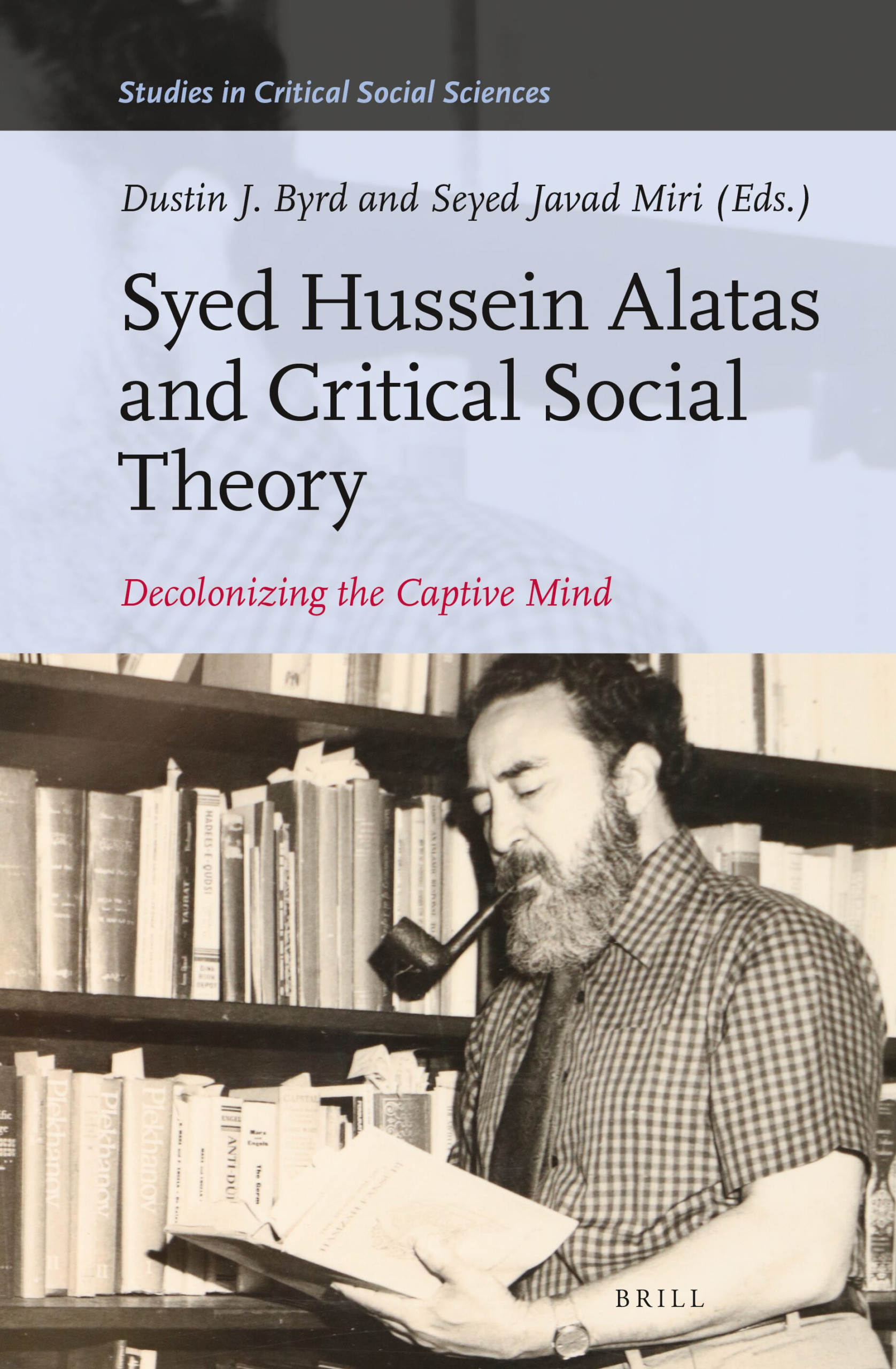
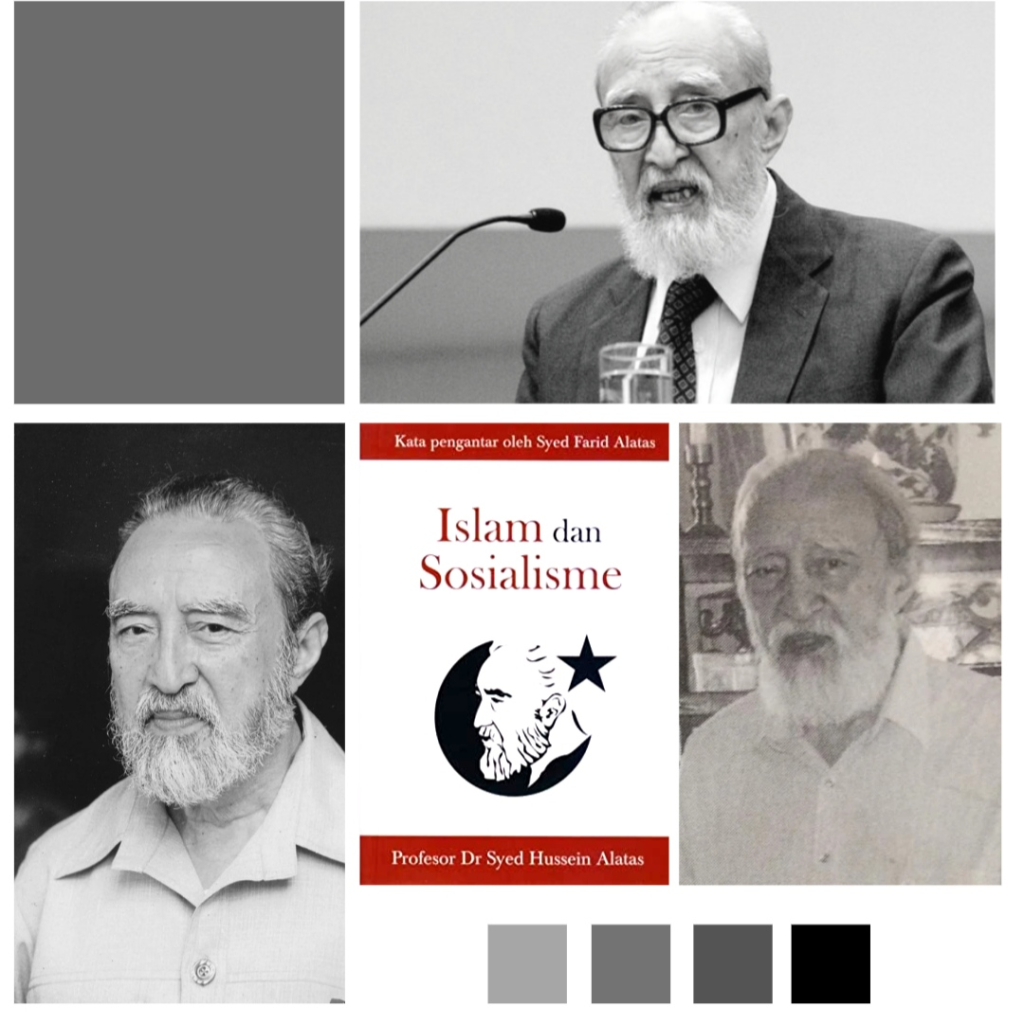
The late Professor Syed Hussein Alatas, former Vice-Chancellor of the University of Malaya (1988–1991), devoted much of his intellectual life to understanding corruption, the responsibilities of intellectuals and the obstacles that prevent societies from progressing.
Among his important contributions was the concept of bebalism, derived from the Malay word bebal. Although often translated as foolishness or stupidity, the concept describes something more serious than simply making a mistake: a persistent pattern of intellectual laziness, stubbornness, irrationality and an unwillingness to examine evidence.
In his 1977 book Intellectuals in Developing Societies, Alatas explored how this mentality could obstruct intellectual development. He subsequently elaborated on the subject in essays published in Dewan Masyarakat in 1988.
His warning remains relevant far beyond Malaysia.
For Myanmar, a country devastated by political repression, armed conflict, communal distrust, corruption and competing propaganda, the concept provides a valuable framework for examining some of the attitudes that prevent national reconciliation and progress.
This is not an accusation against the Myanmar people as a whole. Nor is it a label that should be attached to any particular ethnicity, religion or political movement. It is a warning about a human weakness that can affect ordinary citizens, religious leaders, educated professionals, politicians and those who hold power.
1. The Most Dangerous Foolishness Is Defending What We Know Is Wrong
One of the most damaging manifestations of intellectual failure is the willingness to defend wrongdoing simply because the wrongdoer belongs to our own political camp, ethnic community, religious group or circle of friends.
Corruption provides a clear example.
When public money is stolen, public institutions are abused or powerful individuals receive preferential treatment, citizens should ask questions regardless of the identity of the accused.
Instead, some people defend questionable conduct because they support the person responsible. They dismiss evidence, attack the messenger and treat legitimate criticism as an act of hostility against their own group.
The result is a dangerous reversal of moral priorities: loyalty becomes more important than honesty, and defending a leader becomes more important than defending the public interest.
Myanmar cannot establish a just and prosperous society if corruption is condemned only when committed by political opponents but excused when committed by allies.
The test of integrity is not whether we condemn the corruption of our opponents. It is whether we are equally prepared to condemn corruption within our own ranks.
Professor Alatas’s work on corruption, particularly Corruption: Its Nature, Causes and Functions (1991), examined corruption as a social and institutional problem rather than merely a collection of individual moral failings.
Myanmar needs this broader understanding. Corruption flourishes when dishonest practices become normalised, institutions fail to hold powerful people accountable, and citizens lose confidence that honesty will be rewarded.
Accepting corruption as inevitable is not realism. It is surrender.
2. Social Media Without Critical Thinking: A Dangerous Combination
Facebook, TikTok, Telegram, YouTube and other digital platforms can help people obtain information, communicate across borders and expose abuses that might otherwise remain hidden.
But they can also become powerful vehicles for misinformation, fabricated accusations, propaganda and hatred.
A video clip without context, an anonymous allegation, an emotionally charged photograph or a fabricated quotation can circulate widely before anyone checks its authenticity.
People may forward material because it confirms their existing prejudices, not because it has been verified.
In such an environment, the loudest claim can appear more convincing than the best-supported argument. Repetition may be mistaken for evidence, while anger may be mistaken for courage.
Myanmar’s experience demonstrates why this is not merely an abstract concern. In March 2024, the Independent Investigative Mechanism for Myanmar reported on evidence concerning a covert military-linked Facebook network that systematically disseminated hate speech against the Rohingya around the time of the 2017 clearance operations. International research has also documented the wider dangers of online misinformation and hate campaigns in Myanmar.
These findings do not mean that every social media user spreads falsehoods or that every political claim is propaganda. They demonstrate why information must be assessed carefully, particularly when it concerns vulnerable communities or could contribute to violence.
Before sharing a post, responsible citizens should ask:
- Who created this information, and what evidence supports it?
- Is the material authentic and presented in its proper context?
- Have credible, independent sources confirmed the claim?
- Does the post criticise a specific action, or does it condemn an entire ethnic or religious community?
- Am I sharing it because it is true, or because it makes me angry and confirms what I already believe?
These questions are not signs of weakness. They are basic habits of responsible citizenship.
A smartphone can place an enormous amount of information in our hands. It cannot guarantee that we possess the wisdom to evaluate it.
3. Islamophobia, Rohingya-Phobia and the Politics of Scapegoating
One particularly destructive form of irrational thinking is the willingness to believe negative generalisations about an entire community.
In Myanmar, anti-Muslim prejudice, hostility towards the Rohingya and the portrayal of religious minorities as collective threats have contributed to an atmosphere in which discrimination can be excused and suffering can be ignored.
Such attitudes should be examined critically, regardless of who promotes them.
A crime committed by an individual does not establish the guilt of an entire religion. The actions of one political organisation do not justify collective punishment of an ethnic community. A disputed historical claim should not be accepted simply because it supports a popular nationalist narrative.
Nor should legitimate questions about citizenship, migration, security or historical identity be used as excuses for dehumanisation.
These issues deserve evidence, careful historical analysis, lawful procedures and impartial treatment.
The same standards must apply to every community, including Muslims, Rohingya, Kaman, Pathi, Myae-Doo and the many other peoples who form part of Myanmar’s complex history.
If we demand justice for our own community but remain indifferent to injustice against others, we have not established a principle of justice. We have established a system of selective sympathy.
Myanmar’s future requires a different approach: equal human dignity, the rule of law and a willingness to distinguish verified facts from prejudice.
4. Fanaticism and the Refusal to Examine Evidence
Professor Alatas warned that irrational thinking can become associated with fanaticism. When people become convinced that their beliefs must never be questioned, reasoned discussion becomes increasingly difficult.
This problem is not confined to religion.
Political loyalists may refuse to acknowledge misconduct by their preferred leaders. Nationalists may reject historical evidence that complicates their preferred narratives. Religious followers may accept unsupported claims because a respected figure repeats them. Educated professionals may also abandon critical judgment when group pressure becomes too strong.
Religious faith and rational inquiry need not be enemies. Genuine moral and spiritual commitment can encourage honesty, compassion, humility and the pursuit of knowledge.
The problem arises when religious or political authority is used to silence questions, excuse wrongdoing or encourage hostility towards others.
Myanmar’s Buddhist, Muslim, Christian, Hindu and other communities all have reasons to encourage responsible leadership, moral conduct and peaceful coexistence.
Religious teachers should help people become more truthful, compassionate and thoughtful. Political leaders should help citizens understand difficult issues rather than exploit their fears. Educators should encourage students to ask questions and examine evidence rather than merely repeat what they have been told.
No leader should demand unquestioning loyalty as a substitute for providing sound reasons.
5. The Corruption of Moral Standards
Corruption is not confined to money changing hands.
A society’s moral standards also deteriorate when dishonesty is admired, intimidation is rewarded, public humiliation is treated as entertainment and people are encouraged to despise those who disagree with them.
A person may condemn bribery while spreading false accusations. Another may denounce dictatorship while attempting to silence critics within their own organisation. Someone may speak passionately about national unity while promoting hatred against a minority.
These contradictions deserve examination.
Moral integrity requires consistency between our public declarations and our actual conduct.
Myanmar does not need a competition to determine which political camp, ethnic group or religious community is morally superior. It needs institutions and social expectations that discourage wrongdoing regardless of the perpetrator’s identity.
Citizens should reject the idea that a person’s political usefulness excuses dishonesty, or that a respected religious or community figure must automatically be above criticism.
Respect does not require blind obedience. Accountability does not require hatred.
We can criticise conduct without dehumanising the person. We can demand justice without seeking revenge. We can defend our communities without denying the rights of others.
These are essential foundations for a peaceful society.
6. The Home, the School and the Decline of Reading
In his discussion of bebalism, Alatas drew attention to the environment in which people develop their intellectual habits.
Families and schools play important roles in teaching children how to think, how to question information and how to distinguish knowledge from mere assertion.
Reading is particularly important.
A person who encounters only short videos, sensational headlines and material that reinforces existing beliefs may have fewer opportunities to develop the patience required to understand complex arguments.
However, the problem is not that everyone must become an academic, or that sports, music and entertainment are inherently harmful. They can enrich human life.
The concern is an imbalance: when entertainment consumes nearly all available attention, while sustained reading, reflection and serious discussion receive little encouragement.
A society cannot expect its citizens to evaluate complicated questions of economics, constitutional government, history, science and public policy if they are never encouraged to examine such questions carefully.
Myanmar families can help by making books and thoughtful discussion part of everyday life. Schools can teach students to compare sources, recognise logical fallacies and distinguish evidence from opinion. Universities can protect academic freedom and reward honest research.
Young people should not be told simply what to think. They should be taught how to think.
This is especially important in Myanmar, where conflict and political repression have disrupted education and restricted access to reliable information for many people.
The answer is not to insult those who lack educational opportunities. It is to expand access to education, books, independent information and intellectual exchange.
The purpose of education is not merely to produce people who can pass examinations. It is to develop people who can think independently, act responsibly and recognise when they are being deceived.
7. My Personal Connection with Professor Syed Hussein Alatas
I am writing about Professor Syed Hussein Alatas not merely as a reader of his ideas, but as someone who had a personal connection with him during my years in Malaysia.
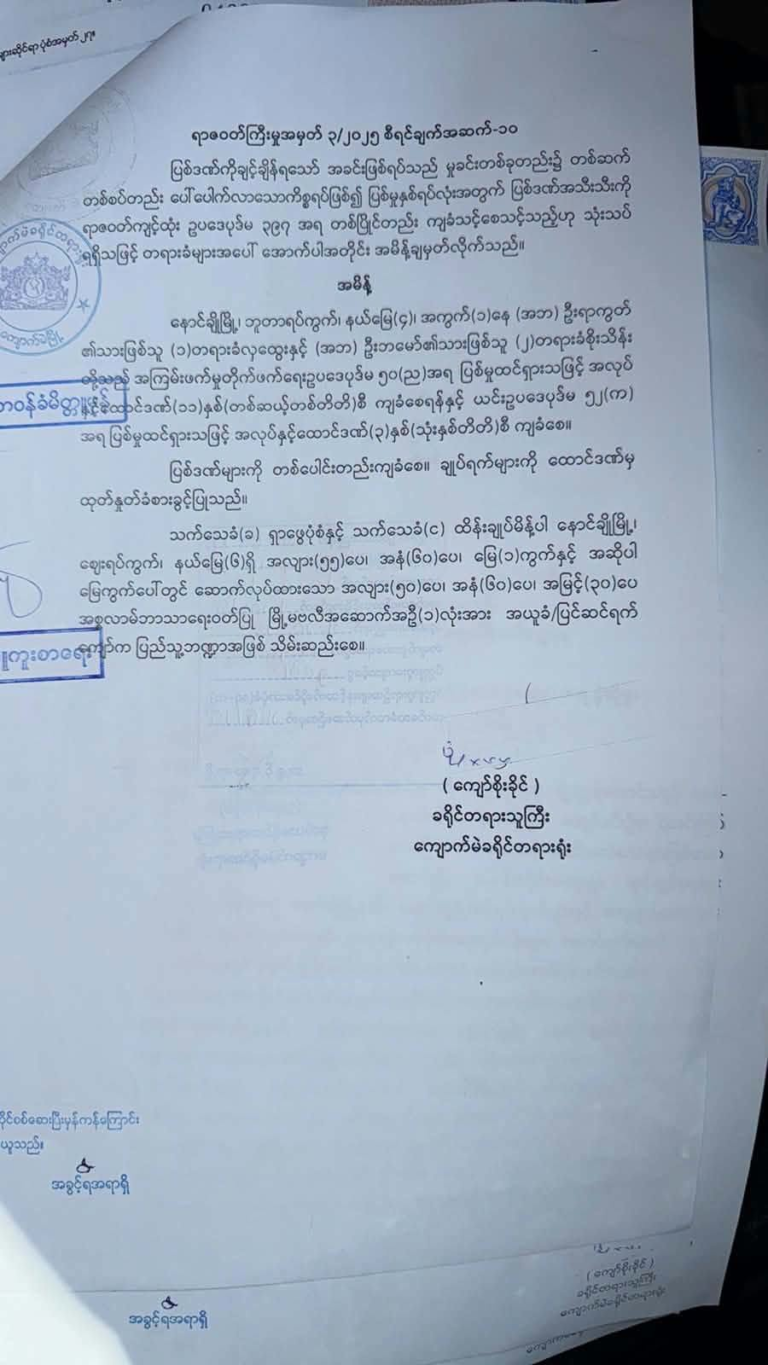
At that time, I was a foreign doctor seeking professional opportunities within the University of Malaya system. I wrote to Professor Alatas and received a reply bearing his signature.
I have also written about my efforts to help establish a pathway for Myanmar doctors to be accepted at University Hospital Kuala Lumpur (UHKL), then operating within the University of Malaya system. My account is available here:
How I Helped Make History at UHKL by Helping Myanmar Doctors Gain Acceptance
I was accepted for work as a medical officer and for postgraduate training in obstetrics and gynaecology. However, my family circumstances eventually led me to leave that professional path and enter private practice so that I could better support my children’s education.
As permanent residents holding Malaysian Red Identity Cards rather than citizenship, my children could not enter the public-university pathway available to Malaysian citizens in the circumstances I faced. I therefore had to find other ways to finance their education.
I have never regretted that sacrifice.
At 77, I remain grateful that I can continue working as a general practitioner and contributing to public discussion. My children and other family members have pursued their own educational and professional achievements, including degrees from the University of Malaya.
Looking back, I see a connection between these experiences and Professor Alatas’s concerns about education, intellectual development and the responsibilities of society.
Education is not merely a private investment. It is a contribution to the future of a family and, potentially, to the wider community.
When capable people are denied opportunities, when institutions place unnecessary barriers in the way of talent, or when societies discourage independent thought, the loss extends beyond the individuals directly affected.
Myanmar, too, needs to protect and develop its human potential. Our people should not have to sacrifice their futures because of discrimination, political conflict, corruption or the destruction of educational opportunities.
I should add a note of caution concerning historical attribution: Professor Alatas’s documented academic career and writings are readily identifiable, but I would prefer to verify specific claims about his teaching relationship with particular political figures before presenting those claims as established facts.
8. What Myanmar Can Learn from Alatas
The lesson of bebalism is not that we should divide people into the intelligent and the stupid, or use an academic concept to humiliate political opponents.
Doing so would reproduce the very problem we are trying to address.
The real lesson is that intellectual laziness and the refusal to examine evidence can become serious social and political obstacles.
Myanmar needs citizens who are willing to:
- Reject corruption consistently. No leader, party, armed organisation, religious institution or public official should be exempt from scrutiny.
- Verify information before sharing it. A claim does not become true simply because it is popular, emotionally satisfying or repeated by a trusted figure.
- Reject collective hatred. Ethnic and religious identity must not replace individual evidence or justify discrimination.
- Protect the freedom to question. Students, journalists, academics, professionals and ordinary citizens should be able to raise legitimate questions without threats or intimidation.
- Read, reflect and continue learning. Intellectual development requires more than consuming information; it requires examining arguments, comparing evidence and recognising our own mistakes.
- Practise moral consistency. We should apply the same standards to our allies and opponents, our own communities and others.
- Accept that nobody is infallible. The ability to reconsider an opinion when confronted with stronger evidence is a sign of intellectual maturity, not humiliation.
These principles are relevant whether Myanmar eventually adopts a federal or confederal arrangement, a parliamentary system or another constitutional model. No political structure can succeed indefinitely if corruption is tolerated, public reasoning is discouraged and entire communities are treated as enemies.
Constitutional reform and institutional accountability are essential, but so is the development of a civic culture that values truth and responsibility.
Conclusion: Let Us Fight Ignorance, Not One Another
Myanmar has suffered enough from political extremism, armed conflict, communal hatred and the abuse of power.
We cannot change the past simply by condemning it. Nor can we build a better future by repeating the same habits of unquestioning loyalty, prejudice, misinformation and moral double standards.
Professor Syed Hussein Alatas’s concept of bebalism offers us an opportunity for self-examination.
Before accusing others of foolishness, we should ask ourselves whether we are willing to read, think, verify, question and admit when we are wrong.
Before defending a leader, we should ask whether we would accept the same conduct from a political opponent.
Before forwarding a hateful message, we should consider whether it is true, whether it is fair and whether it could endanger innocent people.
Before demanding loyalty from others, we should examine our own responsibilities.
Myanmar’s national crisis cannot be solved by intelligence alone, nor by education alone. It also requires courage, integrity, empathy, fair institutions and a commitment to justice.
We do not need every citizen to become a professor, scholar or intellectual. We do need a society in which people are encouraged to think, learn, question and act responsibly.
Let us therefore fight corruption without hypocrisy, oppose hatred without spreading more hatred, defend freedom without denying it to others, and pursue justice without abandoning our humanity.
Myanmar’s future will depend not only on who holds power, but also on whether our society learns to value truth over propaganda, integrity over loyalty to corrupt individuals, knowledge over prejudice, and human dignity over hatred.
A Call to Unity
Muslims, Buddhists, Christians, Hindus and people of every faith and ethnic background in Myanmar share an interest in peace, education, justice and a future in which their children can live with dignity.
Let us build a culture in which disagreement does not become hatred, criticism does not become persecution, and religious or political differences do not prevent us from recognising one another’s humanity.
Let us teach our children not merely to defend what they believe, but to examine why they believe it.
Let us demand accountability from every person who exercises power, while protecting the dignity and rights of every person who lacks it.
A better Myanmar begins when we have the courage to question ourselves, the wisdom to reject deception and the humanity to seek justice for all.
InshaAllah, may we work towards a Myanmar where knowledge defeats ignorance, integrity defeats corruption, and compassion overcomes hatred.
References and further reading
- Faisal Tehrani, “What is most foolish according to Syed Hussein Alatas,” Free Malaysia Today, 22 October 2026. The article discusses Alatas’s concept of bebalism and its relevance to contemporary public discourse.
https://www.freemalaysiatoday.com/category/opinion/2026/10/22/yang-paling-bodoh-menurut-syed-hussein-alatas - Syed Hussein Alatas, Intellectuals in Developing Societies (1977). A foundational work examining intellectual life and bebalism.
https://www.routledge.com/link/link/p/book/9781138972896 - Syed Hussein Alatas, Corruption: Its Nature, Causes and Functions (1991). A major work on the nature and social functions of corruption.
- National Library Board Singapore, “Syed Hussein Alatas bin Syed Ali Alatas.” A biographical overview of his academic career, intellectual contributions and writings.
https://www.nlb.gov.sg/main/article-detail?cmsuuid=2e821568-93b4-456b-a707-523bef5bbd12 - Independent Investigative Mechanism for Myanmar, “Publication of IIMM Analytical Reports,” 27 March 2024. Reports on the military’s covert Facebook network and the dissemination of anti-Rohingya hate speech.
https://iimm.un.org/en/publication-iimm-analytical-reports - United Nations, A Conceptual Analysis of the Overlaps and Differences between Hate Speech, Misinformation and Disinformation (June 2024). Discusses the relationship between harmful online content, discrimination and violence.
https://www.un.org/en/genocideprevention/documents/publications-and-resources/Report_Analysis_Hate_Speech_Misinformation_Disinformation_June_2024.pdf
Editorial note: This article adapts ideas discussed in the cited works to Myanmar’s circumstances. The Myanmar-specific applications and recommendations are the author’s commentary, not quotations or claims made by Professor Alatas himself.