By Phyo Wai, Faculty of Asian and Middle Eastern Studies, University of Oxford
As discussed above, if we were to give an example of the organization most transformed by the Hsaya-Daka Project, it would have to be the YMBA. When I interviewed YMBA members in Yangon around 2015, I remember that the YMBA was still an organization people had nearly forgotten. However, due to the involvement of military figures and financial support under the Hsaya-Daka Project, the YMBA regained public prominence.
After the 2021 coup, this project expanded even further. The strengthening of the military-Sangha complex following the coup is the result of long-term control mechanisms and economic incentives the military has used to co-opt monastic organizations. For example, interviewees confirm that Ma Ba Tha monk leaders from Mon State and Karen State received large sums of money for Ma Ba Tha’s new free school system. Well-known Ma Ba Tha monks from Mandalay also reportedly received numerous donations from military families for their educational organizations in Sagaing. One notable example is a monk named U Panniya, who founded the Nay Min Gyi Metta mining company in September 2022 and registered it with DICA.
Another document featured in my paper is a secret military directive first published by Tachileik News. This directive outlines that activities related to the Hsaya-Daka Project must be systematically implemented, all activities must be video-documented, those records must be submitted to the relevant Regional Military Commands, and then posted on the military-controlled Central News Website.
This leak is a rare piece of evidence showing just how systematically the military council has planned to maintain and strengthen its influence over Buddhist monastic organizations and the general public. The emphasis on video documentation could serve two purposes: first, to verify that Hsaya-Daka activities are actually being carried out at the grassroots level; and second, to use those videos as propaganda tools.
By posting these videos on the central news platform, the military wants to project the image that “we are firmly supporting Buddhism.” Such an image is intended to legitimize military authority and portray civil-military relations as harmonious. Some have suggested that these so-called leaks may themselves be deliberate disinformation by the military. However, officers interviewed stated that internal disagreements within the military make such leaks naturally plausible.
Furthermore, showcasing these activities through controlled media is an attempt to shape public perception and narrative. By staging images of meetings with religious leaders and communities, the military tries to conceal the coercive and manipulative aspects of the Hsaya-Daka Project. This approach not only serves to enhance their domestic image, but also functions as a diplomatic tool to counter international criticism of the junta’s authoritarian rule and human rights violations.
The detailed documentation and reporting structures specified in this directive also reveal the extent to which the military monitors and controls religious activities. The military is well aware of the enormous influence of senior Buddhist monks in Myanmar’s socio-political life, and this point demonstrates that the military is trying to co-opt that influence to suppress resistance and consolidate power.
Another leaked table from administrative circles details the schedule of military medical teams visiting Hsaya-Daka monasteries under various Regional Military Commands from January to June 2024. This data was taken from an article by Hein San published by Myaylat Athan in June 2024. According to statements from some CDM military officers, the military is fully aware of the powerful influence of senior Buddhist monks in Myanmar. Since over 87% of Myanmar’s population practices Buddhism, the military has formed mobilizing committees under every Regional Military Command, involving both battalion commanders and their wives. These committees carry out mobilization efforts both inside and outside the military and must report frequently to superior officers. Additionally, each regional commander’s annual report includes provisions for inviting external partner organizations once a year to conduct Buddhist cultural training for children of military families inside the base, and for military wives to lead Patthana, Abhidhamma courses, and recitation ceremonies. This further strengthens the Hsaya-Daka networks.
The targeting of Buddhist monasteries as the focus of these mobilization efforts demonstrates the military’s desire to exploit monastic influence to control society. Under this plan, each battalion is reportedly required to make donations to two monasteries per month. This approach is a calculated strategy by the military to build and maintain strong relationships with Buddhist communities.
The increased emphasis on the Hsaya-Daka Project after the coup reflects the military’s response to both digital and physical resistance. By more closely engaging with and co-opting Buddhist leaders, the military council aims to reduce opposition and further legitimize its authority. Military medical teams systematically visiting monasteries serves a dual purpose: on one hand, providing tangible support to monks; on the other hand, it amounts to infiltrating the military’s presence into religious organizations.
This strategic engagement of the military with the Buddhist monastic community is not merely surface-level charity but a deeply rooted strategy for sustaining power. The involvement of senior military officers and their wives in these activities shows how much the military prioritizes integrating the military and religious spheres.
The regularity of these donation visits demonstrates that the military is trying to establish a continuous, visible presence within the religious sphere. By creating dependency and alliance, the military is attempting to neutralize potential sources of dissent within Buddhist monastic organizations. The systematic documentation and reporting of these activities shows that this strategy is not accidental but meticulously planned.
The Hsaya-Daka Project can be described as a sophisticated and multi-faceted approach to exploiting religious influence for political gain. The military’s strategic engagement with senior Buddhist monks is a deliberate effort to suppress opposition and consolidate its power following the 2021 coup.
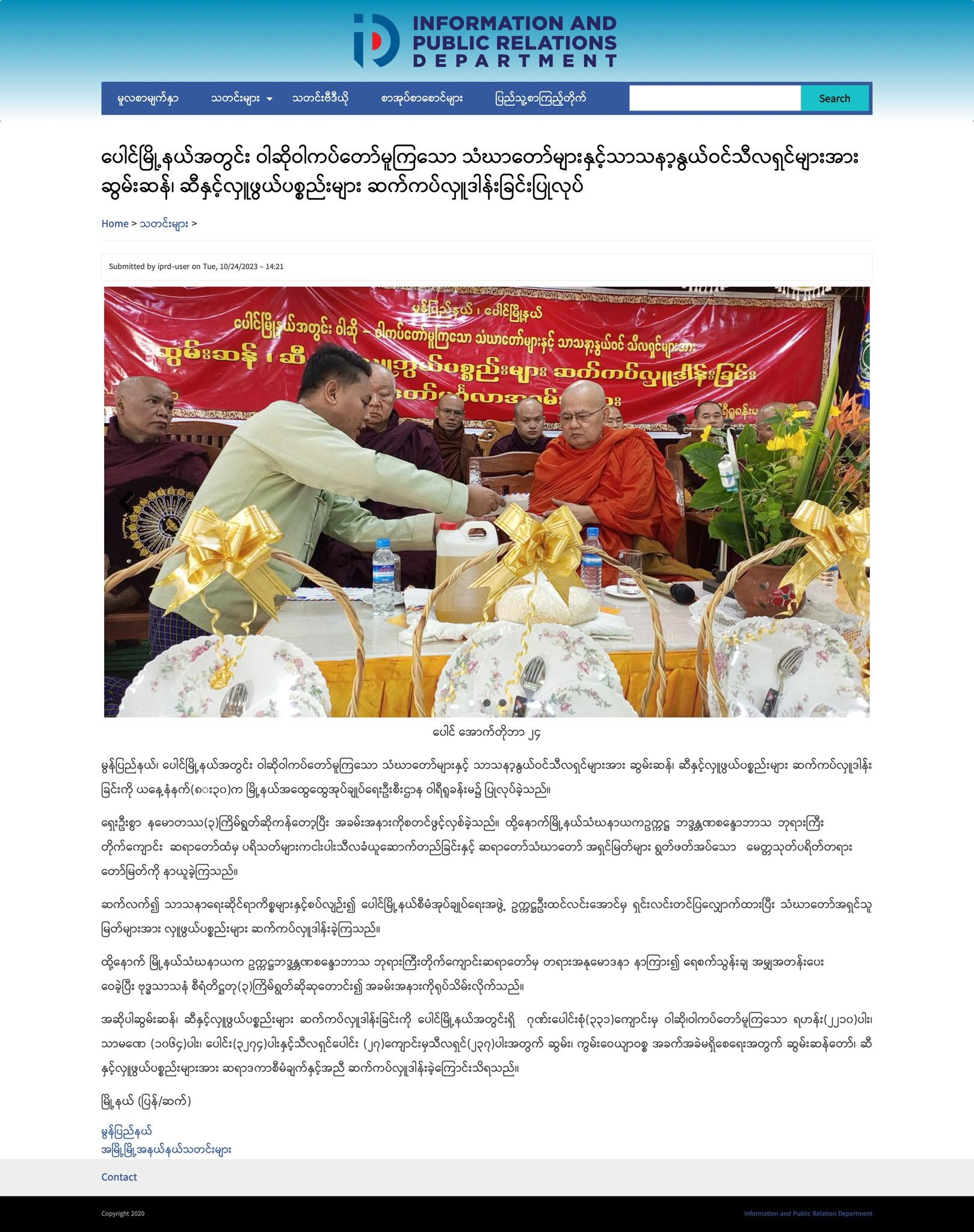
On the official website of the military-controlled Ministry of Information, photos of donations made by the General Administration Department, relevant Regional Military Commands, and the Police Force are prominently displayed. In those news items, the phrase “donated under the Hsaya-Daka Project” is frequently used. As one example, a donation record from Paung Township, Mon State, dated October 24, 2023, can be examined.
Posting this news on the official military-controlled site is evidence that the Hsaya-Daka Project continues to be implemented and actively promoted under the directives of coup leaders. By showcasing these donations, the military wants to publicly project an image of “doing good deeds,” while simultaneously demonstrating that it continues to use the Hsaya-Daka Project to build influence over the Buddhist monastic community and the general public.
The photos and the way news items are written serve multiple purposes. First, they function as propaganda. The military council wants to build a positive image as an organization supporting religious institutions. In a country with a Buddhist majority, such displays of philanthropy and piety are intended to legitimize the junta’s authority. Furthermore, repeatedly referencing the Hsaya-Daka Project in official communications signals that this project remains a cornerstone of the military’s strategy to control the religious and social spheres.
Cases like the Paung Township donation are numerous. Even on the October 12, 2023 entry on the Ministry of Religious Affairs and Culture’s website concerning a donation by the minister in Naypyidaw, the term “Hsaya-Daka school” appears. These are all part of a broader, systematic effort to embed the military’s presence within Myanmar’s religious and social life. The regular, visible patronage acts under the Hsaya-Daka Project are intended to forge strong relationships with senior monks and secure their allegiance. By incorporating state apparatus such as the General Administration Department and the Police Force into these activities, the military is weaving together the civil sector and security sector into religious outreach, constructing a network of influence and control.
The selection of Paung Township, Mon State, also reflects the military council’s tactical approach. By extending influence into various regions across the country, the military wants to make its presence and its “good deeds” visible not just in urban centers but nationwide. This wide reach is critical for consolidating power and controlling resistance — partly because Paung Township is also a location where anti-violence rallies have frequently been held.
Furthermore, the timing of publishing this news may also be calculated. Publishing such reports after a period of sustained public resistance and CDM movements could be an attempt to counter negative perceptions and project the image that the military still maintains control. This approach is part of the junta’s propaganda strategy — using charity and piety to manipulate public perception and rebuild legitimacy.
The detailed posting of donations on the Ministry of Information’s website shows that the Hsaya-Daka Project continues to be implemented. This project remains an important component of the military’s broader strategy to use religious patronage to consolidate power and influence.
(To be continued)
Note: “Hsaya-Daka” (ဆရာ-ဒကာ) literally means “Teacher-Donor/Patron” — referring to the monk-military patron relationship the junta systematically cultivated.
Phyo Wai is at The Faculty of Asian and Middle Eastern Studies, University of Oxford.
(နဝတ လက်ရာ ဆရာ-ဒကာ စီမံချက်-၂)
အထက်မှာဆွေးနွေးခဲ့သလို ဆရာ-ဒကာစီမံချက်ကြောင့် အများဆုံးပြောင်းလဲသွားတဲ့ အဖွဲ့အစည်း တခုကိုဥပမာပေးရရင် YMBA လို့ဆိုရမှာပါ။ ၂၀၁၅ ခုနှစ်လောက်တုန်းက ရန်ကုန်က YMBA အဖွဲ့ဝင်တွေကို တွေ့ဆုံမေးမြန်းကြည့်တဲ့အခါ YMBA ဟာ လူတွေမေ့လုနီးပါး ဖြစ်နေတဲ့ အဖွဲ့အစည်းတခုလို ဖြစ်နေဆဲဆိုတာ ကျနော်မှတ်မိနေပါတယ်။ ဒါပေမယ့် ဆရာ-ဒကာစီမံချက်နဲ့အညီ စစ်ဘက်လူပုဂ္ဂိုလ်တွေ၊ ငွေကြေးထောက်ပံ့မှုတွေ ပါဝင်လာတာကြောင့် YMBA ဟာ ပြန်ပြီး လူသိများလာခဲ့ပါတယ်။
၂၀၂၁ အာဏာသိမ်းပြီးနောက်မှာတော့ ဒီစီမံချက်က ပိုပြီးကျယ်ပြန့်လာတယ်လို့ ဆိုရပါမယ်။ အာဏာသိမ်းပြီးနောက်ပိုင်း စစ်တပ်-သံဃာ complex ပိုခိုင်မာလာတာဟာ စစ်တပ်က သံဃာ့အဖွဲ့အစည်းကို co-opt လုပ်ဖို့ ရေရှည်သုံးလာတဲ့ control mechanisms နဲ့ economic incentives တွေရဲ့ ရလဒ်ဖြစ်ပါတယ်။ ဥပမာ မွန်ပြည်နယ်နဲ့ကရင်ပြည်နယ်ဖက်က မဘသဆရာတော် တွေဟာ မဘသအခမဲ့ကျောင်းစနစ်အသစ်အတွက် ငွေကြေးအများကြီး ရရှိခဲ့တယ်လို့ တွေ့ဆုံမေးမြန်း သူတွေကအတည်ပြုကြပါတယ်။မန်းလေးဖက်က နာမည်ကြီးမဘသဆရာတော်တွေလည်း စစ်တပ် မိသားစုတွေကနေ သူ့ရဲ့ စစ်ကိုင်းမှာရှိတဲ့ ပညာရေးအဖွဲ့အစည်းအတွက် လှူဒါန်းမှုအများအပြား ရရှိခဲ့တယ်လို့ ဆိုကြပါတယ်။ ထူးခြားတဲ့ဥပမာတစ်ခုကတော့ ဦးပညာ ဆိုတဲ့ဘုန်းကြီးတပါးဟာ ၂၀၂၂ ခုနှစ် စက်တင်ဘာလမှာ Nay Min Gyi Metta mining company ကို တည်ထောင်ပြီး DICA မှာ မှတ်ပုံတင်ခဲ့တာပါ။
ကျနော့်စာတမ်းထဲပါတဲ့ နောက်ထပ်ဓာတ်ပုံတခုကတော့ Tachileik News က ပထမဆုံးဖြန့်ခဲ့တဲ့ စစ်တပ်အတွင်း လျှို့ဝှက်ညွှန်ကြားချက်တခုပါ။ ဒီညွှန်ကြားချက်မှာ ဆရာ-ဒကာစီမံချက်နဲ့ဆိုင်တဲ့ လုပ်ငန်းတွေကို စနစ်တကျအကောင်အထည်ဖော်ဖို့၊ လုပ်ဆောင်ချက်အားလုံးကို ဗီဒီယိုမှတ်တမ်းတင်ဖို့၊ အဲဒီမှတ်တမ်းတွေကို သက်ဆိုင်ရာတိုင်းစစ်ဌာနချုပ်တွေထံ တင်ပြဖို့၊ နောက်ပြီး စစ်တပ်ထိန်းချုပ် ထားတဲ့ Central News Website ပေါ်တင်ဖို့ ဖော်ပြထားပါတယ်။
ဒီ ပေါက်ကြားမှု က စကစဟာ ဗုဒ္ဓဘာသာသံဃာ့အဖွဲ့အစည်းနဲ့ ပြည်သူလူထုအပေါ် သူတို့ရဲ့သြဇာ ကို ထိန်းသိမ်းပြီး ပိုခိုင်မာအောင်လုပ်ဖို့ ဘယ်လောက်စနစ်တကျ စီစဉ်ထားသလဲဆိုတာကို ရှားရှားပါးပါး မြင်ရစေတဲ့အထောက်အထားတခုဖြစ်ပါတယ်။ ဗီဒီယိုမှတ်တမ်းတင်ဖို့ အလေးပေးထားတာက ရည်ရွယ်ချက် နှစ်ခုရှိနိုင်ပါတယ်။ ပထမက အောက်ခြေအဆင့်မှာ ဆရာ-ဒကာလုပ်ငန်းတွေကို တကယ် အကောင်အထည်ဖော်မဖော် စစ်ဆေးဖို့။ ဒုတိယက အဲဒီဗီဒီယိုတွေကို ဝါဒဖြန့်ကိရိယာအဖြစ် သုံးဖို့ပါ။
ဒီဗီဒီယိုတွေကို ဗဟိုသတင်းပလက်ဖောင်းပေါ်တင်ခြင်းအားဖြင့် စစ်တပ်က “ကျွန်တော်တို့ဟာ ဗုဒ္ဓဘာသာကို ခိုင်ခိုင်မာမာထောက်ပံ့နေပါတယ်” ဆိုတဲ့ပုံရိပ်ကို ပြသချင်တာပါ။ အဲဒီလိုပုံရိပ်က စစ်တပ်ရဲ့အာဏာကို တရားဝင်သလိုဖြစ်စေပြီး civil-military relations ဟာ သဟဇာတဖြစ်နေသလို ပြသဖို့ ရည်ရွယ်ထားပါတယ်။ တချို့ကတော့ ဒီလျှို့ဝှက်စာပေါက်ကြားတယ်ဆိုတဲ့ကိစ္စတွေဟာ စစ်တပ် ဖက်က တမင်ကိုရည်ရွယ်ချက်ရှိရှိသတင်းမှားလွှင့်တာလို့လည်း ယူဆကြသူတွေရှိတယ်ပေါ့ဗျာ။ ကျနော်တွေ့ဆုံမေးမြန်းခဲ့တဲ့အရာရှိတွေရဲ့အဆိုအရတော့ တပ်တွင်းမှာလည်းသဘောထားကွဲလွဲမှုတွေ ရှိနေတာကြောင့် ဒီလိုပေါက်ကြားမှုတွေဖြစ်တတ်တာ သဘာဝပဲလို့ဆိုပါတယ်။
ဒါ့အပြင် ထိန်းချုပ်ထားတဲ့မီဒီယာကနေ ဒီလုပ်ငန်းတွေကို ပြသခြင်းက ပြည်သူ့အမြင်နဲ့ narrative ကို ပုံဖော်ဖို့ ကြိုးစားမှုလည်းဖြစ်ပါတယ်။ ဘာသာရေးခေါင်းဆောင်တွေနဲ့ လူမှုအသိုင်းအဝိုင်းတွေနဲ့ တွေ့ဆုံနေတဲ့ ပုံရိပ်တွေကို စီမံပြသခြင်းအားဖြင့် ဆရာ-ဒကာစီမံချက်ရဲ့ ဖိအားပေးမှု၊ ချယ်လှယ်မှု ဘက်ကို ဖုံးကွယ်ဖို့ ကြိုးစားပါတယ်။ ဒီနည်းလမ်းက ပြည်တွင်းမှာ သူတို့ပုံရိပ်ကို မြှင့်တင်ဖို့သာမက နိုင်ငံတကာက အာဏာရှင်အုပ်ချုပ်ရေးနဲ့ လူ့အခွင့်အရေးချိုးဖောက်မှုတွေကို ဝေဖန်နေမှုတွေကို တုံ့ပြန်ဖို့ diplomatic tool အဖြစ်လည်း အသုံးဝင်သေးတာကိုး။
ဒီညွှန်ကြားချက်ထဲမှာ မှတ်တမ်းတင်ခြင်းနဲ့ အစီရင်ခံခြင်းဖွဲ့စည်းပုံကို အသေးစိတ်သတ်မှတ်ထားတာက စစကစဟာ ဘာသာရေးလုပ်ငန်းတွေကို စောင့်ကြည့်ထိန်းချုပ်မှု ဘယ်လောက်အထိ လုပ်နေသလဲ ဆိုတာကိုလည်း ပြပါတယ်။ စကစဟာ မြန်မာ့လူမှုနိုင်ငံရေးဘဝမှာ ဗုဒ္ဓဘာသာ သံဃာတော် တွေရဲ့သြဇာကြီးမှုကို ကောင်းကောင်းသိထားပြီး အဲဒီသြဇာကို co-opt လုပ်ပြီးတော့ ဆန့်ကျင်မှုတွေကို ဖိနှိပ်ဖို့၊ အာဏာကို ပိုခိုင်မာစေဖို့ ကြိုးစားနေတယ်ဆိုတာကို ဒီအချက်က ပြပါတယ်။
အုပ်ချုပ်ရေးအသိုင်းအဝိုင်းကနေ နောက်ထပ် ပေါက်ကြားလာတဲ့ ဇယားတစ်ခုမှာ ၂၀၂၄ ခုနှစ် ဇန်နဝါရီလကနေ ဇွန်လအထိ တိုင်းစစ်ဌာနချုပ်အမျိုးမျိုးအောက်က ဆရာ-ဒကာဘုန်းကြီးကျောင်း တွေကို စစ်တပ်ဆေးအဖွဲ့တွေ သွားရောက်ခဲ့တဲ့ အစီအစဉ်တွေကို အသေးစိတ်ဖော်ပြထားပါတယ်။ ဒီအချက်အလက်တွေကို ၂၀၂၄ ခုနှစ် ဇွန်လမှာ Myaylat Athan က ထုတ်ဝေခဲ့တဲ့ Hein San ရဲ့ ဆောင်းပါးကနေ ယူထားပါတယ်။ CDM စစ်ဘက်အရာရှိတချို့ရဲ့ ပြောကြားချက်အရဆိုရင် စစ်တပ်ဟာ မြန်မာနိုင်ငံမှာ ထိပ်တန်းဗုဒ္ဓဘာသာဆရာတော်ကြီးတွေရဲ့ ဩဇာအင်အားကို ကောင်းကောင်း သိထားပါတယ်။ မြန်မာနိုင်ငံမှာ လူဦးရေ ၈၇ ရာခိုင်နှုန်းကျော်က ဗုဒ္ဓဘာသာကို ကိုးကွယ်ကြတဲ့အတွက် စစ်တပ်က တိုင်းစစ်ဌာနချုပ်တိုင်းမှာ mobilising committees တွေ ဖွဲ့ထားပြီး တပ်မှူးတွေနဲ့ သူတို့ရဲ့ ဇနီးတွေပါ ပါဝင်စေပါတယ်။ ဒီကော်မတီတွေက တပ်တွင်း၊ တပ်ပြင် mobilising efforts တွေကို လုပ်ဆောင်ပြီး အထက်တပ်အရာရှိတွေထံ မကြာခဏ အစီရင်ခံရပါတယ်။ ဒါ့အပြင် တိုင်းမှူးတွေရဲ့ နှစ်ချုပ်အစီရင်ခံစာတိုင်းမှာ တနှစ်ကိုတခါ ဗုဒ္ဓဘာသာယဥ်ကျေးမှုသင်တန်းတွေကို ပြင်ပက မိတ်ဖက် အဖွဲ့အစည်းတွေကိုဖိတ်ကြားပြီး တပ်တွင်းမိသားစုက ကလေးသူငယ်တွေကို သင်ကြားစေတာ၊ ပဌာန်း အဘိဓမ္မာစတဲ့သင်တန်းတွေနဲ့ရွတ်ဖတ်ပူဇော်ပွဲတွေကို ကတော်တွေက ဦးစီးပြီးကျင်းပစေတာလည်း ပါဝင်ပါတယ်။ ဒီကနေတဆင့်လည်း ဆရာ-ဒကာကွန်ရက်တွေကို ပိုမိုအားကောင်းစွာချိတ်ဆက်သွားစေ တယ်လို့ သုံးသပ်ရပါတယ်။
ဗုဒ္ဓဘာသာဘုန်းကြီးကျောင်းတွေကို ဒီ mobilization efforts တွေရဲ့ target အဖြစ် ရွေးထားတာဟာ စစ်တပ်က လူ့အဖွဲ့အစည်းကို ထိန်းချုပ်ရာမှာ သံဃာ့သြဇာကို အသုံးချချင်တာကို ပြပါတယ်။ ဒီအစီအစဉ်အရ တပ်ရင်းတရင်းစီက လစဉ် ဘုန်းကြီးကျောင်းနှစ်ကျောင်းကို လှူဒါန်းပွဲလုပ်ရမယ်လို့ သတ်မှတ်ထားတယ်လို့ ဆိုပါတယ်။ ဒီနည်းလမ်းက ဗုဒ္ဓဘာသာအသိုင်းအဝိုင်းနဲ့ ခိုင်မာတဲ့ ဆက်ဆံရေးတည်ဆောက်ပြီး ထိန်းသိမ်းဖို့ စစ်တပ်ကတွက်ချက်ထားတဲ့ဗျူဟာတစ်ခုဖြစ်ပါတယ်။
အာဏာသိမ်းပြီးနောက် ဆရာ-ဒကာစီမံချက်ကို ပိုအလေးထားလာတာဟာ စစ်တပ်က digital resistance နဲ့ physical resistance နှစ်မျိုးစလုံးကို တုံ့ပြန်နေတာကို ပြပါတယ်။ ဗုဒ္ဓဘာသာခေါင်းဆောင်တွေကို ပိုမိုချိတ်ဆက်ပြီး co-opt လုပ်ခြင်းအားဖြင့် စစ်ကောင်စီဟာ ဆန့်ကျင်မှုကို လျော့ပါးစေချင်တယ်၊ သူ့အာဏာတရားဝင်မှုကို ပိုမိုခိုင်မာစေချင်တယ်။ စစ်တပ် ဆေးအဖွဲ့တွေ ဘုန်းကြီးကျောင်းတွေကို စနစ်တကျသွားခြင်းဟာ ရည်ရွယ်ချက်နှစ်ခုရှိပါတယ်။ တဖက်မှာ သံဃာတော်တွေကို တကယ်မြင်သာတဲ့အထောက်အပံ့ပေးတယ်။ အခြားတဖက်မှာတော့ စစ်တပ်ရဲ့တည်ရှိမှုကို ဘာသာရေးအဖွဲ့အစည်းတွေထဲ စိမ့်ဝင်စေတဲ့သဘောလို့ဆိုရပါမယ်။
ဒီလိုဗုဒ္ဓဘာသာသံဃာ့အသိုင်းအဝိုင်းနဲ့ စစ်တပ်ရဲ့ strategic engagement ဟာ အပေါ်ယံအလှူပြုခြင်း သက်သက်မဟုတ်ဘဲ အာဏာတည်မြဲရေးအတွက် နက်နက်ရှိုင်းရှိုင်း အမြစ်တွယ်နေတဲ့ ဗျူဟာတစ်ခုဖြစ်ပါတယ်။ အဆင့်မြင့်စစ်အရာရှိတွေနဲ့ သူတို့ရဲ့ဇနီးတွေပါ ဒီလုပ်ငန်းတွေထဲ ပါဝင်နေခြင်းက စစ်တပ်ဟာ စစ်ဘက်နဲ့ ဘာသာရေးနယ်ပယ်ကို ပေါင်းစပ်ဖို့ ဘယ်လောက် အလေးထားနေသလဲဆိုတာ ပြပါတယ်။
ပုံမှန်သွားရောက်လှူဒါန်းမှုတွေဟာလည်း စနစ်တကျဖြစ်နေတာကြောင့် စစ်တပ်ဟာ ဘာသာရေး နယ်ပယ်ထဲမှာ ဆက်တိုက်မြင်သာတဲ့တည်ရှိမှုတခု တည်ဆောက်ဖို့ ကြိုးစားနေတယ်ဆိုတာ ပြပါတယ်။ Dependency နဲ့ alliance တစ်ခု ဖန်တီးခြင်းအားဖြင့် စစ်တပ်ဟာ ဗုဒ္ဓဘာသာသံဃာ့ အဖွဲ့အစည်းအတွင်း ဖြစ်လာနိုင်တဲ့ dissent source တွေကို neutralise လုပ်ဖို့ ကြိုးစားနေပါတယ်။ ဒီလုပ်ငန်းတွေကို စနစ်တကျမှတ်တမ်းတင်ပြီး အစီရင်ခံနေရတာက ဒီဗျူဟာဟာ မတော်တဆ ဖြစ်ပေါ်လာတာမဟုတ်ဘဲ အလွန်သေချာစွာစီမံထားတဲ့အရာဖြစ်ကြောင်း ပြပါတယ်။
ဆရာ-ဒကာစီမံချက်ဟာ ဘာသာရေးသြဇာကို နိုင်ငံရေးအကျိုးအမြတ်အတွက် အသုံးချတဲ့ sophisticated and multi-faceted approach တခုလို့ဆိုနိုင်ပါတယ်။ စစ်တပ်က ထိပ်တန်းဗုဒ္ဓဘာသာဆရာတော်ကြီးတွေနဲ့ strategic engagement လုပ်နေတာဟာ ၂၀၂၁ အာဏာ သိမ်းပြီးနောက် ဆန့်ကျင်မှုတွေကို ဖိနှိပ်ဖို့နဲ့ သူ့အာဏာကို ပိုမိုခိုင်မာစေဖို့ တမင်လုပ်နေတဲ့ ကြိုးစားမှု ဖြစ်ပါတယ်။
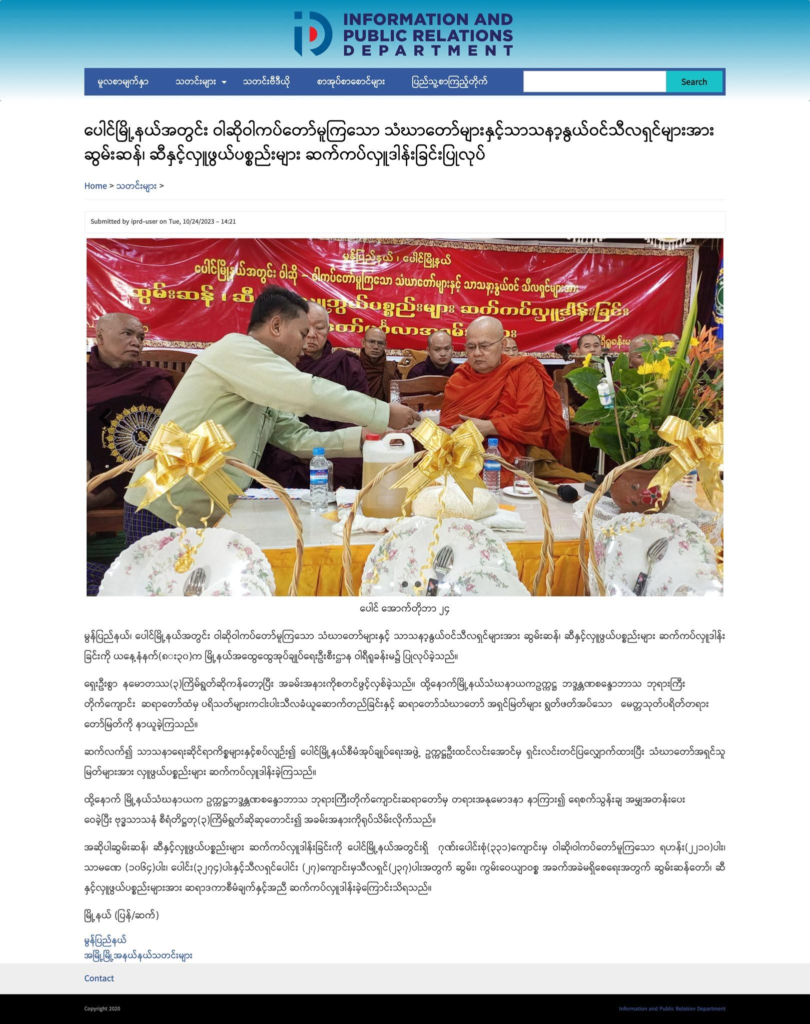
စစ်တပ်ထိန်းချုပ်ထားတဲ့ ပြန်ကြားရေးဝန်ကြီးဌာနရဲ့ official website မှာလည်း အထွေထွေအုပ်ချုပ်ရေးဌာန၊ သက်ဆိုင်ရာတိုင်းစစ်ဌာနချုပ်နဲ့ ရဲတပ်ဖွဲ့တို့က လှူဒါန်းတဲ့ဓာတ်ပုံတွေကို အထင်အရှားတင်ထားပါတယ်။ အဲဒီသတင်းထဲမှာ “ဆရာ-ဒကာစီမံချက်အရ လှူဒါန်းသည်” ဆိုတဲ့စကားလုံးကို အသုံးပြုထားတာကိုလည်း မကြာခဏတွေ့ရမှာဖြစ်ပါတယ်။ ဥပမာတခုအနေနဲ့ ပြောရရင် ၂၀၂၃ ခုနှစ် အောက်တိုဘာလ ၂၄ ရက်နေ့မှာ မွန်ပြည်နယ် ပေါင်မြို့နယ်က အလှူမှတ်တမ်း တခုကို ကြည့်နိုင်ပါတယ်။
စစ်တပ်ထိန်းချုပ်ထားတဲ့ official site ပေါ်မှာ ဒီသတင်းကို တင်ခြင်းက အာဏာသိမ်းခေါင်းဆောင်တွေရဲ့ ညွှန်ကြားချက်အောက်မှာ ဆရာ-ဒကာစီမံချက်ကို ဆက်လက်အကောင်အထည်ဖော်နေပြီး တက်တက် ကြွကြွမြှင့်တင်ဆောင်ရွက်နေတယ်ဆိုတာကို ပြတဲ့အချက်ဖြစ်ပါတယ်။ ဒီလှူဒါန်းမှုတွေကို ပြသခြင်းအားဖြင့် စစ်တပ်က သူ့ရဲ့ “ကောင်းမှုလုပ်နေတဲ့ပုံရိပ်” ကို လူထုရှေ့ပြချင်တာပါ။ တချိန်တည်း မှာ ဗုဒ္ဓဘာသာသံဃာ့အသိုင်းအဝိုင်းနဲ့ လူထုအပေါ် သြဇာတည်ဆောက်ဖို့ ဆရာ-ဒကာစီမံချက်ကို ဆက်သုံးနေတယ်ဆိုတာကိုလည်း ပြပါတယ်။
ဓာတ်ပုံတွေနဲ့ သတင်းရေးသားပုံတွေဟာ ရည်ရွယ်ချက်အမျိုးမျိုးရှိပါတယ်။ ပထမအနေနဲ့ ဝါဒဖြန့်မှုအဖြစ် လုပ်ဆောင်ပါတယ်။ စကစဟာ ဘာသာရေးအဖွဲ့အစည်းတွေကို ထောက်ပံ့နေတဲ့ အဖွဲ့အစည်းအဖြစ် အကောင်းမြင်ပုံရိပ်တည်ဆောက်ချင်ပါတယ်။ ဗုဒ္ဓဘာသာလူများစုရှိတဲ့နိုင်ငံမှာ ဒီလို ပရဟိတနဲ့ သဒ္ဓါတရားပြသမှုဟာ စစ်ကောင်စီရဲ့အာဏာကို တရားဝင်သလိုဖြစ်စေဖို့ ရည်ရွယ်ပါတယ်။ ဒါ့အပြင် official communications ထဲမှာ ဆရာ-ဒကာစီမံချက်ကို ထပ်ခါထပ်ခါဖော်ပြခြင်းက ဒီစီမံချက်ဟာ စစ်တပ်ရဲ့ ဘာသာရေးနဲ့ လူမှုရေးနယ်ပယ်ထိန်းချုပ်ရေးဗျူဟာရဲ့ အဓိကအုတ်မြစ် တခုဖြစ်နေကြောင်းကိုလည်း ပြနေတဲ့သဘောပါပဲ။
ပေါင်မြို့နယ်က အလှူလိုမျိုးဖြစ်ရပ်တွေဟာ အများကြီးပါ။ သာ/ယဥ်ဝဘ်ဆိုဒ်မှာဖော်ပြထားတဲ့ ၂၀၂၃ အောက်တိုဘာလ ၁၂ရက်နေ့မှာ နေပြည်တော်က သာ/ယဥ်ဝန်ကြီးရဲ့အလှူမှာကိုပဲ ဆရာ-ဒကာ ကျောင်းဆိုတဲ့စာသားကိုတွေ့ရမှာဖြစ်ပါတယ်။ ဒါတွေဟာ မြန်မာနိုင်ငံရဲ့ ဘာသာရေးနဲ့ လူမှုဘဝထဲ စစ်တပ်ရဲ့တည်ရှိမှုကို ထည့်သွင်းဖို့ ကြိုးစားနေတဲ့ ကျယ်ပြန့်ပြီး စနစ်တကျလုပ်ဆောင်မှုရဲ့ အစိတ်အပိုင်းတခုလည်းဖြစ်ပါတယ်။ ဆရာ-ဒကာစီမံချက်အောက်က ပုံမှန်၊ မြင်သာတဲ့ patronage acts တွေဟာ ထိပ်တန်းဆရာတော်ကြီးတွေနဲ့ ခိုင်မာတဲ့ဆက်ဆံရေးဖန်တီးဖို့၊ သူတို့ရဲ့ allegiance ကို သေချာစေဖို့ ရည်ရွယ်ထားပါတယ်။ အထွေထွေအုပ်ချုပ်ရေးဌာနနဲ့ ရဲတပ်ဖွဲ့လို state apparatus တွေကို ဒီလုပ်ငန်းတွေထဲ ပါဝင်စေခြင်းအားဖြင့် စစ်တပ်ဟာ civil sector နဲ့ security sector ကို ဘာသာရေး outreach ထဲ ပေါင်းထည့်ပြီး သြဇာနဲ့ထိန်းချုပ်မှုကွန်ရက်တခု တည်ဆောက်နေတာပါပဲ။
မွန်ပြည်နယ် ပေါင်မြို့နယ်ကို ရွေးချယ်ထားတာကလည်း စကစရဲ့ tactical approach ကို ပြပါတယ်။ နိုင်ငံအနှံ့ဒေသအမျိုးမျိုးထဲ သြဇာချဲ့ထွင်ခြင်းအားဖြင့် စစ်တပ်ဟာ မြို့ပြဗဟို တွေမှာတင်မဟုတ်ဘဲ တတနိုင်ငံလုံးအနှံ့ သူ့ရဲ့တည်ရှိမှုနဲ့ “ကောင်းမှုလုပ်နေမှု” ကို မြင်သာစေချင်တာပါ။ ဒီလိုကျယ်ပြန့်တဲ့ reach က အာဏာတည်မြဲရေးနဲ့ ဆန့်ကျင်မှုထိန်းချုပ်ရေးအတွက် အရေးကြီးပါတယ်။ ဘာလို့လဲဆိုတော့ ပေါင်မြို့ဟာ အကြမ်းဖက်ရှုတ်ချပွဲတွေမကြာခဏပြုလုပ်တဲ့နေရာလည်း ဖြစ်လို့ပါ။
ဒါ့အပြင် ဒီသတင်းကို ထုတ်ပြန်တဲ့အချိန်ကလည်း တွက်ချက်ထားတဲ့အချိန်ဖြစ်နိုင်ပါတယ်။ လူထုခုခံမှုနဲ့ CDM လှုပ်ရှားမှုတွေ ဆက်ရှိနေတဲ့ကာလနောက်ပိုင်းမှာ ဒီလိုသတင်းတွေကို ထုတ်ပြန်ခြင်းဟာ အပျက်သဘောမြင်ချက်တွေကို တုံ့ပြန်ဖို့၊ စစ်တပ်က ထိန်းချုပ်မှုရှိနေသေးတယ်ဆိုတဲ့ပုံရိပ်ကို ပြသဖို့ ကြိုးစားတာဖြစ်နိုင်ပါတယ်။ ဒီနည်းလမ်းက charity နဲ့ piety ကို အသုံးပြုပြီး public perception ကို manipulate လုပ်ပြီး legitimacy ကို ပြန်တည်ဆောက်ဖို့ ကြိုးစားတဲ့ စစ်ကောင်စီရဲ့ propaganda strategy တခုပါ။
ပြန်ကြားရေးဝန်ကြီးဌာနဝက်ဘ်ဆိုဒ်မှာ လှူဒါန်းမှုတွေကို အသေးစိတ်တင်ပြထားတာက ဆရာ-ဒကာစီမံချက်ကို ဆက်လက်အကောင်အထည်ဖော်နေတယ်ဆိုတာကို ပြပါတယ်။ ဒီစီမံချက်ဟာ ဘာသာရေး patronage ကို အသုံးချပြီး အာဏာနဲ့သြဇာကို ခိုင်မာစေဖို့ စစ်တပ်ရဲ့ ကျယ်ပြန့်တဲ့ဗျူဟာထဲက အရေးကြီးတဲ့အစိတ်အပိုင်းအဖြစ် ဆက်ရှိနေပါတယ်။
(ဆက်ရန်)