Written by Dr Ko Ko Gyi for MMNN
The latest angry warning from Communist China that Taiwan must “bear the consequences” for using a water cannon against a vessel near the Taiwan-controlled Pratas Islands has once again exposed a familiar contradiction in Beijing’s foreign policy rhetoric.
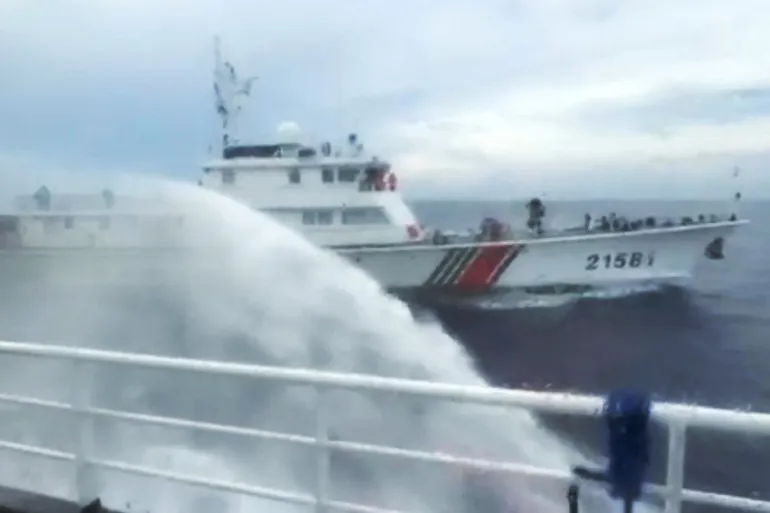
According to reports, Taiwan’s Coast Guard used a water cannon after a vessel allegedly ignored repeated warnings and entered restricted waters near the Pratas Islands. Beijing swiftly condemned the action, accusing Taiwan of behaving dangerously and claiming that the incident endangered lives and property. Chinese officials further asserted that Taiwan would be responsible for any consequences arising from the confrontation.
Yet before climbing onto the moral high ground, Beijing may wish to pause and look into a mirror.
There is an old proverb that says:
“People who live in glass houses shouldn’t throw stones.”
The meaning is simple and timeless. Those who are vulnerable to the very same criticism should be cautious about condemning others. It is a warning against hypocrisy and double standards.
Another equally relevant saying is:
“What’s good for the goose is good for the gander.”
If a particular action is considered acceptable when performed by one party, then the same standard should logically apply to others. One cannot demand privileges for oneself while denying the same rights or responses to others.
This is precisely where Beijing’s outrage begins to lose credibility.
For years, the Chinese Coast Guard and other Chinese maritime vessels have repeatedly employed water cannons against foreign vessels operating in disputed waters, particularly those of the Philippines in the South China Sea. Such incidents have been documented on multiple occasions and have often been accompanied by dangerous blocking manoeuvres, close-quarter confrontations and aggressive maritime tactics.
Over the past several years, Philippine vessels conducting resupply missions, fisheries patrols and humanitarian operations have frequently reported being blasted by powerful water cannons from Chinese ships. In some cases, vessels suffered damage to equipment and navigation systems. In others, missions were delayed or disrupted altogether.
When those incidents occurred, Beijing routinely defended its actions as legitimate law enforcement, necessary maritime protection or the enforcement of what it claimed to be its sovereign rights.
If China believes that the use of water cannons can constitute legitimate law enforcement when employed by Chinese vessels, then it becomes difficult to argue that the same practice suddenly becomes unacceptable when used by Taiwan under similar circumstances.
This is where the old proverb about the goose and the gander becomes especially relevant.
Standards cannot change depending on who is holding the water cannon.
If China insists that its own coast guard acts lawfully when expelling vessels from waters it claims, then it should at least recognize that others may advance the same justification when defending waters under their own administration or jurisdiction.
What we are witnessing is not merely a disagreement over maritime boundaries. It is also a dispute over consistency.
Around the world, nations closely observe not only what governments say but also what they do. Credibility is strengthened when words and actions align. It is weakened when one rule is demanded for oneself and another imposed on everyone else.
The situation also evokes another familiar expression:
“The pot calling the kettle black.”
Criticizing others for conduct that mirrors one’s own behaviour rarely strengthens an argument. More often, it invites scrutiny and raises questions about double standards.
None of this resolves the underlying disputes surrounding the Pratas Islands, the Taiwan Strait or the wider South China Sea. Those complex issues remain deeply contested and are unlikely to disappear anytime soon.
However, if Beijing wishes the international community to take its criticism seriously, it must first demonstrate that the standards it applies to others are the same standards it is willing to accept for itself.
After all, fairness is a two-way street.
If water cannons are acceptable instruments of maritime enforcement when used by China, then Beijing should think carefully before expressing shock when another side employs similar methods.
In international affairs, consistency matters.
And as the old saying wisely reminds us:
People who live in glass houses shouldn’t throw stones.
MMNN Commentary Desk
“A nation cannot claim that an action is legitimate when it does it, yet call the same action outrageous when someone else does it.”
That is precisely the essence of:
People who live in glass houses shouldn’t throw stones.
What’s good for the goose is good for the gander.
The pot calling the kettle black.
A taste of one’s own medicine.