By Dr Ko Ko Gyi MMNN: Neither Centralised Domination nor Localised Ethnic Domination Can Deliver Genuine Democracy
Introduction: What Kind of Union Do We Want?
As Myanmar struggles to escape decades of military dictatorship, civil war, ethnic conflict, and religious discrimination, one fundamental question deserves serious consideration:
In a future Federal or Confederal Democratic Union of Myanmar, should all citizens enjoy equal rights, while ethnic nationalities (Taingyintha) receive additional rights and protections to preserve their identities, cultures, territories, and legitimate aspirations?
Our answer is yes to both.
Every citizen must enjoy equal fundamental rights, regardless of ethnicity, religion, ancestry, language, gender, or political affiliation. At the same time, ethnic nationalities that have suffered historical marginalisation must be able to preserve their identities, exercise meaningful self-determination, and participate fairly in governing their traditional homelands.
These objectives need not contradict one another. Properly designed constitutional arrangements can protect both individual equality and collective ethnic rights.
However, there is one essential condition: additional rights for one community must never become permission to discriminate against another.
1. Geographic Federalism or Ethnic Federalism?
Senior General Min Aung Hlaing has advocated a model of federalism based on geographical and administrative boundaries rather than naming federal units after ethnic nationalities. His stated reasoning is that different ethnic communities live together throughout Myanmar and that dividing territories along ethnic lines could create further inequality and conflict.
At first glance, geographical federalism may appear to offer a solution to ethnic rivalry. However, critics among ethnic organisations and pro-democracy forces argue that such a model could preserve the existing centralised power structure while disregarding the historical promises of ethnic equality and autonomy associated with the 1947 Panglong Agreement.
For many ethnic nationalities, federalism is not merely a method of dividing administrative territory. It is a political commitment to self-determination, meaningful power-sharing, cultural preservation, and protection against domination by the central government.
The dispute, therefore, is not simply about whether a state should carry an ethnic name or a geographical name. The more important questions are:
- Who exercises political power?
- Who controls local resources and public revenue?
- Who determines the future of a state’s population?
- How are minority communities protected?
- Can the people genuinely choose their representatives and govern themselves?
A state named after a geographical feature can still be authoritarian. Equally, a state named after an ethnic nationality can still discriminate against people belonging to other communities.
The name of a state cannot guarantee justice. Its constitution, institutions, and actual practices must do so.
2. Equal Citizenship Must Be the Foundation
Myanmar’s history demonstrates the dangers of tying citizenship and political recognition too closely to officially prescribed ethnic classifications.
The 1982 Citizenship Law established different categories of citizenship and has contributed to the exclusion and insecurity of the Rohingya and other marginalised communities. The official classification of 135 national races has also become a source of controversy over who is recognised as belonging to the nation.
A future democratic Myanmar must confront this problem honestly.
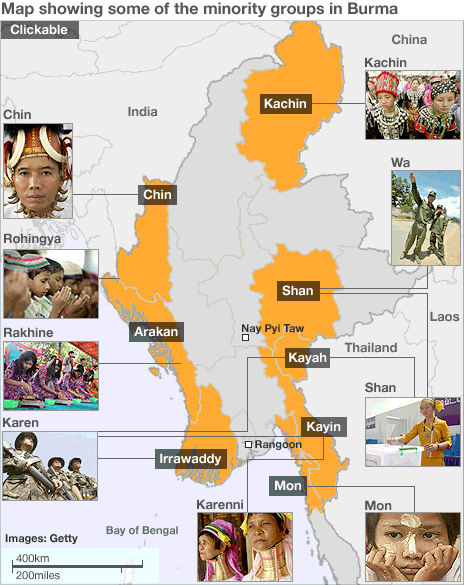
Bamar citizens, Kachin, Karen, Chin, Shan, Rakhine, Mon, Ta’ang, Wa, Pa-O, Lisu, Rawang, and other ethnic communities must enjoy equal fundamental rights. So must Myanmar Muslims, Rohingya, Myanmar Chinese, people of mixed ancestry, and other communities whose identities do not fit neatly into officially prescribed ethnic categories.
No citizen should be treated as less entitled to justice, security, education, employment, political participation, or legal protection because of ancestry or religious belief.
The reform of the 1982 Citizenship Law and the establishment of fair, transparent, and non-discriminatory citizenship procedures must therefore be central to democratic transition.
Citizenship should not become a privilege granted according to religious identity or political loyalty. Nor should an individual’s fundamental rights depend on whether the state classifies that person as belonging to one of its recognised national races.
A democratic constitution must recognise the equal dignity of all people and provide fair procedures for establishing citizenship, including appropriate safeguards for stateless people and long-term residents.
3. The Problem of Minorities Within Minorities
Here lies one of the greatest challenges facing any future Federal or Confederal Union.
Suppose the Arakan Army succeeds in establishing a highly autonomous Rakhine or Arakan state. What will happen to the Rohingya, Mro, Thet, Khumi, and other communities living within that territory?
Suppose Kachin State gains extensive autonomy. Will Lisu, Rawang, and other smaller communities enjoy fair political representation and protection of their languages and cultures?
Suppose Shan State becomes a powerful autonomous member of a federal or confederal union. How will the Wa, Pa-O, Ta’ang, Kokang, Danu, and other communities exercise their rights and aspirations?
These questions cannot be dismissed as minor administrative issues. They go to the heart of whether federalism will create genuine freedom or merely redistribute political domination.
A community that has experienced discrimination under a Bamar-dominated central government must not reproduce the same discrimination against smaller communities under its own regional administration.
The same principle applies to every state and every political organisation.
A minority does not lose its fundamental rights merely because it becomes a minority within an autonomous ethnic state.
If the people of Myanmar are to escape the cycle of domination and resistance, constitutional protection must extend from the Union government to every state, district, township, and village.
4. Should Ethnic Nationalities Receive Additional Rights?
Yes. Equal citizenship does not require identical treatment in every circumstance.
Some ethnic communities have suffered decades of armed conflict, displacement, underinvestment, restrictions on their languages, and exploitation of resources from their traditional territories. Treating every community identically without considering these historical disadvantages could perpetuate inequality rather than correct it.
For this reason, a future democratic Myanmar should combine universal citizenship rights with additional collective rights and carefully designed affirmative action.
These additional protections could include:
A. Cultural and linguistic rights
Ethnic communities should be able to preserve and develop their languages, literature, histories, traditions, and cultural heritage. Mother-tongue education should be supported, alongside access to the common languages necessary for wider educational and economic opportunities.
Communities should also be able to establish appropriate cultural and educational institutions without unreasonable interference from central authorities.
B. Meaningful political representation
Federal institutions should ensure that smaller states and ethnic communities cannot simply be overruled on every important issue by a larger population.
A properly designed upper house or House of Nationalities could give states and recognised communities meaningful representation. Constitutional procedures could require special consent for laws that directly threaten protected languages, cultural institutions, customary rights, or other fundamental collective interests.
Such safeguards must be carefully defined so that they protect communities without allowing political elites to obstruct every ordinary decision.
C. Control over local resources
States and local communities should receive a fair share of revenue from natural resources within their territories, including jade, minerals, timber, gas, and other valuable resources.
Local populations should not be left with environmental destruction, displacement, and damaged livelihoods while the benefits flow elsewhere.
Transparent revenue-sharing, environmental safeguards, independent auditing, and accountable local government are essential.
D. Free, prior, and informed participation
Major development projects affecting indigenous communities and their traditional lands should be subject to meaningful consultation and appropriate consent requirements consistent with applicable international standards, including the principles reflected in the United Nations Declaration on the Rights of Indigenous Peoples.
Development must not become another instrument for dispossession.
E. Affirmative action for disadvantaged communities
Communities affected by war, poverty, geographical isolation, or historical exclusion may require additional support in education, university admission, public-sector recruitment, healthcare, infrastructure, and social protection.
For example, a disadvantaged community in Chin, Kayah, or Kachin State may need targeted educational assistance to compete fairly with students who have benefited from better-resourced schools.
Such measures should be based on transparent evidence of disadvantage, periodically reviewed, and designed to improve genuine opportunity.
They should not become permanent privileges for politically powerful groups or a means of excluding equally disadvantaged people from other communities.
5. Equal Rights Must Apply Inside Every State
Additional collective rights for ethnic nationalities must never override the fundamental rights of individual residents.
A future Union Constitution should establish a binding minimum standard of equality and human rights applicable throughout the country. State constitutions must comply with that standard while providing additional protections suited to local circumstances.
Every resident should enjoy equal protection of the law, personal security, freedom of religion and belief, freedom of expression, access to justice, and protection against discrimination.
Smaller communities should also have effective mechanisms to protect their interests within larger ethnic states.
Depending on local circumstances, these mechanisms could include autonomous districts, self-governing zones, guaranteed political representation, language rights, local legislative authority, and equitable funding arrangements.
Myanmar’s 2008 Constitution included certain self-administered areas, but a future democratic arrangement would need to ensure that local autonomy is meaningful, adequately funded, democratically accountable, and protected from arbitrary interference.
For communities dispersed across different parts of the country, territorial autonomy alone may not be practical. Myanmar Muslims, Myanmar Chinese, and other geographically dispersed communities should also enjoy non-territorial cultural protections, including freedom to practise their religions, preserve their languages, and maintain lawful cultural and educational institutions.
No community should have to control a particular piece of territory before its members can enjoy their fundamental rights.
6. What Can We Learn from the Federal Democracy Charter?
The Federal Democracy Charter associated with Myanmar’s revolutionary movement offers an important framework for considering these questions.
The charter’s approach seeks to bring together individual human rights, non-discrimination, ethnic collective rights, state self-determination, decentralised governance, and affirmative action for disadvantaged populations.
Its significance lies in recognising that a future Union cannot be built solely around the unrestricted authority of a central government. States must have meaningful constitutional powers, and communities must be able to preserve their identities and participate in decisions affecting their futures.
The charter also reflects the need to address historical disadvantages rather than relying exclusively on formal equality.
However, difficult questions remain.
How will collective rights be defined and enforced? How will the rights of Rohingya, Myanmar Muslims, mixed-ancestry citizens, and other communities outside or contested within official Taingyintha classifications be protected? What effective representation and decision-making powers will smaller communities possess inside larger autonomous states?
These are not reasons to abandon federal democracy. They are reasons to strengthen its constitutional safeguards.
The Federal Democracy Charter should be examined as a political framework whose promises must ultimately be translated into enforceable law, functioning institutions, and accountable government. Its practical success will depend on whether all communities can see their rights protected in reality, not merely in constitutional language.
7. Citizenship Reform Must Accompany Federal Reform
Federalism cannot solve Myanmar’s problems if citizenship remains unequal.
The National Unity Consultative Council and other revolutionary institutions have debated the replacement or abolition of the 1982 Citizenship Law. The movement towards a more inclusive citizenship framework is an important step, but the precise legal arrangements, implementation, and protection of excluded communities remain critical challenges.
A future citizenship law should establish clear, fair, and non-discriminatory procedures. It should address statelessness, provide effective legal remedies, and protect people against arbitrary deprivation of citizenship.
Whether citizenship is established through birth, descent, naturalisation, or a combination of lawful criteria, the rules must be transparent and consistent with human rights.
The Rohingya question is particularly important. A democratic Myanmar cannot credibly promise equality while leaving an entire community without a fair path to recognised citizenship and effective protection.
At the same time, legitimate concerns about the political autonomy of ethnic homelands must be addressed through constitutional safeguards, local self-government, and fair power-sharing—not by denying other residents their basic rights.
8. Federalism or Confederalism: The Name Is Not Enough
Whether Myanmar ultimately adopts a federation, a confederation, or another negotiated constitutional arrangement, the fundamental principles remain the same.
A federation generally combines a common constitutional order with constitutionally protected powers for its member states. A confederation generally gives constituent political units greater retained sovereignty and delegates more limited powers to common institutions. The precise arrangements depend on the constitutional agreement.
Neither model automatically guarantees democracy.
A central government can abuse its authority in a federation. A powerful regional administration can discriminate against minorities within a confederation. Competing armed organisations can also become unaccountable if military strength replaces democratic consent.
Therefore, constitutional labels alone cannot guarantee peace, equality, or justice.
The future Union must establish clear divisions of power, independent courts, democratic elections, accountable security institutions, transparent public finances, and peaceful procedures for resolving disputes.
State governments must not be permitted to violate fundamental rights simply because they enjoy autonomy. Nor should the federal centre be able to use human rights as a pretext to abolish legitimate state autonomy.
The challenge is to protect both decentralisation and individual freedom.
9. A Practical Constitutional Settlement for Myanmar
MMNN proposes that the following principles should guide the drafting of a future democratic constitution.
First: Equal fundamental rights for all citizens.
Every citizen must enjoy equal legal protection and political rights, without discrimination based on ethnicity, religion, ancestry, or other protected characteristics.
Second: Recognition of ethnic collective rights.
Ethnic nationalities must be able to preserve their languages, cultures, histories, and traditions, exercise meaningful self-determination, and participate in governing their traditional territories.
Third: Protection for minorities within minorities.
Every state constitution must guarantee the rights of smaller communities living within its borders. Their protection should include effective representation, access to justice, cultural autonomy, and appropriate local self-government.
Fourth: Fair citizenship reform.
Citizenship laws must be transparent, non-discriminatory, and consistent with human rights. Statelessness and arbitrary exclusion must be addressed through lawful and effective procedures.
Fifth: Needs-based affirmative action.
Disadvantaged communities should receive additional educational, economic, healthcare, and social support according to demonstrable needs. Special measures must be transparent, accountable, and regularly reviewed.
Sixth: Equitable resource-sharing.
States and local communities should receive a fair share of the benefits from resources in their territories, with safeguards against corruption, environmental destruction, and the exploitation of vulnerable populations.
Seventh: Independent constitutional enforcement.
An independent judiciary or constitutional court should be empowered to protect individual rights, resolve disputes between governments, and review discriminatory laws and practices.
Eighth: Inclusive political participation.
No ethnic group, religion, political party, or armed organisation should enjoy an unchecked monopoly over public authority. Governments must derive their legitimacy from the people and remain accountable to them.
Ninth: Democratic and peaceful dispute resolution.
Constitutional mechanisms must enable communities to negotiate disagreements over boundaries, resources, representation, and autonomy without resorting to violence.
These principles should apply whether the final settlement is federal or confederal.
Conclusion: Equality Without Erasure, Autonomy Without Domination
Myanmar’s future cannot be built by asking one community to surrender its identity so that another can feel secure. Nor can it be built by allowing one community’s historical suffering to justify the future discrimination of another.
The Bamar majority must not dominate ethnic nationalities through an overcentralised Union. Ethnic-majority states must not dominate their smaller communities. Religious minorities must not be excluded because they do not fit an officially prescribed ethnic classification. And no citizen should have to prove ethnic superiority or political loyalty before enjoying basic rights.
At the same time, equal citizenship must not become a slogan used to weaken ethnic self-determination or disregard historical injustice. Communities that have struggled to preserve their languages, lands, and political identities need meaningful collective protections.
The answer is not to choose between individual equality and ethnic rights. It is to design a constitutional system that guarantees both.
Our fundamental principle should be: Equal rights for every citizen, additional safeguards for historically disadvantaged communities, and genuine self-determination for ethnic nationalities—without discrimination against minorities within minorities.
A democratic Union must protect every citizen against both centralised tyranny and localised tyranny.
That is how Myanmar can move beyond a contest over which group should rule, towards a shared political settlement in which every community has a stake in peace, justice, dignity, and prosperity.
UNITY IN DIVERSITY. EQUALITY IN CITIZENSHIP. JUSTICE FOR ALL.
MMNN’s Final Verdict
Equality must be the foundation; ethnic rights must be protected; affirmative action must correct genuine disadvantage; and no majority—national or regional—must be allowed to turn its power into domination.
The ultimate test of a Federal or Confederal Democratic Myanmar will not be how many ethnic states it creates or what names it gives them. It will be whether the smallest and most vulnerable community can live safely, preserve its identity, receive justice, and participate in public life without fear.
A Union that protects only its strongest communities is not truly democratic. A Union that protects everyone, while recognising and remedying historical injustice, has a genuine chance of achieving lasting peace.