THE STORY OF MYANMAR — PART 5. The Language of the Pyu — When Stones Began to Speak
Posted on
The Language of the Pyu — When Stones Began to Speak
Long before modern Myanmar was written in the alphabet we recognise today, people in the land beside the great river were already writing.
The Pyu left behind cities.
They left behind walls, wells, temples, beads and burial grounds.
But perhaps their greatest gift to us was something much more fragile:
their written words.
Cities can disappear beneath fields.
Buildings can collapse.
Kings can be forgotten.
But when words are carved into stone, they can wait patiently for centuries.
And eventually, someone may come and listen.
A Writing System Before Modern Burmese
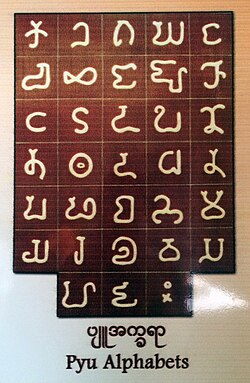
The Pyu developed their own writing system many centuries before the Burmese script reached its later form.
The surviving characters may initially look unfamiliar to a modern Myanmar reader.
But look carefully.
Some forms have a surprisingly familiar appearance.
This is not accidental.
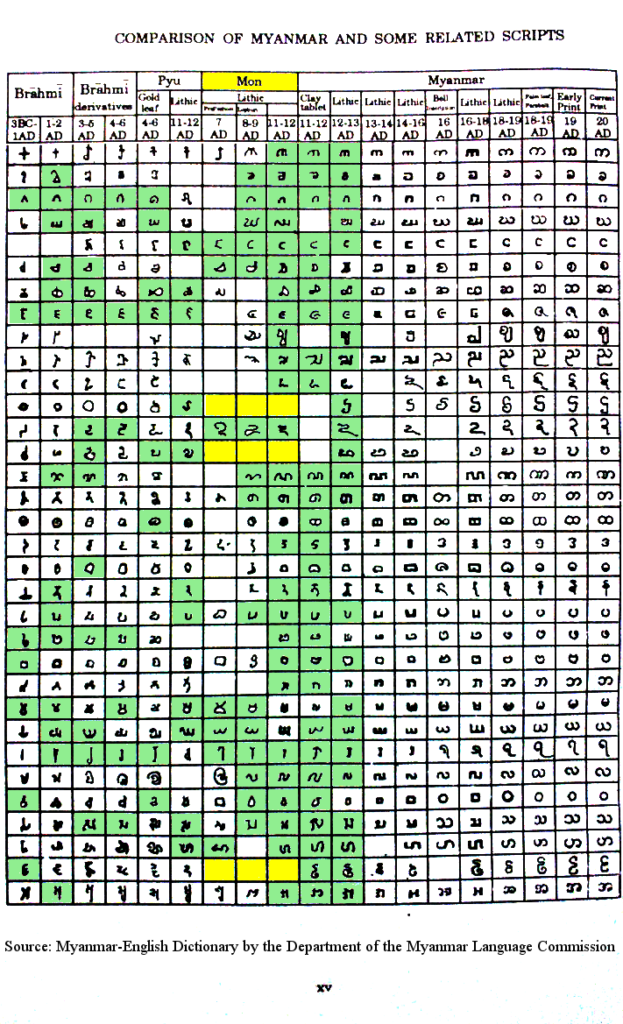
The Pyu script belongs within the broader history of writing traditions connected with Brahmi-derived scripts, which travelled and developed across South and Southeast Asia.
That does not mean that the Pyu were Indians.
Their language is classified separately from Indo-Aryan languages.
Rather, it shows something more interesting:
the Pyu lived in a world of cultural connections.
Ideas, religions, writing systems and words travelled across mountains, rivers and seas.
The Geography Behind the Writing
Look at the map of ancient mainland Southeast Asia.
There were no modern international borders dividing Myanmar, Thailand, Laos, Cambodia and Vietnam.
To the west lay the Indian subcontinent.
To the north lay China and Yunnan.
To the south and east were the Mon and other peoples of mainland Southeast Asia.
And to the west, across the Bay of Bengal, lay Rakhine—an important gateway toward India.
The Pyu therefore lived at a remarkable geographical crossroads.
Perhaps this is why your old geography lessons at Kingswood High School, Kalaw, suddenly became relevant to our ancient-history journey!
Geography creates the roads.
People create the connections.
And language records the journey.
When Words Travel
Consider the ancient word Śrī.
It carried meanings associated with auspiciousness, prosperity, radiance and honour.
Across Asia it appeared in different forms.
Śrī → Sri → Thiri
The same ancient cultural inheritance can still be glimpsed in names and titles such as Sri, Tan Sri, Datuk Seri, and Burmese Thiri.
Even the name Yazakumar opens another window.
Yaza is related to Indic rāja, “king” or “ruler.”
Kumar comes from kumāra, associated with a prince or young man.
And Yazakumar himself was connected with North Arakan/Rakhine, at Myanmar’s western gateway toward the Indian world.
One should not turn these names into proof that the Pyu originated in India.
But they are clues to something undeniable:
ancient Myanmar participated in a much wider Asian cultural world.
Then Came the Stone
And here the story becomes extraordinary.
In 1113 CE, during the Bagan period, a stone inscription was created that would eventually become one of the most important keys to understanding the Pyu language.
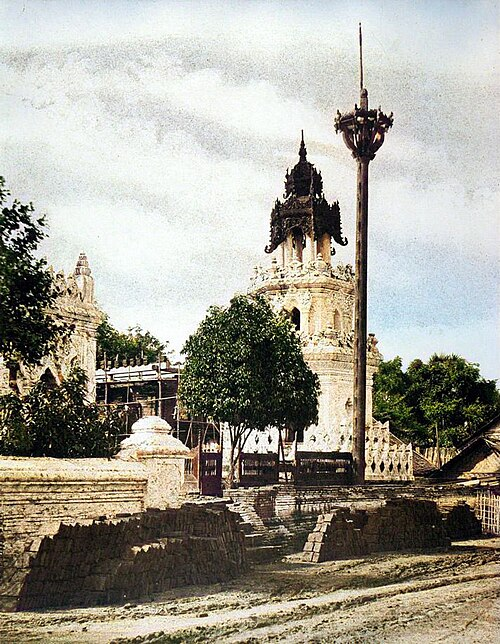
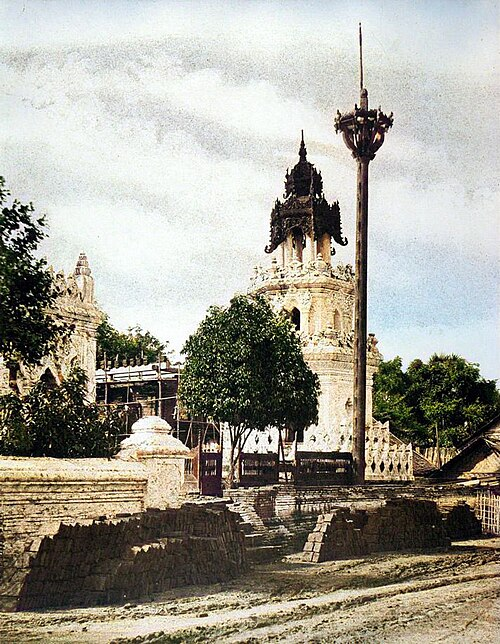
It is known as the Myazedi Inscription, associated with Prince Yazakumar.
One stone.
Four languages.
Pyu. Old Burmese. Old Mon. Pali.
Think about that for a moment.
More than nine centuries ago, four linguistic traditions stood together on the same monument.
It was almost as though medieval Myanmar itself was saying:
“We are a meeting place.”
The Prince Who Left More Than a Monument
Yazakumar was the son of King Kyansittha and Thanbula.
According to the traditional account, Kyansittha had not initially known that he had a surviving son.
When Thanbula eventually brought Yazakumar to Pagan, the king recognised him.
Yet Yazakumar did not become king.
The succession went to his nephew Alaungsithu.
Yazakumar instead became associated with important religious foundations and made substantial donations.
The Myazedi inscription records these donations and preserves his connection with his father and his religious acts.
But here I want to make a distinction.
There is a fascinating question that we may reasonably ask—but we should not pretend that history has already answered it.
Ancient royal succession could be dangerous.
In many monarchies, possible rival princes could become political threats.
So one possible interpretation of Yazakumar’s extraordinary generosity is that religious donation may also have been politically prudent: by transferring substantial wealth and dependants into religious foundations, he may have reduced his own political and material vulnerability.
That is an interpretation—not an established fact.
His own stated motivation was religious and filial.
But history sometimes allows us to ask questions that the surviving sources cannot answer.
Perhaps Yazakumar was simply a devoted son.
Perhaps he was a devout Buddhist prince.
Perhaps he was also a very clever politician.
We cannot know for certain.
The Great Historical Accident
And here comes the most beautiful part of the story.
Yazakumar could not possibly have known what his inscription would mean nearly a thousand years later.
He was recording his world.
He was honouring his father.
He was protecting his religious donations.
But the stone did something far beyond his intentions.
It preserved the Pyu language.
The Pyu civilization eventually disappeared as a distinct historical civilization.
Its cities fell silent.
Its people became part of the changing populations of Myanmar.
Its language ceased to be spoken as an ordinary living language.
But its written voice remained on stone.
Four Languages Become One Key
The importance of the Myazedi inscription is precisely that the same historical text exists in four languages.
Scholars could compare the Pyu version with the better-understood Pali, Mon and Old Burmese versions.
The inscription therefore became an extraordinarily important source for reconstructing and understanding Pyu language and writing.
That is why it is sometimes compared with the Rosetta Stone.
But perhaps there is a more poetic way of saying it.
The Rosetta Stone helped modern humanity hear ancient Egypt.
The Myazedi Stone helped modern humanity hear the Pyu.
And the comparison should not be taken literally: they are different inscriptions from different civilizations and historical circumstances.
But the metaphor captures their importance.
The Forgotten Voice
Imagine the Pyu cities after their decline.
The houses disappear.
The roads disappear.
The walls become mounds.
The people move on.
Centuries pass.
The language falls silent.
Then, almost a thousand years later, archaeologists and scholars examine an ancient stone.
They see four scripts.
They compare them.
And suddenly, a civilization that had become almost silent begins to speak again.
Not loudly.
Not completely.
But enough for us to hear fragments of its voice.
What the Pyu Teach Us
The Pyu story is not simply a story about an ancient people who once lived in Myanmar.
It is a story about connection.
Their cities connected different parts of the Ayeyarwady world.
Their merchants participated in wider trade networks.
Their religion was connected with the Buddhist world.
Their writing belonged to a wider family of South and Southeast Asian scripts.
Their culture interacted with neighbouring civilizations.
And their surviving inscriptions remind us that Myanmar was never an isolated island of civilization.
It was part of Asia.
A Stone That Remembered
There is an extraordinary irony here.
Yazakumar may have wanted to preserve his father’s memory.
He could never have imagined that his stone would eventually preserve the memory of an entire civilization.
A prince made a donation.
A craftsman carved a stone.
Four languages were written upon it.
A civilization disappeared.
The stone remained.
And centuries later, humanity came looking for the forgotten voice of the Pyu.
It was still there.
Waiting.
From Pyu to Myanmar
The story does not end with the Pyu.
Writing continued to evolve.
Pyu, Mon, Pali and other traditions interacted with the developing culture of Bagan.
The early Myanmar script emerged within this broader environment of cultural and linguistic exchange.
And eventually, the script that we recognise today as Myanmar script took shape.
So when we look at modern Burmese writing, we should remember:
Every letter has a history.
Behind the familiar curves and circles lies a much older Asian story.
A story of movement.
A story of adaptation.
A story of contact.
A story written not by one civilization alone, but by generations of people learning from one another.
The Story Continues
The Pyu cities are now ruins.
Their language is no longer spoken as a living community language.
But they have not completely disappeared.
Their cities remain beneath the earth.
Their artefacts remain in museums.
Their inscriptions remain on stone.
And their words—though fragmentary—still speak.
Perhaps that is the greatest lesson of archaeology:
Civilizations may disappear. Languages may fall silent. Kingdoms may be forgotten. But humanity leaves traces.
And if we are patient enough to listen, even stones can tell us who we once were.
Epilogue to the First Pyu Arc
We began this journey with a simple question:
What was Myanmar like before Bagan?
We have now travelled from the mountains and valleys of ancient Myanmar to the great Ayeyarwady cities; from Halin to the wider Asian trade routes; from Brahmi-related writing traditions to Pyu script; and finally to a stone that preserves four languages.
And perhaps the most important lesson is this:
Before there was a “Myanmar” on the modern map, there were already many peoples, languages, cultures and connections moving through this land.
1 year ago (edited)The Homo-anyarthians who received civilization from the Aryans( We call ’em ” Pyu” ) who initially came from the middle east on the way which became ” The Silk Road ” to the Indus Valley, the Northern India; the Pyus are the Eractus, Turkish, Parsians, Russians, etc. )originally exists across the South East Asia since 40 million years ago. The Pyus built up the City Nations in the Myanmar without collaboration by the indigenous race, the Anyarthians until the Bangan Emperor appeared in A.D. 600.
Human anthropological ancestry and migration models
The anthropological ancestry of Myanmar is defined by a multi-layered migration model, functioning not just as a geographical pathway, but as a primary continental center of early human diversification. [1, 2]
Modern population genomics and ancient DNA (aDNA) analysis have mapped this complex mosaic into three major prehistoric waves and subsequent historical integrations. [1]
🗺️ The Prehistoric Migration Models
1. The Paleolithic Foundation & Inland Dispersal (60,000 – 10,000 Years Ago)
Out-of-Africa Coastal vs. Inland Routes: While the earliest Homo sapiens migrated from Africa via a southern coastal route (~60 kya), large-scale mitochondrial DNA (mtDNA) analysis shows that initial settlers reached Myanmar by ~50 kya. [1, 2]
The Myanmar Cradle: Rather than passing through quickly, human ancestors remained for nearly 25,000 years. The enrichment of basal maternal lineages with extreme genetic diversity proves that Myanmar served as an evolutionary “differentiation center”. [1, 2]
South-to-North Inland Route: Between 25 kya and 10 kya, early humans pushed upward from Myanmar into southwestern China (modern Yunnan Province). They used major river valleys (like the Irrawaddy, Salween, and Mekong) as an alternative inland corridor to populate the deep interior of East Asia. [1, 2]
Hoabinhian Hunter-Gatherers: These early inhabitants left behind distinct stone tools (Anyathian culture). Genomically, they share close affinity with deeply diverged Eastern Eurasian lines, similar to the Onge hunter-gatherers of the Andaman Islands. [1, 2, 3, 4]
2. The Neolithic Austroasiatic Expansion (4,500 – 3,000 Years Ago)
The Influx of Farmers: The second major layer arrived during the Neolithic transition, when agriculturalists migrated south from central or southern regions of the Yangtze River basin. [1, 2, 3]
Genetic Admixture: These incoming migrants brought domesticated rice farming, shouldered stone tools, and distinct pottery styles. Ancient genomes show they extensively admixed with the indigenous Hoabinhian hunter-gatherers. [1, 2, 3, 4]
Ethnolinguistic Legacy: This fusion formed the baseline ancestry for Austroasiatic-speaking groups, such as the ancient Mon people, whose genetic signatures spread widely across Mainland Southeast Asia. [1, 2, 3]
3. The Bronze/Iron Age Sino-Tibetan & Tai-Kadai Influx (2,500 – 1,500 Years Ago)
The Northern Corridor: During the Bronze and Iron Ages, a massive population shift moved from the north down into Myanmar. [1]
Sino-Tibetan Origins: Millet-farming communities originally from the Yellow River Basin expanded southward through the Tibetan-Yi Corridor. This movement triggered the divergence and southward expansion of Sino-Tibetan (Tibeto-Burman) languages. [1, 2, 3]
Tai-Kadai Migrations: Simultaneously, Tai-Kadai speakers expanded southward out of Southern China, overlapping with these pathways to create highly layered local demographic profiles. [1, 2]
🧬 Present-Day Genomic Outcomes
The historic era witnessed the consolidation of these deep ancestral strands into distinct modern group profiles. [1]
The Bamar Mosaic: Arriving in the upper Irrawaddy Valley around the 9th century CE, the Bamar people expanded and formed the historical Pagan Kingdom. Genomically, they are a broad, highly admixed genetic mosaic. They carry dominant Sino-Tibetan paternal lineages (Y-haplogroups O2 and O1b) integrated with underlying Austroasiatic and South Asian genetic markers.
The Karen Isolation: In stark contrast, hill-dwelling populations like the Karen exhibit relative genetic isolation. They show very low signatures of historical admixture with neighboring groups, preserving an older, distinct Sino-Tibetan maternal sub-structure. [1, 2, 3, 4, 5]
To see how these shifting migrations and ancestral fusions directly shaped the physical and cultural geography of the region, watch this breakdown of ancient regional bloodlines: