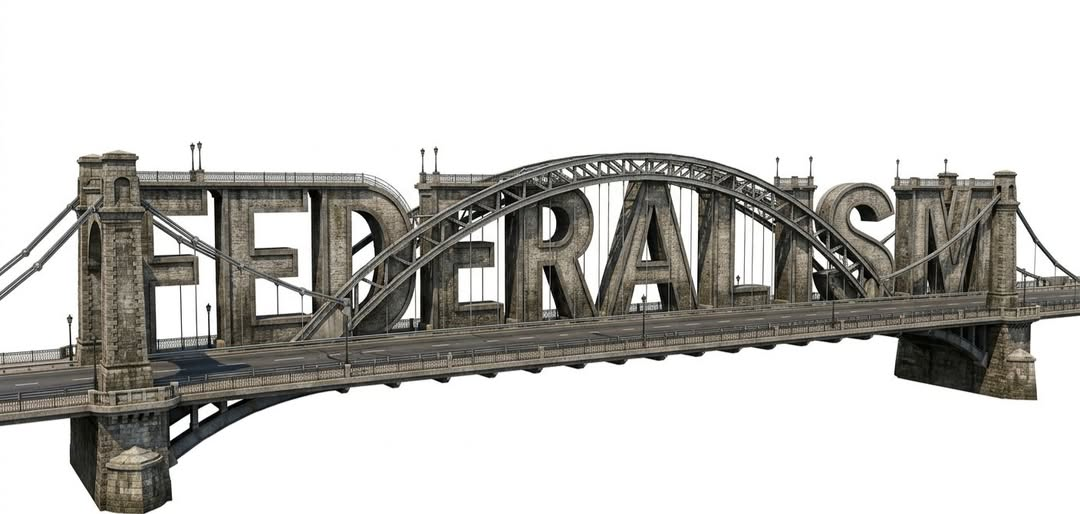
Beyond Ethnic Majoritarianism Toward a Shared Union
By combining the reflections of Augustus Linn with broader comparative constitutional thinking, an uncomfortable but unavoidable question emerges for Myanmar’s future:
If Myanmar one day becomes a genuine Federal Union or even a loose Confederation, and if truly democratic elections are finally held, who will actually govern the ethnic states?
For decades, many opposition movements have treated “Federal Democracy” almost as a magical cure for Myanmar’s political disease. Yet federalism itself is not a miracle. As Augustus Linn correctly argued, federalism is not automatically the same thing as democracy, prosperity, or justice. Countries like Thailand function without federalism. Indonesia contains extraordinary ethnic diversity yet remains largely unitary under the slogan “Unity in Diversity.” Much of Europe also functions through democratic but non-federal systems.
His central argument is profound: in Myanmar, federalism is not necessarily the destination. It is a “middle point” — a political bridge designed to calm historical fears, ethnic grievances, and distrust born from decades of military domination and forced centralization.
Yet even if federalism succeeds politically, another deeper issue awaits beneath the surface: demography.
For over seventy years, war, militarization, migration, trade, and state policies have transformed the population structure of Myanmar’s ethnic frontier regions.
In theory, states such as Kachin, Shan, and Kayah were imagined as ancestral homelands of their titular ethnic groups. In practice, however, these regions have become highly mixed societies.
In Kachin State
The Kachin themselves are internally diverse: Jinghpaw, Lisu, Rawang, Lacheik, Zaiwa, and others. Added to this are large populations of Bamar civil servants, soldiers, traders, migrant laborers, and Chinese commercial communities concentrated around jade, timber, and border trade corridors.
In Shan State
The demographic picture is even more fragmented. “Shan State” is not purely Shan. It contains Wa, Palaung (Ta’ang), Kokang Chinese, Danu, Intha, Pa-O, Lahu, Akha, Bamar settlers, Muslim trading communities, and many others. Some of these groups historically resisted Shan domination as strongly as they resisted Bamar centralization.
In Kayah (Karenni) State
Decades of conflict displaced many indigenous Karenni populations while military expansion and urban settlement reshaped areas around Loikaw and strategic transport corridors.
Thus, if one-person-one-vote democracy suddenly appears tomorrow, the mathematics become brutally clear:
The Kachin may not numerically dominate Kachin State.
The Shan may not dominate Shan State.
The Karenni may not dominate Kayah State.
This is the paradox many revolutionaries rarely discuss openly.
Why Pure Majoritarian Democracy Could Fail
Traditional ethnic nationalism assumes that each ethnic state naturally belongs politically to its “native” ethnic majority. But demographic reality no longer supports that assumption.
Under a simple First-Past-The-Post system, several dangerous outcomes may emerge:
1. Fragmented Indigenous Votes
In Kachin State, Jinghpaw, Lisu, and Rawang parties may split indigenous votes among themselves while better-organized settler blocs consolidate strategically.
2. Electoral Capture
In Shan State, the Shan vote itself may fragment among regional parties while Wa, Kokang, Pa-O, Palaung, Bamar, and urban commercial interests dominate coalition politics.
3. Permanent Political Exclusion
Groups that fought for self-determination for generations may discover that democracy alone cannot guarantee them governing power inside their own ancestral territories.
4. Renewed Armed Conflict
If disappointed ethnic movements reject electoral outcomes as demographic colonization, armed struggle could resume under new justifications.
Thus, Myanmar’s future danger is not only dictatorship versus democracy.
It may become:
Majoritarian democracy versus pluralistic survival.
Augustus Linn’s “Middle Point”
Augustus Linn’s essay wisely avoids simplistic slogans.
He correctly notes that:
- Federalism alone cannot cure Myanmar.
- Democracy remains essential.
- Identity politics, if endlessly intensified, can deepen fragmentation.
- Yet ignoring ethnic grievances entirely is equally dangerous.
His most important contribution is the idea of “Common Ground.”
Federalism, in this view, becomes:
- neither full separatism,
- nor total centralization,
- but a negotiated balance allowing shared citizenship alongside local self-rule.
This resembles the “cooperative federalism” models seen in countries like Germany and partially in Canada.
The challenge for Myanmar is that demographics have already changed too deeply for old-style ethnic exclusivism to function peacefully.
The Need for Coalition Democracy
Myanmar’s frontier regions may therefore require a completely different political philosophy:
Not Ethnic Domination
but
Multi-Ethnic Coalition Governance
Instead of assuming one ethnic group will permanently rule a state, future constitutions may need to force cooperation structurally.
This is where comparative international examples become important.
Lessons from Other Countries
1. Singapore’s Group Representation System
Singapore created the Group Representation Constituency (GRC) system to ensure minority racial participation in parliament.
Political parties cannot field mono-ethnic candidate teams. They must include minority candidates within party slates.
Myanmar could adapt this idea carefully:
- A Shan State electoral slate might legally require Shan, Wa, Ta’ang, and Bamar representation together.
- A Kachin slate might require Jinghpaw, Lisu, Rawang, and Bamar candidates jointly.
This would discourage racial polarization and encourage negotiated alliances.
Of course, critics argue that Singapore’s model also strengthens ruling-party dominance. Therefore Myanmar would need stronger democratic safeguards and independent electoral commissions.
2. Proportional Representation (PR)
Ironically, even the recent electoral discussions promoted by Min Aung Hlaing indirectly highlight a real constitutional issue: First-Past-The-Post systems can produce distorted outcomes in fragmented societies.
A genuine democratic Proportional Representation system — unlike manipulated authoritarian versions — could:
- reduce wasted votes,
- ensure smaller ethnic groups gain representation,
- prevent one bloc from sweeping entire states unfairly.
In deeply divided societies, PR often stabilizes politics better than winner-take-all systems.
Countries such as:
- Belgium,
- Netherlands,
- and post-conflict systems elsewhere
have relied heavily on coalition-building through PR frameworks.
Federalism with Upper House and Lower House
Myanmar may eventually require a dual parliamentary structure balancing population and ethnicity simultaneously.
Lower House
Represents population proportionally.
Larger Bamar-majority regions naturally dominate here because of population size.
Upper House
Represents states equally regardless of population.
This resembles:
- the United States Senate,
- the German Bundesrat,
- and partially the Indian Rajya Sabha.
Such an upper chamber could protect smaller ethnic states from total domination by population-heavy central regions.
Possible safeguards could include:
- veto powers over constitutional amendments,
- approval requirements for military deployments,
- state consent for major resource extraction agreements,
- reserved minority representation.
Reserved representation is controversial.
Myanmar already experienced a distorted version through the military’s unelected 25% parliamentary bloc under the 2008 Constitution.
Yet democratic reserved seats are fundamentally different from military appointments.
Countries such as:
- New Zealand (Māori seats),
- India (Scheduled Castes and Tribes),
- and partially Malaysia through constitutional communal balancing
all contain mechanisms acknowledging historical asymmetries.
In Myanmar, reserved seats might potentially protect:
- highly fragmented minorities,
- religious minorities,
- and indigenous populations vulnerable to demographic displacement.
The key difference must be:
democratic legitimacy rather than authoritarian appointment.
Perhaps the most emotionally sensitive issue is security.
Most Ethnic Revolutionary Organizations (EROs) will never fully trust a centralized army after decades of civil war.
A future compromise may involve:
Central Federal Forces
Responsible for:
- external defense,
- air force,
- navy,
- foreign intelligence.
State Security Forces
Responsible for:
- local policing,
- border security,
- internal stability.
This resembles:
- the National Guard model in the United States,
- provincial policing traditions in Canada,
- and federal-state divisions in India.
Without local security guarantees, ethnic federalism may remain psychologically unacceptable to many frontier populations.
Federalism without fiscal autonomy becomes symbolic only.
Resource-rich states like:
- Kachin (jade, hydropower),
- Shan (minerals, border trade),
- and Rakhine (ports, energy)
will demand guaranteed local revenue shares.
International comparisons matter:
- Canadian provinces retain major resource rights.
- Sabah and Sarawak in Malaysia negotiated special protections.
- Australia uses fiscal equalization formulas among states.
Myanmar may eventually need constitutional guarantees ensuring a fixed percentage of local resource revenues remain within originating states.
Otherwise, federalism risks becoming merely administrative decentralization under another name.
Augustus Linn perhaps reaches his most important insight near the end of his essay.
Federalism alone is not the final cure.
Democracy is not enough by itself either.
Ultimately, Myanmar must somehow build:
a shared civic identity larger than ethnicity.
Not by erasing ethnic identities,
but by creating overlapping loyalties:
- local,
- state,
- union,
- and civic.
That is extraordinarily difficult after generations of war, racism, propaganda, displacement, and distrust.
Yet without such a shared identity, every census becomes a battlefield and every election becomes an ethnic headcount.
Myanmar’s future constitutional debate cannot remain trapped between simplistic slogans:
- “Federalism will solve everything”
or - “Strong unity alone will save the country.”
The demographic realities of Kachin, Shan, Kayah, and other frontier regions demand a more mature political imagination.
A future stable union may require:
- coalition democracy instead of ethnic winner-take-all politics,
- proportional representation instead of simple majoritarianism,
- bicameral constitutional balance,
- local security autonomy,
- fiscal federalism,
- and constitutional protection for minorities of every kind.
Most importantly, it may require abandoning the illusion that any single ethnicity can permanently dominate Myanmar’s frontier states peacefully.
The future survival of the Union may depend not on who wins absolute control, but on whether Myanmar’s peoples can finally learn the far harder art of negotiated coexistence.
The most critical and pressing blind spot in contemporary Myanmar political thought about the situation in Rakhine State and drawing parallels to Chin, Mon, and Karen states, you have identified a universal truth: victory on the battlefield does not solve the demographic puzzle of governance. [1, 2]
The Arakan Army (AA) has achieved historic military successes, effectively securing territorial control over most of Rakhine State [1, 2]. However, as you rightly noted, their current political approach risks creating the exact same majoritarian trap that the Bamar military state fell into for decades [2].
Here is an analysis of the pros, cons, and profound geo-political risks facing Rakhine and the other omitted states.
1. The Rakhine Blind Spot: Military Dominance vs. Multi-Ethnic Realities
The Arakan Army / United League of Arakan (ULA) is attempting to build a de facto sovereign state [1, 2]. However, their governance model currently prioritizes the Buddhist Rakhine majority, while largely neglecting or sidelining the state’s massive non-Rakhine populations [2]:
The Internal Danger (The Cons)
Rakhine State is not ethnically homogenous. It is home to the Rohingya, Myo, Maramargyi, Daingnet, Khumi, Chakma, and distinct Hindu communities.
- The Sidelining Effect: If the AA attempts to rule through pure Rakhine ethno-nationalism, they will create an internal underclass [2].
- The Insurgency Cycle: History proves that when minority groups (like the Myo or Chakma) feel erased by a new dominant power, they eventually pick up arms. The AA could find itself fighting localized insurgencies against smaller ethnic groups within its own borders.
The External Illusion (The Geopolitical Risk)
The AA believes its military strength gives it the leverage to negotiate directly with regional superpowers [1, 2]:
- China: Looking to protect the Kyaukphyu deep-sea port and pipelines [2].
- India: Looking to secure the Kaladan Multi-Modal Transit Transport Project.
- Bangladesh: Desperate to resolve the Rohingya refugee crisis.
Why this strategy is flawed: Superpowers are fundamentally transactional. India and China will shake hands with the AA today because they hold the guns, but they will never truly trust a non-state actor that presides over a volatile, uninclusive territory. If Bangladesh feels the AA is completely hostile or indifferent to the rights and return of the Rohingya, Dhaka can easily shut its borders, choke Rakhine’s economy, or quietly support anti-AA factions to protect its own national security.
2. The Universal Problem: Chin, Mon, and Karen States
The issue of mixed populations and competing claims is not unique to Rakhine or the northern states; it is an active powder keg across the remaining ethnic borderlands:
Chin State (Deep Tribal Fragmentation)
While the world views “Chin” as a single identity, the state is split into dozens of distinct clans and linguistic groups (e.g., Asho, Cho, Falam, Hakha, Tedim, Zomi). Currently, the Chin National Front (CNF) and various localized Chinland Defense Forces (CDFs) are experiencing severe internal friction over who gets to dictate the future constitution of Chinland. Without a strict, non-majoritarian coalition model, Chin State risks fracturing into localized tribal conflicts.
Mon and Karen States (The Overlapping Borders)
Decades of civil war have caused massive population shifts in southeastern Myanmar.
- The Demographic Mix: Large pockets of Karen people live deep inside Mon State, and significant Mon populations live within Karen State. Furthermore, because of their proximity to Yangon and trading hubs, both states have massive, highly integrated populations of Bamar settlers and mixed-race communities.
- The Risk of Overlap: If a future federal map draws hard, exclusive boundaries for “Karen State” and “Mon State” based on ethnic names, it will ignite immediate border disputes and communal violence over territory, local tax revenues, and language schooling.
3. A Universal “Pluralistic State” Formula
To prevent these liberated states from collapsing into civil war after the central junta falls, the constitutional blueprint we discussed must be applied universally—not just at the federal level, but internally within each state.
If the AA in Rakhine, the KNU in Karen State, or the CNF in Chin State want to rule effectively and secure international recognition, they must implement a State-Level Power-Sharing Architecture:
| State | Dominant Group | Internal Minorities to Protect | Institutional Solution Required |
|---|---|---|---|
| Rakhine | Rakhine Buddhists | Rohingya, Myo, Chakma, Hindus, Maramargyi | Autonomous District Councils with veto power over local land and religious laws. |
| Chin | Major Chin Clans (Hakha/Falam) | Smaller Clans (Zomi, Cho, Mara) | Rotational Leadership in the state executive branch to prevent one clan from dominating. |
| Karen / Mon | Karen / Mon Pluralities | Mon/Karen enclaves, Bamar settlers | Reciprocal Cultural Agreements ensuring equal language rights in schools across both states. |
Military victory without inclusive political engineering is an illusion.
If the Arakan Army or any other ethnic revolutionary group believes they can rule through the raw power of the majority while ignoring the multi-ethnic fabric of their territories, they will simply repeat the tragic mistakes of the Bamar military dictatorships. True stability will only arrive when these groups realize that sharing power with the smallest minority within their borders is not a sign of weakness, but the ultimate source of their sovereign strength.
Augustus Linn is with Augustus.Linn.
torneSdopsfm1act8c79a7h690t8293g6fim266hi1f2125c10mh270lh9ta ·
” ဖက်ဒရယ်သည် ကြားပွိုင့် “
■ နိုင်ငံတနိုင်ငံတွင် ပြည်သူကို ကိုယ်စားပြုသည့် နိုင်ငံရေးစနစ် ဖြစ်ဖို့ရာ ဖက်ဒရယ် ဖြစ်ဖို့ လိုအပ်ပါသလား ?
– ” No ” ပါ ။ ဖက်ဒရယ်စနစ်ကို မလိုအပ်ပါ ။ ဒီမိုကရေစီစနစ်ကိုသာ လိုအပ်ပါ၏။
နိုင်ငံတနိုင်ငံတွင် ကုံလုံကြွယ်ဝချမ်းသာဖို့ ဖက်ဒရယ်ဖြစ်ဖို့ လိုအပ်ပါသလား ?
– အဖြေသည် ” No ” ပါ။ စျေးကွက်စီးပွားရေးကို မူဝါဒမှန်မှန်ဖြင့် အကောင်အထည်ဖော်မည့် အဂိကင်းသော အာဏာပိုင်အဖွဲ့အစည်းသာ လိုအပ်ပါတယ်။
” Identity Politics ” ကို သက်ဝင်မှု မရှိသည့် သာမန်နိုင်ငံသားတဦး အတွက် လွတ်လပ်သည့်စနစ်အတွင်း တရားမျှတစွာနေထိုင်နိုင်ဖို့ ဖက်ဒရယ်စနစ် မလိုပါ။ ဒီမိုကရက်တစ်စနစ်တွင် ” All in One ” အကုန်ပါပြီးပါပြီ။
■ သို့ဆိုလျှင် မြန်မာ့အရေးတွင် ဖက်ဒရယ်ဒီမိုကရေစီကို အမြဲဦးတည်၍ တိုင်တည်နေကြသလဲဆိုလျှင် ကြားပွိုင့် ဖြစ်သောကြောင့်ဟုသာ ဆိုရပါမယ်။
မြန်မာတွင် ခေတ်အဆက်ဆက် အစိုးရမဖြစ်ထိုက်သူတို့ အာဏာလုယူခဲ့ကြသလို ဖြစ်လာသည့်အခါတွင်လည်း စီမံခံ့ခွဲမှု ချာတူးလန်သဖြင့် လူမှုစီးပွားရေး ကြပ်တည်းလွန်းကြပါတယ်။
နဂိုမူလအားဖြင့် အမျိုးသားရေးဝိသေသများ ခိုင်မာပြီးသား ဒေသများတွင် ” Identity Politics ” အလွန်အမင်း အားကောင်းလာစေဖို့ လေပင့်ပြီးသား ဖြစ်လာတယ်။ အက်ရာကြောင်း ပို၍နက်လာတယ်။
■ အကြောင်းရင်း ( Cause ) ဖြစ်သော Identity Politics ကနေ ပိုမိုပြင်းထန်သော ပဋိပက္ခ အဖြစ် အသွင််ပြောင်းပြီး ဘေးထွက်ဆိုးကျိုးများမလာစေဖို့ ကုသရမည့် နည်းလမ်းသည် ကိုယ်ပိုင်ပြဌာန်းခွင့် အပါအဝင် သမမျှတစွာ အာဏာခွဲဝေပေးခြင်း နှင့် ဖက်ဒရယ်စနစ်ဖြစ်ပါ၏။
ထို့ကြောင့် မြန်မာ့အရေးတွင် ဖက်ဒရယ် အကြောင်းကို ထည့်၍ထည့်၍ ပြောကြရတယ်။
■ ထိုကလွဲ၍ သာမန်နိုင်ငံသားတယောက်အတွက် ဖက်ဒရယ် မလိုအပ်ပါ။ နိုင်ငံ၏ မြောက်ဖျားမှ တောင်ဖျားအထိ တရားဥပဒေစိုးမိုးမှုကို လုပ်ဆောင်နိုင်မယ့် ရွေးကောက်ခံအစိုးရတရပ် ရှိနေလျှင် ရိုးရိုးရှင်းရှင်းနှင့် အဆင်ပြေပါ၏။
ထိုင်းတွင် ဖက်ဒရယ်စနစ် မရှိပါ။ ဒီမိုကရေစီပင် မစစ်မှန်ပါ။ အတိုင်းအတာတခု အထိအလုပ်ဖြစ်ပါတယ်။
အင်ဒိုနီရှားတွင် လူမျိုးခွဲပေါင်း ၁၃၄၀ ကျော်ခန့် ရှိတာကြောင့် မြန်မာ့ Classification ထက် ၁၀ ဆ များပါတယ်။ ဖက်ဒရယ် မရှိပါ။ ” Unity in Diversity ” ဟူသော ကြွေးကြော်မှုဖြင့်ပင် စုစည်းထားပါတယ်။
ဂျာမနီမှ လွဲ၍ ဥရောပနိုင်ငံအများစုသည် ဒီမိုကရက်တစ် ဖြစ်ကြသော်လည်း တပြည်ထောင် ( Unitary ) နိုင်ငံများပါ။ အလုပ်ဖြစ်သည်မှ ဟိုဘက်ကမ်းပင် လွန်နေပါ၏။
■ မြန်မာတွင် စစ်အာဏာရှင်စနစ်ကို တွန်းလှန်ဖို့ရာ ဒေသတွင်းအင်အားကို ညှစ်ထုတ်ဖို့ရာ လူမျိုးရေးနှင့် ဒေသိယခံစားချက် Ethnic grievance ကို မီးမောင်းထိုး အခြေပြုရတယ်။
အမျိုးသားရေးဝိသသေ Identity ကွဲပြားစွာရှိနေခြင်းသည် အကောင်းမွန် အမျှတဆုံးသော နိုင်ငံများတွင်ပင် ခွဲထွက်ရေးလိုလားမှုကို တစုံတရာဖြစ်စေတယ်။ Identity အသစ်တိုင်းသည် အက်ကြောင်းသာ ဖြစ်၏။ အရာထင်ယုံမျှလား ၊ အသူတရာနက်သည်အထိ ကွဲပြီလားသာ ကွာတယ်။
ညံ့ဖျင်းနှံချာသည့် အာဏာရှင်စနစ်အောက်တွင် လူမှုစီးပွား ကြပ်တည်းလှသည့်အပြင် Identity Politics ကို ရှေ့တန်းတင်လွန်းကြရာ နိုင်ငံအနေဖြင့် တစစီ ပြိုကွဲဖို့ ဆေးပေါင်းစုံနေပြီ။
■ သည်အခါ တခွဲတည်းခွဲလိုနေကြသော အစုကို အရှိန်ထိမ်းဖို့ နှင့် ဖက်ဒရယ်မလိုအပ်သူတို့အကြား ” Common Ground ” သည် ကိုယ်ပိုင်ပြဌာန်းခွင့်အာဏာ တစုံတရာကို ခွဲဝေပေးသည့် ဖက်ဒရယ်စနစ် ဖြစ်လာတယ်။ ပေါင်းကူးတံတားလည်းဖြစ်တယ်။
ဖက်ဒရယ်သည် ခွဲထွက်ရေးလားဆိုရင် မဟုတ်သလို ၊ ဖက်ဒရယ်သည် ခွဲထွက်ရေးအန္တရာယ်မရှိသလားဆိုလျှင်လည်း မဟုတ်ပါ။ ဗဟိုတခုတည်းက အစစအရာရာ ထိမ်းချုပ်ထားနိုင်သည့် တပြည်ထောင်နိုင်ငံများထက်တော့ ခွဲထွက်သွားနိုင်ဖို့က ရာခိုင်နှုန်း ပိုများကြောင်း ငြင်းဆန်ရန် မရှိပါ။
ဖက်ဒရယ်တွင်လည်း တသမတ်တည်း မဟုတ်ကြပါ။ ပုံစံအမျိုးမျိုး မူကွဲပါတယ်။ အဓိက ဆုံးဖြတ်ရမည်က
– ဖက်ဒရယ်ယူနစ်များကို မည်သည်ကို အခြေခံ၍ ဖွဲ့စည်းတည်ဆောက်မလဲ နှင့်
– ဗဟို အစိုးရနှင့် ပြည်နယ် ( ယူနစ် ) အစိုးရအကြား အာဏာ မည်မျှခွဲဝေကြမလဲ ဖြစ်၏။
■ ယူနစ်တိုင်းသည် လူမျိုးကို အခြေခံ၍ မဖြစ်ပါ။ လူမျိုးဟူသည် အတိအကျပြ၍ မရသည့် သဘောဆောင်တာမို့ လူများစု ပြည်နယ်များ ရှိမှာဖြစ်ပေမယ့် လူများစုလူမျိုး မရှိသောပြည်နယ် , ပထဝီအပိုင်းအခြားကို အခြေခံထားသော ပြည်နယ်များလည်း ရှိနေနိုင်တယ်။
သို့မှသာ ဖက်ဒရယ်ဟူသည် Identity Politics မပါသည့် နိုင်ငံသားများတိုင် ထိတွေ့ရောက်ရှိမယ်။ ဖက်ဒရယ်သည် တိုင်းရင်းသားပြည်နယ်များ အတွက်ဖြစ်၍ , ပြည်မကလူများနှင့် မဆိုင်လို့ ထင်မြင်ရသော ” Division ” အကန့်ကို ဖြိုပြီးဖြစ််မယ်။
မျှတရမယ်။ သည့်အတွက် သံလွင်မြစ်အရှေ့တွင် ဝ ပြည်နယ်ခွဲထုတ်ပေးရမှာ ဖြစ်သလို မိုင်းဆတ်ကို မြို့တော်ထားမယ့် လားဟူ လူများစု ပြည်နယ်ရှိရမယ်။ ကျိုင်းတုံပြည်နယ်လည်း ရှိသင့်တယ်။
■ ဂျာမနီ၏ ” Cooperative ဖက်ဒရယ်ပုံစံ ” ပူးပေါင်းဆောင်ရွက်မှု ရှိနေရမယ်။ ဗဟိုသည် ကာကွယ်ရေး , နိုင်ငံခြားရေး , ငွေကြေးမူဝါဒနှင့် လူဝင်ကြီးကြပ်ရေးကို ကိုင်ထားရမယ်။ ဤသည်တို့ကလွဲ၍ ဖွဲ့စည်းအုပ်ချုပ်ပုံ ခြေဥက အာမခံထားသော နိုင်ငံသား အခွင့်အရေးကို မကျော်လွန်သ၍ ကျန်ရှိသည့် နေ့တဓူဝအရေးအရာများ , ဒေသခံ ပြည်သူလူထုနှင့် တိုက်ရိုက်ဆက်ဆံသော ကိစ္စများကို ဖက်ဒရယ်ယူနစ်အစိုးရက ကိုင်တွယ်မယ်။
ဖက်ဒရယ်ပိုင်မြေနှင့် ဗဟိုအုပ်ချုပ်မြေများဟူ၍ ခွဲခြားရှိမည်မဟုတ်ပဲ တနိုင်ငံလုံး၏ နိုင်ငံသားတိုင်းသည် ပြည်နယ် ( ယူနစ် ) တခုမဟုတ်တခုတွင် သက်ဆိုင်နေထိုင်နေကြလိမ့်မယ်။ ဤသို့သော ယူနစ်တိုင်းတွင် ဗဟိုအစိုးရကိုင်တွယ်သောကဏ္ဍနှင့် ယူနစ်အစိုးရကိုင်တွယ်သော ကဏ္ဍဟူ၍ အဆင့်ခွဲ တည်ရှိနေကြခြင်းသာ။
ဤမျှသော ကြားပွိုင့် ကိုရလျှင် ဖက်ဒရယ်မလိုအပ်သည့် သူများအတွက် ဝန်မပိုသလို , အမျိုးသားရေးဝိသေသ ပြဌာန်းခွင့် ရလိုသူများအတွက်လည်း အုပ်ချုပ်ရေးအာဏာ တစုံတရာ ဝေမျှပြီး ဖြစ်သဖြင့် ကျေနပ်စေမယ်။
■ ကြားပွိုင့်တွင် တည်ငြိမ်အောင် မျှခြေတည်ထားရင်း ဧရာဝတီကို အလယ်မှာထား၍ မဲခေါင်မှသည် နတ်မြစ်တိုင် ဘုံဖြစ်သော ( Shared Civic Identity ) ဝိသေသကို တည်ဆောက်နိုင်လျှင်တော့ အတိုင်းအထက်အလွန် ဖြစ်လာပါမယ်။
မြန်မာ့အရေးရောဂါတွင် ဖက်ဒရယ်သည် ရောဂါပျောက်ဆေး မဟုတ်ပါ။ ဒီမိုကရေစီနိုင်ငံရေးစနစ်သည် ပိုးသတ်ဆေးဆိုလျှင် ဖက်ဒရယ်သည် အကိုက်အခဲပျောက်ဆေးသာ ဖြစ်ပါ၏။