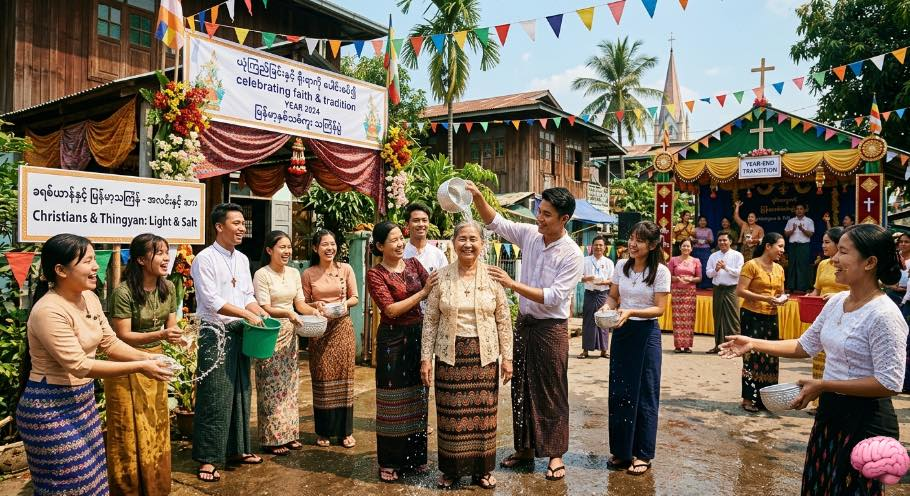
Interfaith reflection that blends the Christian and Muslim viewpoints on Thingyan
Thingyan, Myanmar’s New Year festival, is often debated—religious or cultural? Both Christians and Muslims in Myanmar have offered thoughtful perspectives that converge on a common principle: faith and culture can coexist.
- Shared Understanding of Thingyan Both traditions recognize Thingyan as a cultural marker of renewal, not a religious obligation. Its roots in seasonal transition make it a national heritage rather than a spiritual command.
- Faith Boundaries Christians emphasize rejecting idol worship while celebrating the joy of community. Muslims likewise avoid spirit-related rituals but embrace the cultural aspects of water play, family gatherings, and kindness.
- Moderation and Morality Both warn against excess—drunkenness, violence, or immorality. Instead, they encourage respectful participation, supporting the elderly, protecting the vulnerable, and celebrating with dignity.
- Witness of Love and Unity Christians are called to be “light and salt,” showing love through their conduct. Muslims are reminded that moderation and compassion reflect true faith. Together, these values testify to the possibility of harmony across communities.
Thingyan becomes more than just a festival—it is a bridge. For Christians, it is a chance to celebrate cultural heritage while holding firm to faith. For Muslims, it is an opportunity to join in joy without compromising belief. Both perspectives affirm that extremism divides, but moderation and respect unite.
In this way, Thingyan can be celebrated as a cultural festival beyond religion, a moment where diverse communities witness to love, respect, and shared humanity.
Muslim POV
- Thingyan as culture, not religion The article frames Thingyan as Myanmar’s New Year, rooted in seasonal transition, not inherently a religious obligation.
- Respecting heritage while holding faith Muslims are encouraged to appreciate the cultural aspects—community, joy, and renewal—without engaging in practices linked to spirit worship or idolatry.
- Moderation in celebration Similar to Christian guidance, the Muslim perspective warns against excesses such as drunkenness, violence, or immoral behavior, focusing instead on family, kindness, and social harmony.
- Universal values The piece highlights that participating in cultural festivals respectfully can foster unity and mutual understanding across communities.
Christians and Myanmar Thingyan
For Christians living in Myanmar, Thingyan often raises the question: Is it a religious festival or a cultural tradition? Some reject it entirely, while others participate without much thought.
In reality, the word Thingyan comes from Pali “Sankanta” and Sanskrit “Sankranti,” meaning “transition.” It marks the end of the old year and the beginning of the new year in the Myanmar calendar, celebrated in the month of Tagu.
So, how should Christians approach it according to the Bible?
1. Thingyan is Myanmar’s New Year Being Christian does not mean abandoning one’s cultural heritage. Jesus Himself joined Jewish festivals such as the Feast of Tabernacles (John 7:2–10) and celebrated Passover with His disciples (Luke 22:14–15). Though He is God, He shared in human joys and sorrows. Therefore, celebrating Myanmar’s New Year is not against Christian faith. Christians have the right to celebrate it with pride. (Philippians 4:8 encourages believers to think on whatever is true, noble, right, pure, lovely, and praiseworthy.)
2. Distinguish between faith and tradition Christians should reject the idol worship and spirit-related beliefs tied to Thingyan’s history (Exodus 20:3). But pouring water as a prayer for refreshment and blessing, rather than invoking spirits, is not sinful.
3. Be light and salt Separating completely from society can cause Christians to miss opportunities to show love. Instead of saying “this has nothing to do with us,” Christians can demonstrate kindness during Thingyan—by not targeting the vulnerable, supporting the elderly, and playing water games respectfully.
4. Maintain moral integrity The danger in Thingyan is not the water itself but the behaviors: drunkenness, violence, and excessive indulgence. These contradict Christian values. (1 Corinthians 10:31 reminds believers to do everything for God’s glory.)
A Christian should hold firmly to their faith while also respecting and valuing their cultural traditions. Extremism only breeds division, but harmonious participation testifies to Christ’s love.
Would you like me to adapt this translation into a short article-style summary (more neutral, for general readers) or keep it as a Christian teaching note (with Bible references and guidance)?
The Muslim perspective I referenced earlier post emphasizes that Thingyan should be seen as a cultural New Year festival rather than a religious ritual, encouraging Muslims to respect tradition while avoiding practices tied to idol worship. It parallels the Christian viewpoint you translated earlier—both stress maintaining faith while valuing cultural heritage.
- Thingyan as culture, not religion The article frames Thingyan as Myanmar’s New Year, rooted in seasonal transition, not inherently a religious obligation.
- Respecting heritage while holding faith Muslims are encouraged to appreciate the cultural aspects—community, joy, and renewal—without engaging in practices linked to spirit worship or idolatry.
- Moderation in celebration Similar to Christian guidance, the Muslim perspective warns against excesses such as drunkenness, violence, or immoral behavior, focusing instead on family, kindness, and social harmony.
- Universal values The piece highlights that participating in cultural festivals respectfully can foster unity and mutual understanding across communities.
It’s striking how both communities—though different in theology—arrive at a shared principle of balance: hold firmly to faith, but don’t reject cultural identity. Both warn against extremism and encourage moderation, kindness, and respect.
Mro Christian Fellowship
epntsdrooS 19r h1Mucmi0c 10cgfufmPf3lt83ti6:cc9uapaA3ua0l1c ·
#ခရစ်ယာန် နှင့် မြန်မာ့သင်္ကြန်
မြန်မာနိုင်ငံမှာ နေထိုင်တဲ့ ခရစ်ယာန်တစ်ယောက်အတွက် သင်္ကြန်ဟာ “ဘာသာရေးပွဲ” လား၊
“ရိုးရာပွဲ” လားဆိုတာ အငြင်းပွားစရာ ဖြစ်နေတတ်ပါတယ်။ တချို့က အစွန်းရောက်ပြီး အားလုံးကို ငြင်းပယ်ကြသလို၊ တချို့ကလည်း ဘောင်ကျော်ပြီး ပြုမူမိကြတာတွေ ရှိပါတယ်။
တကယ်တော့ သင်္ကြန် ဟူသော ဝေါဟာရသည် ပါဠိဘာသာ “သင်္ကန္တ” နှင့် သက္ကတဘာသာ “သင်္ကြန္တ” မှ ဆင်းသက်လာပြီး “ကူးပြောင်းခြင်း” ဟု အဓိပ္ပာယ်ရသည်။ မြန်မာပြက္ခဒိန်၏ နောက်ဆုံးလဖြစ်သော တန်ခူးလတွင် နှစ်ဟောင်းကုန်၍ နှစ်သစ်သို့ ကူးပြောင်းသည့် အထိမ်းအမှတ်အဖြစ် ကျင်းပသော ပွဲတော်ဖြစ်သည်။
သမ္မာကျမ်းစာ အခြေခံအရ ကျွန်တော်တို့ ဘယ်လို ရပ်တည်သင့်သလဲ?
၁။ သင်္ကြန်သည် မြန်မာ့နှစ်သစ်ကူးဖြစ်သည်
ခရစ်ယာန်ဖြစ်ခြင်းသည် မိမိလူမျိုး၏ ရိုးရာယဉ်ကျေးမှုကို စွန့်ပယ်ခြင်းမဟုတ်ပါ။
ယေရှုခရစ်တော်ကိုယ်တိုင် ယုဒလူမျိုးတို့၏ ပွဲတော်တစ်ခုဖြစ်သော “တဲတော်ပွဲ” သို့ တက်ရောက်ဆင်နွှဲခဲ့သလို (ယောဟန် ၇:၂-၁၀)၊ “ပသခါပွဲ” ကိုလည်း တပည့်တော်များနှင့်အတူ အလေးအနက်ထား စားသုံးခဲ့သည် (လုကာ ၂၂:၁၄-၁၅)။
ကိုယ်တော်သည် ဘုရားဖြစ်သော်လည်း လူ့အဖွဲ့အစည်းနှင့် သီးခြားမနေဘဲ လူတို့၏ ပျော်ရွှင်ခြင်း၊ ဝမ်းနည်းခြင်းများတွင် ပါဝင်ခဲ့သည်။ ထို့ကြောင့် မြန်မာ့နှစ်သစ်ကူးကို ဆင်နွှဲခြင်းသည် ယုံကြည်ခြင်းနှင့် ဆန့်ကျင်ဘက်မဟုတ်ပါ။”မြန်မာ့နှစ်သစ်ကူး” ကို ဂုဏ်ယူစွာ ဆင်နွှဲပိုင်ခွင့်ရှိပါသည်။
ကြွင်းသေးသော စကားဟူမူကား၊ ညီအစ်ကိုတို့၊ သမ္မာတရားနှင့် ဆိုင်သောအကျင့်၊ လျောက်ပတ်သော အကျင့်၊ ဖြောင့်မတ်သော အကျင့်၊ စင်ကြယ်သော အကျင့်၊ သူတပါးနှစ်သက်ဖွယ်သော အကျင့်၊ ချီးမွမ်းဖွယ်သောအကျင့် ရှိသမျှတို့ကိုလည်းကောင်း၊ ပါရမီတစ်ပါးပါး၊ ကောင်းသော သတင်းတစ်ပါးပါးနှင့် ဆိုင်သောအကျင့်တို့ကိုလည်းကောင်း၊ နှလုံးသွင်းကြလော့။-
ဖိလိပ္ပိ 4:8
၂။ ယုံကြည်ခြင်းနှင့် ရိုးရာကို ခွဲခြားမြင်ခြင်း
သင်္ကြန်၏ နောက်ခံသမိုင်းတွင်ပါသော နတ်ဘုရားများ၊ ရုပ်တုကိုးကွယ်မှုနှင့် သက်ဆိုင်သောအယူအဆများကို ခရစ်ယာန်များအနေဖြင့် မယုံကြည်၊ မကိုးကွယ်ခြင်းက မှန်ကန်သော ရပ်တည်ချက်ဖြစ်သည် (ထွက်မြောက်ရာ ၂၀:၃)။ သို့သော် “နတ်မင်းကြီး မဆင်းလာလို့ ရေမပက်ရဘူး” ဆိုခြင်းထက် “တစ်ဦးနှင့်တစ်ဦး အေးမြပါစေကြောင်း ဆုတောင်းခြင်း” အသွင်ဖြင့် ရေပက်ခြင်း၊ ရေလောင်းခြင်းသည် အပြစ်မှုမဟုတ်ပါ။
၃။ အလင်းနှင့် ဆား ဖြစ်ပါ
လောကကြီးထဲကနေ သီးခြားခွဲထွက်နေခြင်းက ခရစ်ယာန်တို့၏ မေတ္တာကို ပြသရန် အခွင့်အရေး ဆုံးရှုံးစေပါသည်။ အစွန်းရောက်ပြီး “ငါတို့နဲ့မဆိုင်ဘူး” ဟု ပြောမည့်အစား၊ သင်္ကြန်ရက်များတွင် အငယ်ဆုံးသောသူကို မစခြင်း၊ သက်ကြီးသူများကို ထောက်ပံ့နှင့် စနစ်တကျ ရေကစားခြင်းဖြင့် ခရစ်ယာန်တို့၏ ကောင်းမွန်သော ပုံသက်သေကို ပြသသင့်ပါသည်။
၄။ ကျင့်ဝတ်ကို ထိန်းသိမ်းပါ
သင်္ကြန်မှာ ရှောင်ကြဉ်ရမည့်အရာမှာ “ရေ” မဟုတ်ဘဲ “အကျင့်စာရိတ္တ” ဖြစ်သည်။ အရက်သေစာသောက်စားခြင်း၊ ရိုင်းစိုင်းစွာ ပြုမူခြင်းနှင့် အလွန်အကျွံ ပျော်ပါးခြင်းတို့သည်သာ ခရစ်ယာန်ကျင့်ဝတ်နှင့်
မညီညွတ်ခြင်းဖြစ်သည်။
သင်တို့သည် စားသော်လည်းကောင်း၊ သောက်သော်လည်းကောင်း၊ မည်သည့်အမှုကို ပြုသော်လည်းကောင်း၊ ဘုရားသခင်၏ ဘုန်းတော်ကို ထောက်၍ ခပ်သိမ်းသောအမှုကိစ္စကို ပြုကြလော့။-၁ ကောရိန္သု 10:31
နိဂုံးချုပ်အနေနဲ့…
ခရစ်ယာန်တစ်ယောက်ဟာ မိမိယုံကြည်ခြင်းကို ခိုင်မာစွာ ဆုပ်ကိုင်ထားသလို၊ မိမိရဲ့ ရိုးရာယဉ်ကျေးမှုကိုလည်း လေးစားတန်ဖိုးထားတတ်ရပါမယ်။ အစွန်းရောက်ခြင်းက အမုန်းတရားကိုသာ ဖြစ်စေပြီး၊ သဟဇာတဖြစ်ခြင်းကသာ ခရစ်တော်၏ မေတ္တာကို သက်သေခံရာ ရောက်ပါတယ်။