Whispers Behind the Riots: A Personal Reflection from Kuala Lumpur
“From the Rakhine State riots 2012 to later unrest in Meiktila and Lashio, a personal reflection on geopolitics, manufactured narratives, and lived diplomatic encounters.”
Recently, I listened to allegations by Thet Kha Moe Nyo, a former Director from Myanmar’s Ministry of Health now aligned with the Civil Disobedience Movement (CDM). In a YouTube discussion, he raised troubling suspicions about possible external influences—particularly Chinese strategic interests—behind the anti-Muslim riots in Rakhine, Meiktila, and Lashio.
These claims are not entirely new. They echo a long-standing pattern of speculation among analysts and observers.
The Backdrop: China, Protests, and Strategic Frustrations
In 2011, the Myanmar government suspended the controversial Myitsone Dam, following widespread public protests. The dam, backed by Chinese investment, became a symbol of national resistance.
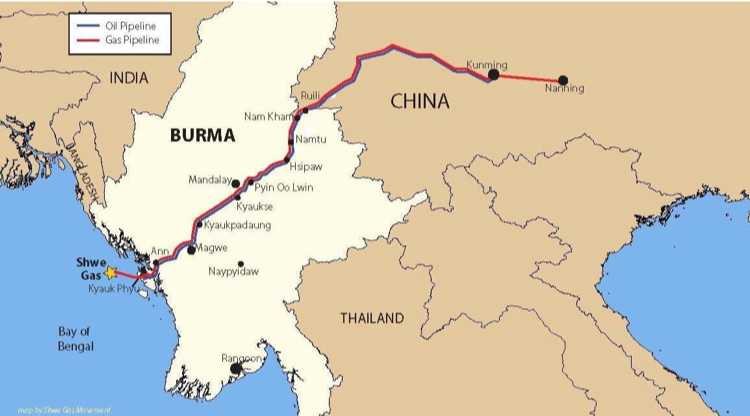
At the same time, protests erupted against Chinese-backed pipelines and infrastructure projects across the country. Villagers, activists, and even workers challenged Beijing’s growing footprint. These developments forced China to reconsider its strategy in Myanmar.
It was during this tense period that communal violence began to erupt.
Manufactured Narratives and the Rohingya Tragedy
Prominent Myanmar scholar Maung Zarni has strongly argued that the Rohingya genocide was triggered by manufactured narratives—notably the alleged rape and murder of a Rakhine woman, Ma Thida Htwe.
According to accounts later revealed:
- The doctor who conducted the post-mortem reportedly found no evidence of rape.
- Under pressure, however, he was forced to certify the case as rape and murder.
- This testimony was said to have been conveyed to Zarganar, a member of the Rakhine Investigation Commission. After this information was leaked, there was an unsuccessful assisination attempt on Zargana at the Yangon airport, which silenced him forever with the fear for his life.
Additional disturbing allegations include:
- Digital manipulation of the victim’s images to inflame public anger
- Rapid sentencing of accused individuals within two weeks, without due process
- Political actors such as Aye Maung and propagandists accused of amplifying false narratives
These emotionally charged fabrications played a powerful role in mobilizing mass hatred—laying the groundwork for violence that escalated into genocide.
Even former President Thein Sein reportedly acknowledged certain truths after investigations, though related documents were later suppressed.
A Wider Pattern? Pipelines and Riots
Some Western analysts have pointed out a troubling coincidence:
- The 2012 Rakhine violence erupted along the route of Chinese pipeline projects
- Subsequent anti-Muslim riots spread to Meiktila and Lashio, also along strategic corridors
While no definitive proof has emerged, the pattern has fueled suspicions that communal unrest may have served as a diversionary tactic during sensitive infrastructure development.
My Personal Encounter: A Conversation That Still Haunts Me
Allow me to step back into the early 1990s.
At that time, I had an unusually close relationship with the Myanmar Embassy in Kuala Lumpur. I was not only their physician but also a friend to many—ambassadors, military attachés, and their families. I attended nearly every official function: Independence Day celebrations, Tatmadaw Day events, and diplomatic gatherings.
There, I mingled with diplomats from ASEAN, China, India, and Bangladesh. I was often introduced with pride as a Myanmar doctor practicing in Malaysia.
Yet behind this cordial façade, I lived a double life.
Under the pseudonym Bo Aung Din—inspired by a famous Myanmar film character who infiltrates authority while secretly resisting it—I wrote critical articles in publications like Asiaweek and Far Eastern Economic Review.
The Night of the Conversation
One evening, at a diplomatic function, I found myself in conversation with military attachés from India and China.
Both had been drinking.
I teased the Indian attaché about India’s support for Burmese opposition groups and its strained relations with Myanmar’s government. Then, turning to the Chinese attaché, I praised China’s strong ties with Myanmar—its trade, investment, and unwavering support.
But I went further.
I suggested:
- Why not build roads and ways from Yunnan to Mandalay and Yangon?
- Why not even consider a canal across the Kra Isthmus to connect the Bay of Bengal to the South China Sea?
These were ideas I had read years earlier—perhaps as early as 1987.
His Response
The Chinese attaché was visibly pleased.
He smiled, embraced me, and said words that I have never forgotten:
“Yes, Doctor, you are right. We are already planning this. Right now, we must go around the Straits of Malacca. But in 100 years, China will be number one in the world. One day, we may have to fight the United States. All the countries around the Malacca Strait are U.S. allies. That will put us in danger.
We need alternative routes—through Burma.”
This was long before the world heard of the Belt and Road Initiative.
Reflections
Was this merely strategic foresight?
Or does it offer a glimpse into the deeper geopolitical calculations surrounding Myanmar—where infrastructure, influence, and instability intersect?
I cannot claim definitive answers.
But as someone who has:
- Witnessed diplomatic circles up close
- Heard candid strategic thinking firsthand
- And later observed the tragic manipulation of communal tensions
…I feel compelled to record these memories.
History, after all, is not only written in official documents—but also in whispered conversations, suppressed truths, and the lived experiences of those who stood quietly at the crossroads.
READ ALSO: