From Gagarin to Geopolitics: A Personal Reflection on Memory, War, and Changing Loyalties
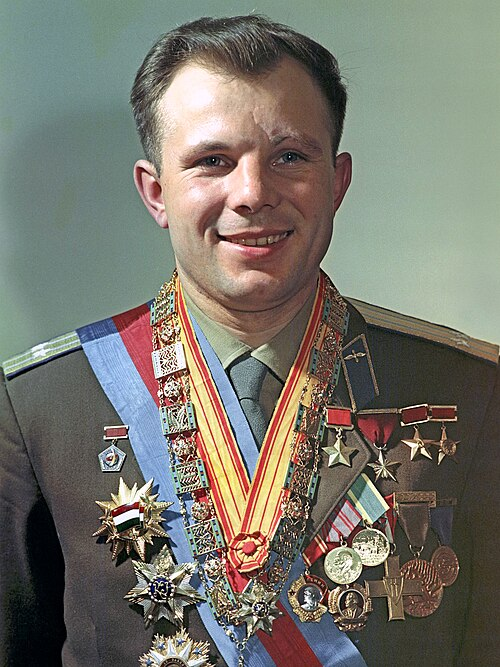
Today marks the anniversary of Yuri Gagarin, the first human to journey into outer space on 12 April 1961.
Since I was just 11 years old, I have remembered this day every year. I even wrote it down carefully in my small notebook back then. Later, with the arrival of Facebook, it became my quiet annual ritual to commemorate him on every Thingyan eve.
But when Russian invasion of Ukraine began, I stopped this tradition—with a sense of deep discomfort, even disgust.
Politics, however, has a way of challenging our emotions and reshaping our perspectives.
The well-known phrase—“In politics, there are no permanent friends or enemies, only permanent interests”—continues to prove its relevance. Alliances shift. Sympathies evolve. Moral clarity often becomes blurred.
When tensions escalated into a wider conflict involving United States–Israel actions against Iran, and with Russia and China showing support for Iran, I found myself reassessing my earlier stance.
Ironically, Russia began to look less like an adversary and more like a counterbalance.
I once felt sympathy for Volodymyr Zelenskyy—especially when he was publicly belittled, as if he “had no cards” to play. But that sympathy turned into frustration when he aligned himself fully with the US–Israel position in the broader conflict.
Such are the uncomfortable contradictions of our time.
A Historical Note (Credit: Wikipedia)
On 12 April 1961, at 6:07 a.m. UTC, the spacecraft Vostok 1 was launched from Baikonur Cosmodrome. Aboard was Yuri Gagarin, using the call sign Kedr (“Siberian pine”).
Gagarin (9 March 1934 – 27 March 1968), a Soviet pilot and cosmonaut, became the first human to travel into outer space. During this historic mission, he completed one orbit of Earth in just 108 minutes.
This remarkable achievement, at the height of the Space Race, made him an international hero. He was awarded numerous honours, including the Soviet Union’s highest title: Hero of the Soviet Union.
Born in the village of Klushino, Gagarin began his working life in a steel plant before joining the Soviet Air Forces. He was later selected for the Soviet space programme alongside five other cosmonauts.
After his historic flight, he served as deputy training director at the Cosmonaut Training Centre (later named after him) and was elected to the Supreme Soviet.
Although Vostok 1 was his only space mission, he was assigned as backup for Soyuz 1. Tragically, that mission ended in disaster, killing his friend, cosmonaut Vladimir Komarov. Fearing the loss of a national icon, Soviet authorities grounded Gagarin from further spaceflights.
In 1968, after completing further training, he returned to flying aircraft—but only briefly. Just five weeks later, he died in a crash while piloting a MiG-15 during a training flight.
Reflection
From a young boy’s admiration of a space hero to an older man’s cautious navigation of global politics, my journey mirrors the changing world around us.
Heroes remain. History remains.
But our interpretations—shaped by war, power, and shifting alliances—never stay the same.