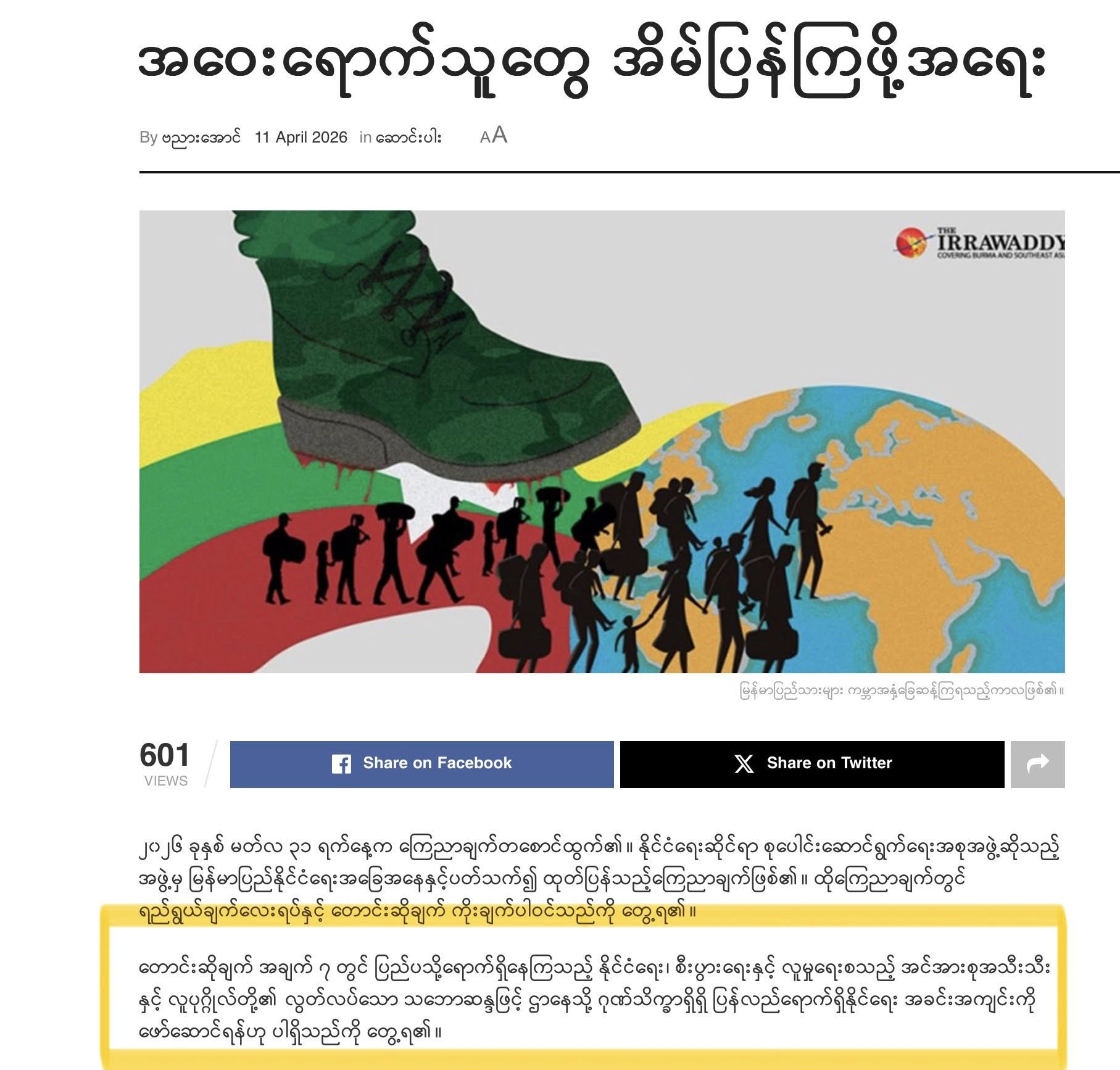
Writing “Myanmar’s misfortune is Thailand’s opportunity” might sound harsh, but “Myanmar’s loss is Thailand’s gain” is closer to the truth.
It’s no secret that Myanmar nationals are leaving their country in droves due to the ongoing crisis at home. But what is striking is the sheer scale: Thailand alone hosts an estimated 4.1 million Myanmar migrants, and when undocumented daily border crossings are factored in, that figure could represent at least 10% of Myanmar’s entire population.
When you add migrants in Malaysia, other Southeast Asian nations, China, South Korea, Japan, the Arab states, the United States, and Europe, the total number of Myanmar people living abroad likely reaches around 12 million — roughly one in four, or 25% of the population. This is one of the largest displacement crises in Asia, driven not by choice but by military repression, economic collapse, and civil war following the February 2021 coup.
The Economic Dimension: Remittances Matter
Myanmar’s overseas diaspora sends money home, providing a critical lifeline to the domestic economy. However, Myanmar has yet to fully harness the economic potential of its diaspora the way other nations have.
Consider the Philippines: with a population of 115 million, only around 10 million work abroad — yet they remit an extraordinary USD 40 billion annually, equivalent to roughly 10% of the country’s GDP. This single income stream has been instrumental in lifting millions of Filipinos out of poverty and stabilising the Philippine economy through multiple global downturns.
Vietnam and Indonesia tell similar stories. Vietnam’s overseas remittances exceeded USD 19 billion in 2024, while India — the world’s top remittance recipient — received over USD 129 billion, according to World Bank data. These figures underscore how powerfully a well-supported diaspora can fuel national development.
Thailand’s Strategic Calculus
At a policy forum titled “Thailand’s Security and Economic Landscape Post-2026 Elections”, held in Bangkok on 27 March, the Chairman of the Peace Rights Opportunity Foundation (PRF), Kannavee Suebsang, made a pointed observation: the brain drain and financial capital flowing out of Myanmar — and into Thailand — should be viewed as “a strategic social force that can serve Thailand’s long-term development interests.” He called for a systematic policy framework to leverage this human and economic resource for Thailand’s benefit.
In plain terms: Myanmar produces the talent and labour; Thailand reaps the rewards.
This is not entirely Thailand’s fault. Countries like Thailand, Vietnam, and the Philippines have smart diaspora policies that allow their nationals living abroad — even those holding foreign citizenship — to return visa-free at any time. This security of return encourages overseas nationals to invest back in their home countries, fuelling economic growth from both ends.
The Uncomfortable Truth
Myanmar’s crisis is, at its root, self-inflicted through decades of military misrule. The people fleeing are not adventurers seeking fortune — they are doctors, engineers, teachers, entrepreneurs, and workers who simply cannot survive, practice their professions, or build a future under junta rule.
Thailand is not to blame for welcoming this influx and making strategic use of it. The real question is when Myanmar will learn from nations like the Philippines and Vietnam — countries that have built robust frameworks to protect, support, and benefit from their overseas communities, while also creating the conditions at home that make return worthwhile.
Myanmar feeds the world with its people. It is long past time for Myanmar — and ultimately its people — to reclaim the benefits of that sacrifice.
Sources:
FB of U Aung Tin (Canada)
World Bank Remittance Data 2024; Irrawaddy News;
UNHCR Myanmar Displacement Reports;
Philippine Overseas Employment Administration (POEA);
Asian Development Bank Migration Reports.
“မြန်မာအခက် ထိုင်းအချက်”လို့ရေးရင် မတရားရာကျမယ်။
“မြန်မာမိုက်လေ ထိုင်းပွလေ”လို့ရေးမှ မျှတမယ်။
မြန်မာတွေပြည်တွင်းမနေနိုင်လို့ ပြည်ပထွက်တာ မဆန်းပေမယ့် ထိုင်းတစ်နိုင်ငံတည်းမှာ မြန်မာ၄.၁သန်းရှိတယ်ဆိုတော့၊ နေ့စဉ်ခိုးဝင်နေတာတွေကိုပါ ပေါင်းထည့်ရင် အနည်းဆုံး ၁၀ရာခိုင်နှုံးလောက်ဖြစ်နေတာ အံ့ဩမိတယ်။
မလေးအပါအဝင် အရှေ့တောင်အာရှ၊ တရုတ်၊ ကိုရီးယား၊ ဂျပန်၊ အာရဗ်နိုင်ငံများ၊ အမေရိကန်နဲ့ ဥရောပနိုင်ငံတွေပေါင်းလိုက်ရင် မြန်မာအနည်းဆုံး လေးပုံတစ်ပုံ(၂၅ရာခိုင်နှုံး)၊ လေးယောက်မှာတစ်ယောက်နှုံးဖြစ်သော၊ လူဦးရေ၁၂သန်းလောက် ပြည်ပထွက်နေရတာဖြစ်ပါတယ်။
ပြည်ပရောက် မြန်မာတွေက ပြည်တွင်းကို ငွေပို့ကြတဲ့အတွက် မြန်မာ့စီးပွါးရေးကို ကြီးမားသော အထောက်အကူဖြစ်စေတယ်။
ဥပမာပေးရရင် ဖိလစ်ပိုင်နိုင်ငံမှာ လူဦးရေ၁၁၅သန်းရှိပြီး လူဆယ်သန်းကျော်လောက်ပဲ ပြည်ပမှာအလုပ်လုပ်ကြပေမယ့်၊ ပြန်ပို့ငွေက နှစ်စဉ် အမေရိကန်ဒေါ်လာ ၄၀ဘီလျှံဖြစ်တယ်။ တစ်နိုင်ငံလုံး GDPရဲ့ ဆယ်ရာခိုင်နှုံးရှိလို့ ကြောက်ခမန်းလိလိ မြင့်မားပြီး သူတို့တိုင်းပြည်၊ သူတို့ပြည်သူတွေကို ဆင်းရဲတွင်းက ကူညီကယ်ထုတ်နိုင်ခဲ့ကြတယ်။
အရှေ့တောင်အာရှမှာ ဖိလစ်ပိုင်၊ ဗီယက်နမ်နဲ့ ထိုင်းနိုင်ငံသားတွေက နိုင်ငံခြားသား ခံယူထားရင်လည်း ဗီဇာမလိုပဲ အချိန်မရွေးပြန်လို့ရနေလို့ ပြည်ပရောက်တွေက ကိုယ့်နိုင်ငံတွေမှာ စီးပွါးရေးရင်းနှီးမြှုပ်နှံမှုတွေ ပိုလုပ်လာကြတယ်။ ဒီသုံးနိုင်ငံရဲ့ စီးပွါးရေးတိုးတက်မှု အရှိန်အဟုန်မြင့်အောင် တဖက်တလမ်းက အထောက်အကူပြုနေကြတယ်။
အခုဧရာဝတီဆောင်းပါးမှာ
ထိုင်းအစိုးရက မြန်မာပြည်မှာ မနေနိုင်လို့ ယိုစီးထွက်လာတဲ့ ဦးနှောက်တွေနဲ့ ငွေကြေးအရင်းအမြစ်တွေဟာ “ထိုင်းနိုင်ငံ၏ ရေရှည်ဖွံ့ဖြိုးတိုးတက်မှုအတွက် မဟာဗျူဟာမြောက် အင်အားစုများ ဖြစ်လာနိုင်တဲ့အတွက် ထိုင်းနိုင်ငံတော်အတွက် အကျိုးပြုနိုင်သည့် “လူ့အဖွဲ့အစည်း၏ စွမ်းအားတရပ်” အဖြစ် ရှုမြင်ပြီး စနစ်တကျ ပြောင်းလဲအသုံးချရန် လိုအပ်ကြောင်း”ကို
ပြီးခဲ့သည့် မတ်လ ၂၇ ရက်က ဘန်ကောက်မြို့၌ ကျင်းပခဲ့သော “၂၀၂၆ ရွေးကောက်ပွဲအလွန် ထိုင်းနိုင်ငံ၏ လုံခြုံရေးနှင့် စီးပွားရေး မြင်ကွင်း” မူဝါဒရေးရာ ဆွေးနွေးပွဲ၌ ငြိမ်းချမ်းရေးဆိုင်ရာအခွင့်အရေးဖောင်ဒေးရှင်း (PRF) ဥက္ကဋ္ဌ ခွန်ကန်နာဝီ ဆပ်ဆန်း (Kannavee Suebsang)က ပြောကြားခဲ့တယ်လို့ ဆိုပါတယ်။
မြန်မာကမွေး၊ ထိုင်းကစားဖြစ်နေပါပြီ။
ထိုင်းကို အပြစ်မတင်ပါ။
မြန်မာတွေသာ လိမ်မာသင့်တာ ကြာပြီ။