ဒေါက်တာ ကိုကိုကြီး
မြန်မာနိုင်ငံ၏ လမ်းဆုံလမ်းခွ- ဖြစ်နိုင်ခြေရှိသော အနာဂတ် (၅) ခု
မြန်မာနိုင်ငံ ရင်ဆိုင်နေရသော အန္တရာယ်များနှင့် အနာဂတ်ကို ဆုံးဖြတ်ပေးမည့် ရွေးချယ်မှုများကို သုံးသပ်ချက်
နိဒါန်း- သမိုင်းဝင် လမ်းဆုံလမ်းခွ
၂၀၂၁ ခုနှစ် ဖေဖော်ဝါရီ ၁ ရက် စစ်အာဏာသိမ်းပြီးနောက် မြန်မာနိုင်ငံသည် လက်နက်ကိုင်ပဋိပက္ခများ၊ နိုင်ငံရေးအရ အစိတ်စိတ်ကွဲထွက်မှု၊ စီးပွားရေး ယိုယွင်းမှု၊ နေရပ်စွန့်ခွာ ထွက်ပြေးရမှုနှင့် နိုင်ငံတော် ယန္တရားများ အားနည်းလာမှုတို့ကို ရင်ဆိုင်နေရသည်။ စစ်တပ်၊ အမျိုးသားညီညွတ်ရေးအစိုးရ (NUG)၊ ပြည်သူ့ကာကွယ်ရေးတပ်ဖွဲ့များ (PDF)၊ တိုင်းရင်းသား လက်နက်ကိုင်အဖွဲ့အစည်းများ (EAOs) နှင့် ဒေသန္တရ အုပ်ချုပ်ရေးအဖွဲ့များ ပါဝင်သော ပဋိပက္ခကြောင့် သန်းနှင့်ချီသော ပြည်သူများ အခြေခံလိုအပ်ချက်များနှင့် လုံခြုံရေးကို ဆုံးရှုံးနေကြသည်။ ၂၀၂၆ ခုနှစ် ကုလသမဂ္ဂ၏ ခန့်မှန်းချက်အရ လူပေါင်း ၁၆.၂ သန်း ခန့် လူသားချင်း စာနာထောက်ထားမှု အကူအညီ လိုအပ်နေပြီး ဇွန်လအထိ ပြည်တွင်းနေရပ်စွန့်ခွာသူ ၃.၈ သန်း နီးပါး ရှိခဲ့သည်။ အဓိက မေးခွန်းမှာ မြန်မာနိုင်ငံသည် စည်းလုံးညီညွတ်သော နိုင်ငံအဖြစ် ဆက်လက်တည်ရှိမည်လား၊ အစိတ်စိတ်ကွဲထွက်ပြီး မင်းမဲ့စရိုက်ဆန်သွားမည်လား သို့မဟုတ် ညှိနှိုင်းဖြေရှင်းမှုဖြင့် အားလုံးပါဝင်သော ဖက်ဒရယ်ဒီမိုကရေစီ ပြည်ထောင်စုကို တည်ဆောက်နိုင်မည်လား ဟူ၍ ဖြစ်သည်။
၁။ နိုင်ငံအစိတ်စိတ်ကွဲထွက်သွားနိုင်ခြေ (Balkanization)
ဗဟိုအာဏာ အားနည်းလာချိန်တွင် EAOs နှင့် ခုခံတွန်းလှန်ရေးအဖွဲ့များက နယ်မြေများကို အုပ်ချုပ်လာကြသည်။ ယင်းသည် ဖက်ဒရယ်စနစ်၏ အခြေခံအုတ်မြစ် ဖြစ်လာနိုင်သကဲ့သို့ နယ်မြေအငြင်းပွားမှုများနှင့် ယုံကြည်မှု ကင်းမဲ့မှုများကြောင့် ပြိုင်ဆိုင်နေသော အုပ်ချုပ်ရေးစနစ်များအဖြစ်လည်း ကွဲထွက်သွားနိုင်သည်။ အမှန်တကယ် အန္တရာယ်မှာ နိုင်ငံတကာက တစ်ခုတည်းသော နိုင်ငံအဖြစ် အသိအမှတ်ပြုထားသော်လည်း ပြည်တွင်းတွင် အုပ်ချုပ်ရေးစနစ် အမျိုးမျိုး ကွဲပြားနေခြင်း ဖြစ်သည်။ ဖြေရှင်းနည်းမှာ အာဏာခွဲဝေမှု၊ ကိုယ်ပိုင်ပြဋ္ဌာန်းခွင့်နှင့် သယံဇာတ မျှတစွာ ခွဲဝေမှုတို့ ပါဝင်သော “မတူကွဲပြားမှုအတွင်း စည်းလုံးညီညွတ်မှု” ဖက်ဒရယ်စနစ်ကို တည်ဆောက်ရန် ဖြစ်သည်။
၂။ ကျရှုံးနိုင်ငံ (Failed State) ဖြစ်လာနိုင်ခြေ
နိုင်ငံတော် ယန္တရားများသည် နှစ်ရှည်လများ တဖြည်းဖြည်း ယိုယွင်းလာနိုင်ပြီး နယ်မြေစိုးမိုးမှု လျော့နည်းခြင်း၊ အဖွဲ့အစည်းများ အားနည်းခြင်း၊ ငွေကြေးဖောင်းပွမှုနှင့် ကုန်သွယ်ရေး ပြတ်တောက်ခြင်း၊ အခြေခံဝန်ဆောင်မှုများ ရပ်တန့်ခြင်း၊ နေရပ်စွန့်ခွာရခြင်းနှင့် မူးယစ်ဆေးဝါး၊ လူကုန်ကူးမှု၊ အွန်လိုင်းလိမ်လည်မှု စသည့် တရားမဝင် စီးပွားရေးများ ကြီးထွားလာခြင်းတို့မှာ သတိပေးလက္ခဏာများ ဖြစ်သည်။ ၂၀၂၅ ခုနှစ် ဒီဇင်ဘာ UNODC အစီရင်ခံစာအရ မြန်မာနိုင်ငံ၏ ဘိန်းစိုက်ပျိုးမှုသည် ၁၇% တိုးလာပြီး ၅၃,၁၀၀ ဟက်တာ အထိ ရောက်ရှိခဲ့သည်။ တရားဥပဒေစိုးမိုးမှု အားနည်းလျှင် လက်နက်ကိုင်အဖွဲ့များ၊ စစ်ဘုရင်များနှင့် ရာဇဝတ်ဂိုဏ်းများက ဒေသများကို ထိန်းချုပ်လာနိုင်ပြီး ပညာတတ်နှင့် ကျွမ်းကျင်ပညာရှင်များလည်း ပြည်ပသို့ ထွက်ခွာသွားနိုင်သည်။
၃။ လူမျိုးရေးနှင့် ဘာသာရေး အဓိကရုဏ်းများ ပြန်လည်ဖြစ်ပွားနိုင်ခြေ
နိုင်ငံရေးအကျပ်အတည်းကြောင့် လူနည်းစုများအား နိုင်ငံရေးအရ ထိုးကျွေးခြင်း၊ အမုန်းစကားများ ပျံ့နှံ့ခြင်း၊ နယ်မြေနှင့် သယံဇာတ အငြင်းပွားခြင်းနှင့် တရားမျှတသော ဥပဒေစိုးမိုးမှု ကင်းမဲ့ခြင်းတို့ ဖြစ်ပေါ်လာနိုင်သည်။ ရခိုင်ပြည်နယ်ရှိ AA၊ စစ်တပ်နှင့် ရိုဟင်ဂျာလူထုတို့ကြား ပဋိပက္ခနှင့် ၂၀၂၆ ခုနှစ် ဩဂုတ်လ OHCHR အစီရင်ခံစာတို့က လူသားချင်း စာနာမှုနှင့် လူ့အခွင့်အရေး အခြေအနေများ ပိုမိုဆိုးရွားလာကြောင်း ပြသနေသည်။ သို့သော် အစုလိုက်အပြုံလိုက် အပြစ်တင်ခြင်းကို ငြင်းပယ်ရမည်ဖြစ်ပြီး “အားလုံးအတွက် တန်းတူညီမျှသော အခွင့်အရေးများနှင့် တိုင်းရင်းသားလူမျိုးစုများအတွက် ထပ်ဆောင်းအကာအကွယ်များ” ကို အာမခံရမည်။
၄။ အထက်မြန်မာပြည်တွင် တရုတ်သြဇာနှင့် အောက်မြန်မာပြည်တွင် အနောက်နိုင်ငံသြဇာ ခွဲခြားခံရနိုင်ခြေ
တရုတ်နိုင်ငံအတွက် စီးပွားရေးစင်္ကြံ၊ ရေနံနှင့် သဘာဝဓာတ်ငွေ့ပိုက်လိုင်းများ၊ ကျောက်ဖြူရေနက်ဆိပ်ကမ်း၊ သယံဇာတနှင့် နယ်စပ်လုံခြုံရေးတို့မှာ အရေးပါပြီး နယ်စပ်တစ်လျှောက် EAOs များနှင့် စစ်တပ်တို့အပေါ် သြဇာရှိသော်လည်း မြောက်ပိုင်းအဖွဲ့အားလုံးကို တရုတ်၏ ရုပ်သေးအဖြစ် ယူဆ၍မရပေ။ အနောက်နိုင်ငံများက ဒီမိုကရေစီ၊ လူ့အခွင့်အရေးနှင့် လူသားချင်း စာနာမှုအကူအညီတို့ကို ဦးစားပေးပြီး အိန္ဒိယနှင့် အာဆီယံတို့လည်း အကျိုးစီးပွားများ ရှိသည်။ အထက်ပိုင်းနှင့် အောက်ပိုင်း သြဇာနယ်မြေ ကွဲပြားသွားနိုင်ခြေမှာ ဖြစ်နိုင်ခြေတစ်ခုသာ ဖြစ်သော်လည်း နိုင်ငံတော် အင်စတီကျူးရှင်းများ အားနည်းနေလျှင် ပြည်ပသြဇာလွှမ်းမိုးမှု ကြီးထွားလာနိုင်သည်။ ဖက်ဒရယ်ဒီမိုကရေစီ အစိုးရသစ်အနေဖြင့် တရုတ်၊ အမေရိကန်၊ အာဆီယံ၊ အိန္ဒိယ၊ ဂျပန်နှင့် အီးယူတို့နှင့် ဟန်ချက်ညီသော ဆက်ဆံရေးကို ထိန်းသိမ်းသင့်သည်။
၅။ အကောင်းဆုံး ဖြစ်နိုင်ခြေ- အပစ်အခတ်ရပ်စဲရေး၊ ငြိမ်းချမ်းရေးဆွေးနွေးပွဲ၊ ညီညွတ်ရေး ကြားဖြတ်အစိုးရနှင့် ဖက်ဒရယ်ဒီမိုကရေစီ ပြည်ထောင်စု
အခက်အခဲများ ရှိသော်လည်း ညှိနှိုင်းဖြေရှင်းမှု၊ ကျယ်ကျယ်ပြန့်ပြန့် အပစ်အခတ်ရပ်စဲရေးနှင့် အားလုံးပါဝင်သော ကြားဖြတ်အစိုးရ တည်ထောင်ခြင်းသည် နိုင်ငံပြိုကွဲမှုကို ကာကွယ်ပြီး ငြိမ်းချမ်းရေးနှင့် သာယာဝပြောရေးကို ပြန်လည်တည်ဆောက်ရန် အကောင်းဆုံး လမ်းကြောင်းဖြစ်သည်။
- ကျယ်ကျယ်ပြန့်ပြန့် အပစ်အခတ်ရပ်စဲရေး- အကြမ်းဖက်မှု လျှော့ချရေး၊ အရပ်သားများ ကာကွယ်ရေး၊ လူသားချင်း စာနာမှု အကူအညီ အပြည့်အဝ ရရှိရေးနှင့် နိုင်ငံတကာဥပဒေအရ အကာအကွယ်ပေးရေးတို့ကို ဦးစားပေးရမည်ဖြစ်ပြီး စစ်မှန်သော နိုင်ငံရေးဆွေးနွေးပွဲများအတွက် လမ်းဖွင့်ပေးရမည်။
An assessment of the dangers facing Myanmar and the choices that will determine its future
Dr Ko Ko Gyi wrote for Myanmar Muslim News Network (MMNN)
Introduction: A Nation at a Historic Crossroads
Myanmar is facing one of the most consequential periods in its post-independence history. Since the military coup of 1 February 2021, the country has experienced escalating armed conflict, political fragmentation, economic deterioration, mass displacement and the weakening of public institutions.
What began as resistance to the military takeover has evolved into a nationwide struggle involving the military, the National Unity Government (NUG), People’s Defence Forces (PDFs), established Ethnic Armed Organisations (EAOs), emerging resistance movements and numerous local administrations.
The consequences extend far beyond the battlefield. Millions of ordinary people are struggling to obtain food, healthcare, education, electricity, employment and personal security.
The United Nations’ 2026 humanitarian assessments indicate that approximately 16.2 million people require humanitarian assistance, while nearly 3.8 million people were internally displaced by June 2026. These figures illustrate the extraordinary scale of the national crisis.
The World Bank has also documented the continuing economic difficulties, including weak production, inflationary pressures, declining household welfare, power shortages and disruptions to trade.
The fundamental question is therefore no longer simply who will win the war.
Will Myanmar remain a united country? Will it descend into prolonged fragmentation and anarchy? Or can its political and ethnic stakeholders reach a negotiated settlement and establish a genuinely inclusive Federal Democratic Union?
There are five broad possibilities worth examining.
1. The Possibility of Balkanization: Could Myanmar Break Apart?
One of the most serious long-term dangers is the possible fragmentation of Myanmar into separate political and territorial entities.
Myanmar is geographically diverse and home to numerous ethnic nationalities with distinct histories, languages, cultures and political aspirations. Several ethnic armed organisations have maintained their own military structures and administrative systems for decades.
The 2021 coup dramatically accelerated the fragmentation of central authority.
In many areas, the military no longer exercises effective control. Different EAOs and resistance organisations administer territories, collect revenue, provide security and operate education or healthcare systems.
These developments have two possible implications.
The positive possibility: Local self-administration could become the foundation of a future federal system, allowing ethnic nationalities to exercise meaningful political autonomy while remaining within a common union.
The negative possibility: If political disagreements, territorial rivalries and competing claims to sovereignty remain unresolved, these local administrations could gradually develop into permanently separate political entities.
This danger should not be underestimated.
Some organisations may prioritise their own territorial interests over national political cooperation. Others may be reluctant to surrender their military or administrative authority to a future central government, particularly if they fear a return to Bamar-dominated centralisation.
Historical grievances, mistrust and unequal distribution of natural resources could further complicate negotiations.
However, fragmentation does not automatically mean that Myanmar will become several internationally recognised countries.
A more realistic danger is the emergence of a patchwork of territories governed by different armed and political authorities, with limited national coordination and no effective common constitutional framework.
Such an arrangement could resemble a country that remains internationally recognised as one state but functions internally as several competing political systems.
The solution: Federalism must be understood as a means of preserving national unity through power-sharing, not as another form of central domination.
Ethnic nationalities must receive meaningful self-determination, constitutional safeguards, equitable resource-sharing and protection of their languages, cultures and identities.
At the same time, all stakeholders must recognise the benefits of maintaining a common country, including a shared economy, national infrastructure, international representation, common citizenship and collective security.
Myanmar needs UNITY IN DIVERSITY, not forced uniformity and not compulsory separation.
2. The Possibility of Becoming a Failed State: Anarchy, Chaos and Criminal Rule
Another frightening possibility is the gradual collapse of effective national governance.
A country does not necessarily collapse overnight. Its institutions can deteriorate over many years until they become incapable of performing their essential functions.
Myanmar is already displaying several serious warning signs:
- Loss of effective territorial control: Multiple armed organisations exercise authority in different areas.
- Weakening of national institutions: Administrative, judicial and security institutions have lost public confidence and operational effectiveness in many parts of the country.
- Economic deterioration: Inflation, unemployment, currency instability, disrupted trade and declining investment undermine ordinary livelihoods.
- Collapse or interruption of public services: Healthcare, education, electricity, transport and other essential services remain severely disrupted in conflict-affected areas.
- Mass displacement: Millions of people have been forced to abandon their homes and livelihoods.
- Expansion of illicit economies: Drug production, trafficking, illegal resource extraction, human trafficking and online scam operations exploit weak law enforcement and insecurity.
The United Nations Office on Drugs and Crime reported in December 2025 that Myanmar’s opium cultivation had increased by 17% in 2025, reaching 53,100 hectares, its highest level since 2015.
The growth of transnational scam operations and human trafficking is another serious concern. Criminal networks can exploit territories where legitimate law enforcement is weak or compromised.
The danger is that some armed groups, local power brokers, militias and criminal networks may become increasingly independent of any accountable national authority.
If this continues, ordinary citizens could face a situation in which different territories are controlled by competing armed organisations, private interests, warlords and criminal syndicates.
People might have to pay unofficial taxes, protection money or ransom simply to conduct their daily activities.
Roads, trade routes and essential infrastructure could become increasingly insecure.
Healthcare workers, teachers, traders, farmers and other professionals may leave the country, further weakening the ability to rebuild.
A warning from the Fragile States Index
The supplied article by Myo Nyunt refers to Myanmar’s 2024 Fragile States Index score of 100.0.
The Fund for Peace’s index assesses 12 indicators covering security, political legitimacy, public services, economic conditions, social pressures and external intervention. Its total score ranges from 0 to 120, with higher scores indicating greater fragility.
However, it is important to clarify that the index does not establish a fixed threshold at which a country automatically collapses. Nor does it assign one-third of the total collapse risk to each of three selected indicators.
It is a measurement of vulnerability, not a countdown to national collapse.
Nevertheless, Myanmar’s deteriorating conditions are serious enough to warrant urgent attention.
A particularly dangerous outcome would be a prolonged period in which neither the central authorities nor the opposition can establish a sufficiently effective, accountable and nationally coordinated administration.
The greatest danger is not simply the collapse of one government. It is the collapse of the institutions and public trust necessary to govern the country.
3. The Possibility of Renewed Racial and Religious Riots
Myanmar’s political crisis also carries the danger of renewed communal violence.
The country has a painful history of ethnic and religious discrimination, communal tensions, forced displacement and violence.
Muslims, Christians, Hindus and other religious minorities, as well as numerous ethnic communities, have experienced discrimination and insecurity at different times.
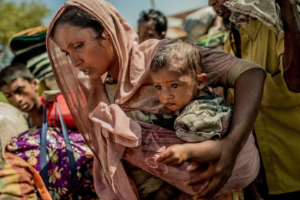
The Rohingya crisis is one of the most devastating examples of the consequences of exclusion, discrimination and violence.
The present conflict could create further opportunities for extremist groups and political opportunists to exploit religious and ethnic identities.
There are several reasons for concern.
First, political scapegoating.
When governments or political organisations face serious difficulties, they may attempt to divert public attention by blaming vulnerable communities for national problems.
Second, extremist propaganda and hate speech.
False allegations, fabricated stories and inflammatory social-media campaigns can spread rapidly, creating fear and hostility between communities.
Third, competition over territory and resources.
When armed organisations take control of new territories, disputes over land, property, religious buildings, local administration and political representation may emerge.
Fourth, the absence of impartial law enforcement.
When courts, police and administrative authorities are unable or unwilling to protect everyone equally, communities may increasingly depend on their own armed supporters for security.
This can create a dangerous cycle of fear, retaliation and communal violence.
Rakhine State deserves particular attention. The conflict involving the Arakan Army, the Myanmar military and the Rohingya population has created serious humanitarian and human-rights concerns.
The UN High Commissioner for Human Rights’ report of August 2026 documents further deterioration in the situation of Rohingya Muslims and other minorities, alongside the destructive effects of the conflict economy.
However, it would be wrong to assume that future communal violence is inevitable or that entire ethnic or religious communities are collectively responsible for the actions of particular armed organisations.
The people of Myanmar must reject collective blame.
Bamar Buddhists are not collectively responsible for military atrocities. Nor should all ethnic armed organisations, Muslims, Christians, Hindus or other communities be judged by the actions of particular individuals or organisations.
The same principle must apply to every community.
Protecting the country’s religious and ethnic diversity
A future democratic Myanmar must guarantee:
- Equal citizenship and equal protection under the law.
- Freedom of religion and the right to practise one’s faith.
- Protection of mosques, churches, temples, monasteries and other religious sites.
- Equal access to education, employment and public services.
- Legal protection against discrimination, incitement and collective punishment.
- Accountability for individuals responsible for violence, regardless of their religion, ethnicity, political affiliation or military position.
Democracy cannot mean the permanent domination of one ethnic or religious majority over minorities.
Equally, minority rights should not be treated as privileges granted at the discretion of a political or military authority.
Equal Rights for All, with Additional Safeguards for Ethnic Nationalities, must become a fundamental principle of the new constitutional order.
4. Could Myanmar Become Divided Between Chinese Influence in Upper Myanmar and Western Influence in Lower Myanmar?
Another possible danger concerns the growing influence of external powers.
Myanmar occupies a strategically important position between China, India, Bangladesh, Thailand and the Indian Ocean.
Its geographical location, natural resources, energy supplies, trade routes and access to the Indian Ocean make it important to several regional and international powers.
China has particularly significant interests in Myanmar.
These include:
- The China-Myanmar Economic Corridor.
- Oil and natural gas pipelines connecting the Bay of Bengal with southwestern China.
- The strategic deep-sea port project at Kyaukphyu.
- Access to natural resources, including minerals and rare earths.
- Border security and stability.
- Prevention of cross-border criminal activities.
- Protection of Chinese citizens, businesses and infrastructure.
China also maintains important relationships with the Myanmar military and several ethnic armed organisations along its borders.
It has demonstrated considerable influence through diplomacy, economic engagement and ceasefire mediation.
Nevertheless, it would be inaccurate to describe all northern ethnic armed organisations as Chinese proxies. They have their own political objectives, historical grievances and interests.
Western countries, particularly the United States and European nations, have different priorities.
These include democracy, human rights, accountability, humanitarian assistance, regional stability and the prevention of further authoritarian consolidation.
India and ASEAN also have important interests, although their approaches and priorities differ.
The danger of geopolitical division
Could these competing interests eventually create two different spheres of influence within Myanmar?
One hypothetical scenario would involve Upper Myanmar, particularly some northern and northeastern territories, becoming increasingly dependent on Chinese political, economic and security influence.
Meanwhile, Lower Myanmar, including Yangon, the Ayeyarwady Delta and other southern and central areas, might develop stronger economic and diplomatic relationships with Western countries and their partners.
However, this should be treated as a possible geopolitical risk rather than an established territorial division.
There is no reliable basis for assuming that China will control all of Upper Myanmar or that Western countries will control Lower Myanmar.
China has important interests in Rakhine and central Myanmar too. Western engagement also does not automatically translate into territorial or political control.
Indeed, China has repeatedly demonstrated that it prefers stability along its borders and the protection of its strategic investments over the complete collapse of Myanmar.
Western governments, meanwhile, have not demonstrated an intention or capacity to take responsibility for governing Myanmar.
Nevertheless, if Myanmar’s national institutions continue to weaken, external powers may increasingly negotiate separately with whichever authorities control particular territories.
This could produce competing economic arrangements, security relationships, political dependencies and spheres of influence.
The consequences might include:
- Reduced national sovereignty.
- Unequal distribution of natural-resource revenues.
- Competition over infrastructure and trade routes.
- External interference in domestic political decisions.
- Greater difficulty establishing a common national foreign policy.
Myanmar must avoid becoming a geopolitical battleground between major powers.
The country’s future should be determined primarily by its own people, not by competing foreign interests.
A future democratic federal government should maintain balanced, pragmatic and mutually beneficial relationships with China, the United States, ASEAN, India, Japan, the European Union and other partners.
Myanmar does not need to become anti-China to establish good relations with the West, nor does it need to become anti-Western to maintain good relations with China.
A sovereign and independent Myanmar should cooperate with all countries while protecting its national interests.
5. The Best Possibility: Ceasefire, Inclusive Peace Negotiations, a Unity Interim Government and a Federal Democratic Union
Despite all these dangers, there is another possible future.
Myanmar could emerge from its present crisis through a negotiated political settlement, a comprehensive ceasefire and the establishment of an inclusive transitional government.
This would not be an easy process. It would require considerable political courage, compromise, trust-building and international support.
However, it offers the best opportunity to prevent permanent national fragmentation and restore peace and prosperity.
A. Comprehensive ceasefire
The first priority should be to reduce violence and protect civilians.
All major parties to the conflict should be encouraged to agree to a monitored ceasefire, with arrangements to prevent renewed fighting.
Humanitarian access must be guaranteed, allowing food, medicine and other essential assistance to reach affected communities.
Prisoners, displaced persons and other vulnerable populations should receive appropriate protection under international law.
A ceasefire should not merely provide armed groups with time to rearm. It must create the conditions for genuine political negotiations.
B. Inclusive peace negotiations
A lasting settlement cannot be achieved through negotiations involving only two or three powerful parties.
The process should include all significant stakeholders, including:
- Representatives of the existing military and relevant state institutions.
- The National Unity Government and democratic political representatives.
- Ethnic Armed Organisations.
- People’s Defence Forces and other resistance organisations.
- Ethnic political parties and state or regional representatives.
- Women, youth and civil-society organisations.
- Muslim, Christian, Hindu, Buddhist and other religious communities.
- Representatives of displaced populations and other vulnerable groups.
No major stakeholder should be permanently excluded from the political process merely because it has a different political background or military history.
Participation does not mean granting every organisation a veto over the country’s future. It means creating a credible process in which all important interests can be heard and negotiated.
C. Establishment of an inclusive Unity Interim Government
Following an agreed political framework, an interim national administration should be established.
It must not simply become a new government dominated by one party, one ethnic group or one military organisation.
It should represent the country’s political and ethnic diversity and operate under an agreed transitional constitutional arrangement.
Its immediate responsibilities should include:
- Restoring essential public services.
- Re-establishing an impartial judiciary and law enforcement system.
- Coordinating humanitarian assistance and reconstruction.
- Managing national economic recovery.
- Preparing a new federal constitution.
- Organising credible democratic elections.
- Supervising security-sector reform and the transition to accountable civilian government.
The interim administration should have a clear mandate, defined powers, transparent financial arrangements and a timetable for completing the transition.
D. Reforming the military and establishing a unified national security system
One of the most difficult issues will be the future of Myanmar’s armed forces and the numerous other armed organisations.
A country cannot achieve sustainable peace if competing armies, militias and armed groups continue operating indefinitely without a common legal and constitutional framework.
However, simply defeating one armed organisation or declaring another institution abolished does not automatically establish peace.
There must be a comprehensive security-sector reform programme.
This should include:
- Establishing civilian democratic control over the national defence and security institutions.
- Professionalising the military and ensuring political neutrality.
- Integrating suitable personnel into a restructured national security system under agreed legal arrangements.
- Developing appropriate arrangements for other armed organisations.
- Disarmament, demobilisation and reintegration programmes where appropriate.
- Retraining and alternative employment opportunities for former combatants.
- Independent oversight and accountability for human-rights violations.
Individuals responsible for serious crimes must face appropriate legal accountability through fair and independent processes.
At the same time, the future should not be built on collective punishment or indiscriminate revenge against entire groups of soldiers, police officers, civil servants or former combatants.
We must distinguish between individual criminal responsibility and the rights of ordinary people who served within existing institutions.
E. A new Federal Democratic Constitution
A new constitution should address the fundamental causes of Myanmar’s decades-long conflicts.
It must establish a genuine federal system based on negotiated power-sharing and constitutional guarantees.
Its essential principles should include:
- Meaningful self-government for ethnic states and nationalities.
- Fair representation at the Union level.
- Equal citizenship and fundamental human rights.
- Protection of ethnic languages, cultures and traditions.
- Freedom of religion and protection of religious minorities.
- Equitable sharing of natural-resource revenues.
- Independent courts and the rule of law.
- Democratic civilian control of the military.
- Transparent and accountable public institutions.
- Regular elections and peaceful transfers of political power.
The new federal arrangement must avoid reproducing the old system of excessive centralisation and military domination.
It must also prevent new regional majorities or powerful local administrations from discriminating against smaller ethnic or religious communities.
Federalism should guarantee both collective rights and individual rights.
F. International support and guarantees
Myanmar’s peace process will also require constructive international involvement.
ASEAN should play an important regional role, working with the United Nations and relevant international partners.
China, India, Thailand, Bangladesh, Japan, the United States and the European Union should support a peaceful settlement rather than pursue competing arrangements that deepen Myanmar’s divisions.
International observers could help monitor ceasefires, humanitarian commitments and the implementation of agreed political arrangements.
Technical assistance, reconstruction funding, investment, educational cooperation and economic support would be essential during the transition.
However, international assistance must strengthen Myanmar’s national institutions and sovereignty rather than create new dependencies.
G. Reconciliation, justice and national reconstruction
Peace cannot be sustained by political agreements alone.
Myanmar must also address decades of discrimination, atrocities, displacement, property disputes and unresolved historical grievances.
There must be credible mechanisms for truth-seeking, justice, reparations where appropriate and reconciliation.
Victims from all ethnic and religious communities deserve recognition and protection.
The Rohingya issue must be addressed through a rights-based process that includes citizenship, freedom of movement, security, voluntary and dignified return where possible, and protection against discrimination.
Reconstruction should prioritise education, healthcare, electricity, agriculture, transportation, employment and the restoration of public confidence.
A peaceful Myanmar could once again become an attractive destination for domestic and international investment.
Its natural resources, agricultural potential, strategic location, tourism, young population and human capital could contribute to substantial economic recovery.
The country’s people deserve to enjoy the benefits of peace rather than remain trapped in endless political and military conflict.
6. What Should Myanmar’s Political and Military Leaders Learn from History?
Myanmar’s leaders, regardless of political affiliation, should understand that military victory does not necessarily produce national peace.
History provides numerous examples of countries where one side won a war but failed to establish lasting stability.
When defeated soldiers, armed groups and their supporters are excluded from all peaceful political and economic opportunities, some may go underground, reorganise or join criminal networks.
This can lead to renewed insurgencies, terrorism, warlordism, extortion, kidnapping and prolonged insecurity.
Even after a ceasefire, unresolved political grievances can generate another generation of armed resistance.
Therefore, Myanmar should not pursue a settlement based solely on the complete humiliation or destruction of its opponents.
This does not mean granting impunity to those responsible for atrocities or serious crimes. Justice and accountability remain essential.
Rather, it means separating legitimate accountability from collective revenge and ensuring that former combatants have lawful pathways back into civilian life.
The objective must be to end the cycle of armed conflict, not simply change the identity of those holding weapons.
Myanmar needs a political settlement that makes it possible for former adversaries to become citizens of the same country, governed by the same constitution and protected by the same laws.
7. The Choice Is Ultimately in the Hands of Myanmar’s People
These five possible futures are not mutually exclusive. Some could develop simultaneously in different parts of the country.
For example, Myanmar could experience increasing territorial fragmentation while parts of the country also suffer economic collapse, criminalisation and renewed communal tensions.
Likewise, local ceasefires might emerge without producing a nationwide political settlement.
The future will depend on several critical factors:
- Whether the military and resistance organisations recognise that continued warfare cannot provide a sustainable solution.
- Whether the NUG, EAOs, PDFs and other political stakeholders can overcome mistrust and agree on a common national framework.
- Whether ethnic nationalities receive meaningful guarantees of equality, autonomy and self-determination.
- Whether political and religious extremists are prevented from exploiting communal divisions.
- Whether China, ASEAN, the United States and other international actors support a comprehensive settlement rather than competing political outcomes.
- Whether Myanmar can rebuild impartial national institutions and restore public confidence.
The most important requirement is responsible and inclusive leadership.
Myanmar does not need another generation of leaders who believe that their own political organisation, ethnicity, religion or military force has an exclusive right to rule the country.
It needs leaders who understand compromise, constitutional government, meritocracy, justice and national reconciliation.
Conclusion: Choose Unity, Peace and Prosperity – Before It Is Too Late
Myanmar stands at a historic crossroads.
One road leads towards further fragmentation, competing armed authorities, economic collapse, criminal networks, communal violence and increasing dependence on foreign powers.
Another road leads towards ceasefire, inclusive negotiations, a Unity Interim Government, security-sector reform, a new federal constitution and sustainable democratic development.
Neither outcome is guaranteed.
The first possibility could gradually destroy the common foundations of the Union. The second requires courage and compromise from all stakeholders.
Our country has already lost too many lives, too many educated and skilled citizens, too many years of economic development and too many opportunities for future generations.
Millions of people have been displaced. Families have been separated. Children have lost educational opportunities. Professionals have migrated. Communities that once lived together have been divided by fear, propaganda and political manipulation.
How much more suffering must the people endure before their leaders recognise the urgency of a negotiated settlement?
We should remember that Myanmar belongs to all its people, not exclusively to any military organisation, political party, ethnic nationality or religious community.
A Bamar Buddhist, a Kachin Christian, a Chin Christian, a Shan, a Karen, a Rakhine, a Rohingya Muslim, a Kaman Muslim, a Hindu, a Panthay or any other citizen should be able to live with dignity, security and equal rights.
Our differences should enrich our country rather than become reasons for permanent hostility.
The ultimate objective must not be the victory of one group over another. It must be the victory of peace over war, justice over oppression, democracy over dictatorship, and national unity over fragmentation.
Myanmar still has the opportunity to become a peaceful, prosperous and respected member of the international community.
Let us choose negotiation rather than endless warfare, reconciliation rather than revenge, federal democracy rather than domination, and UNITY IN DIVERSITY rather than national disintegration.
Equal Rights for All, with Additional Safeguards for Ethnic Nationalities.
One Union. Many Nationalities. Many Religions. Equal Dignity. Shared Future.
May wisdom, justice, compassion and responsible leadership prevail in Myanmar.
Editorial note: This essay examines possible future scenarios. It does not claim that any particular outcome is inevitable. The proposed peace arrangements are recommendations for discussion, not an assertion that all stakeholders have already agreed to them.
Above post was written after reading the following post in Burmese:
Myo Nyunt
ဗမာပြည်ဒီအတိုင်းသွားရင်ဘယ်တော့လောက်ပြိုလဲမလဲ?
ဗမာနိုင်ငံ၏ ပဋိပက္ခ၊ ထိရှလွယ်မှုနှင့် နိုင်ငံတော် ပြိုလဲနိုင်ခြေ သုံးသပ်ချက်။
၁။ သီအိုရီဆိုင်ရာ မူဘောင်- Fragile States Index (FSI) နှင့် ပြိုလဲမှု အခြေအနေများ။
(က) အမှတ်ပေးစနစ်နှင့် အန္တရာယ်အဆင့်များ။
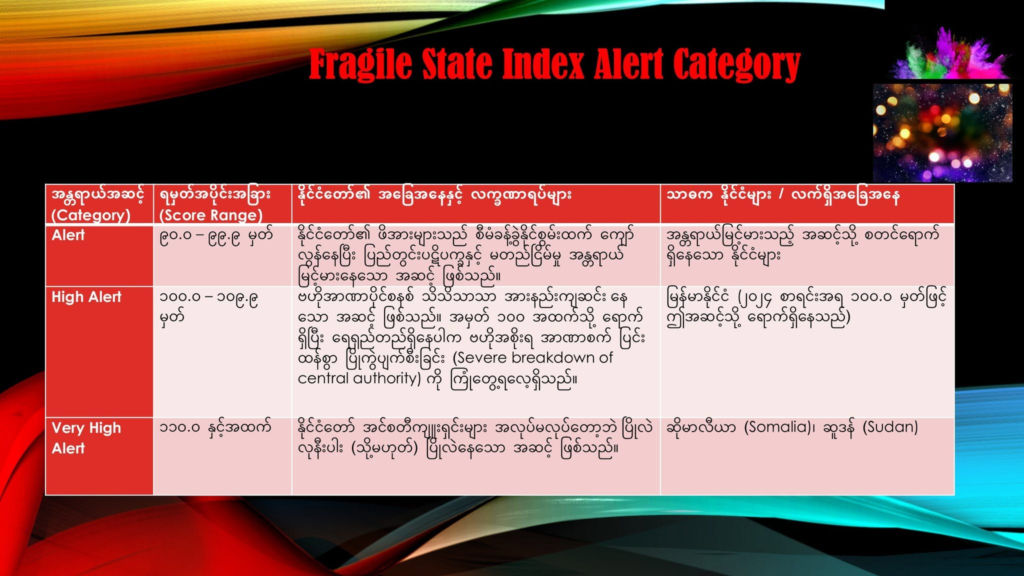
Fund for Peace ၏ CAST Framework အရ နိုင်ငံတစ်နိုင်ငံ မည်သည့်အချိန်တွင် ပြိုလဲမည်ဟူသော တိကျသည့် မျဉ်းသတ်မှတ်ချက် (Fixed Collapse Threshold) မရှိပါ။ FSI တွင် ညွှန်းကိန်း (၁၂) ခုရှိပြီး တစ်ခုလျှင် (၀) မှ (၁၀) မှတ်အထိ ပေးထားရာ စုစုပေါင်းအမှတ် (၁၂၀) ရှိသည် (အမှတ်များလေ ထိရှလွယ်မှု ပြင်းထန်လေ ဖြစ်သည်)။ အမြင့်ဆုံး အန္တရာယ်အဆင့်ဖြစ်သော Alert Category (၉၀.၀ – ၁၂၀.၀ မှတ်) ကို အောက်ပါအတိုင်း ခွဲခြားထားသည်-
• Alert (၉၀.၀ – ၉၉.၉ မှတ်): နိုင်ငံတော်၏ ဖိအားများသည် စီမံခန့်ခွဲနိုင်စွမ်းထက် ကျော်လွန်နေပြီး ပြည်တွင်းပဋိပက္ခနှင့် မတည်ငြိမ်မှု အန္တရာယ် မြင့်မားနေသော အဆင့် ဖြစ်သည်။
• High Alert (၁၀၀.၀ – ၁၀၉.၉ မှတ်): ဗဟိုအာဏာပိုင်စနစ် သိသိသာသာ အားနည်းကျဆင်းနေသော အဆင့် ဖြစ်သည်။ သမိုင်းကြောင်းအရ အမှတ် ၁၀၀ အထက်သို့ ရောက်ရှိပြီး ရေရှည်တည်ရှိနေသည့် နိုင်ငံအများစုသည် ဗဟိုအစိုးရ အာဏာစက် ပြင်းထန်စွာ ပြိုကွဲပျက်စီးခြင်း (Severe breakdown of central authority) ကို ကြုံတွေ့ရလေ့ရှိသည်။ (မှတ်ချက် – ၂၀၂၄ စာရင်းအရ ဗမာနိုင်ငံသည် ၁၀၀.၀ မှတ်ဖြင့် ဤအဆင့်သို့ ရောက်ရှိနေသည်။)
• Very High Alert (၁၁၀.၀ နှင့်အထက်): ဆိုမာလီယာ (Somalia)၊ ဆူဒန် (Sudan) တို့ကဲ့သို့ နိုင်ငံတော် အင်စတီကျူးရှင်းများ အလုပ်မလုပ်တော့ဘဲ ပြိုလဲလုနီးပါး (သို့မဟုတ်) ပြိုလဲနေသော အဆင့် ဖြစ်သည်။
(ခ) သီအိုရီအရ “ပြိုလဲခြင်း” ကို ဖြစ်စေသည့် အဓိက ညွှန်းကိန်း (၃) ရပ် (Core Collapse Indicators)
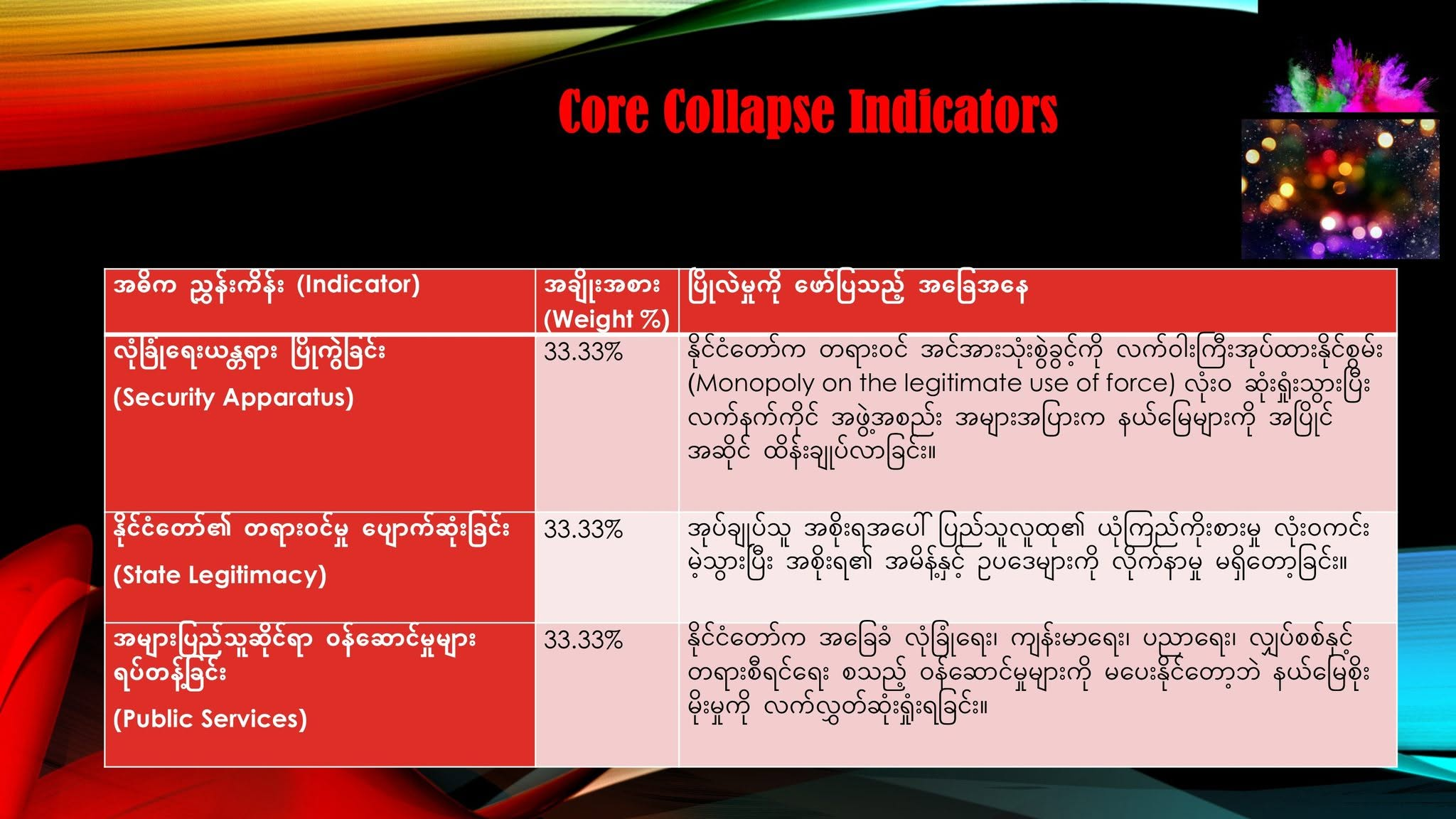
Fund for Peace ၏ သီအိုရီအရ ညွှန်းကိန်း (၁၂) ခုရှိသည့်အနက် နိုင်ငံရေးနှင့် စစ်ရေး ညွှန်းကိန်းများထဲမှ အောက်ပါ အဓိက ညွှန်းကိန်း (၃) ခု သည် နိုင်ငံတော် ပြိုလဲခြင်း ရှိ၊ မရှိကို အဆုံးအဖြတ်ပေးရာတွင် အမြင့်ဆုံး အလေးချိန်ရှိပြီး ယင်း (၃) ခု တစ်ပြိုင်နက် အမြင့်ဆုံးအဆင့် (၉ မှတ် သို့မဟုတ် ၁၀ မှတ်နီးပါး) သို့ ရောက်ရှိသွားပါက နိုင်ငံတော် ပြိုလဲပြီဟု သတ် မှတ်ကြသည်-
1. လုံခြုံရေးယန္တရား ပြိုကွဲခြင်း (Security Apparatus) – 33.33%: နိုင်ငံတော်က တရားဝင် အင်အားသုံးစွဲခွင့်ကို လက်ဝါးကြီးအုပ်ထားနိုင်စွမ်း လုံးဝ ဆုံးရှုံးသွားပြီး လက်နက်ကိုင် အဖွဲ့အစည်း အများအပြားက နယ်မြေများကို အပြိုင်အဆိုင် ထိန်းချုပ်လာခြင်း ဖြစ်သည်။
2. နိုင်ငံတော်၏ တရားဝင်မှု ပျောက်ဆုံးခြင်း (State Legitimacy) – 33.33%: အုပ်ချုပ်သူ အစိုးရအပေါ် ပြည်သူလူထု၏ ယုံကြည်ကိုးစားမှု လုံးဝကင်းမဲ့သွားပြီး အစိုးရ၏ အမိန့်နှင့် ဥပဒေများကို လိုက်နာမှု မရှိတော့ခြင်း ဖြစ်သည်။
3. အများပြည်သူဆိုင်ရာ ဝန်ဆောင်မှုများ ရပ်တန့်ခြင်း (Public Services) – 33.33%: နိုင်ငံတော်က အခြေခံ လုံခြုံရေး၊ ကျန်းမာရေး၊ ပညာရေး၊ လျှပ်စစ်နှင့် တရားစီရင်ရေး စသည့် ဝန်ဆောင်မှုများကို မပေးနိုင်တော့ဘဲ နယ်မြေစိုးမိုးမှုကို လက်လွှတ်ဆုံးရှုံးရခြင်း ဖြစ်သည်။
(ဂ) သီအိုရီ၏ ကန့်သတ်ချက်။
FSI သည် မည်သည့်အချိန်တွင် ပြိုလဲမည်ကို ကြိုတင်ဟောကိန်းထုတ်သည့် ကိရိယာ (Predictive tool) မဟုတ်ဘဲ လက်ရှိ နိုင်ငံတော်အပေါ် ကျရောက်နေသော ဖိအားများ၏ ပြင်းထန်မှုကို တိုင်းတာသည့် ကိရိယာ (Measurement of vulnerability/strain) သာ ဖြစ်သည်။ FSI သည် ပြောင်းလဲမှုနှုန်းထား (Rate of change) နှင့် နိုင်ငံတော်၏ ခံနိုင်ရည်စွမ်း (Resilience) ကို တိုက်ရိုက် မတိုင်းတာနိုင်သောကြောင့် အမှတ် ၁၀၀ ကျော်နေသည့် နိုင်ငံတစ်နိုင်ငံသည် ချက်ချင်းမပြိုကျဘဲ “တဖြည်းဖြည်း ယိုယွင်းပျက်စီးနေသော အခြေအနေ (Protracted Fragility)” ဖြင့် နှစ်ပေါင်းများစွာ တည်ရှိနေနိုင်သကဲ့သို့ ပြင်ပမှ ရုတ်တရက် ရိုက်ခတ်မှု (External Shock) တစ်ခုခုကြောင့်လည်း အချိန်မရွေး ပြိုလဲသွားနိုင်သည်။
၂။ လက်ရှိ အခြေအနေနှင့် ပြိုလဲနိုင်ခြေကို တွန်းအားပေးနေသော အဓိက အကြောင်းရင်းများ။
(က) နိုင်ငံတကာ အဖွဲ့အစည်းများ၏ သုံးသပ်ချက်။
• Fund for Peace (FSI): လုံခြုံရေးယန္တရား အားနည်းလာခြင်း၊ စီးပွားရေး ကျဆင်းခြင်းနှင့် ပြည်သူလူထု၏ အစိုးရအပေါ် ယုံကြည်မှု ပျက်ပြားခြင်းတို့သည် နိုင်ငံပြိုလဲမှုဆီသို့ ဦးတည်နေသည့် လက္ခဏာများအဖြစ် ထောက်ပြထားသည်။
• International Crisis Group (ICG): ဗဟိုအစိုးရ၏ ထိန်းချုပ်မှု လက်လွှတ်ဆုံးရှုံးနေရပြီး အစိတ်စိတ်အမွှာမွှာ ကွဲထွက်နေသော အခြေအနေ (Fragmentation) သို့ ရောက်ရှိနေပြီဟု သုံးသပ်သည်။ တစ်နိုင်ငံလုံး အတိုင်းအတာဖြင့် ရုတ်တရက် ဗဟိုချုပ်ကိုင်မှု ပြိုလဲသွားခြင်းထက် နယ်စပ်ဒေသများနှင့် တိုင်းရင်းသားဒေသများတွင် ကိုယ်ပိုင်အုပ်ချုပ်ခွင့်ရ ဒေသငယ်များ အများအပြား ပေါ်ပေါက်လာပြီး ဗဟိုအစိုးရ၏ အာဏာသက်ရောက်မှု ကျုံ့ဝင်သွားသည့် ပုံစံမျိုး ဖြစ်ပေါ်နေသည်။
(ခ) ပြိုလဲမှုကို တွန်းပို့နေသော အဓိက ဖိအားများ။
• စစ်ရေးနှင့် နယ်မြေစိုးမိုးမှု ဆုံးရှုံးခြင်း: တိုင်းရင်းသား လက်နက်ကိုင် အဖွဲ့အစည်းများ (EAOs) နှင့် ပြည်သူ့ကာကွယ်ရေးတပ်ဖွဲ့များ (PDFs) ၏ ထိုးစစ်များကြောင့် နယ်စပ်ကုန်သွယ်ရေး လမ်းကြောင်းများနှင့် မြို့သိမ်းတိုက်ပွဲများတွင် နယ်မြေအများအပြား လက်လွှတ်ဆုံးရှုံးရခြင်းသည် ဗဟိုအာဏာပိုင်အဖွဲ့အစည်း၏ စစ်ရေးနှင့် နိုင်ငံရေး ခံနိုင်ရည်ကို အကြီးအကျယ် စမ်းသပ်နေသည်။
• စီးပွားရေး ယိုယွင်းပျက်စီးမှု: ကမ္ဘာ့ဘဏ် (World Bank) ၏ စောင့်ကြည့်လေ့လာမှု အစီရင်ခံစာများအရ ငွေကြေးဖောင်းပွမှု၊ ကျပ်ငွေတန်ဖိုး ကျဆင်းမှုနှင့် ကုန်သွယ်ရေး ပြတ်တောက်မှုတို့ကြောင့် အခြေခံစားသောက်ကုန် ဈေးနှုန်းကြီးမြင့်မှုသည် ပြည်သူလူထု၏ ရှင်သန်ရပ်တည်ရေးကို ပြင်းထန်စွာ ခြိမ်းခြောက်နေပြီး စီးပွားရေး ယန္တရား ရပ်တန့်သွားခြင်းကြောင့် အုပ်ချုပ်ရေး ယန္တရားကိုပါ ဆက်လက်လည်ပတ်ရန် ခက်ခဲစေသည်။
• အခြေခံ ဝန်ဆောင်မှုများ ပြတ်တောက်ခြင်း: ကျန်းမာရေး၊ ပညာရေးနှင့် လျှပ်စစ်မီး ရရှိရေးကဲ့သို့သော အခြေခံ ပြည်သူ့ဝန်ဆောင်မှုများ ပေးအပ်နိုင်စွမ်း မရှိတော့ခြင်းသည် နိုင်ငံတော် အင်စတီကျူးရှင်းများ ပြိုလဲနေပြီ ဖြစ်ကြောင်း ပြသနေသည့် အချက်များ ဖြစ်သည်။
• တရားမဝင် စီးပွားရေးနှင့် နယ်စပ်ဖြတ်ကျော် ရာဇဝတ်မှုများ: မူးယစ်ဆေးဝါး၊ အွန်လိုင်းလိမ်လည်မှု (Scam centres) နှင့် တရားမဝင် သယံဇာတ တူးဖော်မှုများသည် ပြည်တွင်းပဋိပက္ခကို ငွေကြေးနှင့် လက်နက်အင်အား ဖြည့်တင်းပေးနေသည့် အဓိက အရင်းအမြစ် (Conflict Driver) အဖြစ် ပဋိပက္ခကို ပိုမိုရှည်ကြာစေသည်။
၃။ နိုင်ငံတော် ယန္တရား လုံးဝပြိုလဲမှုကို ဟန့်တား သို့မဟုတ် အချိန်ဆွဲထားနိုင်သော အချက်များ။
• အိမ်နီးချင်း နိုင်ငံများ၏ ပါဝင်ပတ်သက်မှု: တရုတ်၊ အိန္ဒိယနှင့် ထိုင်းနိုင်ငံတို့သည် နယ်စပ်လုံခြုံရေး၊ စီးပွားရေး အကျိုးစီးပွားနှင့် ဒုက္ခသည် အရေးကိစ္စများကြောင့် ဗမာနိုင်ငံ လုံးဝပြိုလဲသွားမည့် အခြေအနေ (Total State Collapse) ကို မလိုလားကြပေ။ ထို့ကြောင့် သံတမန်ရေးအရ ကြားဝင်စေ့စပ်မှုများနှင့် စီးပွားရေး ထိတွေ့ဆက်ဆံမှုများမှတစ်ဆင့် အခြေအနေကို ထိန်းညှိရန် ကြိုးပမ်းလေ့ရှိသည်။
• သဘာဝသယံဇာတနှင့် နိုင်ငံခြားဝင်ငွေ: သဘာဝဓာတ်ငွေ့၊ ကျောက်မျ က်ရတနာနှင့် အခြားသယံဇာတများမှ ရရှိနေသေးသည့် ဝင်ငွေများသည် ဗဟိုအုပ်ချုပ်ရေး ယန္တရားကို အတိုင်းအတာတစ်ခုအထိ ဆက်လက်လည်ပတ်နိုင်ရန် အထောက်အပံ့ ဖြစ်စေသည်။
• အတိုက်အခံ အင်အားစုများအကြား စုစည်းမှု အခြေအနေ: တော်လှန်ရေး အင်အားစုများနှင့် တိုင်းရင်းသား လက်နက်ကိုင်အဖွဲ့များအကြား ဗဟိုအစိုးရကို အစားထိုးနိုင်မည့် တစ်ခုတည်းသော နိုင်ငံရေးနှင့် စစ်ရေး ဦးဆောင်မှု တည်ဆောက်ရာတွင် ညှိနှိုင်းရန် လိုအပ်ချက်များ ရှိနေသေးခြင်းကလည်း အပြောင်းအလဲ ဖြစ်ပေါ်မည့် အချိန်ကာလကို အကျိုးသက်ရောက်စေသည်။
၄။ တရားမဝင် စီးပွားရေးနှင့် နယ်စပ်ဖြတ်ကျော် ရာဇဝတ်မှုများ၏ ဒေသတွင်း သက်ရောက်မှု။
ဗမာနိုင်ငံ၏ တရားမဝင် စီးပွားရေး (Illicit Economy) နှင့် နယ်စပ်ဖြတ်ကျော် ရာဇဝတ်မှုများ (Transnational Crime) သည် ပြည်တွင်းပဋိပက္ခ၏ နောက်ဆက်တွဲအကျိုးဆက်တစ်ခုသာ မဟုတ်တော့ဘဲ စစ်ရေးနှင့် နိုင်ငံရေးကို တွန်းအားပေးနေသည့် အဓိက အရင်းအမြစ် (Conflict Driver) ဖြစ်လာပြီး ဒေသတွင်း တည်ငြိမ်မှုကို အောက်ပါနည်းလမ်းများဖြင့် ထိခိုက်စေသည်-
1. လုံခြုံရေးနှင့် နယ်စပ်ဒေသ မတည်ငြိမ်မှု (Border & Security Spillover)။
o ဗဟိုအစိုးရ၏ ထိန်းချုပ်မှု ကျုံ့ဝင်လာခြင်းနှင့် နယ်မြေအစိတ်စိတ်ကွဲထွက်နေမှုကို အခွင့်ကောင်းယူ၍ တရုတ်၊ ထိုင်း၊ အိန္ဒိယနှင့် ဘင်္ဂလားဒေ့ရှ် နယ်စပ်တစ်လျှောက်တွင် လက်နက်မှောင်ခိုမှု၊ မူးယစ်ဆေးဝါးနှင့် လူကုန်ကူးမှု ကွန်ရက်များ ပိုမိုအားကောင်းလာသည်။
o ဘိန်းစိုက်ပျိုးမှုနှင့် စိတ်ကြွဆေးပြား (Methamphetamine / Yaba)၊ Ketamine ကဲ့သို့သော ဓာတုမူးယစ်ဆေးဝါး ထုတ်လုပ်မှုများ ပြန်လည်မြင့်တက်လာပြီး အိန္ဒိယအရှေ့မြောက်ဒေသ (Mizoram, Assam)၊ ထိုင်းနှင့် ဒေသတွင်းနိုင်ငံများသို့ နယ်စပ်ဖြတ်ကျော် ဝင်ရောက်မှုများ ဆက်တိုက်ဖြစ်ပေါ်နေသည်။
o ပဋိပက္ခအတွင်း ပါဝင်ပတ်သက်နေသော အဖွဲ့အစည်းအချို့နှင့် နယ်စပ်စောင့်/ပြည်သူ့စစ် ကွန်ရက်များသည် လက်နက်ဝယ်ယူရန်နှင့် စစ်ရေးအသုံးစရိတ်များအတွက် တရားမဝင် စီးပွားရေးလုပ်ငန်းများမှ ဝင်ငွေရရှိနေခြင်းကြောင့် ပဋိပက္ခကို ရှည်ကြာစေပြီး နယ်စပ်လုံခြုံရေးကို ပိုမိုရှုပ်ထွေးစေသည်။
2. အွန်လိုင်းလိမ်လည်မှု (Scam Centres) နှင့် နိုင်ငံဖြတ်ကျော် ငွေကြေးရာဇဝတ်မှု။
o ဗမာနယ်စပ်ဒေသများ (ဥပမာ – မြဝတီ/ရွှေကုက္ကို၊ ကိုးကန့်/လောက်ကိုင်နှင့် အခြားနယ်စပ်ဇုန်များ) အခြေစိုက် အွန်လိုင်းလိမ်လည်မှု ဗဟိုဌာနများသည် နိုင်ငံဖြတ်ကျော် ရာဇဝတ်ဂိုဏ်းများနှင့် ချိတ်ဆက်လုပ်ကိုင်နေပြီး ဒေသတွင်းနှင့် နိုင်ငံတကာမှ ပြည်သူများကို ငွေကြေးဆုံးရှုံးမှုများစွာ ဖြစ်ပေါ်စေသည်။
o အလုပ်အကိုင် အခွင့်အလမ်း အတုများဖြင့် နိုင်ငံပေါင်းစုံမှ နိုင်ငံသားများကို လိမ်လည်ခေါ်ဆောင်ပြီး အဓမ္မခိုင်းစေခြင်း၊ ညှဉ်းပန်းနှိပ်စက်ခြင်းများ ရှိနေသဖြင့် အိမ်နီးချင်းနိုင်ငံများအတွက် ကောင်စစ်ရေး၊ လူမှုရေးနှင့် လူသားချင်း စာနာထောက်ထားမှုဆိုင်ရာ ဖိအားများ တိုးပွားစေသည်။
o ငွေကြေးခဝါချမှုနှင့် Cryptocurrency (ဥပမာ – Tether ကဲ့သို့သော Stablecoins) အသုံးပြုမှုများသည် ဒေသတွင်း ဘဏ္ဍာရေးစနစ်၏ ဥပဒေစိုးမိုးမှုနှင့် စည်းမျဉ်းထိန်းချုပ်မှုများကို စိန်ခေါ်နေသည်။
3. သဘာဝသယံဇာတ တူးဖော်မှုနှင့် သဘာဝပတ်ဝန်းကျင် သက်ရောက်မှု ။
o တရားမဝင် ရွှေ၊ ကျောက်စိမ်းနှင့် သတ္တု (ဥပမာ – သံဖြူနှင့် မြေရှားသတ္တုများ) တူးဖော်မှုများ ကျယ်ပြန့် လာခြင်းကြောင့် မြစ်ချောင်းများ ညစ်ညမ်းခြင်း၊ သစ်တောပြုန်းတီးခြင်းနှင့် စိုက်ပျိုးမြေပျက်စီးခြင်းတို့ ဖြစ်ပေါ်စေသည်။
o ဤသက်ရောက်မှုများသည် နယ်စပ်ဖြတ်ကျော် မြစ်ရေအရည်အသွေးနှင့် ဒေသခံလူထု၏ စားဝတ်နေရေးကို ထိခိုက်စေသည့်အတွက် အိမ်နီးချင်းနိုင်ငံများအကြား သဘာဝပတ်ဝန်းကျင်နှင့် နယ်စပ်စီမံခန့်ခွဲမှု ဆိုင်ရာ ပြဿနာများကို ဖြစ်ပေါ်စေသည်။
4. သံတမန်ရေး၊ ကုန်သွယ်ရေးနှင့် ဒေသတွင်း ပူးပေါင်းဆောင်ရွက်မှု ခက်ခဲခြင်း ။
o တရားဝင် ကုန်သွယ်ရေးလမ်းကြောင်းများ မတည်ငြိမ်ခြင်းနှင့် မှောင်ခို/တရားမဝင် ဈေးကွက်များ ကြီးထွား လာခြင်းကြောင့် ဒေသတွင်း ကုန်သွယ်ရေး၊ ရင်းနှီးမြှုပ်နှံမှုနှင့် အခြေခံအဆောက်အအုံ စီမံကိန်းများအပေါ် ယုံကြည်မှု လျော့နည်းစေသည်။
o Scam centres နှိမ်နင်းရေး၊ နယ်စပ်လုံခြုံရေးနှင့် နိုင်ငံသားများ ပြန်လည်ခေါ်ယူရေးကိစ္စများသည် တရုတ်၊ ထိုင်း၊ အိန္ဒိယနှင့် အာဆီယံ (ASEAN) နိုင်ငံများအတွက် ပြည်တွင်းလုံခြုံရေး ဦးစားပေးကိစ္စများ ဖြစ်လာနေပြီး နှစ်နိုင်ငံဆက်ဆံရေးနှင့် သံတမန်ရေး နည်းလမ်းများကို ဟန်ချက်ညီအောင် ကြိုးပမ်းနေရသည်။
၅။ အနှစ်ချုပ် သုံးသပ်ချက်။
• ဖြစ်စဉ်ပုံစံ။ ဗမာနိုင်ငံသည် ရက်ပိုင်း သို့မဟုတ် လပိုင်းအတွင်း ရုတ်တရက် လုံးဝပြိုကျသွားမည့် ပုံစံထက် တဖြည်းဖြည်းချင်း အာဏာဗဟိုချုပ်ကိုင်မှု လျော့ပါးပြီး အစိတ်စိတ်အမွှာမွှာ ပြိုကွဲနေသည့် ဖြစ်စဉ် (Gradual Fragmentation) ထဲသို့ ရောက်ရှိနေပြီ ဖြစ်သည်။
• ဒေသတွင်း သက်ရောက်မှု။ တရားမဝင် စီးပွားရေးနှင့် နယ်စပ်ဖြတ်ကျော် ရာဇဝတ်မှုများသည် ပြည်တွင်းပဋိပက္ခကို ငွေကြေးနှင့် လက်နက်အင်အား ဖြည့်တင်းပေးနေရုံသာမက မူးယစ်ဆေးဝါး၊ ဆိုက်ဘာလိမ်လည်မှု၊ လူကုန်ကူးမှုနှင့် သဘာဝပတ်ဝန်းကျင် ထိခိုက်မှုများမှတစ်ဆင့် အိမ်နီးချင်းနိုင်ငံများ၏ လုံခြုံရေး၊ စီးပွားရေးနှင့် လူမှုရေး တည်ငြိမ်မှုကို တိုက်ရိုက် ဖိအားပေးနေသော ဒေသတွင်း လုံခြုံရေး ပြဿနာ (Regional Security Challenge) အဖြစ် တည်ရှိနေသည်။
• ရှေ့ဆက် အခြေအနေ။ ရှေ့ဆက်ဖြစ်ပေါ်လာမည့် အချိန်ကာလသည် စီးပွားရေး ကျဆင်းမှု၏ အတိုင်းအတာ၊ စစ်ရေးပဋိပက္ခများ၏ အလှည့်အပြောင်းနှင့် အိမ်နီးချင်းနိုင်ငံများ၏ မူဝါဒ အပြောင်းအလဲများအပေါ် များစွာမူတည်နေသည်။
ဗမာ နိုင်ငံတော်ပြိုဆင်းနေရတဲ့အကြောင်းတရားအစစ်ကစစ်အာဏာရှင်ကြောင့်ဖြစ်လို့ဒါကိုကုစားဖို့ဟာကစစ်တပ်အမြစ် ဖြတ်ဖို့ဘဲရှိသည်။
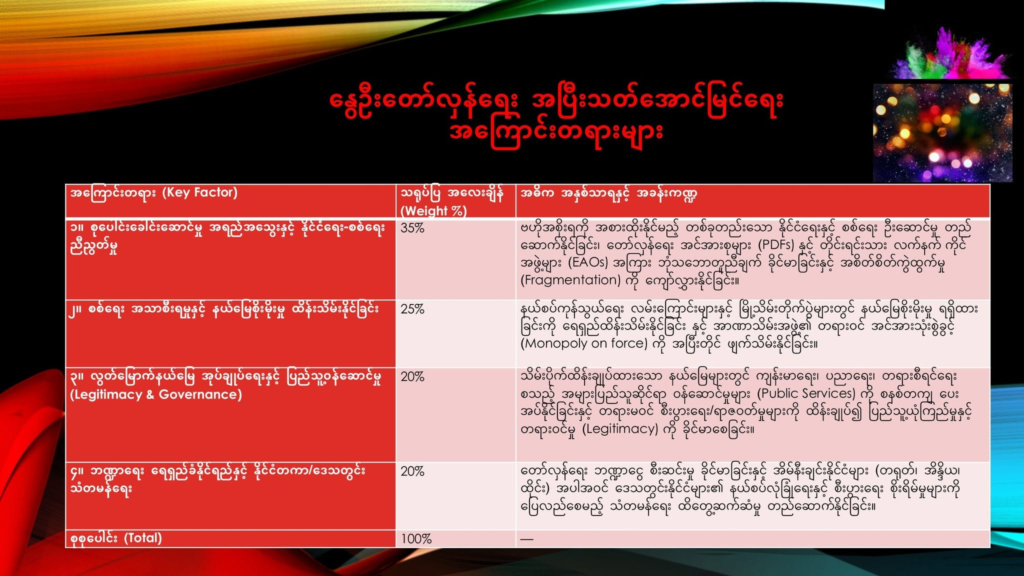
နိုင်ငံတော် ယန္တရား ပျက်စီးယိုယွင်းနေမှု (Fragility) ကို တွန်းပို့နေသည့် ဖိအားများ ရှိနေသော်လည်း အပြောင်းအလဲကို အဆုံးအဖြတ်ပေးမည့် အဓိက အချက်မှာ အတိုက်အခံ အင်အားစုများအကြား ဗဟိုအစိုးရကို အစားထိုးနိုင်မည့် တစ်ခုတည်း သော နိုင်ငံရေးနှင့် စစ်ရေး ဦးဆောင်မှု တည်ဆောက်နိုင်ခြင်းသာဖြစ်သည်။
ဤရှုထောင့်မှကြည့်လျှင် စုပေါင်းခေါင်းဆောင်မှု အရည်အသွေး မြင့်မားခြင်းသည် အောက်ပါအကျိုးဆက်များကို တိုက်ရိုက် ဖြစ်ပေါ်စေနိုင်ပါသည်-
• အစိတ်စိတ်အမွှာမွှာ ကွဲထွက်မှု (Fragmentation) မှ စနစ်ကျသော အသွင်ကူးပြောင်းမှုဆီသို့ ဦးတည်နိုင်ခြင်း။ နိုင်ငံတော် အာဏာဗဟိုချုပ်ကိုင်မှု ပြိုလဲသွားချိန်တွင် ဒေသအလိုက် အစိတ်စိတ်ကွဲထွက်နေသည့် အခြေအနေ (Fragmentation) ၌သာ ရပ်တန့်မနေဘဲ ဘုံနိုင်ငံရေး သဘောတူညီချက်နှင့် အုပ်ချုပ်ရေး ယန္တရားအသစ်ဖြင့် အစားထိုးနိုင်ရန် စုပေါင်းခေါင်းဆောင်မှုက အဓိက ကျပါသည်။
• စစ်ရေးနှင့် နိုင်ငံရေး ဟန်ချက်ညီမှု။ နယ်မြေစိုးမိုးမှု ရရှိလာသည်နှင့်အမျှ လွတ်မြောက်နယ်မြေများတွင် အများပြည်သူဆိုင်ရာ ဝန်ဆောင်မှုများ (Public Services) နှင့် တရားဥပဒေစိုးမိုးရေးကို စနစ်တကျ ပြန်လည်တည်ဆောက်နိုင်ခြင်းသည် တော်လှန်ရေး အင်အားစုများ၏ တရားဝင်မှု (Legitimacy) ကို ပိုမိုခိုင်မာစေပါသည်။
• ဒေသတွင်းနှင့် နိုင်ငံတကာ ယုံကြည်မှု ရရှိခြင်း။ အိမ်နီးချင်းနိုင်ငံများ အနေဖြင့် ဗမာနိုင်ငံ လုံးဝပြိုလဲသွားမည့် အခြေအနေ (Total State Collapse) နှင့် နယ်စပ်ဖြတ်ကျော် ရာဇဝတ်မှုများကို စိုးရိမ်နေချိန်တွင် စုစည်းခိုင်မာသော နိုင်ငံရေးနှင့် စစ်ရေး ဦးဆောင်မှု ရှိခြင်းက ဒေသတွင်း တည်ငြိမ်မှုကို အာမခံနိုင်သည့် အစားထိုး အင်အားစုအဖြစ် နိုင်ငံတကာ၏ ယုံကြည်မှုနှင့် ထိတွေ့ဆက်ဆံမှုကို ရရှိစေနိုင်ပါသည်။
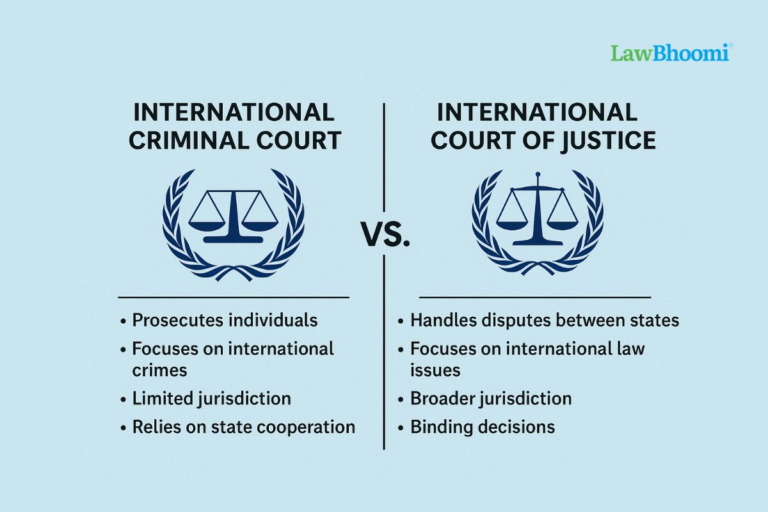
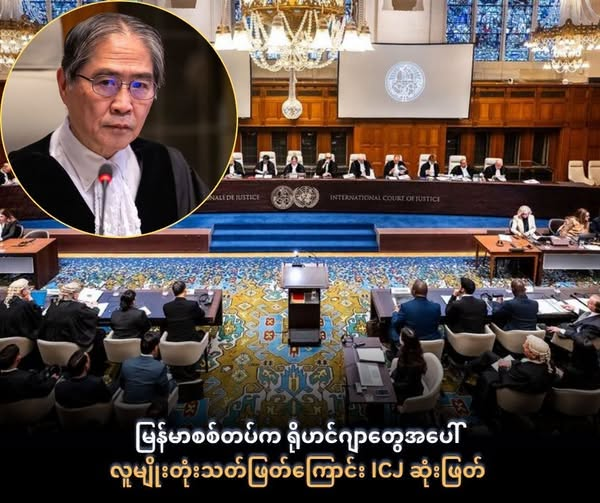
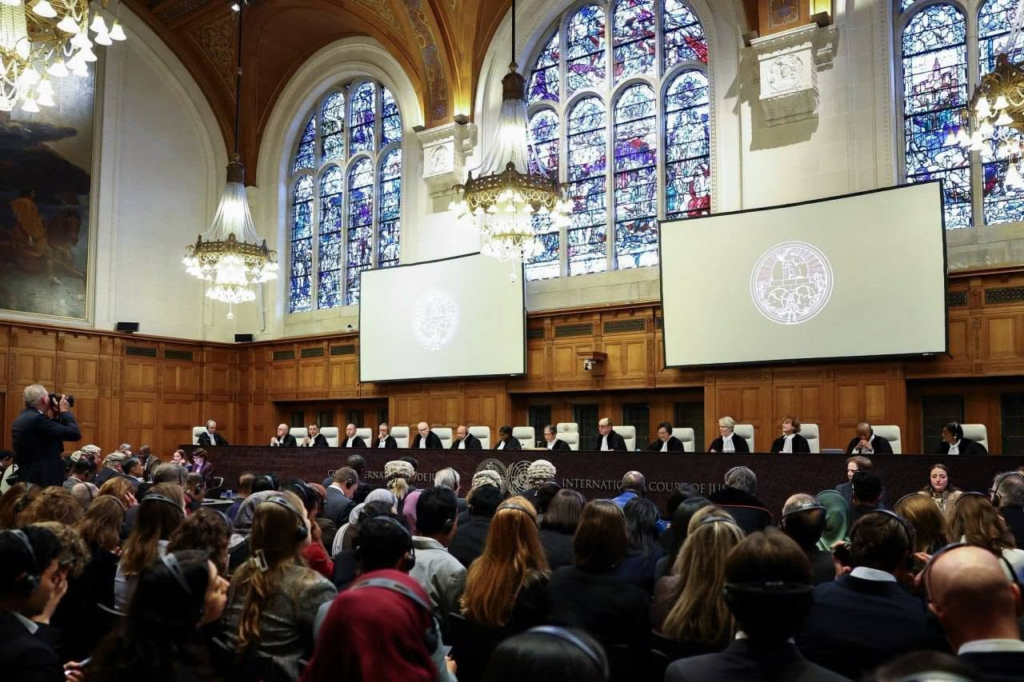
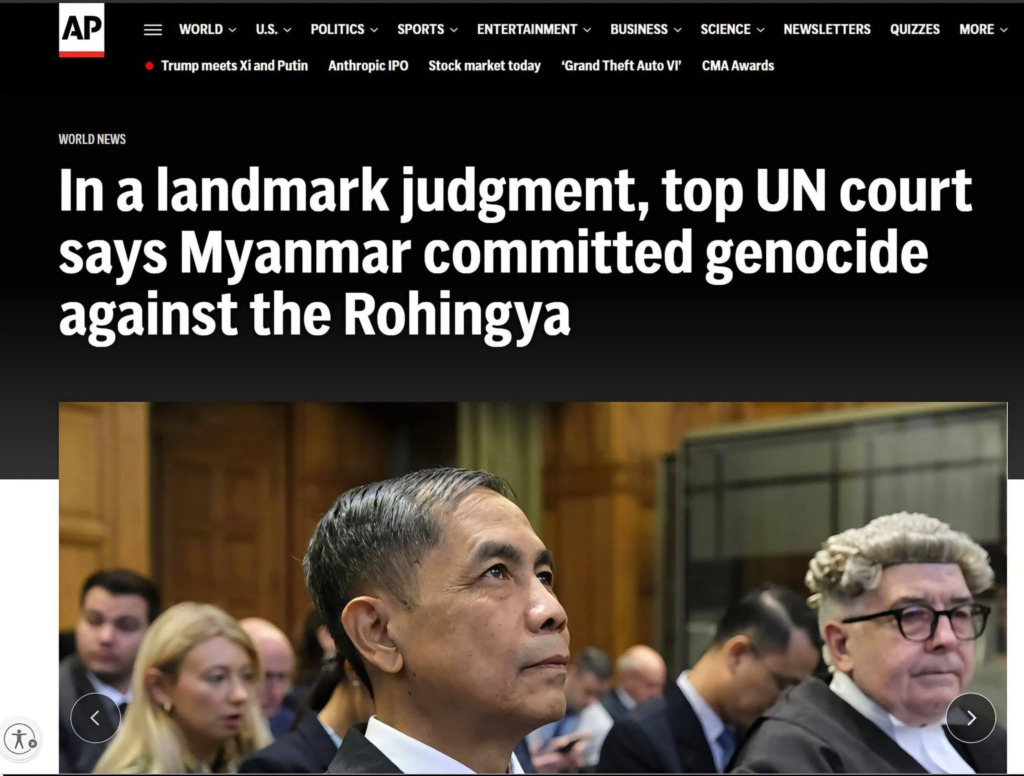
အချုပ်အားဖြင့် ICJ ကလည်းစစ်အုပ်စုအပစ်ရှိကြောင်းအမိန့်ချမှတ်ပြီးနိုင်ငံတော် ပြိုလဲမှုဆီ ဦးတည်နေသည့် ဖိအားများသည် အခြေအနေတစ်ရပ်ကို ဖန်တီးပေးနေသော်လည်း စစ်အာဏာရှင်စနစ်ကို အပြီးသတ် အမြစ်ဖြတ်ပြီး ဖက်ဒရယ်ဒီမိုကရေစီ နိုင်ငံတော်သစ် တည်ဆောက်နိုင်ရေးအတွက်မူ တော်လှန်ရေး အင်အားစုများ၏ စုပေါင်းခေါင်းဆောင်မှု အရည်အသွေးနှင့် စစ်ရေး-နိုင်ငံရေး မဟာဗျူဟာ ညီညွတ်မှု ကသာ အဆုံးအဖြတ်ပေးသွားမည် ဖြစ်ပါသည်။
မျိုးညွန့်(နိုင်ငံတကာမာခရိုစီးပွါးရေးပါရဂူ)
Fact-checking and additional research notes
I have made several important distinctions to ensure the essay is defensible and does not overstate the evidence.
| Issue | Fact-check finding |
|---|---|
| FSI score of 100.0 | The supplied article attributes this to Myanmar’s 2024 score. It is a historical indicator, not a prediction of when collapse will occur. |
| Three indicators each accounting for 33.33% | This is not the Fund for Peace’s official methodology. The index uses 12 indicators, each scored from 0–10. |
| Balkanization | Territorial fragmentation is a genuine risk, but internationally recognised partition is not inevitable. |
| China versus Western influence | China has substantial influence, but a neat Upper Myanmar/Lower Myanmar division is speculative. |
| Religious violence | The danger is real, particularly where political extremism, discrimination and weak law enforcement intersect. It is not inevitable. |
| Federal transition | There are already different local governance experiments, but coordination, legitimacy, resources and mutual trust remain challenges. |
The 2026 ISEAS-Yusof Ishak Institute analysis, Myanmar’s Emerging Governance Mosaic, is particularly relevant. It documents the development of alternative governance structures involving ethnic organisations, the NUG, PDFs and local communities. It also identifies competing authority claims and political mistrust as significant obstacles. ISEAS Yusof Ishak Institute+1
Important supporting references
These are useful sources for MMNN readers who wish to examine the evidence behind the essay.
1. Fund for Peace – Fragile States Index methodology and indicators. Explains the 12 indicators and why the index is not a countdown to collapse. Read the methodology.
2. United Nations OCHA – Myanmar Humanitarian Update No. 52, July 2026. Documents the humanitarian crisis and nearly 3.8 million internally displaced people. Read the UN report.
3. UNICEF – Myanmar Humanitarian Situation Report, January–June 2026. Provides updated information about displacement, children, education, healthcare and regional conditions. Read the report.
4. World Bank – Myanmar Economic Monitor, June 2026. Examines economic contraction, inflation, power shortages and the outlook for recovery. Read the economic assessment.
5. OHCHR – Situation of Human Rights of Rohingya Muslims and Other Minorities in Myanmar, August 2026. Particularly important for the discussion of ethnic and religious minorities. Read the human-rights report.
6. UNODC – Myanmar Opium Survey 2025. Documents the increase in opium cultivation to 53,100 hectares. Read the survey.
7. ISEAS-Yusof Ishak Institute – Myanmar’s Emerging Governance Mosaic, September 2026. An important analysis of alternative governance arrangements and the challenges of building a federal union. Read the analysis.
8. International Crisis Group – Myanmar’s New Administration: Military Consolidation, Not Transition, June 2026. Examines ceasefire prospects, foreign relations and the limitations of the political transition. Read the analysis.
9. International IDEA – Global State of Democracy: Myanmar. Provides additional analysis of democratic deterioration and federal political developments. Read the country assessment.
MY PERSONAL HOPE FOR THE FUTURE OF BURMA
I do not aspire to become a politician, minister, parliamentarian or government adviser. Nor do I insist that any particular political organisation, military institution or individual must govern Burma.
My wish is much simpler.
I want to see the people of Burma live without fear of war, persecution, discrimination, poverty and religious or ethnic hatred.
I want Bamar, Shan, Kachin, Chin, Karen, Rakhine, Rohingya, Mon, Kayah and all other nationalities to enjoy equal dignity and meaningful rights.
I want Muslims, Buddhists, Christians, Hindus and people of other faiths to practise their religions peacefully.
I want children to attend schools, patients to receive medical treatment, farmers to prosper, businesses to flourish and young people to build their futures in their own country.
I want a government that serves the people rather than demanding that the people serve those in power.
Whether Burma eventually adopts a federal parliamentary system, another democratic constitutional arrangement or a different form of government is a matter for its people to decide through a peaceful, inclusive and legitimate process.
My concern is not who occupies the presidential palace or commands the armed forces.
My concern is whether ordinary people can live safely, freely and prosperously.
I want Burma to become a country where nobody needs to flee abroad to escape war, discrimination or economic desperation, and where nobody is treated as a second-class citizen because of ethnicity, religion or political beliefs.
That is the Burma I hope future generations will inherit.