Dr Ko Ko Gyi.
An appeal to Myanmar’s military leadership, democratic forces, ethnic resistance organisations, religious leaders and the international community.
Edited for Myanmar Muslim News Network (MMNN)
Introduction: A Critical Moment for Myanmar
On 19 November 2026, the International Court of Justice (ICJ) is scheduled to deliver its judgment in The Gambia v. Myanmar, concerning alleged violations of the Genocide Convention against the Rohingya.
Meanwhile, the International Criminal Court (ICC) investigation into the Bangladesh/Myanmar situation continues. In November 2024, the ICC Prosecutor applied for an arrest warrant against Senior General Min Aung Hlaing over alleged crimes against humanity of deportation and persecution of the Rohingya. As of 18 November 2026, the application remains pending before the judges; an application is not itself an arrest warrant.
Myanmar must therefore prepare for a difficult international legal and political environment.
However, this should also be viewed as an opportunity to reconsider the country’s political direction.
This is not the time to confront the international community, encourage anti-Muslim or anti-Rohingya rhetoric, or manufacture racial and religious tensions to divert public attention. It is the time to demonstrate political maturity, responsibility and a willingness to find a peaceful way forward.
The international legal proceedings should be addressed through lawful engagement, cooperation and respect for judicial decisions—not threats, denial, intimidation or attempts to mobilise religious and racial hatred.
1. Recognise the Reality: Military Victory Alone Cannot Resolve Myanmar’s Crisis
Myanmar has experienced nearly six years of nationwide conflict since the military coup of February 2021.
Despite changing territorial control, military offensives and considerable external assistance to different actors, the country has not achieved a decisive and sustainable military victory.
The military may retain significant conventional capabilities, while ethnic resistance organisations and other revolutionary forces continue to challenge its authority.
The humanitarian, economic and social consequences are devastating.
No political or military leadership should assume that defeating one opponent will automatically bring peace. Even if one side gains substantial battlefield advantages, other armed groups, local resistance networks and political grievances may continue.
A military victory without political reconciliation could merely create the conditions for another generation of insurgency.
A negotiated political settlement, therefore, offers Myanmar a more sustainable path than an endless pursuit of total military victory.
The objective should not be to determine which side humiliates or destroys the other. It should be to prevent further suffering and establish a political system in which all communities can live with security, dignity and equal rights.
2. Release Daw Aung San Suu Kyi and Begin Genuine National Reconciliation
The release of Daw Aung San Suu Kyi should be considered an essential confidence-building measure.
Her participation, in whatever form she freely chooses, could help open channels of communication between the military, democratic political representatives, ethnic organisations and other stakeholders.
Her release should be part of a broader national reconciliation initiative, rather than an isolated political gesture.
It would also send an important signal to the international community that Myanmar’s leadership is prepared to move beyond confrontation.
This does not mean that one individual can solve the country’s problems. Myanmar’s crisis is much larger than any single leader or political party.
Nevertheless, excluding influential political figures from a national settlement would make the process less inclusive and less credible.
3. Understand the Fear of Losing Power: A Lesson from Tun Dr Mahathir
During my interview with former Malaysian Prime Minister Tun Dr Mahathir Mohamad about Myanmar politics, he explained an important problem facing authoritarian rulers.
He observed that military rulers may hesitate to surrender power because they fear prosecution, imprisonment or retaliation after leaving office.
He referred to the experiences of former Bangladeshi President Hussain Muhammad Ershad, former South Korean President Chun Doo-hwan and former Indonesian President Suharto.
Their experiences illustrate why political and military leaders may perceive a transition to civilian government as a personal threat.
This is an important political reality that negotiators should understand.
If leaders believe that their only choices are to retain power indefinitely or face humiliation, imprisonment or death, they may choose continued confrontation even when their country is suffering enormously.
Therefore, peace negotiators should explore credible security arrangements and lawful transition mechanisms that reduce unnecessary fears while respecting justice and victims’ rights.
A peace agreement must provide a political way forward without becoming a guarantee of impunity.
4. Apply Sun Tzu’s Wisdom: Leave an Honourable Way Forward
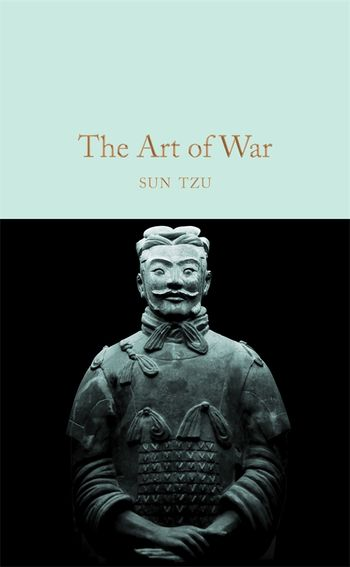
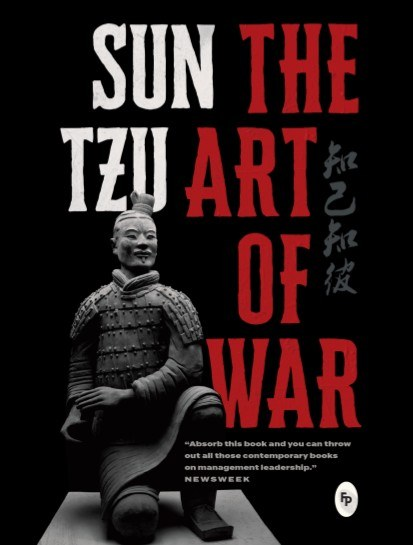
The ancient Chinese military strategist Sun Tzu wrote in The Art of War, Chapter VII, Maneuvering:
“When you surround an army, leave an outlet free. Do not press a desperate foe too hard.”
This principle is relevant beyond the battlefield.
When an opponent believes that there is absolutely no way out, the incentive to continue fighting may increase. A political settlement should therefore provide a credible alternative to endless resistance.
However, the lesson should not be misunderstood as an endorsement of allowing perpetrators to escape accountability.
In Myanmar’s circumstances, leaving an outlet means offering a negotiated political transition, a lawful retirement process where appropriate, personal security arrangements consistent with the law, and opportunities for former combatants to reintegrate into peaceful civilian life.
It means giving people a reason to choose peace rather than fight to the bitter end.
The objective should be to defeat the cycle of violence, not to humiliate an entire institution or community.
5. Explore Safe, Lawful and Dignified Retirement Arrangements
International peace negotiations sometimes include security guarantees, retirement arrangements or relocation for former leaders.
Myanmar’s negotiators could explore such possibilities, but they must be realistic and lawful.
For example, former military leaders who are not subject to applicable arrest or prosecution obligations might seek retirement or voluntary residence in another country, subject to the receiving country’s consent and immigration laws.
Possible destinations should not be presented as countries that have already agreed to accept them. The United States, Canada, the United Kingdom, European countries, Australia, China and Japan would each make their own decisions under their respective laws and international obligations.
Likewise, any proposal concerning the protection or transfer of personal wealth must distinguish legitimately acquired property from corruption, stolen public assets and proceeds of crime.
There must be no secret arrangements to transfer public money or conceal illicit wealth.
Most importantly, no bilateral or domestic political agreement can automatically cancel the jurisdiction of an international court or override applicable international law.
The ICC’s Rome Statute, for example, provides that official position does not by itself exempt a person from criminal responsibility before the Court.
Therefore, any retirement or security arrangements must be designed without promising immunity that the negotiators have no legal authority to grant.
6. Consider a Myanmar Truth, Justice and Reconciliation Commission
Myanmar should study the experience of South Africa’s Truth and Reconciliation Commission (TRC), established under the Promotion of National Unity and Reconciliation Act 34 of 1995.
The South African process sought to establish the truth about serious human rights violations committed during apartheid, provide victims with an opportunity to tell their stories, recommend reparations and promote reconciliation.
Its amnesty arrangements were conditional. Applicants had to make full disclosure of relevant facts and satisfy statutory requirements concerning politically motivated acts.
It was not a blanket amnesty for every person responsible for every crime.
Myanmar should consider establishing an independent and credible Truth, Justice and Reconciliation Commission, adapted to the country’s circumstances.
Such a commission could:
- Investigate and document serious human rights violations by all parties.
- Provide victims and survivors with safe opportunities to testify.
- Establish the fate and whereabouts of missing persons.
- Identify patterns of abuse and the institutions responsible.
- Recommend appropriate prosecutions and other forms of accountability.
- Propose reparations and rehabilitation for victims.
- Recommend institutional reforms to prevent future violations.
- Promote reconciliation between communities that have experienced decades of conflict.
A crucial distinction must be maintained: reconciliation is not the same as forgetting, and forgiveness cannot be imposed upon victims.
Serious international crimes must be addressed consistently with applicable national and international law. A domestic truth commission cannot simply cancel international criminal proceedings.
Justice and reconciliation should reinforce one another, rather than being presented as opposing choices.
7. Provide Meaningful Compensation and Rehabilitation for Victims
Political reconciliation alone is insufficient.
Millions of people have suffered from armed conflict, displacement, persecution, arbitrary detention, destruction of property and economic collapse.
A sustainable peace process must recognise their suffering through practical measures.
Victim compensation and rehabilitation should consider:
- Families of people killed or disappeared.
- Injured civilians and survivors of torture.
- Former political prisoners.
- Internally displaced persons (IDPs).
- Refugees and displaced communities wishing to return voluntarily and safely.
- People who lost homes, land, businesses and livelihoods.
- Survivors of sexual and gender-based violence.
- Communities whose schools, hospitals, religious buildings and cultural heritage have been destroyed.
Possible funding sources could include:
- Future government budgets and a dedicated national reparations fund.
- Recovery of assets established to have been acquired through corruption or other unlawful means, following due process.
- Contributions from responsible institutions and enterprises, where legally established and financially feasible.
- International reconstruction assistance and development partnerships.
- Voluntary contributions from international donors and humanitarian organisations.
Compensation should be transparent, independently administered and based on fair eligibility criteria.
It should not discriminate on the basis of ethnicity, religion, political affiliation or geographical location.
8. Undertake Comprehensive Security Sector Reform
One of the most difficult challenges in Myanmar’s transition will be the future of its armed forces and the many armed organisations operating throughout the country.
A sustainable settlement must address the legitimate security concerns of all parties.
The future security architecture should be developed through inclusive negotiations involving:
- The Tatmadaw.
- Ethnic Revolutionary Organisations (EROs).
- People’s Defence Forces (PDFs).
- Other armed resistance groups.
- Relevant civilian political representatives.
The long-term objective should be a professional, accountable and nationally representative security sector under civilian constitutional authority.
Possible reforms include:
- Professional training and merit-based promotion.
- Clear civilian oversight and parliamentary accountability.
- Human rights and international humanitarian law education.
- Independent mechanisms for investigating abuses.
- A transparent system of recruitment and retirement.
- Disarmament, demobilisation and reintegration (DDR) programmes.
- Carefully designed integration or alternative civilian employment pathways for qualified former combatants.
No armed organisation should be allowed to operate indefinitely outside the law.
Equally, integration should not mean simply absorbing all armed groups into the existing military structure without fundamental reform.
9. Establish an Inclusive Federal Democratic Union
Myanmar’s future must be based on political equality, genuine federalism and respect for its extraordinary ethnic and religious diversity.
The constitutional settlement should include the following principles:
A. Genuine Federal Democracy
Meaningful autonomy, constitutional powers and political participation for ethnic states and regions.
B. Rule of Law
Independent courts, accountable institutions, equal application of the law and protection against arbitrary detention.
C. Equality of Citizenship
All citizens must enjoy equal fundamental rights without discrimination based on ethnicity, religion, language or origin.
D. Protection of Ethnic and Religious Minorities
All communities, including Rohingya, Kaman, Pathi, Myae-Doo and other Muslim communities, as well as Buddhist, Christian, Hindu and other religious communities, must enjoy protection under the law.
The Rohingya question must be addressed through a credible process that protects human rights, resolves citizenship issues in accordance with international standards and facilitates safe, voluntary and dignified return for refugees.
E. Freedom of Religion and Belief
Religious institutions must not be exploited to promote hatred, incite violence or discriminate against other communities.
F. Meritocracy and Equal Opportunity
Public appointments, education, military recruitment and professional advancement should be based on ability, qualifications and fair procedures—not personal connections, religious identity or political loyalty.
G. Balanced Foreign Relations
Myanmar should maintain constructive relations with China, India, ASEAN, the United States, Russia, Japan, the European Union and other partners.
Its foreign policy should safeguard national sovereignty while avoiding excessive dependence on any single external power.
10. Stop Religious Hatred and Racial Provocation
At this critical moment, Buddhist monks, Muslim religious scholars, Christian leaders, Hindu representatives, community elders and civil society organisations have a particularly important responsibility.
Religious teachings should promote compassion, justice, restraint and peaceful coexistence.
No religious institution should become a platform for inciting hatred against another community.
The authorities must protect all communities equally and investigate incitement and violence impartially.
The suffering of the Rohingya must not be used to provoke hostility against ordinary Buddhists. Similarly, the suffering of Buddhist communities must never be used to justify discrimination against Muslims or other minorities.
Collective blame is unjust and dangerous.
Myanmar needs responsible religious leadership, not religious nationalism.
11. Seek International Support for an Inclusive Peace Process
Myanmar’s peace process should not be controlled by one domestic faction or one foreign power.
The United Nations, ASEAN, China, India, the United States, Japan and other concerned partners could support an inclusive and carefully structured negotiation process.
International participation might include:
- Neutral facilitation and mediation.
- International monitoring of ceasefire agreements.
- Humanitarian access and assistance.
- Technical support for constitutional and institutional reform.
- Support for refugee return and reintegration.
- Assistance with reconstruction and economic recovery.
- Cooperation with appropriate international justice mechanisms.
The United Nations and relevant international bodies should help ensure that all significant stakeholders have a voice, including ethnic nationalities, women, religious minorities and displaced communities.
No peace agreement will be sustainable if it excludes those who must live with its consequences.
12. A Practical Roadmap: The Five Cs
Myanmar could organise its national reconciliation process around five interconnected principles:
- Ceasefire: Reduce armed confrontation and protect civilians.
- Conciliation: Establish dialogue, confidence-building and humanitarian cooperation.
- Consensus: Negotiate an inclusive political settlement involving all significant stakeholders.
- Constitution: Establish a genuine federal democratic constitutional framework.
- Confidence: Build trust through justice, accountability, institutional reform and internationally supported guarantees.
These five principles should be pursued together, with implementation monitored through agreed mechanisms.
Conclusion: Choose the Future, Not Another Generation of War
Myanmar has already lost too many lives, too many generations of educational opportunities and too much economic potential.
The country cannot afford another decade of civil war, revenge and racial or religious hostility.
Military leaders should understand that retaining power indefinitely is not a sustainable national strategy.
Opposition forces should also recognise that a durable peace requires a political and security arrangement that addresses the legitimate concerns of all communities, while refusing to sacrifice justice and fundamental rights.
The international community should support a settlement that combines accountability, national reconciliation, humanitarian protection and democratic transformation.
The ICJ judgment should be approached with seriousness and respect. Whatever the outcome, Myanmar must not respond with hostility against the international community or with hatred against its own citizens.
The ICC proceedings and other legal processes must also be addressed through lawful and responsible channels.
The choice before Myanmar’s leaders is not simply between victory and defeat. It is between continuing a destructive conflict and creating a future in which every community can live in peace, dignity and equality.
Sun Tzu’s ancient wisdom offers a useful final reminder: do not push a desperate opponent into a corner when a way towards settlement remains possible.
Let us leave room for peace, but never abandon justice.
Equal Rights for All, with Additional Safeguards for Ethnic Nationalities.
UNITY IN DIVERSITY.
Peace with Justice. Reconciliation with Accountability. Federal Democracy with Equal Citizenship.